
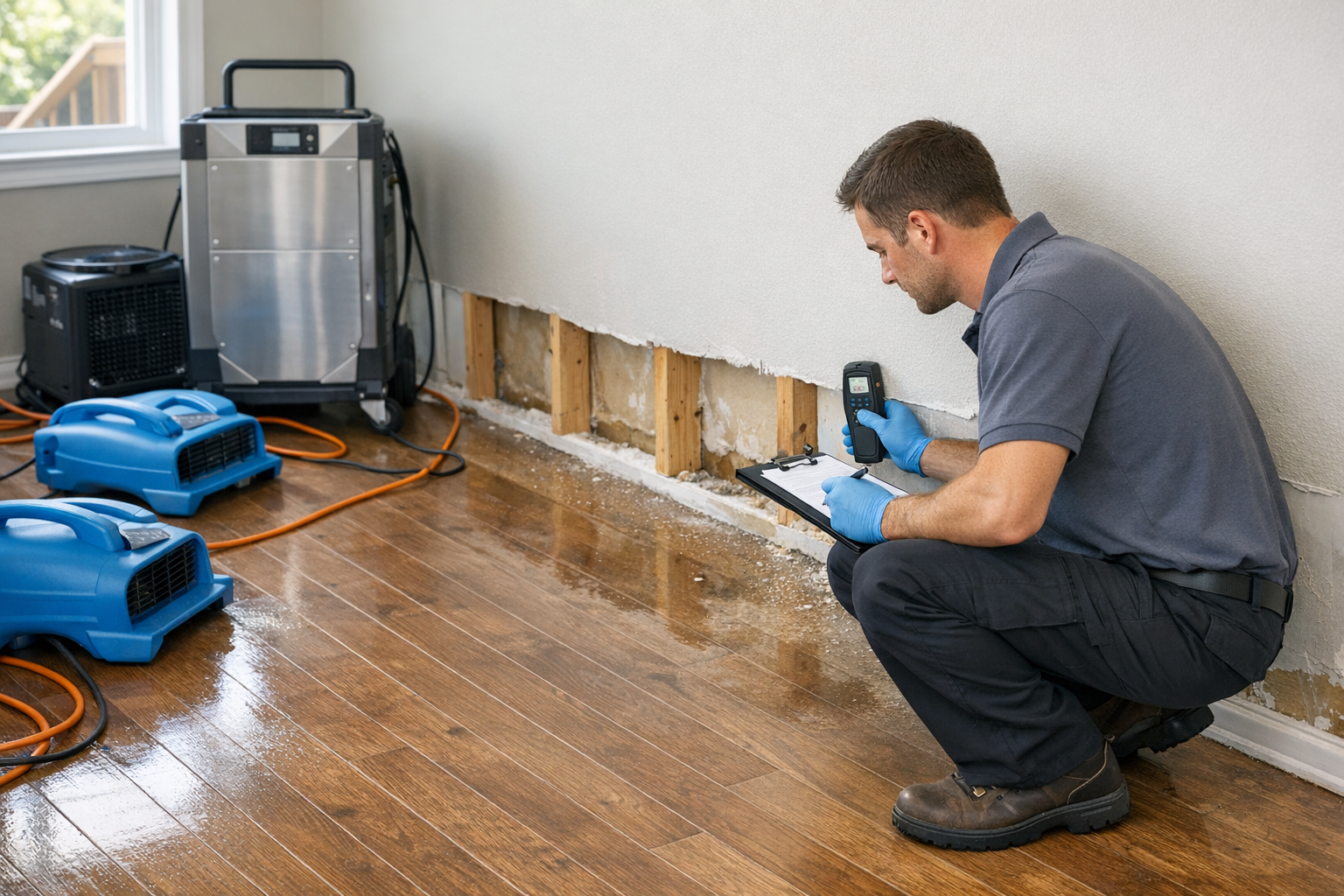
Water damage is something we regularly see across Michigan. A frozen pipe in January, heavy spring rains, sump pump failure, or a roof leak during a summer storm can quickly introduce moisture into a home or commercial building. The real concern is not just the water intrusion itself, but what happens in the first 24 to 48 hours afterward.
According to the U.S. Environmental Protection Agency, mold can begin growing within 24 to 48 hours if moisture is not properly addressed (EPA, “Mold Cleanup in Your Home”: https://www.epa.gov/mold/mold-cleanup-your-home). That narrow window makes your response critical. For homeowners, property managers, contractors, and investors, understanding what to do immediately after water damage can significantly reduce long-term mold health risks and avoid costly mold remediation.
This guide outlines the essential steps to prevent mold growth and protect your property.
Why Mold Develops So Quickly After Water Damage
Mold spores are naturally present in both indoor and outdoor air. They become problematic when moisture allows them to colonize organic materials such as:
Drywall
Wood framing
Carpet and padding
Insulation
Ceiling tiles
Michigan’s seasonal humidity, basement construction, and freeze-thaw cycles all contribute to elevated water damage mold risk. When materials remain damp beyond 24 to 48 hours, mold after flooding or plumbing failures becomes increasingly likely.
The EPA emphasizes that controlling moisture is the most important factor in preventing mold growth (EPA Indoor Air Quality: https://www.epa.gov/indoor-air-quality-iaq). Acting quickly is not optional. It is essential.
Step 1: Stop the Source of Water
Before cleanup begins, identify and eliminate the source of water. This may involve:
Shutting off a broken supply line
Repairing a roof leak
Addressing foundation seepage
Clearing blocked drain systems
If flooding involves sewage or stormwater, treat the area as potentially contaminated. Standing floodwater may introduce bacteria and additional indoor air quality hazards beyond mold.
FEMA advises that materials wet for more than 48 hours are at high risk for mold growth and may require removal rather than drying (FEMA “Mold and Mildew”: https://www.fema.gov/fact-sheet/mold-and-mildew).
For rental or commercial properties, rapid response is also part of responsible property management and environmental compliance for property owners.
Step 2: Remove Standing Water Immediately
Water extraction should begin as soon as possible. The longer water sits, the deeper it penetrates structural components.
Professional extraction equipment is often necessary in moderate to large losses. In Michigan homes, basement mold after water damage is frequently linked to delayed or incomplete water removal.
Materials that absorb water quickly include:
Carpet padding
Insulation
Upholstered materials
Engineered wood flooring
Many of these materials cannot be salvaged once saturated.
Step 3: Dry the Structure Within 24 to 48 Hours
Drying is the most important step in preventing mold growth.
Effective drying typically requires:
Commercial-grade dehumidifiers
High-velocity air movers
Controlled airflow
Opening windows alone is rarely sufficient, especially during humid Michigan summers. The EPA recommends maintaining indoor humidity levels below 60 percent to discourage mold growth (EPA Indoor Air Quality: https://www.epa.gov/indoor-air-quality-iaq).
Moisture often migrates behind walls and beneath flooring. A professional mold inspection may include moisture meters or infrared imaging to identify hidden damp areas that are not visible on the surface.
If structural materials are not fully dried, mold can develop inside wall cavities even when surfaces appear dry.
Step 4: Remove and Discard Unsalvageable Materials
Some building materials cannot be restored once waterlogged. These often include:
Carpet padding
Fiberglass insulation
Acoustic ceiling tiles
Severely saturated drywall
When drywall absorbs water, it may need to be removed several inches above the visible water line to ensure hidden moisture is eliminated.
Leaving damp materials in place significantly increases the likelihood that professional mold remediation will later be required.
In older Michigan properties, demolition of water-damaged materials may expose additional hazardous materials in homes. If the building predates 1980, consider asbestos inspection or asbestos testing before disturbing suspect materials. The EPA outlines requirements related to asbestos during renovation and demolition (EPA Asbestos Overview: https://www.epa.gov/asbestos).
Addressing these risks properly protects occupants and prevents unintended exposure.
Step 5: Clean and Sanitize Remaining Surfaces
After removing damaged materials, all remaining structural surfaces should be cleaned thoroughly.
Effective mold removal involves physically removing contamination, not simply applying a surface spray. Painting over or spraying visible growth does not resolve the underlying issue.
If you notice a persistent mold smell in house areas after drying and cleaning, it may indicate hidden growth behind walls or under flooring.
Step 6: Monitor for Signs of Mold Growth
Continue monitoring the affected area for several weeks.
Watch for:
Musty or earthy odors
Discoloration on drywall or wood
Warping or bubbling paint
Visible spotting in damp areas
The Centers for Disease Control and Prevention notes that exposure to mold may cause nasal congestion, throat irritation, coughing, wheezing, and aggravation of asthma symptoms, particularly in sensitive individuals (CDC Mold Information: https://www.cdc.gov/mold).
If visible growth appears or symptoms persist, professional mold remediation should be considered.
When Professional Mold Remediation Is Necessary
While minor surface issues can sometimes be addressed with proper cleaning and drying, professional intervention is recommended when:
The affected area exceeds approximately 10 square feet
Mold is present inside HVAC systems
Water intrusion involved sewage or contaminated floodwater
Moisture remained for several days
The mold remediation process typically includes:
Containment barriers
Negative air pressure systems with HEPA filtration
Removal of contaminated materials
Detailed cleaning and sanitizing
Post-remediation verification
For landlords and property managers, mold remediation for landlords is not just about property preservation. It also helps protect tenant health and reduce liability exposure.
If you are searching for mold removal near me or mold remediation Michigan, verify that the contractor follows established containment and filtration practices. In Southeast Michigan communities such as Warren, timely mold remediation services can prevent structural deterioration and tenant complaints from escalating.
Mold in Commercial Buildings
Mold in commercial buildings presents unique challenges due to building size and HVAC complexity. Roof leaks, plumbing failures, and foundation seepage can allow contamination to spread through ventilation systems and impact multiple tenant spaces.
Environmental testing for property managers may include:
Air sampling
Surface sampling
Moisture mapping
Maintaining indoor air quality supports occupant health and business continuity.
For Michigan-specific guidance on environmental health concerns in buildings, property owners can also reference the Michigan Department of Environment, Great Lakes, and Energy at https://www.michigan.gov/egle.
Additional Risks in Older Michigan Properties
Water damage can expose other environmental concerns in aging buildings.
If paint begins deteriorating after moisture exposure, peeling lead paint danger may increase. Lead paint removal and lead paint abatement must follow established safety protocols, particularly under lead paint laws enforced for Michigan rental properties.
Similarly, demolition during repairs may require asbestos removal or asbestos abatement if asbestos-containing materials are present. Comprehensive environmental remediation services often evaluate for mold, asbestos, and lead together to ensure environmental safety in older homes and commercial buildings.
Preventing Future Mold Problems
Once cleanup is complete, prevention becomes the focus.
Recommended preventative measures include:
Maintaining gutters and downspouts
Ensuring sump pumps function properly and adding battery backups
Sealing foundation cracks
Improving basement ventilation
Using dehumidifiers where humidity remains elevated
Routine maintenance is one of the most effective ways to reduce long-term water damage mold risk.
Protecting Health and Property Value
Mold is more than a cosmetic issue. It can damage building materials, affect indoor air quality, and reduce property value.
The EPA makes it clear that moisture control is the foundation of mold prevention. Acting within the first 24 to 48 hours after water intrusion significantly reduces the likelihood of widespread contamination.
For property owners across Michigan, early action is far less expensive than large-scale mold remediation after growth has spread.
Contact BDS Environmental
If your home or commercial property has experienced water damage and you are concerned about mold growth, timely evaluation is essential.
BDS Environmental provides professional mold inspection, mold remediation, and environmental remediation services throughout Michigan. Our team works with homeowners, contractors, landlords, and property managers to address moisture issues safely and thoroughly.
If you suspect mold after flooding, notice a persistent musty odor, or need guidance following water damage, contact BDS Environmental to schedule an inspection and protect your property moving forward.
