
5 Signs Mold May Be Growing in Your Home or Building
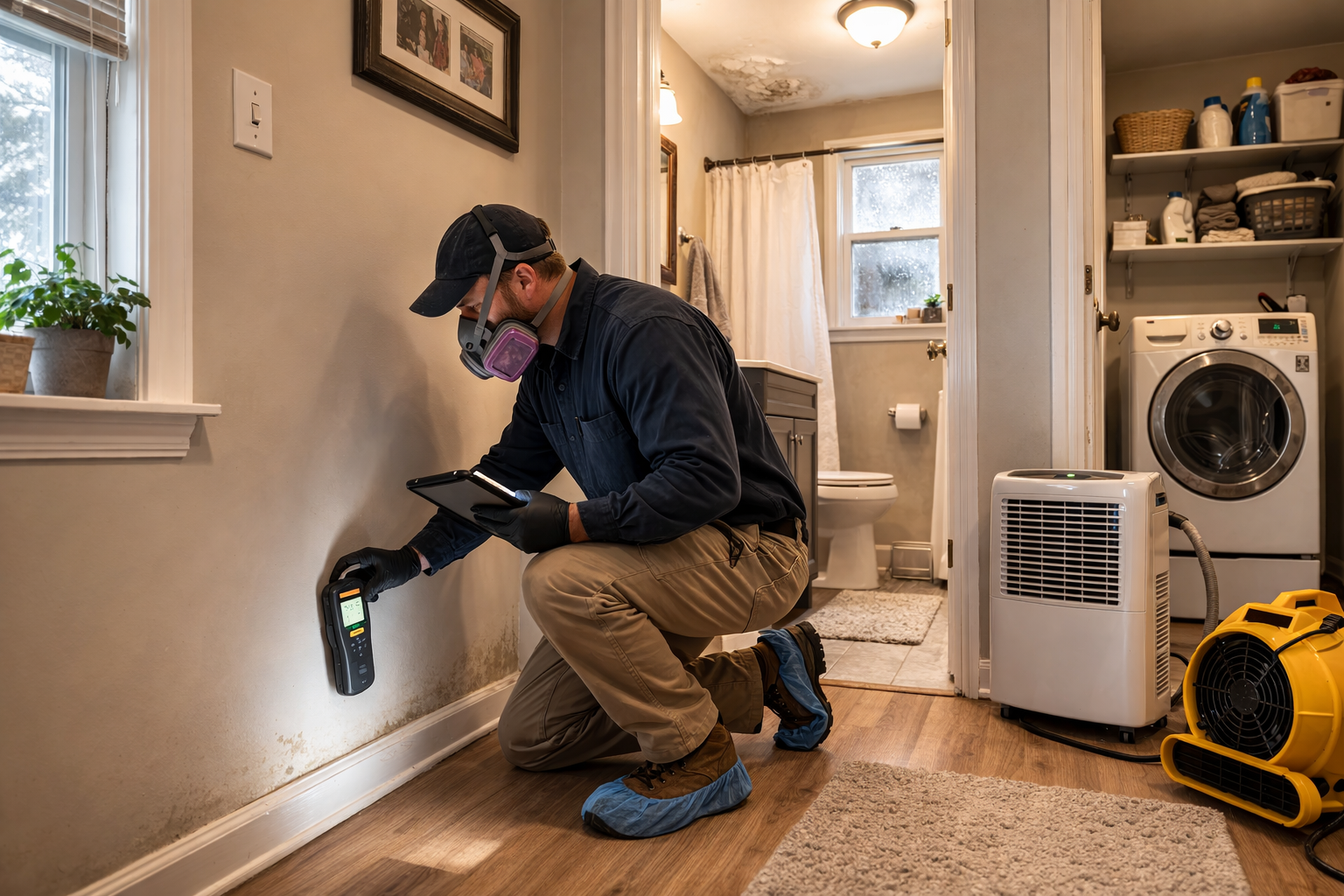
In Michigan, mold problems are rarely random. They usually follow moisture. That moisture can come from basement seepage during spring rains, a sump pump failure, a roof leak after a storm, or a slow plumbing leak that quietly feeds hidden growth for weeks.
The tricky part is that mold does not always show up as obvious black patches on a wall. In many homes and commercial buildings, the first clues are subtle. A persistent odor. A damp feeling in one area. A tenant complaint that keeps coming back. By the time mold becomes visible, the underlying moisture issue has often been present long enough to create a larger remediation job.
Health concerns matter too. The Centers for Disease Control and Prevention notes that mold exposure can cause symptoms like a stuffy nose, sore throat, coughing or wheezing, burning eyes, or skin rash, and can worsen asthma for sensitive individuals. (CDC: https://www.cdc.gov/mold-health/about/index.html)
Below are five practical, field-based signs that mold may be growing in your home or building, and what to do next.
Why Early Detection Matters
Mold spores are common in indoor air. They become a problem when moisture allows them to settle and grow on materials like drywall, wood, insulation, carpet, and dust. Once growth starts, it can spread and impact indoor air quality, especially in enclosed areas like basements, crawlspaces, mechanical rooms, and behind finished walls.
Moisture control is the foundation. The EPA recommends keeping indoor relative humidity below 60 percent, ideally between 30 and 50 percent, to discourage mold growth. (EPA Mold Course: https://www.epa.gov/mold/mold-course-chapter-2)
From a property standpoint, early detection can:
Reduce the scope and cost of mold remediation
Prevent repeated tenant complaints and lost rent
Protect building materials from long-term damage
Lower the risk of ongoing indoor air quality hazards
Sign 1: A Persistent Musty Odor That Does Not Go Away
A basement smell is one of the most common early signs of mold, especially in Michigan homes with older foundations or humid basements. If you walk into a room and consistently notice an earthy, musty odor, pay attention. Odor often shows up before visible growth because mold can be hidden behind drywall, under flooring, inside ceiling cavities, or in insulation.
Common odor hotspots:
Basements and crawlspaces
Laundry rooms and utility areas
Bathrooms with weak ventilation
Around HVAC returns or supply vents
Under sinks or behind toilets
If you have a mold smell in house areas that improves when you open windows but comes right back, that is often a clue that the moisture source is still active.
What to do:
Check humidity levels with an inexpensive hygrometer
Look for plumbing leaks under sinks and behind appliances
Inspect around foundation walls and sump crock areas
Consider a professional mold inspection if odor persists despite drying efforts
For property managers, recurring odor complaints in the same unit can be a sign of hidden moisture behind finishes or under flooring, and may warrant environmental testing for property managers.
Sign 2: Visible Staining, Spotting, or Discoloration on Building Materials
Visible mold is not always black. It can appear green, gray, brown, or even white and powdery depending on the surface and conditions. It may look like spotting on drywall, fuzzy growth on wood, or discoloration around vents and windows.
Places to check first:
Drywall near baseboards, especially on exterior walls
Behind furniture placed against cold walls
Ceiling corners and around roof penetrations
Window sills and frames
Under kitchen and bathroom sinks
Basement framing and rim joists
Also watch for water staining. Water stains are not proof of mold, but they indicate a moisture history, and moisture history is what drives mold growth.
If you see staining after a storm, plumbing leak, or basement water event, consider the risk of mold after flooding, especially if drying was delayed.
Helpful rule of thumb:
If staining has expanded over time, or returns after cleaning, it deserves a closer look.
Sign 3: Condensation, High Humidity, or Surfaces That Never Feel Fully Dry
In Michigan, seasonal humidity swings and cold surfaces can cause persistent condensation, especially in basements, older windows, and poorly ventilated bathrooms. Condensation is not just annoying. It is moisture. If it is chronic, it can support mold growth even without a major leak.
Common condensation patterns:
Beads of water on windows in winter
Damp basement walls in spring
Sweating ductwork or pipes in summer
Bathroom ceilings that stay damp long after showers
Condensation on cold water lines or toilet tanks
The EPA recommends keeping indoor humidity below 60 percent to discourage mold growth. (EPA Mold Course: https://www.epa.gov/mold/mold-course-chapter-2)
What this often means in practice:
Basements may need dehumidification from late spring through early fall
Bathrooms need working exhaust fans that vent outdoors
HVAC systems should be evaluated if humidity stays high indoors
Crawlspaces may need vapor barriers and ventilation upgrades
For commercial properties, humidity control is also a building performance issue. Dampness in hallways, storage areas, or mechanical rooms can contribute to mold in commercial buildings and occupant complaints.
Sign 4: Warping, Bubbling Paint, Soft Drywall, or Deteriorating Materials
Mold often follows building deterioration, but the deterioration usually starts with moisture. If paint is bubbling, drywall feels soft, baseboards are swelling, or floors are warping, you may be looking at a hidden water problem that can also support mold growth.
Common building-material warning signs:
Bubbling or peeling paint on drywall
Baseboards pulling away from the wall
Soft spots in drywall near bathrooms or kitchens
Warped laminate or buckled hardwood
Carpet edges that feel damp or smell musty
Persistent dampness in a finished basement
This is especially important for basement mold after water damage. Even a small water event can leave moisture trapped behind finished walls or under flooring.
For property managers and landlords, these conditions can turn into repeat issues if only cosmetic repairs are done. Mold remediation for landlords often starts with fixing the moisture pathway, not just replacing drywall.
A key point from the National Academies is that damp indoor environments are associated with respiratory symptoms and asthma problems in susceptible individuals. (National Academies via NCBI: https://www.ncbi.nlm.nih.gov/books/NBK215643/)
Sign 5: Occupants Experiencing Ongoing Respiratory or Irritation Symptoms Indoors
Health symptoms are not a diagnosis, but patterns matter. If multiple people feel worse in a specific building or room, or symptoms improve when away from the property, it can be a red flag for indoor air quality hazards.
The CDC lists possible mold-related symptoms including:
Stuffy nose
Sore throat
Coughing or wheezing
Burning eyes
Skin rash
Worsening asthma symptoms for sensitive individuals
(CDC: https://www.cdc.gov/mold-health/about/index.html)
In workplaces and commercial settings, NIOSH notes evidence linking damp indoor spaces with asthma symptoms and even new-onset asthma in some cases. (NIOSH: https://www.cdc.gov/niosh/mold/health-problems/index.html)
This is why mold issues in commercial buildings matter beyond aesthetics. Offices, retail spaces, and multi-family buildings can have shared air pathways that spread odors and spores, especially when HVAC systems run continuously.
If you are hearing occupant complaints like:
I keep getting headaches in that area
My allergies flare up when I’m in the unit
It smells musty every morning
That is often a good reason to schedule a mold inspection and evaluate moisture sources.
What to Do If You Notice One or More of These Signs
A good response is simple and methodical. You do not need to panic, but you do need to act.
Start with moisture control
Identify and repair plumbing leaks, roof issues, or foundation seepage
Dry damp areas quickly and completely
Use dehumidifiers in basements and other damp zones
Verify that bathroom fans and dryer vents exhaust outdoors
Maintain indoor humidity control, especially in summer
Know when to get professional help
Consider professional mold inspection and mold remediation when:
Odors persist even after drying
Mold appears repeatedly in the same area
You suspect hidden growth behind walls or under flooring
The affected area is larger than a small, isolated spot
Occupants report recurring symptoms linked to the building
If you are searching for mold removal, focus on providers who use proper containment and HEPA filtration. A professional mold remediation process should include moisture mapping, source correction, containment where needed, and verification that materials are dry and clean.
A Michigan-Specific Note About Older Buildings: Asbestos and Lead
In older Michigan homes and buildings, mold work can overlap with other hazards, especially during demolition or repairs.
If your building was constructed before 1980, disturbing materials during repairs can raise questions about asbestos in homes. If you are opening walls, removing old flooring, or disturbing insulation, asbestos inspection or asbestos testing may be appropriate before renovation work proceeds. The EPA provides guidance on asbestos concerns during renovation and demolition. (EPA Asbestos: https://www.epa.gov/asbestos)
Similarly, if moisture causes paint to deteriorate in older properties, peeling lead paint danger becomes a concern, especially in rentals. Lead paint removal and lead paint abatement must follow strict safety requirements.
This is where comprehensive environmental remediation services can be valuable, particularly for investors and property managers balancing multiple risks and compliance responsibilities.
Protecting Your Property and the People Inside It
Mold problems are not always dramatic at first, but they rarely improve on their own. The earlier you identify the signs, the more options you have to solve the problem at a manageable scope.
Quick recap of the five signs:
Persistent musty odor
Visible staining or discoloration
High humidity or recurring condensation
Warping, bubbling paint, and material deterioration
Occupant symptoms that correlate with the building
If one or more of these are showing up, the right next step is usually a moisture evaluation and, when appropriate, a professional mold inspection.
Contact BDS Environmental
If you suspect mold may be growing in your home, rental property, or commercial building, it is worth getting a clear, professional assessment. BDS Environmental supports homeowners, contractors, property managers, and investors throughout Michigan with mold inspection, mold remediation, and related environmental services.
If you are noticing a mold smell in your house, dealing with basement mold after water damage, managing mold in commercial buildings, or want clarity on the best next steps, contact BDS Environmental. A timely evaluation can protect indoor air quality, reduce long-term damage, and help you move forward with confidence.
