Environmental Hazards in Commercial Buildings: What Property Owners Should Watch For
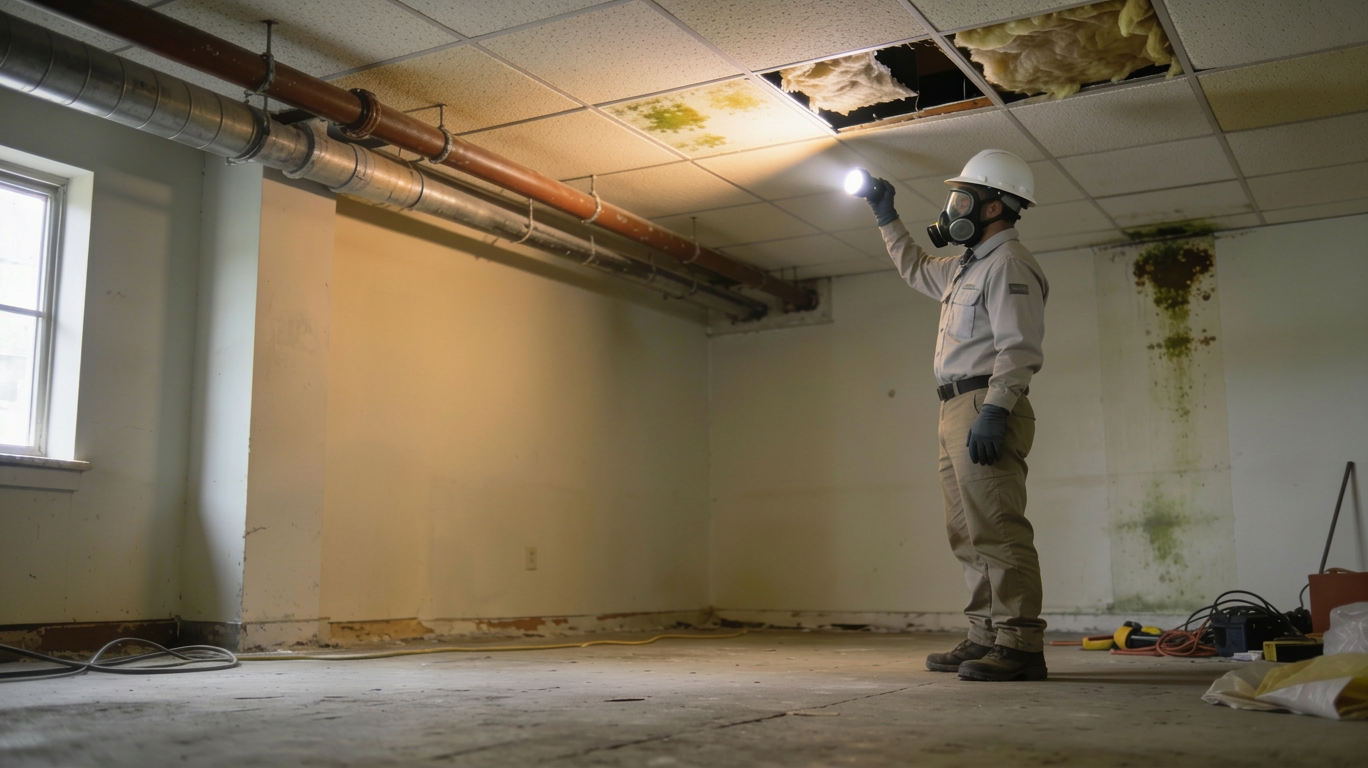
Commercial buildings in Michigan work hard. Office towers, medical facilities, warehouses, schools, and retail centers cycle through tenants, build‑outs, maintenance projects, roof leaks, mechanical upgrades, and occasional emergencies. From the outside, a property may look stable and well maintained. Inside the walls and above the ceiling tiles, however, older materials and long-term building use can leave behind environmental hazards that are easy to miss until they turn into complaints, violations, or unexpected costs.
For owners, property managers, and investors across Metro Detroit, Warren, and other Michigan markets, these hazards fall into a few familiar categories: asbestos in older fireproofing and mechanical systems, mold and moisture problems in roofs and basements, lead-based paint in mixed‑use or legacy spaces, and broader indoor air quality hazards tied to ventilation and building operations. Each one can affect occupant health, regulatory exposure, and asset performance if it is not identified and handled correctly before renovation or major maintenance work begins.
From the field, we see the same patterns repeat. A tenant build‑out uncovers asbestos in a ceiling plenum, a slow roof leak leads to mold in commercial buildings and persistent odor complaints, or a long‑planned rehab in a mixed‑use property runs into lead paint issues around stairwells and windows. None of these are new problems, but they become expensive when they are discovered late. This guide focuses on the core environmental hazards commercial property owners in Michigan should watch for, how they typically show up in real buildings, and practical steps to manage them as part of everyday capital and maintenance planning.
Environmental hazards in commercial buildings are more common than many owners realize, especially in older Michigan properties and heavily used facilities.
Why Environmental Hazards Matter in Commercial Buildings
From an owner’s perspective, a commercial building is an investment, an income stream, and a workplace all at once. When environmental hazards are overlooked, they do not just create indoor air quality hazards. They can trigger health complaints, regulatory issues, unplanned capital expenses, and, in some cases, business interruptions.
In Michigan, many office buildings, retail centers, industrial facilities, and schools were built or renovated during decades when asbestos, lead-based paint, and certain older building systems were standard. Moisture issues in flat roofs and below-grade spaces are also common, which means mold in commercial buildings is a recurring issue, not a rare one. NIOSH has repeatedly warned that occupants of damp office buildings, schools, and other nonindustrial buildings may develop respiratory symptoms and disease if problems are not corrected. https://www.cdc.gov/niosh/docs/2013-102/pdfs/2013-102.pdf
Asbestos in Commercial Buildings
Where Asbestos Shows Up
Asbestos was widely used for fireproofing, insulation, acoustic control, and durability in commercial construction. In older Michigan facilities, asbestos-containing materials may include:
Spray-applied fireproofing on structural steel
Pipe and boiler insulation in mechanical rooms and tunnels
Vinyl floor tile and mastic (especially 9×9 and some 12×12 tiles)
Ceiling tiles and some ceiling textures
Cement board, siding, and roofing products
EPA’s asbestos regulations are designed to minimize the release of asbestos fibers during renovation and demolition activities because airborne fibers can be inhaled and lodge in the lungs. https://www.epa.gov/asbestos/overview-asbestos-national-emission-standards-hazardous-air-pollutants-neshap
Health and Regulatory Concerns
Asbestos health risks include lung cancer, mesothelioma, and asbestosis, often with a long latency period between exposure and disease. NIOSH has concluded there is no known safe level of asbestos exposure and recommends reducing exposures to the lowest feasible levels. https://www.cdc.gov/niosh/docs/2011-159/default.html
For commercial property owners, the key issues are:
Asbestos demolition requirements under EPA’s Asbestos NESHAP for “facilities” such as office buildings, industrial buildings, and schools
OSHA requirements to protect workers who may disturb asbestos-containing materials during maintenance, renovation, or demolition
The need for asbestos inspection and asbestos testing before major projects, and often before routine work that impacts suspect systems
EPA emphasizes that building owners should identify asbestos-containing materials and may need to notify occupants if asbestos is present in the building. https://www.epa.gov/asbestos/occupant-notification-buildings-containing-asbestos
In Michigan, EGLE enforces asbestos demolition and renovation requirements and operates an online notification system for regulated projects, reflecting how closely this area is monitored. https://www.michigan.gov/egle/newsroom/mi-environment/2025/04/02/online-asbestos-notification-system
Mold and Moisture Problems in Commercial Properties
Why Dampness Is a Big Red Flag
Mold problems in commercial buildings almost always follow moisture. Common sources include:
Roof leaks on flat or low-slope roofs
Condensation around mechanical systems and ductwork
Plumbing leaks in restrooms, break rooms, and risers
Poor drainage around foundations and below-grade walls
NIOSH and the World Health Organization have both concluded that occupants of damp buildings are at increased risk of respiratory symptoms, infections, and asthma exacerbation. In one analysis using the NIOSH Dampness and Mold Assessment Tool, increasing dampness scores were significantly associated with building-related respiratory symptoms in occupants. https://pmc.ncbi.nlm.nih.gov/articles/PMC10190119/
How Mold Affects Tenants and Operations
Mold growth and moisture damage can:
Generate musty odors and visible staining that concern tenants
Lead to complaints of cough, wheeze, throat irritation, or headaches that improve away from the building
Degrade building materials and finishes, increasing long-term repair costs
Contribute to indoor air quality hazards that may affect leasing, retention, and reputation
CDC and OSHA both advise that the primary response to mold is to correct the underlying moisture problems and clean or remove affected materials safely, rather than relying on air testing alone. https://www.osha.gov/publications/shib101003
For owners and property managers, a mold remediation process in a commercial setting typically includes moisture investigation, targeted mold inspection, containment, removal or cleaning of affected materials, and verification that building conditions are dry and stable.
Lead-Based Paint in Commercial and Mixed-Use Buildings
Where Lead Can Be an Issue
Lead paint is not limited to houses. In older commercial buildings and mixed-use properties, it may be present on:
Exterior trim, windows, and doors
Interior stair rails, balusters, and trim in shared corridors
Older storefronts and entryways in pre‑1978 buildings
Unit interiors in upper floors used as apartments
OSHA and EPA both maintain standards for protecting workers and occupants from lead exposure during renovation and abatement. EPA’s Renovation, Repair and Painting (RRP) rule applies to child-occupied facilities and pre‑1978 residential units, including many mixed-use properties with apartments above commercial space. https://www.epa.gov/lead/lead-renovation-repair-and-painting-program
Why Owners Should Care
Lead paint hazards in commercial or mixed-use properties create risk when paint deteriorates or is disturbed during maintenance and rehab work. For child-occupied areas (such as daycare spaces, clinics, or apartments where young children live), lead paint exposure symptoms are a serious concern: the CDC notes that even low levels of lead in children can cause learning, behavior, and growth problems. https://www.cdc.gov/lead-prevention/communication-resources/know-the-facts.html
For Michigan owners, integrating lead paint considerations into environmental compliance property owners already manage for asbestos and mold is a practical way to avoid surprises mid-project.
Indoor Air Quality Hazards Beyond Asbestos, Mold, and Lead
Commercial buildings can experience a range of indoor air quality concerns in addition to the “big three” of asbestos, mold, and lead.
The University of Michigan’s Environment, Health & Safety program lists common indoor air quality issues in workplaces as:
Elevated levels of carbon monoxide (CO)
Volatile organic compounds (VOCs) from materials, products, or processes
Airborne non-viable mold spores
Airborne particulates and dust
More: https://ehs.umich.edu/living-safely/building-environment-issues/indoor-air-quality/
In practice, IAQ complaints from commercial occupants often involve:
Odors during or after construction or renovation work
Stale or stuffy air linked to ventilation problems
Dust from nearby projects entering occupied areas
Temperature and humidity control issues that also drive mold and comfort problems
Commercial owners and managers should have a clear path for responding to IAQ complaints, including:
Logging and triaging occupant reports
Inspecting for obvious moisture, dust, or ventilation issues
Engaging environmental services Michigan providers when conditions are complex or persistent
Overlapping Hazards and Renovation Risk
One of the biggest risk points for commercial buildings is renovation, whether it is a tenant build-out, capital improvement, or demolition of older space.
Renovation can expose or overlap:
Asbestos in older fireproofing, insulation, flooring, and ceilings
Mold hidden behind finishes or around long-term leaks
Lead paint on trim, windows, and older interior or exterior surfaces
General indoor air quality hazards from dust, VOCs, and particulates
EPA and NIOSH both highlight that workers can be exposed to asbestos fibers and other hazards during construction, renovation, and demolition activities if proper controls are not used. https://www.epa.gov/asbestos/protecting-workers-asbestos
For owners and asset managers, that means:
Asbestos inspection and asbestos testing should be part of pre-renovation planning in older buildings
Mold and moisture conditions should be identified and corrected before build-out work proceeds
Lead-safe work practices and, where applicable, RRP or abatement requirements should be considered for painted surfaces in child-occupied or residential portions of a property
Coordinating these pieces is often best handled under a single environmental remediation services umbrella so you are not addressing one hazard while inadvertently creating another.
Practical Steps for Michigan Property Owners and Managers
Build an Environmental Baseline
For older or heavily used commercial buildings, it is wise to create a baseline understanding of major environmental hazards, especially before significant capital planning.
That can include:
Reviewing construction age and renovation history
Completing asbestos inspection in key areas, especially where future work is likely
Evaluating moisture and dampness conditions using tools such as moisture mapping or a dampness and mold assessment approach
Identifying lead-related concerns in mixed-use or child-occupied spaces
Integrate Hazards into Capital and Maintenance Planning
Once you know what you are dealing with, environmental compliance becomes part of normal planning instead of an emergency response.
Examples:
Scheduling asbestos abatement ahead of major mechanical replacements or demo work
Addressing chronic roof or plumbing leaks and mold-prone areas before they cause widespread damage
Budgeting for lead paint removal or component replacement in units where children live or where future use may involve child-occupied facilities
Use Specialists When Needed
Environmental testing for property managers and owners is most valuable when:
You have recurring indoor air quality complaints
You are planning major renovation in an older building
You must document conditions for lenders, insurers, or corporate governance
You oversee portfolios with many older assets and need a consistent approach
Working with experienced environmental services Michigan providers helps ensure that asbestos removal, mold remediation, and lead paint abatement are handled in a way that protects occupants, workers, and the long-term performance of the building.
Protecting Your Commercial Investment and the People Inside
Environmental hazards in commercial buildings are manageable when they are recognized early and handled systematically. Asbestos, mold, lead, and broader indoor air quality issues all sit at the intersection of health, compliance, and asset management. For Michigan owners and managers, the question is not whether those risks exist somewhere in the portfolio, but how you will identify and control them before they become costly problems.
If you own or manage a commercial building and are concerned about asbestos, mold, lead, or other environmental hazards—or you are planning renovation work in an older facility—professional evaluation is a smart first step. BDS Environmental helps Michigan property owners, managers, contractors, and investors assess environmental risks, plan safe renovation and maintenance, and coordinate hazardous material removal and remediation when needed. If you suspect an environmental issue in your building or want a clearer picture before your next project, contact BDS Environmental to discuss next steps and protect both your occupants and your investment.