Why Lead Paint Is Still a Problem in Homes Built Before 1978
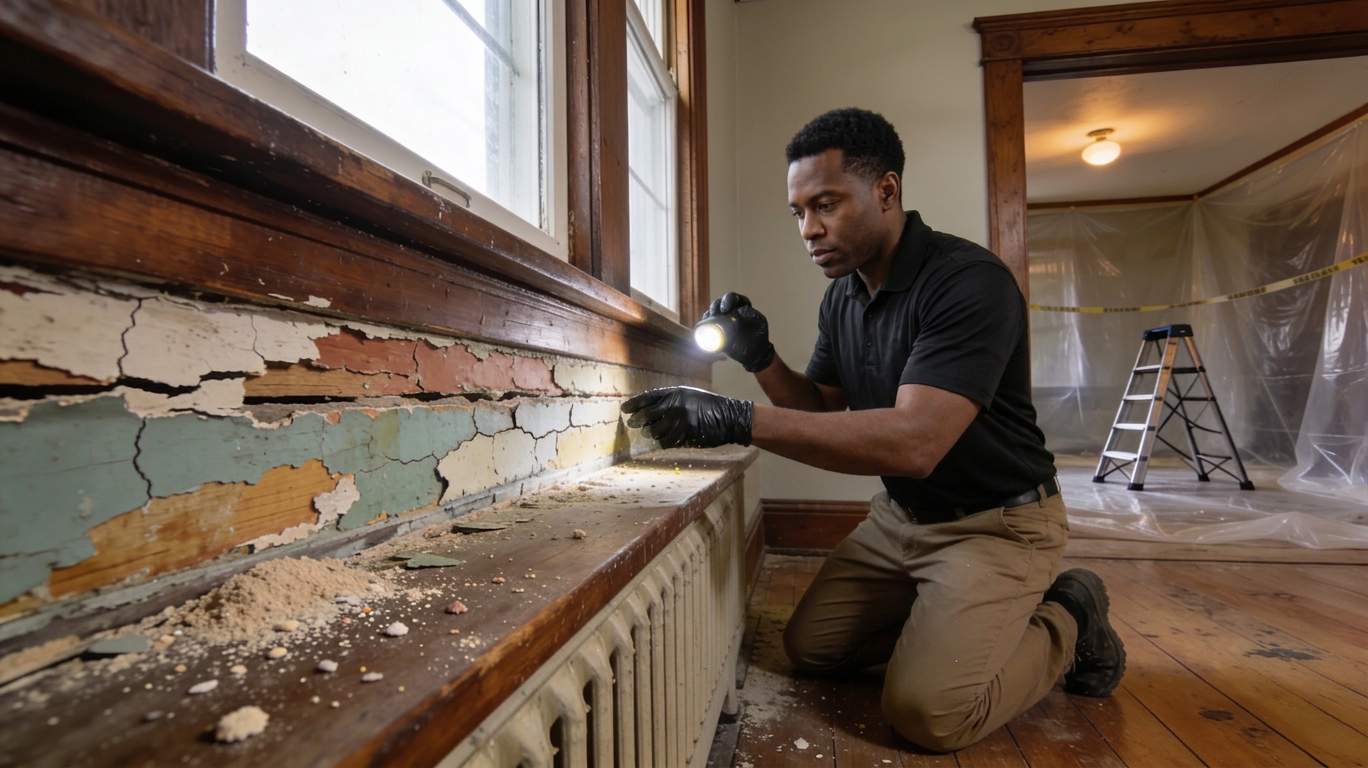
Lead paint remains one of the most widespread and underestimated environmental hazards in Michigan's housing stock. Decades after residential use of lead-based paint was phased out, millions of older homes across the country still contain it on their walls, trim, windows, doors, and exterior surfaces—often in multiple layers applied over the original coat. The problem is not the paint sitting quietly beneath other layers in good condition. The problem is what happens when that paint begins to deteriorate, when friction surfaces grind it into fine dust, or when renovation work disturbs it without the right precautions in place. At that point, lead that has been locked behind wallpaper or a coat of latex paint can become a serious health hazard for anyone living or working in the building.
For homeowners, landlords, property managers, and investors in Metro Detroit, Warren, and other Michigan communities, this is not a distant or theoretical risk. Michigan's older housing stock is dense with properties where lead-based paint is present and where the conditions that make it dangerous—deteriorating surfaces, high-friction windows and doors, aging exterior paint, and ongoing renovation activity—exist side by side with families and occupants who may have no awareness of the hazard. Understanding why lead paint continues to be a problem in older homes, where it tends to create active hazards, and what lead paint removal and abatement actually involve is foundational knowledge for anyone responsible for an older Michigan property.
Why Lead Paint Remains Dangerous in Older Homes
The Paint Does Not Go Away on Its Own
One of the most important things to understand about lead-based paint in older homes is that it does not degrade into a safe form over time. Lead is a metal. The paint film may crack, chalk, chip, and peel as it ages, but the lead in those paint fragments and in the fine dust produced by deterioration remains toxic in whatever form it takes. HUD estimates that tens of millions of housing units in the United States still contain lead-based paint, and that a significant portion of those have lead-based paint in poor condition that presents an active hazard.
https://www.hud.gov/program_offices/healthy_homes/healthyhomes/lead
In Michigan's older housing markets—where much of the urban and suburban housing stock was built under construction standards that permitted or encouraged lead-based paint—this means the hazard is broadly distributed across the region. A property that has been owned by several families, painted multiple times, and never had a professional lead inspection may have lead-based paint in locations that are not obvious during a standard walkthrough.
Friction and Impact Surfaces Are the Highest Risk
Not all lead-based paint in a home presents equal risk. The highest hazard comes from friction and impact surfaces, where the repeated mechanical action of normal use grinds painted surfaces against each other and generates fine lead dust. The most common high-risk locations include:
Window channels and sills, where opening and closing the window creates continuous friction on lead-painted surfaces
Door frames and thresholds, where doors contact painted jambs repeatedly throughout the day
Stair treads, handrails, and balusters
Floors and floor trim in high-traffic areas
This lead dust settles on horizontal surfaces throughout the home, including floors where young children play and hand-to-mouth contact creates a primary exposure pathway. EPA explains that lead-contaminated dust is the most common route of lead exposure for children in older homes, and that it can be present even when no visible paint deterioration exists.
https://www.epa.gov/lead/learn-about-lead
Peeling Paint and Deteriorating Surfaces
Peeling lead paint danger escalates significantly when paint condition deteriorates beyond normal surface wear. Peeling, flaking, or chalking lead-based paint creates paint chips and fine particles that can be ingested by young children, inhaled by occupants, or tracked through the home on footwear. Deterioration is accelerated by:
Moisture intrusion from leaks, condensation, or water damage
Age-related loss of adhesion in original paint films
Incompatible layers of newer paint over older lead-based paint that fail at different rates
Impact damage or physical disturbance from maintenance activities
When exterior lead-based paint deteriorates, it can contaminate soil around the building's perimeter—another significant exposure pathway for children who play in yard areas around older homes.
Lead Paint Exposure Symptoms and Health Risks
Children Are Most Vulnerable
CDC is unambiguous that there is no known safe level of lead in a child's blood, and that even low levels of exposure can permanently affect cognitive development, behavior, and learning. Lead exposure symptoms in children include:
https://www.cdc.gov/lead-prevention/prevention/index.html
Developmental delays and learning difficulties
Reduced IQ and shortened attention span
Hearing problems
Behavioral issues including hyperactivity and aggression
In severe cases, seizures, coma, and death
Because children absorb lead more readily than adults and because their developing nervous systems are more susceptible to its effects, the consequences of ongoing low-level exposure can be lasting and irreversible. CDC emphasizes that primary prevention—removing or controlling lead hazards before exposure occurs—is far more effective than testing children after exposure has already happened.
Adults Face Real Risks Too
Lead exposure is not only a concern for children. Adults with ongoing lead exposure from renovation work, occupational activity, or deteriorating paint conditions in their homes can experience:
Elevated blood pressure and increased cardiovascular risk
Kidney damage
Reproductive effects
Neurological symptoms including memory problems and mood changes
For contractors performing renovation work in older homes without lead-safe work practices, occupational lead exposure is a genuine risk. OSHA's lead standard for construction sets permissible exposure limits and requires protective measures for workers who may disturb lead-based paint during renovation.
When Lead Paint Becomes a Compliance Obligation
Federal Disclosure and Renovation Rules
Federal rules administered by EPA require sellers and landlords of housing where lead-based paint may be present to disclose known lead-based paint and lead hazards to buyers and renters, provide an EPA-approved pamphlet on lead hazards, and include specific language in sales contracts and leases. These requirements apply based on the known or suspected presence of lead-based paint, not on whether any particular action has occurred.
EPA's Renovation, Repair and Painting (RRP) Rule requires contractors who perform renovation, repair, or painting work in homes where lead-based paint may be present to be certified and to follow lead-safe work practices that control dust generation and contain contamination during the project.
https://www.epa.gov/lead/renovation-repair-and-painting-program
The RRP Rule applies to routine renovation work—replacing windows, remodeling kitchens and bathrooms, refinishing floors, and making repairs—whenever lead-based paint may be disturbed. For Michigan homeowners, landlords, and contractors, understanding this rule is essential to staying on the right side of federal environmental compliance obligations.
Lead Paint Laws Michigan Enforces for Rental Properties
Michigan takes lead paint compliance seriously at the state level as well. Michigan's Public Health Code creates significant legal exposure for landlords who rent units to families with minor children when they know the unit contains a lead hazard and fail to correct it. Documented legal guidance from Michigan practitioners notes that penalties can include criminal liability, fines, and in some cases jail time for landlords who are aware of lead conditions and fail to act.
https://michiganleadpaintinspectors.com/current-laws-hold-landlords-responsible-lead-hazards-properties
Cities like Detroit and other Michigan municipalities with concentrated older housing stock have additional lead safety requirements tied to rental certificates and rental licensing, requiring landlords to demonstrate that lead hazards have been identified and addressed before units can be legally rented to families with children. For property managers and investors building rental portfolios in Michigan markets, lead paint laws Michigan enforces are not a background consideration—they are a frontline compliance obligation that affects your ability to legally operate your properties.
Environmental Testing for Property Managers
The first step for any Michigan property manager or investor working with older housing is to establish what lead conditions actually exist in the buildings they are responsible for. A lead inspection or lead risk assessment performed by a certified inspector provides:
A surface-by-surface map of where lead-based paint is present in the building
Dust wipe sampling results showing whether lead dust hazards exist in living areas, on window sills, and on floors
Specific findings about paint condition and which surfaces present the highest risk
Recommendations for controlling or eliminating identified hazards through interim controls or lead paint abatement
Without this documentation, property managers are making compliance decisions without the information they need and are unable to demonstrate they have responded appropriately to known conditions.
https://www.epa.gov/lead/lead-abatement-inspection-and-risk-assessment
What Lead Paint Removal and Abatement Actually Involve
The Difference Between Interim Controls and Full Abatement
There are two primary strategies for managing lead paint hazards in older homes. Interim controls are temporary measures that reduce exposure without permanently eliminating the lead-based paint. They include:
Specialized painting of intact lead-painted surfaces to prevent deterioration and dust
Repair of friction and impact surfaces to reduce dust generation
Cleaning protocols designed to remove lead dust from floors, window sills, and other surfaces on an ongoing basis
Full lead paint abatement—the lead paint removal process that permanently eliminates hazards—involves physically removing lead-based paint by stripping, scraping, or chemical methods; replacing contaminated components like windows and doors; or enclosing lead-painted surfaces with rigid, durable materials. EPA defines abatement as any measure designed to permanently eliminate lead-based paint hazards, and abatement projects require certified abatement firms, specific work practices, clearance testing, and documentation.
Lead-Safe Work Practices During Renovation
For renovation projects in older Michigan homes, even work that is not formal abatement must use lead-safe practices when lead-based paint may be present. The lead paint removal process during renovation involves:
Containing the work area to prevent dust from spreading to other parts of the home
Using plastic sheeting on floors and furniture in the work zone
Wet methods to suppress dust during cutting, sanding, or demolition
HEPA vacuuming of surfaces after work is complete
Cleaning verification before reopening the area to occupants
Clearance testing after renovation in lead-painted homes confirms that dust lead levels on floors, window sills, and window troughs meet regulatory standards before occupants return.
https://www.epa.gov/lead/renovation-repair-and-painting-program
Lead Paint and Other Overlapping Hazards in Older Homes
In many older Michigan properties, lead-based paint is one piece of a broader environmental picture. Properties with lead paint frequently also contain:
Asbestos-containing materials in flooring, ceiling tiles, joint compound, insulation, and other building components. Best practice is to assume suspect materials may contain asbestos regardless of construction date, because some imported drywall, flooring, and ceiling products from countries without stringent asbestos regulations can still contain asbestos today. Regardless of when your property was built, treat suspect materials as potentially asbestos-containing until asbestos inspection and asbestos testing prove otherwise.
Mold conditions where water damage has accelerated paint deterioration or where water intrusion behind lead-painted walls has created simultaneous lead and mold hazards. Mold remediation that involves cutting into lead-painted surfaces must also incorporate lead-safe work practices.
Coordinating environmental remediation services that address lead paint removal, asbestos abatement, and mold remediation together—rather than in separate phases—is the most efficient and safest approach for larger or more complex renovation projects in older Michigan housing.
Protecting Your Property and the People in It
Lead paint in older homes is not a problem that resolves itself with time, fresh paint, or routine maintenance. It requires knowing what you have, understanding where active hazards exist, and taking documented action to control or eliminate those hazards through professional lead paint abatement or appropriately designed interim controls. For Michigan landlords, property managers, and investors, that is also a legal obligation that carries real consequences when it is not met.
If you own or manage older Michigan properties and want to understand your lead paint conditions, your compliance obligations, or what a professional evaluation would involve, BDS Environmental can help. The team works with homeowners, landlords, property managers, contractors, and investors throughout Michigan to conduct lead inspections and risk assessments, explain lead paint laws Michigan enforces, and develop practical lead paint abatement strategies that protect occupants and support long-term compliance. If you suspect lead paint may be a concern in your property, contact BDS Environmental to discuss your situation and find out what the right next steps are.