What Property Managers Should Know About Hazardous Material Removal
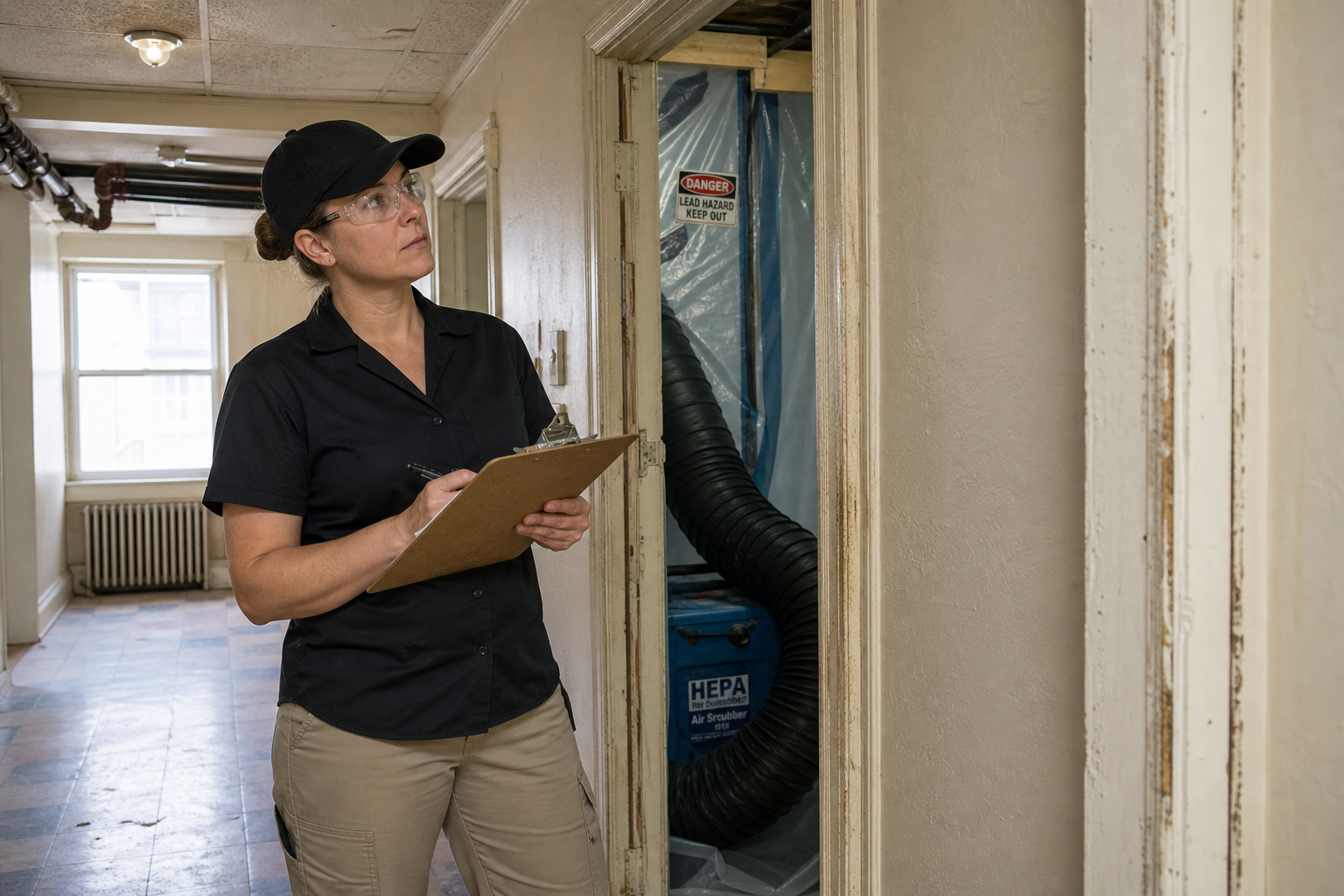
Property managers occupy a unique position when it comes to hazardous materials in buildings. Unlike a homeowner who is primarily responsible for their own family, or an investor who can delegate daily operations, property managers are the people directly responsible for the condition of buildings where other people live and work. That means when asbestos-containing materials are disturbed during a maintenance call, when mold develops behind a wall after a plumbing leak, or when lead-based paint begins to peel in a unit occupied by a family with young children, the property manager is typically the first person who needs to recognize the situation, respond appropriately, and coordinate a professional solution. That is a significant responsibility—and one that carries real legal and financial consequences when it is not handled correctly.
For property managers working across Metro Detroit, Warren, and other Michigan communities, hazardous material removal is not an occasional edge case. Michigan's older housing and commercial building stock means that asbestos, lead paint, and mold conditions are present in a meaningful percentage of the properties that get leased, renovated, and maintained every day. The property managers who handle these situations well are the ones who understand what they are dealing with before a situation escalates—who know when to call for environmental testing, when to remove occupants from an area, and when a general contractor is not the right person for the job. This blog walks through the fundamentals every Michigan property manager should have in their working knowledge.
Understanding the Three Core Hazardous Materials
Asbestos in Buildings
Asbestos-containing materials were used extensively in commercial and residential construction across many decades, and they remain present in a large share of Michigan's older building stock. Common locations in properties managed by Michigan property managers include ceiling tiles and acoustic textures, vinyl and asphalt flooring and the mastics used to bond them, pipe and boiler insulation, drywall joint compound, and some roofing materials.
Critically, best practice is to assume suspect building materials may contain asbestos regardless of when a property was built. Because some imported or foreign-manufactured building products—including drywall, joint compound, flooring, and ceiling tiles from countries without stringent asbestos regulations—can still contain asbestos today, construction date alone is not a reliable way to rule it out. Regardless of the year your property was built, the safest approach is to treat suspect materials as potentially asbestos-containing until asbestos inspection and asbestos testing prove otherwise.
EPA notes that asbestos fibers released when these materials are disturbed can become permanently lodged in lung tissue and are associated with mesothelioma, lung cancer, and asbestosis—diseases that may not appear for decades after exposure. https://www.epa.gov/asbestos/learn-about-asbestos
For property managers, the practical implication is clear: before any renovation, maintenance task, or repair that will disturb building materials in properties where asbestos may be present, an asbestos inspection should be completed by a certified inspector. Sending a maintenance technician to cut into a ceiling or pull up old flooring without knowing what is in those materials is a compliance and liability problem waiting to happen.
Lead-Based Paint
Lead-based paint in older homes and buildings is one of the most consistently regulated environmental hazards in residential property management. Federal rules require landlords of housing where lead-based paint may be present to disclose known lead-based paint and lead hazards, provide EPA-approved informational materials to tenants, and include specific language in lease agreements. https://www.epa.gov/lead/lead-abatement-inspection-and-risk-assessment
In Michigan, those obligations go further. Michigan's Public Health Code creates serious legal exposure for landlords who rent to families with minor children when they are aware of lead hazards in the unit and fail to correct them—including potential criminal liability, fines, and penalties. Cities with significant older housing stock, including Detroit, tie rental certificates to lead safety compliance. https://michiganleadpaintinspectors.com/current-laws-hold-landlords-responsible-lead-hazards-properties
CDC is clear that there is no known safe level of lead in a child's blood, and that primary prevention—removing or controlling lead hazards before exposure occurs—is the most effective approach. https://www.cdc.gov/lead-prevention/prevention/index.html
For property managers overseeing portfolios in older Michigan housing stock, peeling lead paint danger in occupied units is not something to address reactively. A professional lead inspection or risk assessment establishes what lead conditions exist, where active hazards are present, and what corrective action is needed—documentation that protects both occupants and the property owner.
Mold in Managed Properties
Mold is arguably the most frequently encountered hazardous condition in day-to-day property management. It develops quickly after moisture events—a plumbing leak, a seeping foundation, a roof failure, or flooding—and can establish colonies within 24 to 48 hours of water contact with organic building materials. NIEHS notes that living or working in damp, moldy environments is consistently associated with respiratory symptoms, asthma, and upper respiratory infections. https://www.niehs.nih.gov/health/topics/agents/mold
Common situations property managers encounter include:
Basement mold after water damage from sump failures, sewer backups, or foundation seepage
Mold after flooding events that were not fully dried and remediated within the critical window
Chronic mold conditions around HVAC systems, flat roof drains, and plumbing chases in commercial buildings
Mold smell in house areas where visible growth cannot be located, suggesting hidden contamination inside walls or under flooring
Mold remediation for landlords and property managers is not a cleaning task that can be delegated to maintenance staff with a bottle of bleach. As discussed in our previous BDS Environmental blog, bleach does not penetrate porous materials where mold roots are embedded, and surface treatment without addressing the moisture source guarantees the problem will return. Professional mold remediation involves containment, material removal, HEPA cleaning, drying verification, and clearance testing.
Legal and Compliance Obligations Property Managers Must Understand
Federal Rules That Apply to Renovation Work
EPA's Renovation, Repair and Painting (RRP) Rule requires contractors performing renovation, repair, or painting work in housing where lead-based paint may be present to be certified and to follow lead-safe work practices throughout the project. This is not limited to major renovations—it applies to window replacements, bathroom remodels, flooring work, and repairs whenever lead-based paint may be disturbed. https://www.epa.gov/lead/renovation-repair-and-painting-program
For property managers, this means that every contractor you hire to work in older Michigan properties needs to be an EPA RRP-certified renovator if lead-based paint may be present, and you need documentation confirming that lead-safe work practices were followed. Hiring an uncertified contractor for that work exposes both the contractor and the property owner to enforcement action.
For renovation or demolition work that will disturb asbestos-containing materials, EPA's NESHAP requirements establish mandatory notification timelines, work practice standards, and disposal requirements that apply to commercial properties and certain residential projects. Pre-renovation asbestos abatement is not optional when regulated quantities of asbestos-containing material will be disturbed. https://www.epa.gov/asbestos/asbestos-national-emission-standards-hazardous-air-pollutants-neshap
Documentation Is Your Best Protection
Property managers who handle hazardous material situations well maintain organized documentation across their portfolios. That means keeping on file:
Current asbestos survey results for properties where asbestos-containing materials may be present
Lead inspection or risk assessment reports and any clearance documentation following abatement
Mold inspection reports, remediation scopes, and post-remediation clearance test results
Contractor certifications and work records for all hazardous material removal projects
Disclosure acknowledgments signed by tenants in properties where lead-based paint conditions have been documented
This documentation demonstrates that you identified conditions, responded professionally, and maintained environmental compliance standards across your portfolio. It matters when tenants raise health concerns, when insurance claims are filed, when properties are sold or refinanced, and when regulatory agencies ask questions.
Building a Proactive Hazardous Material Management Approach
Environmental Testing as a Portfolio Management Tool
Reactive environmental management—waiting until a tenant reports symptoms or a contractor discovers asbestos mid-demolition—is the most expensive and disruptive way to handle hazardous materials. Environmental testing for property managers is more cost-effective when it is treated as a routine part of property operations and transaction due diligence.
A practical framework for Michigan property managers includes:
Ordering a mold inspection or moisture assessment when any property has a history of flooding, chronic basement seepage, or unresolved water damage
Commissioning an asbestos inspection before any renovation or capital project in buildings with original building materials, regardless of construction date
Obtaining a lead risk assessment for older properties that house or will be marketed to families with young children
Maintaining current environmental baseline documentation across the portfolio and updating it after major renovation or water events
This approach allows property managers to budget realistically for hazardous material removal, avoid mid-project discoveries that stop work and inflate costs, and demonstrate ongoing environmental compliance property owners are expected to maintain.
Coordinating Multiple Hazards in the Same Building
In many Michigan properties, especially those with original building materials and a history of deferred maintenance, asbestos, lead paint, and mold do not appear in isolation. A water intrusion that causes mold remediation in a basement may involve removing flooring with asbestos-containing mastics. A window replacement project in an older property may disturb both lead-painted frames and asbestos-containing glazing compounds. Mold remediation that requires opening walls may expose lead-painted substrates.
When multiple hazardous materials overlap in the same work area, coordinating environmental remediation services under a single, integrated scope is significantly more efficient than addressing each hazard in separate mobilizations. It reduces duplication of containment setups, prevents one remediation process from inadvertently disturbing another hazard, and typically results in a faster overall project timeline.
For property managers overseeing renovation or remediation in complex older buildings, working with an environmental services Michigan contractor who can assess and address all three hazards under a coordinated plan is a practical advantage that also reduces administrative burden on the property management side.
How to Respond When a Hazard Is Discovered
Immediate Steps for Property Managers
When a potential hazardous material condition is identified—whether through a maintenance observation, a tenant complaint, or a contractor flag during project work—the response protocol matters as much as the eventual remediation. Immediate steps should include:
Stopping any work that may be disturbing suspect materials until an assessment is completed
Restricting access to the affected area by occupants and unauthorized personnel
Contacting a certified environmental inspector or remediation firm to evaluate conditions before work resumes
Documenting the discovery, the area affected, and the steps taken in response
Allowing work to continue in a potentially contaminated area without assessment is one of the most common ways that manageable environmental conditions become regulatory enforcement situations and tenant health complaints.
Communicating With Building Owners and Tenants
Property managers serve as the link between building owners and the tenants or occupants who may be affected by hazardous material conditions. Clear, factual communication is essential:
Inform building owners of identified conditions promptly, with specific findings and professional recommendations for next steps
Follow all required disclosure obligations when communicating with tenants about known lead-based paint conditions, using EPA-approved materials and language
Avoid minimizing conditions or speculating about health risks to tenants—let the professional assessment documentation speak for itself
Coordinate tenant notification and relocation needs with the remediation scope when occupants need to be temporarily displaced during major hazardous material removal work
Moving Forward with Confidence
Property managers who understand the fundamentals of hazardous material removal are better positioned to protect their tenants, support their building owners, and manage their portfolios without the unplanned disruptions and costs that come from discovering environmental problems at the wrong moment. Asbestos inspection before renovation, lead paint compliance in older Michigan housing, and professional mold remediation after water events are not extraordinary measures—they are the baseline standard for responsible property management in Michigan's building market.
If you manage Michigan properties and have questions about asbestos conditions, lead paint compliance, mold remediation, or how to structure an environmental assessment across your portfolio, BDS Environmental can help. The team works directly with property managers, landlords, building owners, and investors to evaluate environmental conditions, coordinate professional hazardous material removal, and provide the documentation that supports sound portfolio management and regulatory compliance. If you are dealing with a condition that needs professional evaluation, or simply want to understand what environmental testing for your properties would involve, contact BDS Environmental to start the conversation.