Commercial Asbestos Removal: What Building Owners Should Know
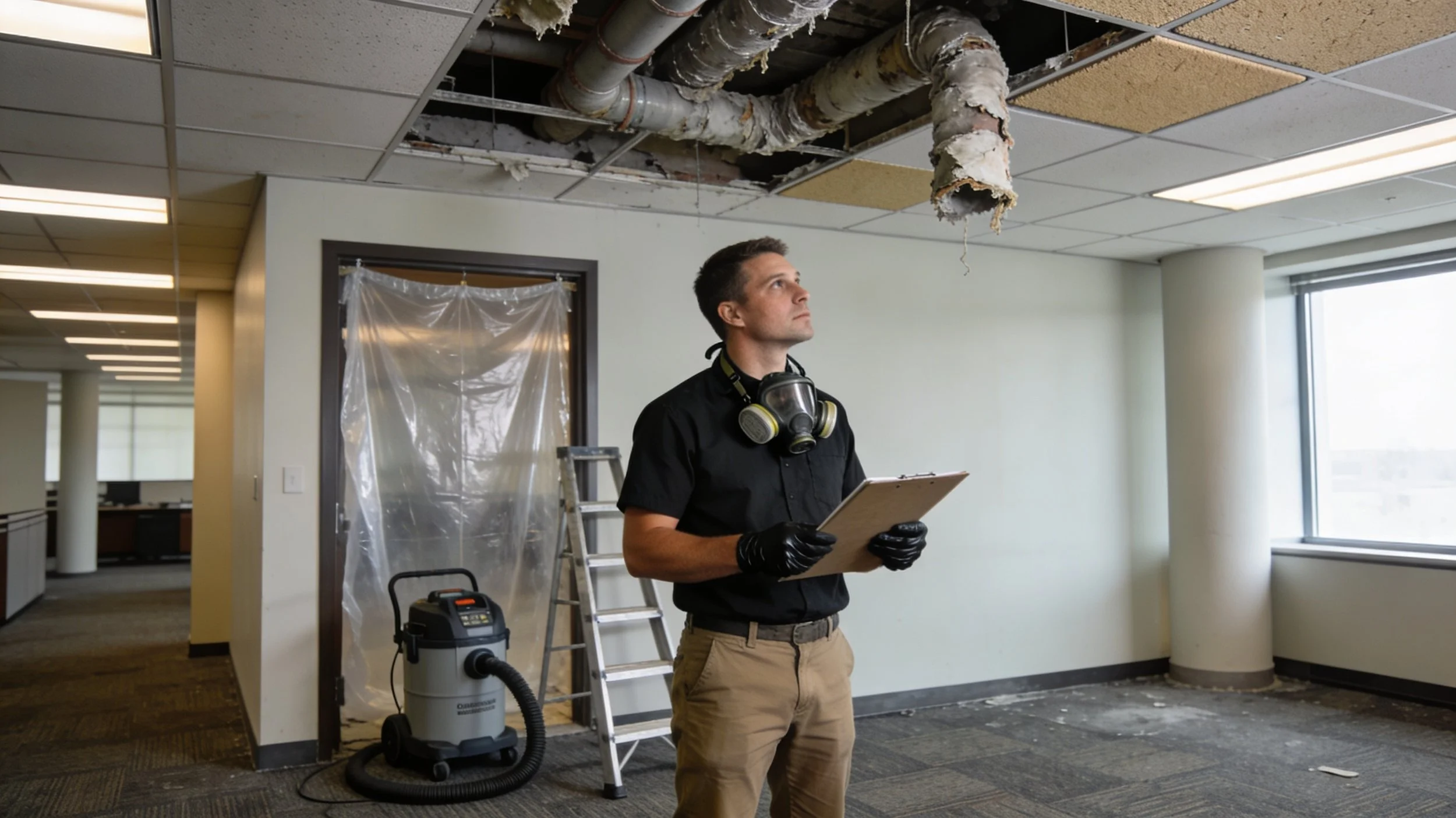
Commercial building owners in Michigan carry a distinct set of responsibilities when it comes to asbestos. Unlike a single-family home where one household is affected, a commercial property involves employees, tenants, contractors, and visitors who may be regularly exposed to indoor air quality hazards without any awareness that asbestos-containing materials exist in the building around them. Asbestos was used in hundreds of commercial building products across many decades of construction, and in some cases asbestos-containing materials continue to be imported and installed in buildings today. For commercial building owners, that means asbestos is not simply a legacy problem tied to older construction—it is an active compliance obligation, a liability exposure, and an occupant health concern that requires informed management.
For property managers, investors, and developers working in Metro Detroit, Warren, and other Michigan markets, commercial asbestos removal is also one of the most common sources of renovation budget overruns and project delays. Discovering asbestos-containing materials mid-demolition, after a contractor has already started cutting into ceilings or stripping floors without an asbestos inspection, triggers emergency containment, regulatory notifications, and unplanned project stops that cost far more than pre-project testing and abatement would have. Understanding where asbestos is found in commercial buildings, what triggers the legal obligation to remove it, and what a proper asbestos abatement process involves is knowledge that pays for itself on every project.
Where Asbestos Is Found in Commercial Buildings
Common Building Materials and Systems
Asbestos was valued in commercial construction for its effectiveness as an insulator, fire retardant, and binding agent. In commercial properties, it was commonly used in or around:
Sprayed-on fireproofing applied to structural steel beams and columns
Pipe insulation, boiler insulation, and mechanical system insulation throughout the building
Ceiling tiles, sprayed acoustic textures, and plaster finishes
Vinyl and asphalt floor tiles and the mastics used to bond them
Drywall joint compound and plaster
Built-up roofing, roofing felts, and some roof coatings
Caulking, gaskets, and sealants around windows, doors, and mechanical systems
Electrical insulation and some duct wrap materials
For commercial building owners, the key point is that asbestos-containing materials can be distributed throughout the building envelope and mechanical systems, not concentrated in a single area.
The Imported Materials Factor
Best practice is to assume suspect building materials may contain asbestos regardless of when your building was constructed. Because some imported or foreign-manufactured building products—including drywall, joint compound, ceiling tiles, flooring, and mechanical insulation produced in countries without stringent asbestos regulations—can still contain asbestos today, construction date alone is not a reliable way to rule it out.
EPA's overview of asbestos in buildings makes clear that asbestos can be present in a wide range of building materials and that the only way to confirm whether a material contains asbestos is through laboratory analysis of collected samples. https://www.epa.gov/asbestos/learn-about-asbestos
Regardless of when your property was built, the safest approach is to treat suspect materials as potentially asbestos-containing until asbestos inspection and asbestos testing prove otherwise. This is especially important during renovation and tenant improvement work, when contractors may be working in areas where original building materials have not been evaluated.
Asbestos Health Risks for Occupants and Workers
Why Asbestos Demands Serious Attention
When asbestos-containing materials are disturbed—through cutting, drilling, sanding, demolition, or physical deterioration—they can release microscopic fibers that become airborne and are inhaled with no visible sign that exposure is occurring. EPA notes that inhaled asbestos fibers can become permanently lodged in lung tissue, where they may cause mesothelioma, lung cancer, and asbestosis, often decades after the original exposure. https://www.epa.gov/asbestos/learn-about-asbestos
NIEHS similarly notes that there is no established safe level of asbestos exposure, and that risk of disease is related to the concentration of fibers inhaled and the duration of exposure. https://www.niehs.nih.gov/health/topics/agents/asbestos
For commercial building owners, that long latency period does not reduce liability—it compounds it. Employees, tenants, and contractors who work in your building today may not develop related illness for many years, but your obligations regarding asbestos conditions in the building exist right now.
Friable vs. Non-Friable Materials
Not all asbestos-containing materials create equal immediate risk. EPA distinguishes between:
Friable asbestos, which can be crumbled by hand pressure and readily releases fibers—sprayed-on fireproofing, deteriorating pipe insulation, and damaged acoustic textures fall in this category.
Non-friable asbestos, which is bound in a solid matrix and unlikely to release fibers unless cut, abraded, or demolished—intact floor tiles, roofing materials, and vinyl flooring are common examples.
Friable materials in poor condition require the most immediate attention. However, non-friable materials that will be disturbed by renovation or demolition must also be addressed before that work begins under both federal and Michigan regulatory requirements.
Federal and Michigan Regulatory Requirements
EPA NESHAP for Renovation and Demolition
EPA's National Emission Standards for Hazardous Air Pollutants (NESHAP) for asbestos establishes specific requirements for commercial renovation and demolition projects that will disturb regulated asbestos-containing materials. Key requirements include:
Conducting a thorough asbestos inspection before any renovation or demolition that will disturb building materials
Providing written notification to the appropriate regulatory agency at least 10 working days before demolition projects begin and before renovations that will disturb regulated threshold quantities of asbestos-containing material
Using EPA-approved work practices during removal to prevent fiber release
Disposing of asbestos-containing waste in sealed, labeled containers transported to an approved disposal facility
https://www.epa.gov/asbestos/asbestos-national-emission-standards-hazardous-air-pollutants-neshap
Failure to comply with NESHAP requirements can result in significant civil penalties, project shutdowns, and potential criminal liability for building owners and contractors. For demolition specifically, pre-demolition asbestos abatement is required regardless of the quantity of asbestos-containing material present.
OSHA Standards for Asbestos Work
OSHA's asbestos standard for construction and general industry sets permissible exposure limits for workers who may encounter asbestos, and establishes requirements for air monitoring, respiratory protection, decontamination procedures, and worker training and certification. https://www.osha.gov/asbestos
For commercial building owners, OSHA's requirements apply when you hire contractors to perform renovation or maintenance work that may disturb asbestos-containing materials. Owners have a responsibility to inform contractors about known asbestos conditions so that workers are protected and compliant work practices are followed from the start.
Michigan Licensing and Notification
In Michigan, asbestos abatement contractors must be licensed through the state, and asbestos abatement projects must meet notification, work practice, and disposal requirements consistent with the federal framework. MIOSHA enforces asbestos standards in Michigan workplaces. For commercial building owners, both federal EPA/NESHAP obligations and Michigan licensing and notification requirements apply simultaneously—understanding both frameworks is essential to avoiding compliance problems on renovation and demolition projects.
What Commercial Asbestos Abatement Involves
Starting With Inspection and Testing
Asbestos inspection is the required starting point before any commercial renovation or demolition. A certified asbestos inspector samples suspect materials throughout the building or in the specific project area and submits samples for laboratory analysis to confirm whether asbestos is present. For commercial building owners, having a current asbestos survey on file provides:
A building-wide map of where asbestos-containing materials exist and their condition
The documentation required to meet EPA NESHAP pre-renovation inspection requirements
Accurate information for contractors to scope and bid abatement work
A baseline record for future renovation and capital project planning
Without a current asbestos inspection, every contractor working in the building is operating without the environmental information needed to keep workers and occupants safe and stay in compliance.
The Abatement Process Step by Step
Commercial asbestos abatement follows a structured process designed to remove asbestos-containing materials without releasing fibers into occupied or adjacent spaces. The key phases include:
Establishing a regulated work area using polyethylene sheeting containment and negative air pressure, so that any fibers disturbed during removal stay within the work zone
Running negative air machines with HEPA filtration continuously within the contained area to filter airborne fibers
Using wet methods during removal to keep asbestos-containing materials from drying out and generating fibers during cutting, stripping, or demolition
Decontamination procedures for workers entering and exiting the work area, including personal protective equipment and HEPA vacuuming protocols
Waste packaging and disposal in sealed, labeled containers transported to a licensed asbestos disposal facility in compliance with EPA and Michigan requirements
Air monitoring during abatement to confirm fiber concentrations remain within acceptable limits
Clearance air sampling after abatement is complete to verify the area is safe for re-occupancy or reconstruction
For large commercial projects, abatement timelines require careful coordination with the overall renovation or demolition schedule. Planning asbestos abatement as part of the project's pre-construction phase—not as a response to discovery mid-project—is how experienced Michigan commercial owners keep projects on schedule.
When Removal Is Required vs. When Management Is an Option
Operation and Maintenance for Intact Materials
Not every instance of asbestos-containing material in a commercial building requires immediate removal. EPA's asbestos management guidance distinguishes between materials that must be removed and materials that may be managed in place through a formal Operation and Maintenance (O&M) program.
Intact, non-friable asbestos-containing materials that are not scheduled for disturbance may be candidates for an O&M approach, which involves documenting locations and conditions, scheduling regular monitoring, and training maintenance staff to avoid accidental disturbance during routine work.
However, O&M is not a permanent solution and does not eliminate abatement requirements when materials will be disturbed by planned work. Any renovation, tenant improvement, or demolition that will impact asbestos-containing materials triggers the requirement for proper abatement before that work begins.
Asbestos Demolition Requirements
When a commercial building is scheduled for full or partial demolition, pre-demolition asbestos abatement is required before any structural work begins. EPA's NESHAP demolition requirements apply regardless of material condition, and notification timelines are strict—10 working days minimum before work begins. https://www.epa.gov/asbestos/asbestos-national-emission-standards-hazardous-air-pollutants-neshap
Michigan commercial owners and developers need to account for pre-demolition asbestos abatement in project timelines and budgets from the earliest stages of planning. Treating it as an afterthought creates regulatory risk and schedule pressure that could have been avoided entirely.
How Asbestos Overlaps With Other Commercial Building Hazards
In many Michigan commercial properties, asbestos does not appear alone. Comprehensive environmental remediation services for commercial buildings frequently need to address:
Lead-based paint on interior surfaces, structural steel, window systems, and exterior components. Renovation work that disturbs lead-based paint in buildings where it may be present must comply with EPA lead renovation rules, and abatement scopes need to be coordinated with asbestos abatement when both hazards are present in the same work area.
Mold in commercial buildings from roof leaks, plumbing failures, and HVAC condensate issues. Mold remediation involving demolition of building materials may also disturb asbestos-containing substrates, making pre-remediation asbestos testing an important step before mold abatement begins.
PCBs in caulking around windows and expansion joints in some commercial buildings, which carry their own separate regulatory removal requirements.
Coordinating environmental services Michigan commercial owners need across asbestos, lead, and mold under an integrated scope is almost always more cost-effective and operationally efficient than addressing each hazard in separate mobilizations. It also reduces the risk that resolving one hazard inadvertently spreads or disturbs another.
Building a Smarter Environmental Compliance Strategy
Environmental testing for property managers and commercial building owners should be treated as a baseline asset management tool, not just a pre-project checklist item. Maintaining a current asbestos survey, lead assessment, and environmental baseline for your Michigan commercial properties:
Reduces the risk of unplanned hazardous material discoveries that stop projects mid-stream
Gives contractors the information they need to bid work accurately and plan safe work practices
Supports lender, insurer, and tenant due diligence processes
Provides documentation of environmental compliance property owners are expected to maintain
Protects building owners from liability tied to worker or occupant exposures on the property
For portfolio owners managing multiple Michigan commercial properties, keeping environmental documentation current across assets is a core part of responsible building management and supports smoother transactions at sale or refinancing.
Working With the Right Partner on Commercial Asbestos Projects
Commercial asbestos removal is not a project to hand off to a general contractor who will figure it out as work proceeds. It requires certified inspectors, licensed abatement contractors, properly designed containment, active air monitoring, regulatory notifications, and documented clearance—without shortcuts, every time.
If you own or manage a commercial building in Michigan and are planning renovation, tenant improvement work, or demolition—or simply want to understand what asbestos conditions exist before your next project moves forward—BDS Environmental can help. The team works with commercial building owners, property managers, developers, and contractors throughout Michigan to conduct thorough asbestos inspections, design and execute abatement scopes, coordinate with other environmental hazards when they overlap, and deliver the documentation that supports full regulatory compliance. If asbestos is part of your upcoming project planning, or you want to get ahead of it before work begins, contact BDS Environmental to discuss your building and what a professional commercial asbestos assessment would involve.