
Environmental Hazards That Can Delay Commercial Construction Projects
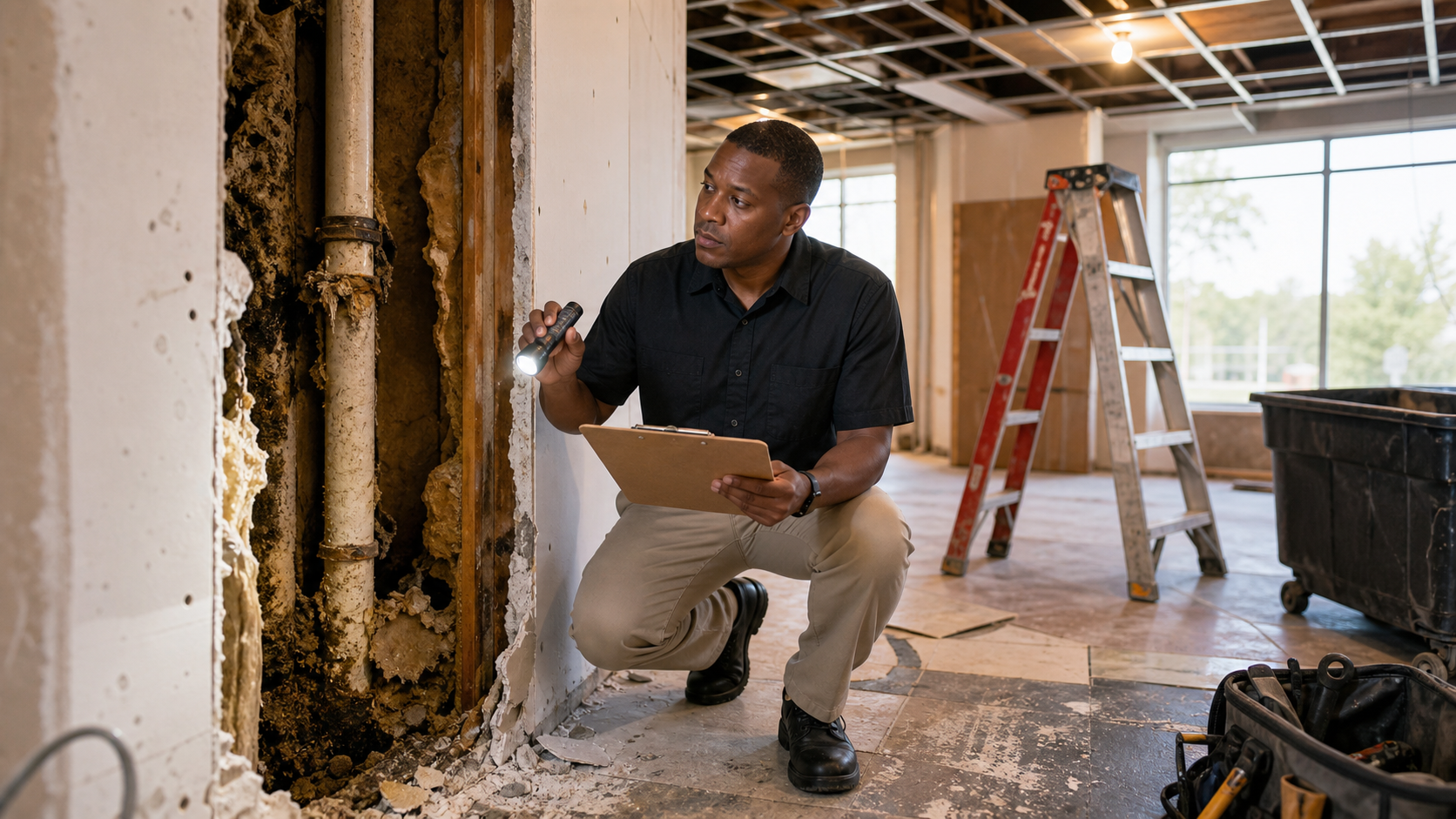
Commercial construction projects run on tight schedules, and even small surprises can throw off timelines, budgets, and contractor coordination. When the surprise involves an environmental hazard, the impact is usually serious. An unexpected asbestos discovery, hidden mold growth, deteriorated lead-based paint, or soil contamination can stop work, trigger regulatory obligations, and force the project team to revise sequencing in ways that affect every trade on site.
For property owners, developers, contractors, and project managers in Michigan, understanding which environmental hazards most commonly delay commercial construction is a practical part of risk planning. These problems are rarely impossible to solve, but they are almost always more expensive when discovered after demolition or foundation work begins. The best approach is to identify potential hazards during pre-construction planning so they can be handled on schedule rather than in the middle of an active build.
Asbestos Is a Common Delay Trigger
Asbestos is perhaps the most well-known environmental delay trigger in commercial construction, and for good reason. It can be found in many building materials that look ordinary until disturbed. Flooring, mastics, ceiling tiles, pipe insulation, drywall joint compound, and textured finishes are all common locations where asbestos may be present.
On an active construction site, these materials are often in the path of planned demolition, renovation, or mechanical work. Once a contractor starts cutting, scraping, or removing finishes and suspect material is exposed, work must stop until professional asbestos inspection and asbestos testing can determine what the crew is dealing with.
The EPA requires owners and operators to identify and manage asbestos before demolition or renovation disturbs it. In Michigan, asbestos renovation and demolition activities fall under the state's Asbestos NESHAP program administered by EGLE. When asbestos is discovered mid-project, these obligations still apply, but now under emergency or reactive conditions rather than planned ones.
Regardless of the year your property was built, the safest approach is to treat suspect materials as potentially asbestos-containing until testing proves otherwise. Because some imported products may still contain asbestos, age alone is not a reliable way to rule out asbestos. Best practice is to assume suspect building materials may contain asbestos regardless of construction date, especially drywall and joint compound, flooring and mastics, ceiling tiles and textures, and imported products or components.
As one industry source notes, unplanned asbestos discoveries during a project can bring construction, renovation, or demolition to a grinding halt, and emergency remediation is far more disruptive than planned abatement. That is why asbestos before renovation planning is not just a safety measure. It is a schedule-protection measure.
Mold Can Surface During Demolition or Moisture Events
Mold is another hazard that commonly delays commercial construction, especially in renovation and adaptive reuse work. It is often hidden behind walls, above ceilings, below flooring, or in mechanical areas where moisture has been present long enough to support growth.
The problem is that mold is usually not visible until finishes are opened or existing conditions are disturbed. A contractor may remove a section of drywall, pull up old carpet, or access a plenum space and find staining, odor, or visible contamination that was not apparent during the initial walkthrough.
The EPA ties mold control to moisture control, noting that when water intrusion occurs indoors, the source should be identified and repaired. On a construction site, that means mold remediation cannot simply be a surface cleaning job. It requires identifying the moisture source, removing damaged materials, and confirming that the building is dry and stable before work resumes.
For commercial projects, mold in commercial buildings creates additional complications because occupied areas may need to be sealed off, air quality managed, and tenant or employee access restricted. That is why mold inspection should be part of pre-construction evaluation whenever moisture history is known or suspect materials will be disturbed.
Lead Paint and Hazardous Coatings
In older commercial properties and mixed-use buildings, lead-based paint and other deteriorated coatings can also cause delays. Painted surfaces around windows, doors, trim, stairwells, railings, and exterior elements may look stable until abrasion, demolition, or surface preparation begins.
Once painted surfaces are sanded, scraped, or disturbed, lead paint exposure becomes a worker safety and environmental compliance issue. Removal requires controlled work practices, worker protection, and proper waste handling. That adds time to the schedule and usually requires a specialized contractor rather than general construction labor.
For project managers, this is another reason environmental testing for property managers and pre-construction site evaluation should include coating assessment when buildings have older painted surfaces. Waiting until painters or demolition crews begin surface prep is usually too late to avoid delay.
Unplanned Hazardous Material Discoveries
Beyond asbestos, mold, and lead, commercial construction sites can encounter other hazardous materials that delay progress. These may include contaminated soil, buried debris, underground storage tanks, old chemical containers, or previous industrial residues. Each of these conditions requires assessment, potential remediation, regulatory notification, and specialized handling before standard construction can proceed.
One construction risk guide notes that unforeseen site conditions, including the presence of hazardous materials, are among the top reasons for construction delays. Another source emphasizes that thorough site assessments evaluating environmental conditions before mobilization help prevent redesign and scope changes later.
In renovation and demolition settings, this is especially relevant. Older buildings, former industrial sites, and properties with complex use histories are more likely to contain hidden environmental issues. The materials may be behind walls, beneath slab floors, in ceiling cavities, or below grade where they are not visible during a standard pre-bid walkthrough.
Why Pre-Construction Environmental Assessment Saves Time
The most effective way to prevent environmental delays is to treat environmental assessment as part of pre-construction planning rather than an emergency response. That means scheduling asbestos inspection, mold inspection, and other environmental testing before demolition, not after the first suspect material is uncovered.
When environmental hazards are identified early, the project team can build the response into the schedule and budget. Abatement can be sequenced before general construction. Remediation can be completed during a planned window. Containment can be coordinated without stopping other trades.
When hazards are discovered late, the opposite happens. Work stops. Trades are sent home. Schedules are revised. Costs increase. And the project may face regulatory scrutiny that could have been avoided with earlier notification and planning.
As one industry source explains, delaying asbestos removal can lead to far greater financial, legal, and health-related costs down the road. That principle applies across environmental hazards. Early response is almost always more efficient than reactive response.
The Hidden Costs Beyond the Direct Delay
Environmental delays also create secondary costs that are easy to overlook. Subcontractor scheduling may be affected. Material deliveries may need to be held. Permit timelines may shift. Lease commencements may be pushed back. Tenant move-ins may be postponed. Financing or draw schedules may need revision.
These ripple effects are why environmental hazards are not just a line-item cost. They are a project-risk factor that affects coordination across multiple parties. A delay in one area can cascade into delays elsewhere, even after the environmental issue itself is resolved.
For investors and owners, that makes front-end environmental due diligence a form of risk management. Spending time and money on assessment before construction starts is usually far less expensive than managing an unplanned stoppage once the project is underway.
Practical Steps for Keeping Projects on Track
For project teams that want to minimize environmental delays, a few practical habits make a significant difference:
Include environmental assessment in pre-construction planning for every renovation, demolition, or adaptive reuse project.
Do not rely on visual assumptions. Suspect materials should be tested before disturbance.
Treat moisture history, water damage, and visible staining as signals that mold inspection may be warranted.
Plan for hazardous material removal as a distinct scope, not an afterthought within general demolition.
Coordinate with qualified environmental professionals who understand local Michigan requirements.
Maintain clear documentation of what was found, what was done, and what remains to be monitored.
These steps do not eliminate every possible surprise, but they dramatically reduce the chance that an environmental hazard will derail the project timeline.
Environmental hazards are a reality in commercial construction, especially in renovation, demolition, and older building reuse projects. The hazards themselves are usually manageable. What causes the real damage to budgets and schedules is discovering them too late. Asbestos, mold, lead paint, and other hazardous materials can all be addressed safely and compliantly when they are identified early and handled with the right expertise.
If you are planning a commercial construction project and want to avoid environmental surprises that slow your timeline, contact BDS Environmental to discuss pre-construction asbestos inspection, mold inspection, and environmental remediation services. Identifying potential hazards before work begins is one of the most reliable ways to keep your project on schedule and under control.
