Why Documentation and Completion Reports Matter in Environmental Work
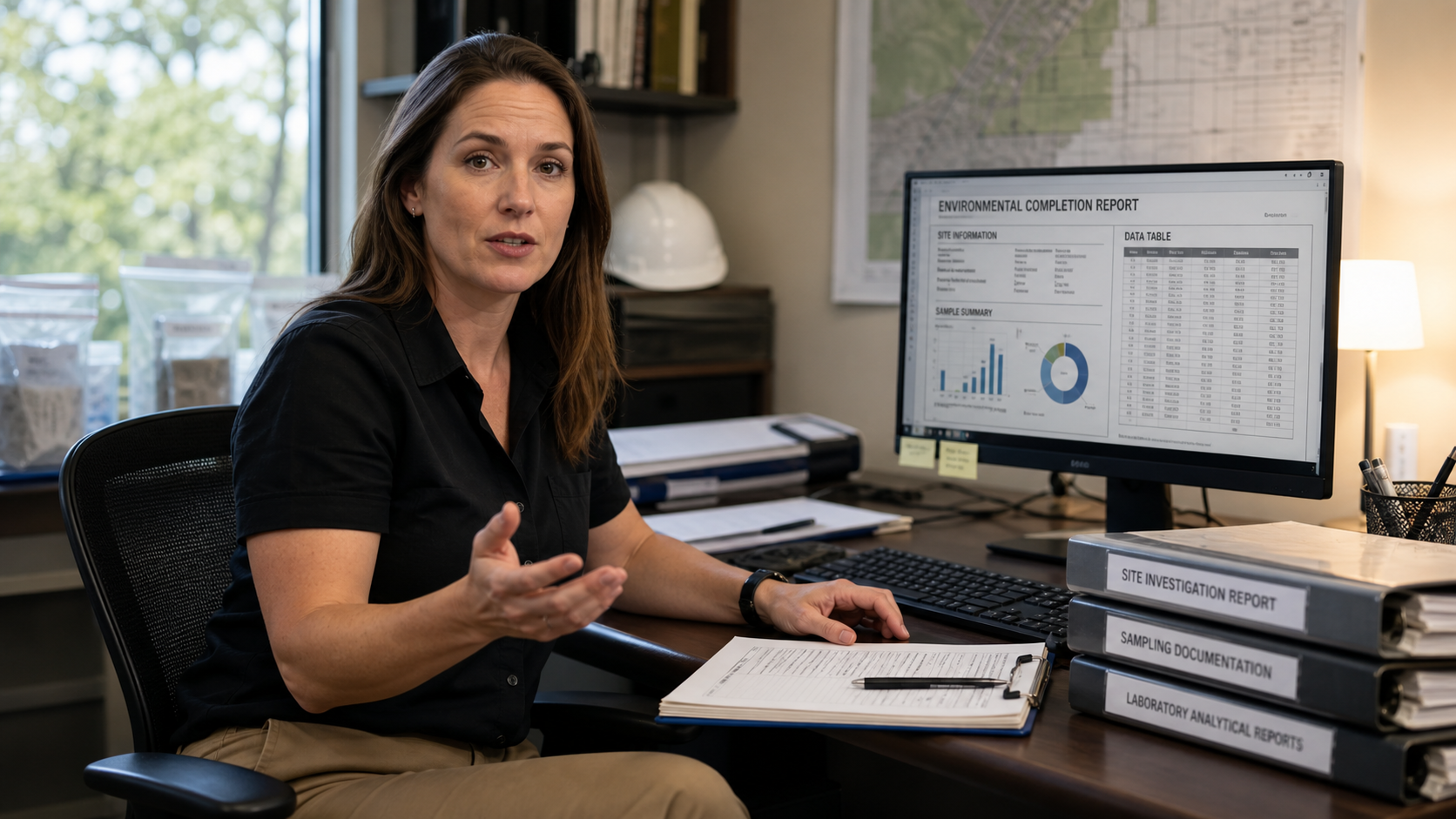
Environmental work is not finished when the containment comes down, the damaged materials are removed, or the crew leaves the site. In asbestos abatement, mold remediation, lead paint removal, and other environmental remediation services, the paperwork at the end of the job is part of the job itself. For homeowners, property managers, contractors, and investors, documentation is what turns a completed scope of work into a defensible, understandable record of what was found, what was done, and what condition the property was left in.
That matters more than many people realize. A project may look complete to the eye, but without clear records, it can be difficult to show whether proper asbestos testing was performed, whether a mold remediation process addressed the source of moisture, whether hazardous material removal followed the right sequence, or whether the space was truly ready for re-occupancy. In real-world property management, renovations, sales, and insurance conversations, completion reports often carry as much value as the physical work itself.
Documentation Is Part of Environmental Compliance
In environmental work, documentation is not just administrative cleanup. It supports compliance, accountability, and communication. When asbestos is involved, owners and operators have responsibilities tied to identifying and managing asbestos-containing materials before renovation or maintenance disturbs them, which is one reason written records matter from the beginning of the project, not just the end.
That principle is especially important in Michigan. The state’s Asbestos NESHAP program administered by EGLE governs asbestos-related renovation and demolition oversight, which means project teams need more than verbal confirmation that work was handled properly. In practice, good documentation helps show what area was affected, what materials were identified, what response was performed, and how the site moved from hazard discovery to project completion.
What Good Environmental Documentation Usually Includes
A strong environmental file should tell the story of the project clearly. It should show what prompted the work, what investigation was performed, what materials or conditions were identified, what corrective action was taken, and what the final status of the area was when the work was complete.
Depending on the project, that documentation may include:
Initial site observations and photos
Asbestos inspection or mold inspection findings
Laboratory results from asbestos testing or other sampling
Scope of work and containment details
Waste handling or disposal records
Daily logs or progress notes
Moisture readings or clearance information
Final completion reports and recommendations
For property owners, this record creates continuity. For contractors and managers, it reduces confusion later. For future buyers, tenants, consultants, or insurers, it provides a usable history instead of forcing everyone to rely on memory.
Completion Reports Prove What Was Actually Done
A completion report matters because it separates assumption from evidence. Without one, a property owner may know that some asbestos removal, mold removal, or lead paint abatement happened, but not necessarily where, how much, under what controls, or whether the work reached the full affected area.
That distinction becomes critical during future renovations. The EPA’s guidance for owners and managers of buildings with asbestos makes clear that asbestos should be identified and managed before it is disturbed by maintenance or renovation activities. If a later contractor opens a wall, removes flooring, or disturbs a ceiling area, prior documentation can help determine whether suspect materials were already addressed, whether additional asbestos inspection is still needed, or whether the current team is stepping into an unknown condition.
This matters in residential settings too. Buyers and owners often ask how to tell if you have asbestos or what does asbestos look like, but visual assumptions are not enough. The EPA notes that you generally cannot tell whether a material contains asbestos simply by looking at it. A clear report with tested locations and results is far more useful than an informal comment that “it was probably taken care of.”
Mold Work Needs Documentation Too
Mold projects are often undervalued from a documentation standpoint because people treat them like cleanup jobs instead of building-condition investigations. In reality, mold remediation should document not only what growth or damage was found, but also what moisture source was identified and what corrective steps were taken.
That is important because moisture control is central to mold control. Indoor environmental health guidance states that the key to mold control is moisture control, and that when water intrusion occurs indoors, the source should be identified and repaired promptly. If a report only says that materials were cleaned or removed, but does not explain the leak, seepage, condensation, or humidity issue behind the damage, then the file is incomplete in the way that matters most.
For property managers, this can affect turnover, leasing, and future complaints. A musty odor, basement mold after water damage, or recurring staining near windows can become a repeated operational problem if the prior work was never documented clearly. Completion reports help show whether the mold remediation process addressed the cause, not just the visible result.
Documentation Reduces Liability and Future Disputes
Environmental work often sits at the intersection of construction, health concerns, occupancy, and regulation. That means disagreements can arise later, even when the original project seemed straightforward. A tenant may claim mold in commercial buildings was never resolved. A buyer may question whether hazardous materials in homes were disclosed properly. A contractor may want to know whether prior asbestos abatement covered the area now being renovated.
This is where documentation protects everyone involved. A clear file can show when the issue was reported, what testing was performed, what the findings were, how the scope was handled, and what completion status was reached. In many cases, that kind of record does not just support legal defensibility. It also shortens conversations that would otherwise become expensive arguments.
Documentation is especially useful during turnover. Guidance on mold testing during rental turnover emphasizes that inspection records help identify hidden conditions before a new occupant moves in and before a complaint becomes a larger legal or operational issue. That same logic applies to asbestos in homes, lead paint in older homes, and broader indoor air quality hazards.
It Helps the Next Contractor and the Next Owner
One of the most practical reasons documentation matters is that environmental issues rarely end with one moment in time. Buildings change hands. Tenants rotate. Walls get opened years later. A mechanical upgrade in one room may affect finishes in another. If there is no usable record, every future project starts from scratch.
Good reporting helps the next contractor work more safely and more efficiently. If flooring and mastics were already sampled, that matters. If ceiling tiles and textures were previously tested, that matters. If a basement mold issue was tied to seepage on one wall but not another, that matters. If lead paint removal process details are already on file, that matters too.
This is also where asbestos-specific caution remains important. Regardless of the year your property was built, the safest approach is to treat suspect materials as potentially asbestos-containing until testing proves otherwise. Because some imported products may still contain asbestos, age alone is not a reliable way to rule out asbestos. Best practice is to be especially careful with drywall and joint compound, flooring and mastics, ceiling tiles and textures, and imported or foreign-manufactured products. A thorough report helps future teams understand what was tested and what still remains unknown.
Completion Reports Support Property Value
From an ownership perspective, documentation supports value because it reduces uncertainty. Environmental problems often hurt a property most when they are poorly understood. A buyer, lender, tenant, or contractor is far more cautious when the history is vague than when the file shows a documented issue, a defined scope of work, and a clear completion record.
That applies across property types. In homes, records help support informed disclosure and renovation planning. In commercial buildings, they help with tenant turnover, capital projects, and facility management. In investment settings, they help answer due diligence questions without guesswork.
This is one reason environmental testing for property managers should not end with the field visit. The real value comes from records that can be used later. A professional report gives the ownership side of the project something concrete to rely on when planning repairs, answering questions, or coordinating environmental safety in older homes and buildings.
What to Look for in a Completion Report
Not all reports are equally useful. A strong completion package should be easy to follow and specific enough to help someone who was not present understand the job later.
Look for reports that clearly identify:
The property area or rooms involved
The reason the work was performed
The materials or conditions identified
Any asbestos testing, mold inspection, or other evaluation performed
The scope of asbestos removal, mold remediation, or lead paint abatement completed
Relevant dates, photos, and supporting records
Final status of the work area
Any remaining recommendations or limitations
A short invoice with a vague line item is not the same thing as a completion report. If the property may be renovated, sold, refinanced, reoccupied, or questioned later, the difference matters.
The Work Is Not Really Finished Without the Record
Environmental remediation is hands-on work, but it is also record-driven work. The visible cleanup matters, the containment matters, the testing matters, and the final condition matters. Documentation is what ties all of those pieces together into a usable project history.
For homeowners, property managers, contractors, and investors, that record protects more than compliance. It protects clarity. It helps prevent repeated testing, missed hazards, and future confusion about what was handled and what was not. It also makes it easier to move forward confidently when the next repair, renovation, sale, or occupancy decision comes along.
If you are dealing with asbestos, mold, lead paint hazards, or other environmental concerns, contact BDS Environmental to discuss inspection, remediation, and the documentation that should follow the work. In environmental projects, a well-done report is part of a well-done job.