How Environmental Remediation Companies Work With General Contractors
In commercial and residential construction, the relationship between a general contractor (GC) and an environmental remediation company is often the difference between a project that stays on schedule and one that stalls indefinitely. When a general contractor takes on a demolition, renovation, or tenant build-out in an older property, they are primarily focused on the final product. However, environmental hazards like mold, asbestos, and lead-based paint cannot simply be built over or torn out with standard demolition techniques.
The EPA’s Renovation, Repair, and Painting (RRP) Rule makes it clear that any contractor performing work that disturbs painted surfaces in pre-1978 homes or child-occupied facilities must follow specific certification and safety protocols to minimize lead exposure. Similarly, federal asbestos standards require careful pre-renovation assessment and controlled abatement. For a general contractor, navigating these regulations while managing standard trades is complicated. That is why bringing in specialized environmental remediation services early is crucial. The remediation company acts as a specialized partner, handling the hazardous material removal so the general contractor can focus on the rebuild.
The Pre-Construction Assessment Phase
The collaboration usually begins before a single wall is opened. During the pre-construction or bidding phase, a general contractor needs to know exactly what they are dealing with so they can accurately price and schedule the job. Environmental testing for property managers and general contractors is the first step in this process.
If the project involves an older building, the environmental remediation company will often perform or coordinate an asbestos inspection and lead paint assessment. This is a critical step because environmental hazards are notorious for hiding in plain sight.
Regardless of the year your property was built, the safest approach is to treat suspect materials as potentially asbestos-containing until testing proves otherwise. Because some imported products may still contain asbestos, age alone is not a reliable way to rule out asbestos, and a government notice on asbestos in imported building products reports that asbestos has been found in a range of imported goods and building materials.
Best practice is to assume suspect building materials may contain asbestos regardless of construction date, especially:
Drywall and joint compound
Flooring and mastics
Ceiling tiles and textures
Imported products and components
Imported or foreign-manufactured building materials can still contain asbestos today, so the safest approach is to test rather than rely on age alone. By identifying these hazards during the bidding phase, the environmental partner helps the general contractor avoid costly change orders and unexpected asbestos demolition requirements once work begins.
Establishing the Scope of Remediation
Once testing confirms the presence of hazards, the environmental remediation company works with the general contractor to define a precise scope of work. This is where the partnership becomes highly tactical. The environmental team must figure out how to remove the hazard without delaying the rest of the construction schedule.
If the issue is lead paint in older homes or commercial structures, the EPA requires specific lead-safe work practices under the RRP Rule, which applies to general contractors, plumbers, electricians, and any trade that disturbs more than a specific threshold of painted surfaces. The remediation company will often take responsibility for the lead paint removal process, ensuring that the work area is properly contained and that the remaining structure is safe for the general contractor’s uncertified trades to enter.
In the case of a water damage mold risk, the remediation company will handle the mold remediation process. This includes setting up containment, operating air scrubbers to manage indoor air quality hazards, and physically removing the mold-contaminated porous materials. The general contractor’s job during this phase is to ensure the building is secured and to coordinate with the remediation team on when reconstruction can begin.
Managing Containment and Access
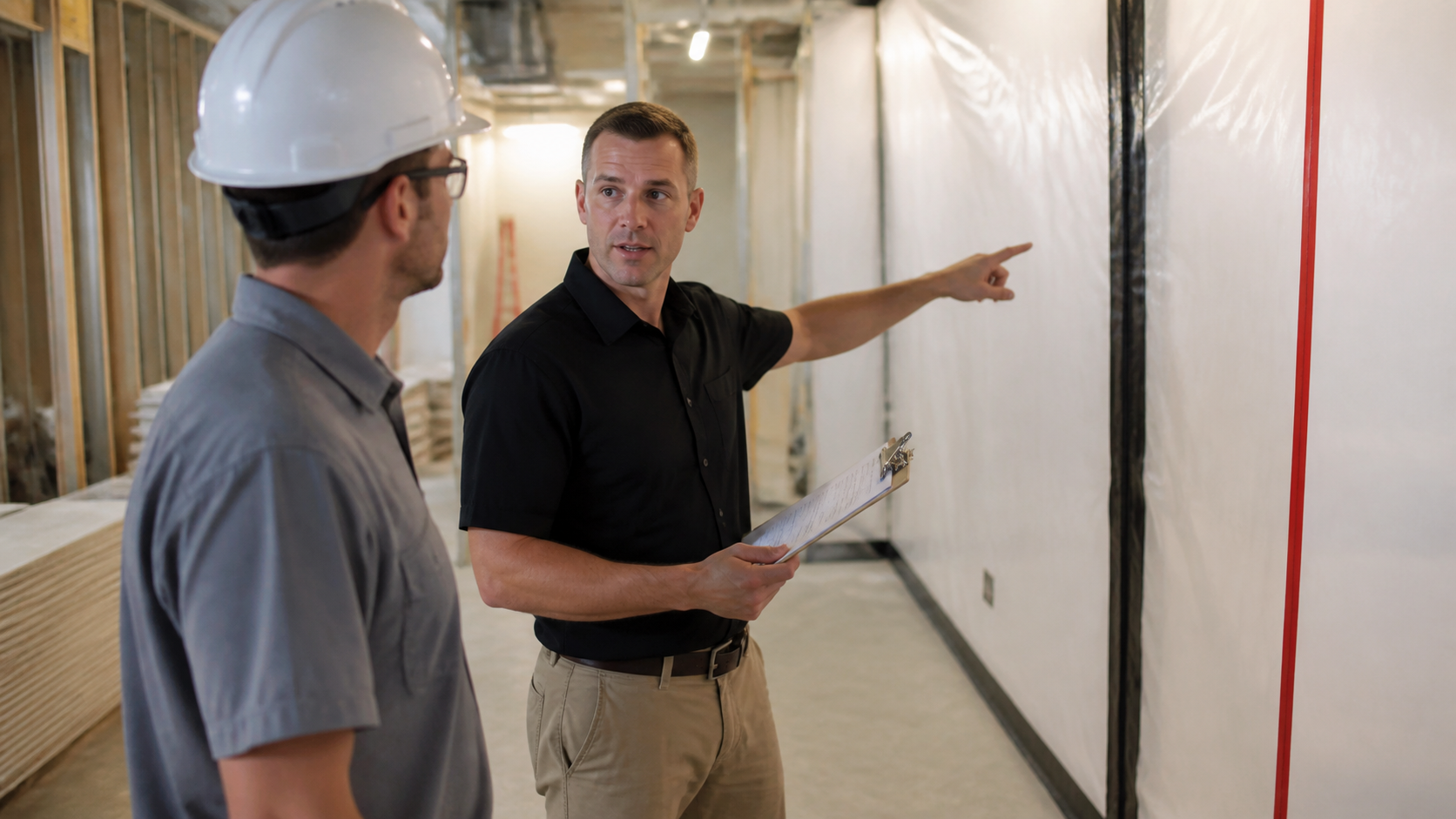
One of the most critical aspects of the relationship is managing access to the work site. When an environmental remediation company begins asbestos abatement or mold removal, they create a highly regulated work zone. This often involves building full containment barriers with heavy plastic sheeting and establishing negative air pressure to keep microscopic fibers or spores from spreading to clean areas of the building.
During this time, the general contractor must coordinate the schedules of other trades to ensure they do not breach the containment area. A single containment failure on a multi-hazard project can lead to cross-contamination, exposing the general contractor to significant liability. The remediation company manages the containment integrity, ensuring that environmental compliance property owners expect is strictly maintained.
For example, if asbestos removal Michigan professionals are working in one wing of a commercial building, the general contractor may schedule electricians and plumbers to work in a separate, completely isolated wing. This parallel scheduling keeps the overall project moving forward while ensuring environmental safety.
Coordinating Safe Disposal
Hazardous material removal does not end when the material is pulled from the walls. Proper waste disposal is a massive logistical and regulatory hurdle that the environmental remediation company manages on behalf of the general contractor.
The EPA enforces strict regulations regarding how asbestos-containing materials and lead-based paint debris must be packaged, transported, and disposed of at approved facilities. The environmental remediation company provides the specialized labor, labeling, and chain-of-custody documentation required to prove the hazardous waste was handled legally.
For the general contractor, this is a major liability relief. If a standard demolition crew were to illegally dump asbestos in homes or commercial debris, the general contractor and the property owner could face severe penalties. The remediation company essentially assumes the liability for the hazardous waste stream from the moment it is removed to the moment it reaches the landfill.
Final Clearance and Hand-off
The final step in the collaboration is the hand-off back to the general contractor. Before standard trades can return to the space to begin rebuilding, the environmental remediation company must prove the area is clean and safe.
This is done through clearance testing. For asbestos, this means conducting air monitoring to ensure fiber levels are below regulatory thresholds. For lead paint abatement, it involves dust wipe sampling to confirm that lead dust has been properly removed from floors and window sills. For mold in commercial buildings or residential basements, post-remediation verification ensures the mold smell in house conditions and visible growth are gone and the moisture source has been addressed.
Once clearance is achieved, the environmental team removes their containment, provides the final clearance documentation to the general contractor, and demobilizes. The general contractor now has a clean, safe, and legally compliant space to complete the renovation.
Why the Partnership Matters
For property managers, investors, and building owners, hiring a general contractor who understands the value of a professional environmental remediation partner is essential. It prevents amateur mistakes, such as dry-scraping peeling lead paint danger zones or disturbing black mold symptoms without containment. It also ensures that the project complies with all local and federal regulations, protecting the property’s value and the health of its future occupants.
If you are a general contractor, property manager, or homeowner planning a renovation and need specialized environmental services Michigan professionals trust, contact BDS Environmental. We work seamlessly alongside construction teams to handle asbestos inspection, asbestos testing, mold remediation, and complete hazardous material removal, ensuring your project stays safe, compliant, and on schedule.