How Abatement Crews Keep Contaminants from Spreading
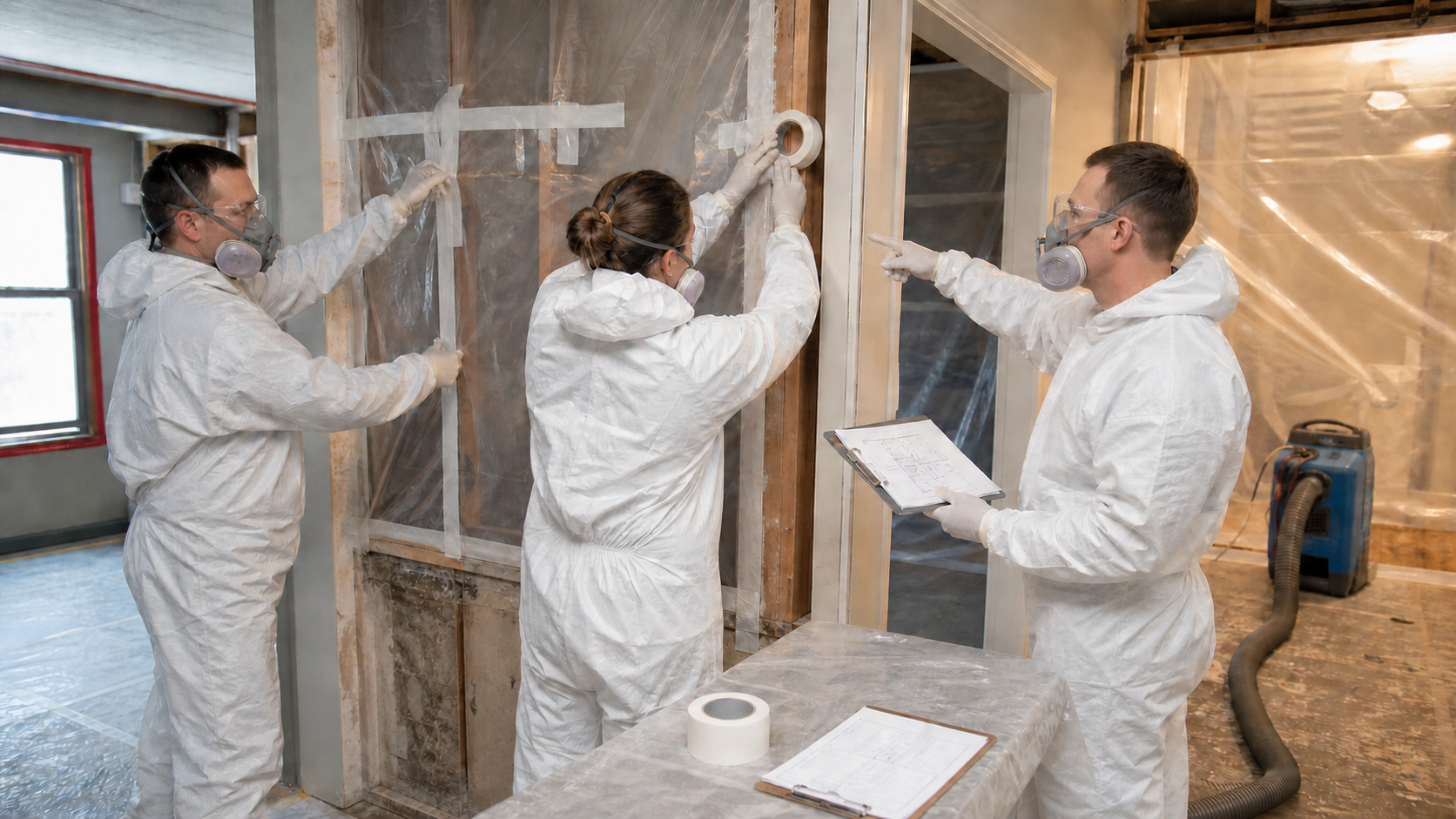
One of the biggest concerns during any environmental cleanup project is not just the contaminant itself. It is what happens when that material gets disturbed. Whether a crew is dealing with asbestos removal, mold remediation, lead paint abatement, or other hazardous material removal, the real risk often comes from particles, fibers, dust, or spores moving from the work area into clean parts of the building. That is why professional abatement crews do not approach these jobs like standard demolition or cleanup. They build the project around containment from the start.
For homeowners, property managers, contractors, and investors, that distinction matters. A well-run abatement project is designed to keep contaminants from spreading through hallways, HVAC systems, adjacent rooms, and occupied areas while the work is happening. In Michigan field terms, that means the crew is not just “removing the problem.” They are controlling airflow, restricting access, managing waste, and following a step-by-step process that keeps the issue contained instead of making it bigger.
Containment Starts Before Removal
The first way abatement crews stop contaminants from spreading is by planning the containment strategy before removal starts. On asbestos projects, OSHA’s Appendix F work practices and engineering controls says the work plan should address the physical layout of the work area, the amount of material being removed, hygiene procedures, personal protective equipment, air monitoring, and the waste transport method before the job moves forward.
That front-end planning matters because different contaminants spread in different ways. Mold remediation on a large or complex project may require extensive containment and PPE, while asbestos abatement may require regulated areas, specialized removal methods, and stricter worker protection controls. The point is the same in both cases: a crew cannot control contamination well if they are improvising after the disturbance has already started.
This is also where asbestos inspection and asbestos testing fit into the process. Regardless of the year your property was built, the safest approach is to treat suspect materials as potentially asbestos-containing until testing proves otherwise. Because some imported products may still contain asbestos, age alone is not a reliable way to rule out asbestos, and a government notice on asbestos in imported building products reports that asbestos has been found in a range of imported goods and building materials.
Best practice is to assume suspect building materials may contain asbestos regardless of construction date, especially:
Drywall and joint compound
Flooring and mastics
Ceiling tiles and textures
Imported products and components
Imported or foreign-manufactured building materials can still contain asbestos today, so the safest approach is to test rather than rely on age alone.
The Work Area Gets Isolated
Once the project is scoped, crews isolate the work area, so contaminants stay where the abatement is happening. OSHA’s Appendix F says asbestos removal enclosures use critical barriers over openings, sealed exits, impermeable dropcloths, and plastic sheeting on walls, floors, and ceilings to separate the regulated area from the rest of the building. The same guidance says HVAC systems serving the work area must be shut down and ducts, grills, windows, and other openings must be sealed to keep contaminated air from entering other parts of the structure.
Mold remediation uses the same basic logic. The EPA’s Mold Course Chapter 5 says large mold remediation jobs usually require full containment with double layers of polyethylene sheeting, an airlock or decontamination chamber, and clear separation between clean areas and contaminated areas. EPA also says that when HVAC systems are involved, supply vents and intakes should be sealed and negative air pressure should be maintained in the work area to avoid spreading mold and mold-contaminated materials.
This is why a professional work area often looks overbuilt to the average property owner. The plastic, tape, zipper doors, warning signs, and sealed vents are not cosmetic. They are there to keep mold spores, asbestos fibers, and contaminated dust from moving into living space, tenant areas, office space, or adjacent construction zones.
Airflow Is Controlled, Not Left to Chance
One of the most important ways abatement crews keep contaminants from spreading is by controlling airflow. On mold projects, the EPA’s Mold Remediation in Schools and Commercial Buildings guidance says the containment area must be maintained under negative pressure relative to surrounding areas so contaminated air stays inside the work zone. EPA’s Mold Course Chapter 6 adds that a fan exhausted to the outside can be used to maintain that negative pressure, and if the containment is working correctly, the plastic sheeting should pull inward.
Asbestos abatement relies on the same principle. OSHA Appendix F says negative-pressure enclosures are used to draw air into the containment area under anticipated conditions and exhaust it through HEPA filtration on a continuous basis during the project. The same OSHA guidance says the enclosure should maintain negative pressure of at least -0.02 inches of water gauge and that airflow can be checked with smoke tubes or other visual methods to confirm the direction of air movement.
This matters because contaminants do not only spread by touch. They also spread through air movement. If the air in the work area is allowed to drift into hallways, adjoining rooms, stairwells, or HVAC returns, a small contained issue can become a building-wide contamination problem very quickly.
Dust, Debris, and Spores Are Suppressed at the Source
Containment is only part of the job. Crews also use methods that reduce how much contaminant gets airborne in the first place. OSHA’s Asbestos Standard for the Construction Industry says employers must use wet methods and HEPA vacuums to promptly clean asbestos-containing or presumed asbestos-containing debris and to avoid dry sweeping where asbestos dust may be present. The EPA’s safe work practices for asbestos similarly says wet cloths, rags, or mops used to pick up asbestos fibers should be properly discarded as asbestos waste while still wet.
Those details may sound small, but they are a big part of why professional asbestos removal works differently than ordinary tear-out. Wet methods help keep fibers from becoming airborne, and HEPA-filtered cleanup helps capture contaminated debris instead of redistributing it.
Mold remediation uses a similar concept. EPA says contaminated porous materials in HVAC systems should be bagged and removed, while materials that can be cleaned should be vacuumed with a HEPA vacuum or cleaned with a moist cloth and detergent solution, then dried promptly. In both asbestos and mold work, the idea is the same: control the contamination where it starts rather than chasing it after it has already spread.
Worker Movement and Waste Follow a Controlled Path
Another major reason professional abatement works better than DIY or loosely managed cleanup is that crews control how people, tools, and waste move in and out of the work area. OSHA Appendix F describes separate spaces for the work area, the decontamination area, and waste storage, along with procedures for HEPA-vacuuming gross contamination from clothing and cleaning tools before workers exit the enclosure. EPA’s mold guidance also says a decontamination chamber or airlock should separate clean areas from contaminated areas and that contaminated PPE should be sealed in bags while still inside the containment exit chamber.
That one-way workflow matters because contamination often spreads during entry and exit, not just during removal. If a worker walks into a clean hallway with contaminated boots, carries unbagged debris through the building, or removes PPE in the wrong location, the containment has already failed.
Waste handling follows the same logic. OSHA says asbestos waste should be bagged during or immediately after removal, kept wet until the container is sealed, and placed in hard airtight containers when sharp edges could puncture disposal bags. That is why professional hazardous material removal jobs put so much emphasis on sealed bags, wrapped debris, labeled waste, and controlled transport routes.
Different Materials Still Require Different Rules
Even though the containment principles are similar, abatement crews also have to match the controls to the material they are addressing. Lead paint removal and lead paint abatement, for example, follow EPA lead-safe work practice requirements when covered painted surfaces are disturbed. The EPA’s RRP Rule requirements say renovators must be trained in lead-safe work practices, firms and renovators must be certified, and specific work practice standards must be followed.
Asbestos work has its own notification and compliance structure as well. In Michigan, the MIOSHA asbestos notification page says the Asbestos Program requires project notification 10 days before many non-emergency asbestos abatement jobs that exceed specified thresholds. That is one more reason environmental compliance property owners and contractors should not treat abatement like standard demolition. The containment plan, the worker protections, and even the project timeline may be driven by the material involved.
For property owners, the practical takeaway is simple. The best abatement crews do not rely on one control. They layer controls together: testing, containment, negative air, HEPA filtration, wet methods, decontamination, controlled waste handling, and material-specific procedures. That layered approach is what keeps a manageable problem from spreading into a larger one.
If you suspect your property may need asbestos abatement, mold remediation, lead-related cleanup, or other environmental remediation services, contact BDS Environmental to discuss the scope before work begins. The safest projects are the ones where contaminants are identified early, contained properly, and removed with controls designed to protect the rest of the building.