After a leak or flood, most property owners look at the obvious damage first. They check the stained ceiling, the wet carpet, the warped baseboard, or the puddle that collected on the floor. The problem is that mold rarely limits itself to the places you can see. Once water moves into porous materials or enclosed cavities, mold can keep developing in hidden areas long after the visible surface looks dry.
That is why mold after flooding and water intrusion often becomes a bigger issue a few days or weeks later. The EPA’s mold and moisture guide says mold will grow where there is moisture and recommends drying water-damaged areas and items within 24 to 48 hours to help prevent mold growth. The EPA’s water-damage guidance is built around that same 24-to-48-hour response window because delayed drying increases the chance that mold will take hold in building materials.
Why Hidden Mold Is So Common
One of the biggest reasons hidden mold develops is that water travels farther than people expect. A roof leak may soak insulation before a stain ever appears on drywall. A plumbing failure can move behind cabinets, under flooring, or into wall cavities. Basement water can wick into framing, trim, stored contents, and lower wall materials even after standing water is removed.
That is why visible drying is not the same thing as full drying. The EPA’s mold cleanup guidance warns that if there has been a lot of water damage, or if mold growth covers more than 10 square feet, property owners should consult EPA’s broader mold remediation guidance. In other words, once moisture spreads into hidden assemblies, the real scope of the problem may be larger than the visible stain or odor suggests.
Behind Drywall and Inside Wall Cavities
One of the most common hidden places mold can grow after a leak or flood is behind drywall. Water from plumbing leaks, roof penetration, ice damming, window failure, or flood intrusion can soak the back side of drywall and the framing behind it without leaving dramatic damage on the finished face right away. By the time paint bubbles, tape joints separate, or discoloration appears, mold may already be growing inside the cavity.
This is one reason a persistent mold smell in house conditions should not be ignored just because the wall surface looks mostly intact. The American Lung Association’s mold guidance explains that mold growth indoors means there is too much moisture in the building and that moisture can come from leaks, rainwater intrusion, condensation, or elevated indoor humidity. If the moisture source remains inside the wall, surface cleaning alone usually does not fix the real problem.
Under Flooring and Carpet Padding
Another high-risk location is under finished flooring. Carpet, pad, laminate flooring, vinyl systems, and even some wood or engineered floor assemblies can trap moisture underneath after a leak or flood. The top surface may feel dry within a day or two, but the padding, adhesive, seams, or subfloor below may still be holding enough moisture for mold growth.
The EPA’s water-damage cleanup table specifically addresses flooring materials and notes that materials such as carpet and backing need prompt drying decisions after water exposure. EPA also notes in its building-material remediation table that cleanup methods vary by material type and by the size of the affected area, which is one reason hidden mold under flooring often turns into a more involved mold remediation process than property owners expect.
In Michigan properties, this is especially common in lower-level spaces, slab-on-grade areas, entry zones, and any room where water pooled for even a short period. Basement mold after water damage often starts under or behind finished materials before occupants realize anything is wrong.
Inside Insulation and Ceiling Assemblies
Insulation is another place mold commonly hides. Whether the building has fiberglass batts, blown-in insulation, or insulated ceiling cavities, moisture can linger there long after the surrounding surface dries. If a ceiling leak affects insulation above drywall or ceiling tiles, mold may grow in the insulation itself, on the framing, or on the back side of the ceiling material.
The EPA’s mold and moisture guide makes the broader point that wet materials must be dried quickly to prevent mold growth. When insulation stays wet, that is often not realistic without opening the assembly. This is one reason hidden ceiling damage can continue to create indoor air quality hazards even when the visible water mark seems minor.
In commercial spaces, this issue can be even more disruptive. Mold in commercial buildings often spreads through ceiling plenums, mechanical spaces, or insulated roof assemblies where occupants do not see the damage until odor complaints or stained ceiling tiles start showing up.
Behind Cabinets, Vanities, and Built-Ins
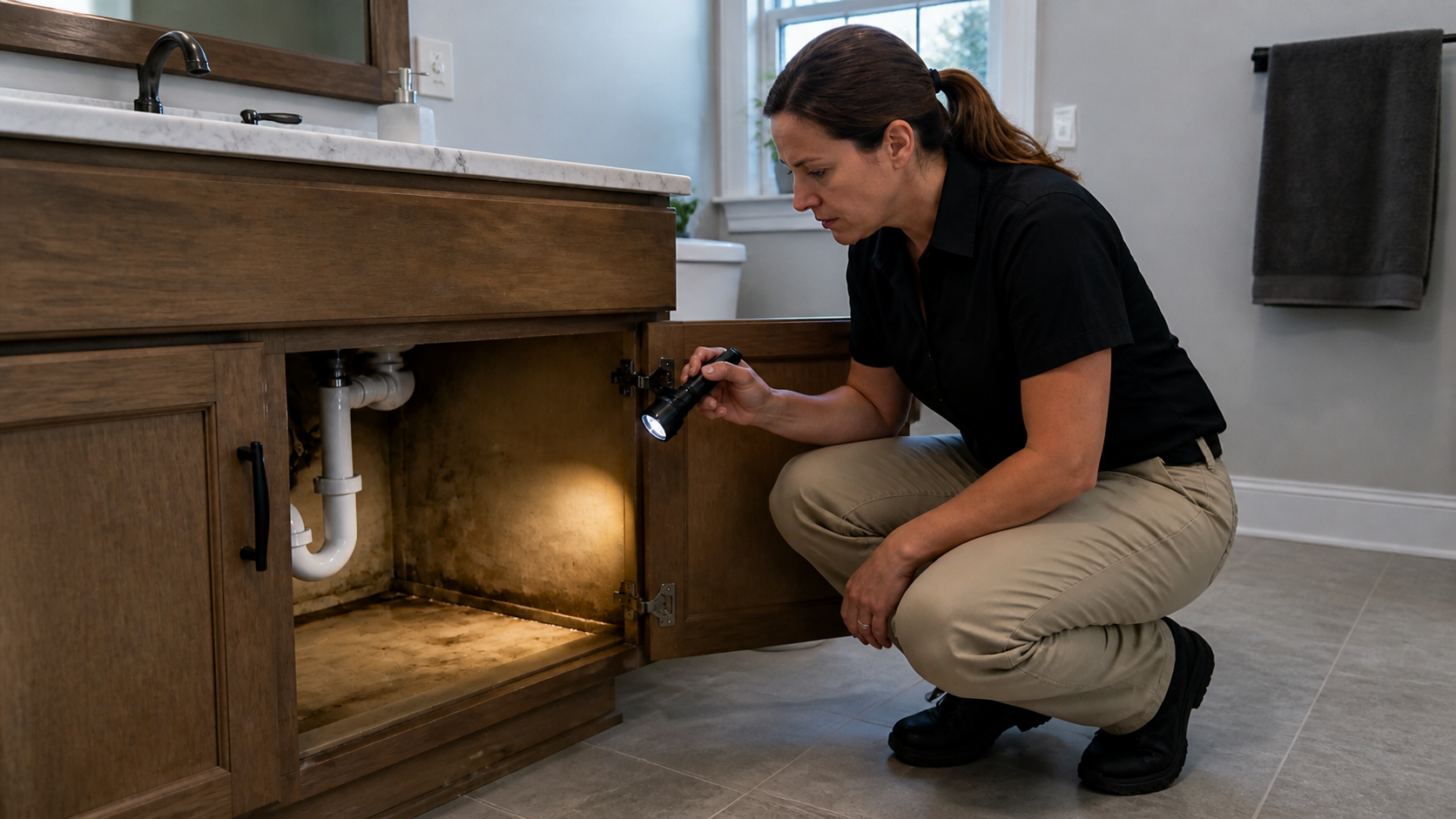
Cabinets and vanities often hide slow leaks very well. Supply-line drips, drain leaks, appliance leaks, and overflows can wet the wall behind the cabinet, the cabinet base, and the floor beneath the toe-kick area long before the problem becomes obvious from normal eye level.
That is one reason kitchens, bathrooms, janitor closets, and break rooms are frequent mold trouble spots. The CDC’s mold cleanup guidance says the needed cleanup depends on how much water damage occurred and where the mold is growing. When moisture is trapped behind cabinetry or millwork, the location itself makes DIY cleanup less effective because the hidden area is difficult to inspect, dry, and clean properly.
For landlords and property managers, these concealed plumbing zones are especially important. Mold remediation for landlords often starts with tenant complaints about odor or dampness under a sink long before visible growth becomes obvious in the room.
Around Baseboards, Trim, and Lower Wall Sections
Water does not need to flood an entire room to create mold risk at the bottom of a wall. Minor seepage, wet carpet edges, appliance leaks, or repeated mopping around a slow leak can keep baseboards and lower drywall sections damp enough for hidden growth. Often the first signs are subtle: swollen trim, soft baseboard edges, cracking caulk, or staining that keeps reappearing after repainting.
These areas are easy to underestimate because they do not always look dramatic. But once water reaches paper-faced drywall or wood trim, mold can develop in the narrow space between the finish materials and the wall framing. If the lower wall section was never opened and dried correctly, the problem often returns.
This is one reason the water damage mold risk in finished basements and first-floor utility areas tends to be higher than people think. The visible baseboard may be only a small part of what was actually affected.
Inside HVAC Components and Duct Pathways
Another hidden place mold can develop after a leak or flood is within HVAC-related components. Moisture can affect duct insulation, nearby wall cavities, condensate areas, and surrounding materials, especially if the system runs through a damp basement, crawl space, or utility chase. Once that happens, occupants may notice odor when the air handler runs, even if the room itself looks clean.
The CDC’s indoor air quality fact sheet identifies molds as one of the indoor air pollutants that can affect building occupants. That matters because hidden mold tied to mechanical pathways often shows up first as an air-quality complaint rather than a visible stain. For environmental testing for property managers, this is a common reason indoor complaints and moisture investigations need to be considered together.
Crawl Spaces, Basements, and Subfloors
Crawl spaces and basements are classic hidden mold zones because they often stay damp longer, get less airflow, and can be affected by seepage, groundwater, plumbing leaks, or poor drainage. Even when the water event happened upstairs, moisture may still migrate downward and affect subfloors, joists, insulation, and foundation-adjacent materials.
The American Lung Association says the best way to control mold indoors is to control moisture sources, including fixing leaks quickly, improving ventilation, directing downspouts away from the building, and keeping indoor humidity below 50 percent. In field terms, that means crawl space and basement conditions often need more than cleanup. They usually need moisture control, drainage correction, or dehumidification to keep mold from coming back.
This is a major reason basement mold after water damage can become a repeat problem. If the water entry route or humidity load remains, the hidden mold conditions usually remain too.
Stored Contents and Soft Materials
After a leak or flood, mold does not just grow on the building itself. It can also grow in stored contents and soft materials that stay damp out of sight. Cardboard boxes, paper goods, upholstered items, stored clothing, area rugs, and contents packed tightly into closets or storage rooms can all trap residual moisture.
The CDC’s mold cleanup guidance advises that cleanup depends in part on where mold is growing, and the CDC’s mold cleanup tips stress that you should not simply cover mold over because it will keep growing if the moisture problem remains. That is why storage areas after flooding deserve the same attention as finished living space. Sometimes the hidden mold problem is inside the contents first, and the building damage becomes obvious second.
Signs Hidden Mold May Still Be Active
Even if you cannot see mold directly, certain clues often suggest it is still active somewhere in the building:
A musty or earthy odor that returns after cleanup.
Stains that keep reappearing on walls or ceilings.
Peeling paint, bubbling finishes, or swollen trim.
Carpet edges or flooring that stay damp or warped.
Recurring humidity complaints in one area.
Allergy-like symptoms that worsen in a certain room.
A history of leak or flood damage without full material drying.
The CDC notes that some people are at greater risk of significant effects from mold exposure, including people with asthma, COPD, immune suppression, or other lung conditions. That is one more reason hidden mold should be treated like a building condition that needs investigation, not just an odor issue that will go away on its own.
Why Professional Inspection Matters
Hidden mold problems often stay hidden because the moisture path was never fully tracked after the original leak or flood. A professional mold inspection helps identify where water likely traveled, which materials may still be affected, and whether mold remediation should include opening assemblies, removing porous materials, or addressing broader indoor air quality hazards.
For homeowners, landlords, and commercial property managers, the key takeaway is simple: if the building had a leak or flood, do not assume the problem stopped at the visible wet spot. Contact BDS Environmental to discuss mold inspection, mold remediation, and environmental remediation services when you suspect moisture may have spread into hidden building materials. The sooner those concealed areas are identified, the easier it is to control damage, protect air quality, and keep a manageable issue from becoming a much larger one.