How Environmental Remediation Helps Protect Employees and Tenants
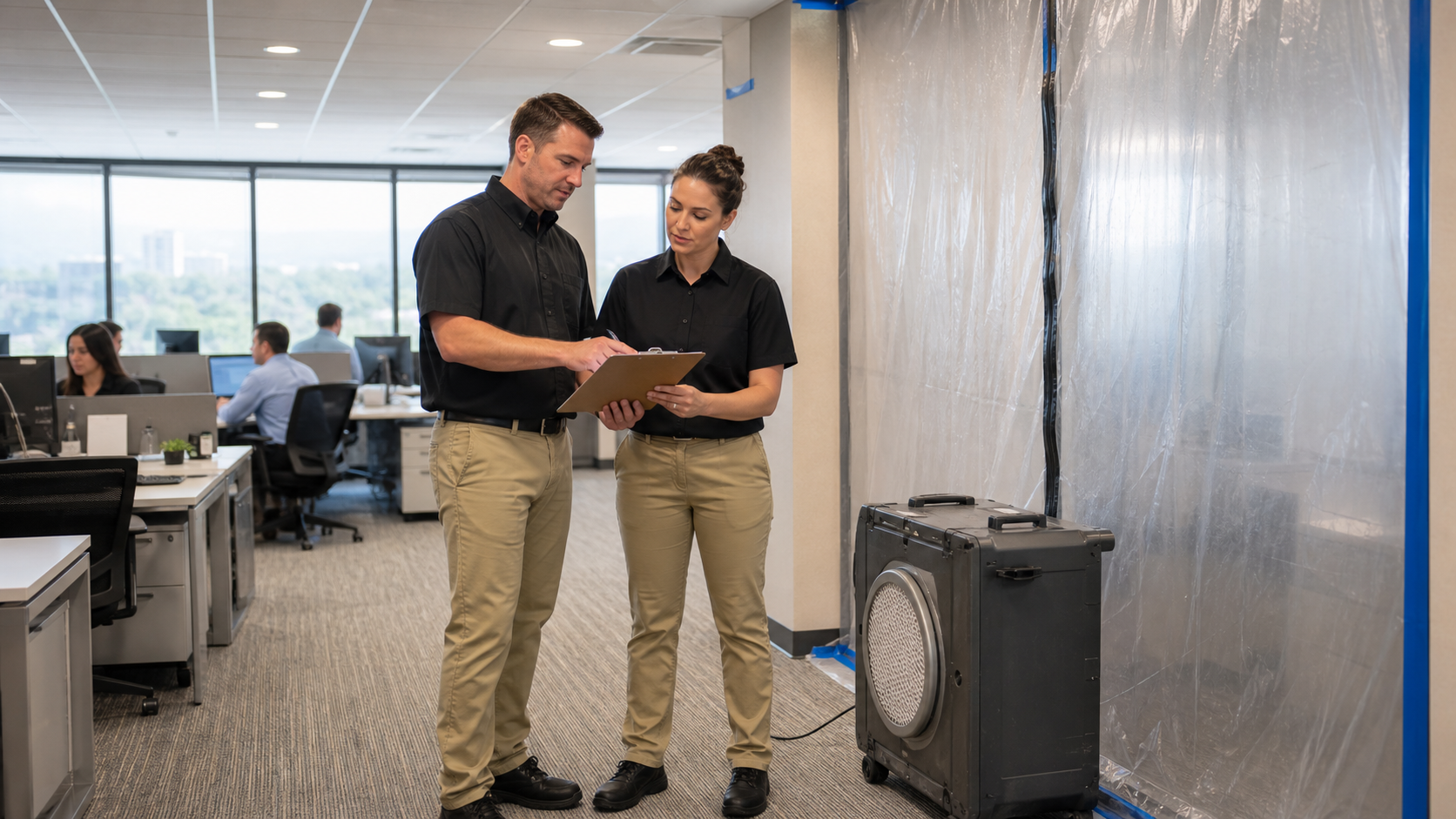
Environmental remediation is not just about fixing a building problem after it becomes visible. In occupied properties, it is about protecting the people who use the space every day. Employees, tenants, visitors, and maintenance staff can all be affected when moisture, mold, asbestos, lead dust, or other indoor air quality hazards are left unmanaged. The EPA’s indoor air quality overview says indoor air quality affects everyone where they live, learn, work, and play, and it highlights source control, ventilation, and filtration as key ways to reduce exposure to indoor pollutants.
That matters because most exposure concerns do not begin with a dramatic emergency. They often start with smaller building issues such as leaks, damaged materials, renovation dust, poor ventilation, or an unresolved complaint about odor or air quality. The EPA’s office building occupant guide says indoor air quality is a major concern to businesses, building managers, tenants, and employees because it can affect health, comfort, well-being, and productivity. The same guide says most Americans spend up to 90 percent of their time indoors, which is one reason indoor environmental problems matter so much in workplaces and rental properties.
Why It Matters
Environmental remediation helps protect people because it focuses on the source of contamination, not just the symptom. The EPA says good indoor air quality management relies on three main strategies: managing pollutant sources, diluting pollutants through ventilation, and using filtration to clean the air. In practical terms, that means effective environmental remediation services are meant to remove or isolate what is causing the problem, whether that is mold in commercial buildings, disturbed asbestos-containing materials, lead dust, or moisture-damaged building components.
This is especially important in occupied buildings because pollutants do not always stay in one room. The EPA’s office building guide says contaminants can spread through stairwells, elevator shafts, wall spaces, utility chases, and HVAC systems, which is why source control and prompt response matter so much. When environmental issues are handled early and correctly, owners and managers have a better chance of protecting both daily operations and the people inside the building.
Common Risks
Mold and Moisture
Mold remediation is one of the clearest examples of how environmental remediation protects employees and tenants. The CDC’s mold cleanup guidance says mold cleanup can present health and injury risks, and it notes that some people, including those with allergies, immune suppression, asthma, COPD, or underlying lung disease, may be at higher risk of significant or severe health effects from mold exposure. The EPA’s office building guide also says moisture and dirt can allow molds and other biological contaminants to thrive, and it adds that failure to dry water-damaged materials promptly can contribute to the growth and spread of unhealthy biological pollutants.
That is why mold removal is not just about wiping a visible patch off a wall. A real mold remediation process addresses the moisture source, evaluates hidden damage, removes unsalvageable materials when needed, and helps reduce ongoing indoor air quality hazards for occupants. For property managers, landlords, and employers, that kind of work can help reduce complaints about musty odors, damp areas, and discomfort that may be affecting both tenant satisfaction and employee performance.
Asbestos in Building Materials
Asbestos-related work is another area where environmental remediation directly protects people in occupied spaces. The EPA’s asbestos guidance for building owners and managers says federal requirements apply to renovation and demolition of buildings that contain asbestos, and it explains that operations and maintenance programs are designed to minimize exposure of building occupants to asbestos fibers. The same EPA guidance says this type of management may apply in office buildings, shopping centers, apartment buildings, hospitals, and similar facilities where asbestos-containing materials can be managed in place rather than left to deteriorate or be disturbed
This is also where a careful asbestos inspection and asbestos testing plan matters. Regardless of the year your property was built, the safest approach is to treat suspect materials as potentially asbestos-containing until testing proves otherwise. Because some imported products may still contain asbestos, age alone is not a reliable way to rule out asbestos. A government notice on asbestos in imported building products reports that a range of imported goods and building materials have been found to contain asbestos.
Best practice is to assume suspect building materials may contain asbestos regardless of construction date, especially drywall and joint compound, flooring and mastics, ceiling tiles and textures, and imported products or components. Imported or foreign-manufactured building materials can still contain asbestos today, so the safest approach is to test rather than rely on age alone. For employers and landlords, that matters because an ordinary repair, renovation, tenant improvement, or demolition project can become an exposure issue if suspect materials are disturbed without the right asbestos abatement plan in place.
Lead Dust During Renovation
Lead paint abatement and lead-safe work practices protect occupants in a similar way. The EPA’s Renovation, Repair and Painting rule guidance says the purpose of the rule is to minimize exposure from lead-based paint dust during renovation, repair, or painting activities. EPA also says the program is designed to reduce lead contamination by training contractors in lead-safe work practices and certifying contractors so those practices are followed.
That matters in tenant-occupied properties and workplaces because renovation dust does not always stay inside the immediate work area. If painted surfaces are disturbed without proper containment and cleanup, exposure risk can extend to residents, maintenance teams, nearby workers, and other occupants using the building at the same time. In that sense, lead paint removal, lead paint abatement, and related environmental compliance steps are not only about the work itself. They are also about keeping routine property improvements from creating a new health concern for the people already inside the building.
How Remediation Protects Occupied Buildings
Environmental remediation helps protect employees and tenants because it brings structure to how a problem is identified, isolated, and corrected. The EPA says good indoor air quality management involves removing pollutant sources from the building or isolating them from people through physical barriers, air pressure relationships, or control of timing, then using ventilation and filtration to reduce exposures further. That framework is a good description of what professional environmental services Michigan property owners often need in real conditions, especially when a building is occupied and work has to happen without letting contaminants spread into clean areas.
In the field, that often includes steps such as:
Investigating complaints and identifying the source of the problem, not just the visible symptom.
Responding quickly to leaks, floods, and damp materials before biological contaminants spread.
Using mold inspection or environmental testing for property managers when odor, moisture, or air quality complaints are not fully explained by surface conditions.
Isolating regulated or contaminated work areas during asbestos removal, asbestos abatement, lead paint removal, or other hazardous material removal work so employees and tenants are not unnecessarily exposed.
Coordinating ventilation, housekeeping, maintenance, and communication so occupants know what is being addressed and why.
The EPA’s office building guide also emphasizes that building managers should respond quickly to leaks, floods, and other accidents to prevent indoor air quality problems from developing. That is one of the clearest reasons environmental remediation helps protect occupants. The sooner the source is addressed, the less chance there is for a smaller issue to become a building-wide air quality problem.
Speed and Communication
Environmental remediation protects people best when it is paired with clear communication and fast decision-making. The EPA says indoor air quality is a shared responsibility in buildings, especially in leased spaces where management and occupants may control different parts of the environment and need to coordinate closely. The same guide says building managers should establish clear procedures for responding to indoor air-related complaints and keep records of reported health complaints to improve the chances of correctly diagnosing and fixing problems.
That is especially relevant for property owners, managers, and employers dealing with mold smell in house complaints, recurring moisture, suspected asbestos before renovation, or tenant concerns about dust and air quality during construction. Remediation work protects employees and tenants more effectively when owners do not wait for the issue to become visible everywhere or disruptive enough that occupants stop trusting the space. In occupied properties, response time and communication are part of the health protection strategy, not just the customer service side of the job.
Long-Term Building Protection
One of the biggest benefits of environmental remediation is that it supports long-term environmental safety in older homes, offices, apartments, and commercial properties. The EPA says even well-run buildings can sometimes experience episodes of poor indoor air quality, but many indoor environmental problems can be prevented or corrected through common-sense management, maintenance, and vigilance. That includes attention to moisture control, pollutant source management, HVAC operation, housekeeping, renovation planning, and coordination between managers, tenants, and contractors.
For property owners and investors, that makes remediation more than a cleanup service. It becomes part of protecting occupancy, reducing disruption, supporting environmental compliance property owners need to maintain, and helping ensure that the building remains safer and more usable over time. For employees and tenants, the benefit is simpler. The building is more likely to stay comfortable, healthier to occupy, and less likely to expose them to avoidable contaminants when problems are addressed at the source instead of covered up or deferred.
If you suspect your property may be dealing with mold, moisture damage, asbestos-containing materials, lead-related concerns, or other indoor air quality hazards, contact BDS Environmental to discuss mold inspection, mold remediation, asbestos testing, asbestos abatement, and broader environmental remediation services. The earlier those issues are identified and addressed, the easier it is to protect both the building and the people who depend on it every day.