Lead-Safe Renovation Practices for Homes Built Before 1978
When updating historic properties, contractors and property managers frequently hear about the regulations for "homes built before 1978." While that year marks a historical context point when the federal government banned consumer lead paint manufacturing, it should never be treated as a strict safety boundary. Paint layers and building materials from various decades can still pose severe threats during a remodel. When renovating older housing stock, or any homes built under earlier building practices, assuming the presence of environmental hazards is the only way to protect your investment and the health of your occupants.
Often, a remodeling project begins because of an unrelated issue, such as upgrading an outdated kitchen or tearing out wet walls after spotting black mold symptoms. However, ripping down walls or scraping window frames can quickly trigger overlapping indoor air quality hazards. If a contractor lacks specialized training, a simple cosmetic update can aerosolize toxic dust throughout the entire building. To navigate these projects legally and safely, property owners must implement strict lead-safe renovation practices from day one.
The Hidden Danger of Renovation Dust
When left intact and in good condition, lead-based paint is generally not an immediate hazard. The true danger emerges during demolition and surface preparation. Standard renovation activities like dry sanding, scraping, or tearing out door frames will pulverize the paint into a fine, toxic powder. This dust is microscopic, settles onto carpets and furniture, and can easily circulate through the home's HVAC system.
For properties experiencing peeling lead paint danger due to water leaks or simple aging, the risks are already elevated. Once demolition begins, the concentration of airborne lead spikes. The Centers for Disease Control and Prevention warns that inhaling or ingesting this dust leads to severe lead paint exposure symptoms. In adults, chronic exposure can cause high blood pressure, joint pain, and memory difficulties. For children, the consequences are devastating, often resulting in permanent developmental delays and learning difficulties.
Essential Lead-Safe Work Practices
To protect public health, the EPA established the Renovation, Repair, and Painting (RRP) program. This rule dictates how contractors must operate when working in homes where lead-based paint may be present. Under the lead paint laws Michigan enforces, any contractor paid to disturb painted surfaces in older homes must be certified and follow specific lead-safe protocols.
For environmental compliance property owners, ensuring your contractors follow these steps is critical:
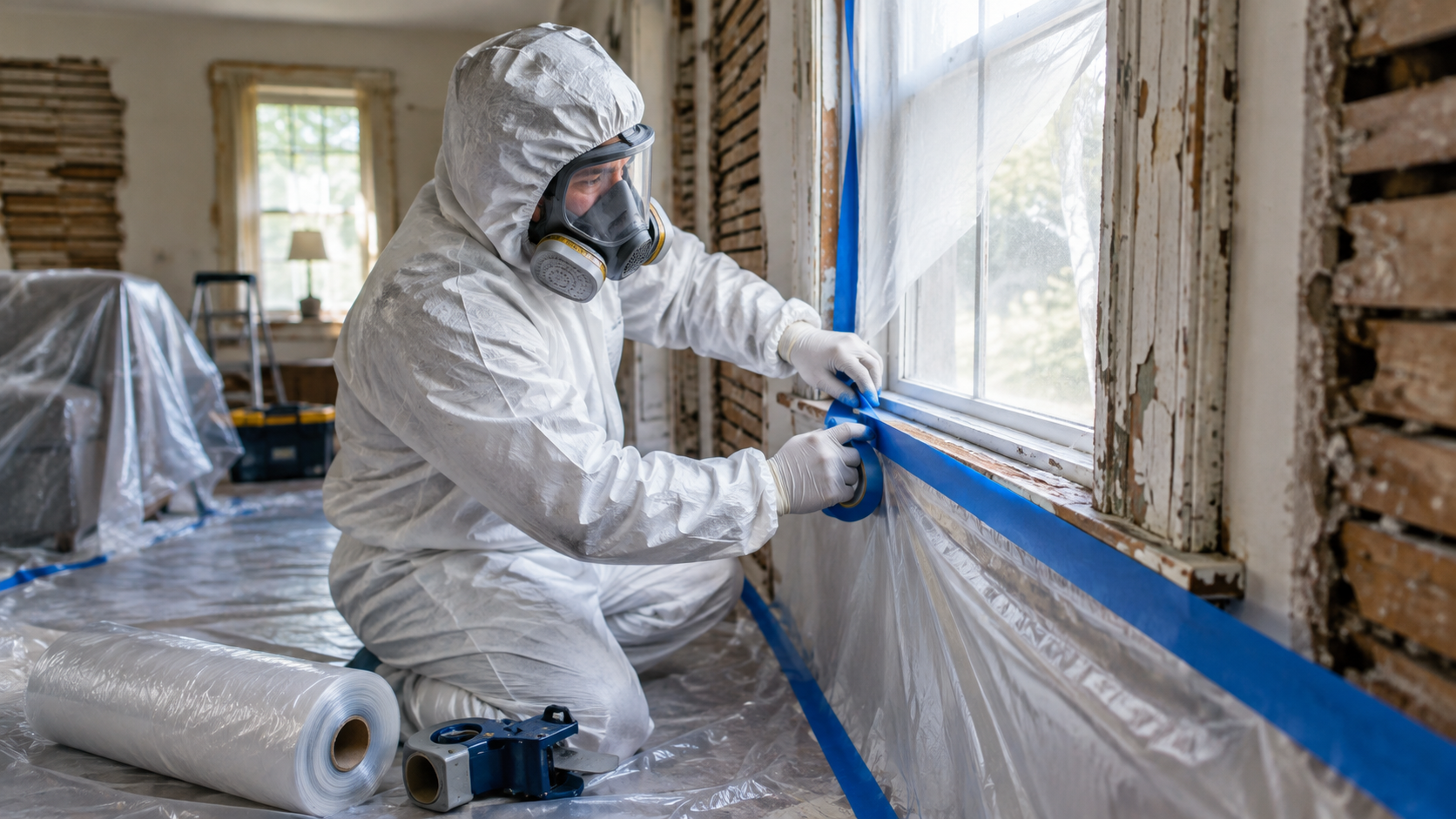
Contain the Work Area: Contractors must seal off the renovation zone using heavy 6-mil plastic sheeting. All doors, windows, and HVAC registers in the room must be taped off to prevent dust from migrating into clean living spaces.
Minimize Dust Generation: Dry scraping, power sanding without HEPA attachments, and open-flame burning are strictly prohibited. Workers must use a wet lead paint removal process, misting surfaces with water before scraping to keep dust from going airborne.
Thorough Cleanup Protocols: A standard shop vacuum will simply blow microscopic lead dust back into the air. Contractors must use specialized HEPA vacuums to clean the workspace, followed by wet wiping all surfaces to capture any lingering residue.
Overlapping Hazards: Asbestos During Renovation
While focusing on the lead paint removal Michigan regulations require, property owners must not overlook other hazardous materials in homes. Demolishing walls, lifting old flooring, or scraping acoustic ceilings often disturbs asbestos.
Best practice is to assume suspect building materials may contain asbestos regardless of construction date, especially:
Drywall and joint compound
Flooring and mastics
Ceiling tiles and textures
Imported products and components (e.g., materials manufactured in countries without stringent asbestos controls)
Imported or foreign-manufactured building materials can still contain asbestos today, so the safest approach is to test rather than rely on age alone. Many property managers mistakenly believe that non-historic buildings are completely immune to asbestos risks. However, global supply chains mean modern components can still pose a threat.
Regardless of the year your property was built, the safest approach is to treat suspect materials as potentially asbestos-containing until testing proves otherwise. Because some imported products may still contain asbestos, age alone is not a reliable way to rule out asbestos.
Before any demolition begins, a professional asbestos inspection and asbestos testing must be completed. If asbestos is found, strict asbestos demolition requirements apply. You must hire licensed professionals for the asbestos removal process to prevent causing severe asbestos health risks for your workers and tenants.
Secondary Threats: Managing Water Damage and Mold
Older homes frequently suffer from hidden water intrusion behind aging plaster or exterior siding. If a contractor opens a wall and discovers a water damage mold risk, the renovation must pause immediately. Ignoring a mold smell in house or trying to cover up wet framing with new drywall will inevitably lead to a massive fungal outbreak.
Handling mold in commercial buildings or residential rentals requires specialized care. If the mold covers a large area, property owners need professional mold remediation Michigan services. The mold remediation process involves setting up negative air pressure containment, safely removing the contaminated wood or drywall, and treating the remaining structure with antimicrobial agents. Combining a mold removal near me search with an asbestos and lead abatement contractor ensures that every environmental safety issue is handled simultaneously without cross-contaminating the property.
Clearance Testing and Final Compliance
Once the dust settles on a renovation, how do you know the property is actually safe for your family or tenants? Visual cleanliness is not enough.
After the contractor finishes the lead abatement Warren MI project and removes the plastic containment, an independent risk assessor should perform clearance testing. This involves taking dust wipe samples from floors and windowsills and sending them to a laboratory. A passing clearance test provides documented proof that the lead paint abatement was successful and the indoor air quality is safe. This documentation is essential for landlords seeking to minimize liability and protect their real estate investments.
Protect Your Investment with Environmental Experts
Renovating older homes requires a delicate balance of architectural preservation and strict environmental safety. Tearing into a project without checking for lead, asbestos, or hidden mold is a dangerous gamble that can result in project shutdowns, massive fines, and severe health consequences for the occupants.
If you are planning a renovation in an older property, contact BDS Environmental before you swing the first hammer. Our expert environmental services Michigan team provides comprehensive asbestos inspection, precise mold inspection, and the licensed hazardous material removal you need to keep your site compliant. Whether you need safe asbestos abatement or professional mold remediation for landlords, we manage the environmental risks so you can focus on building a beautiful, safe space.