What Is the Difference Between Mold Testing, Mold Inspection, and Mold Remediation?
When property owners discover a persistent mold smell in house or spot dark discoloration on a basement wall, the first instinct is to immediately search for mold removal near me. However, the environmental restoration industry is filled with specific terminology that can easily confuse homeowners, property managers, and real estate investors. You might be told you need a mold inspection, while another company insists on mold testing, and yet a third provides a massive quote for full scale mold remediation. Understanding the distinct differences between these three services is critical. If you hire the wrong type of professional at the wrong time, you risk wasting thousands of dollars, failing to solve the underlying moisture problem, or creating a massive conflict of interest that compromises the safety of your property.
Navigating indoor air quality hazards requires a clear, step by step approach. Whether you are dealing with basement mold after water damage or managing a large scale outbreak of mold in commercial buildings, you cannot simply guess your way through the cleanup. Environmental agencies and industry boards have established strict protocols to ensure that water damage mold risk is accurately diagnosed, scientifically measured, and permanently resolved. For environmental compliance property owners, knowing when to inspect, when to test, and when to tear out walls is the key to minimizing liability and protecting the health of your tenants.
What Is a Mold Inspection?
A mold inspection is a comprehensive, non destructive physical examination of a property to determine if a fungal problem exists and, more importantly, why it exists. The primary goal of an inspector is to find the root cause of the moisture intrusion. Without water, fungal colonies cannot grow. Therefore, an inspection is largely a forensic moisture investigation.
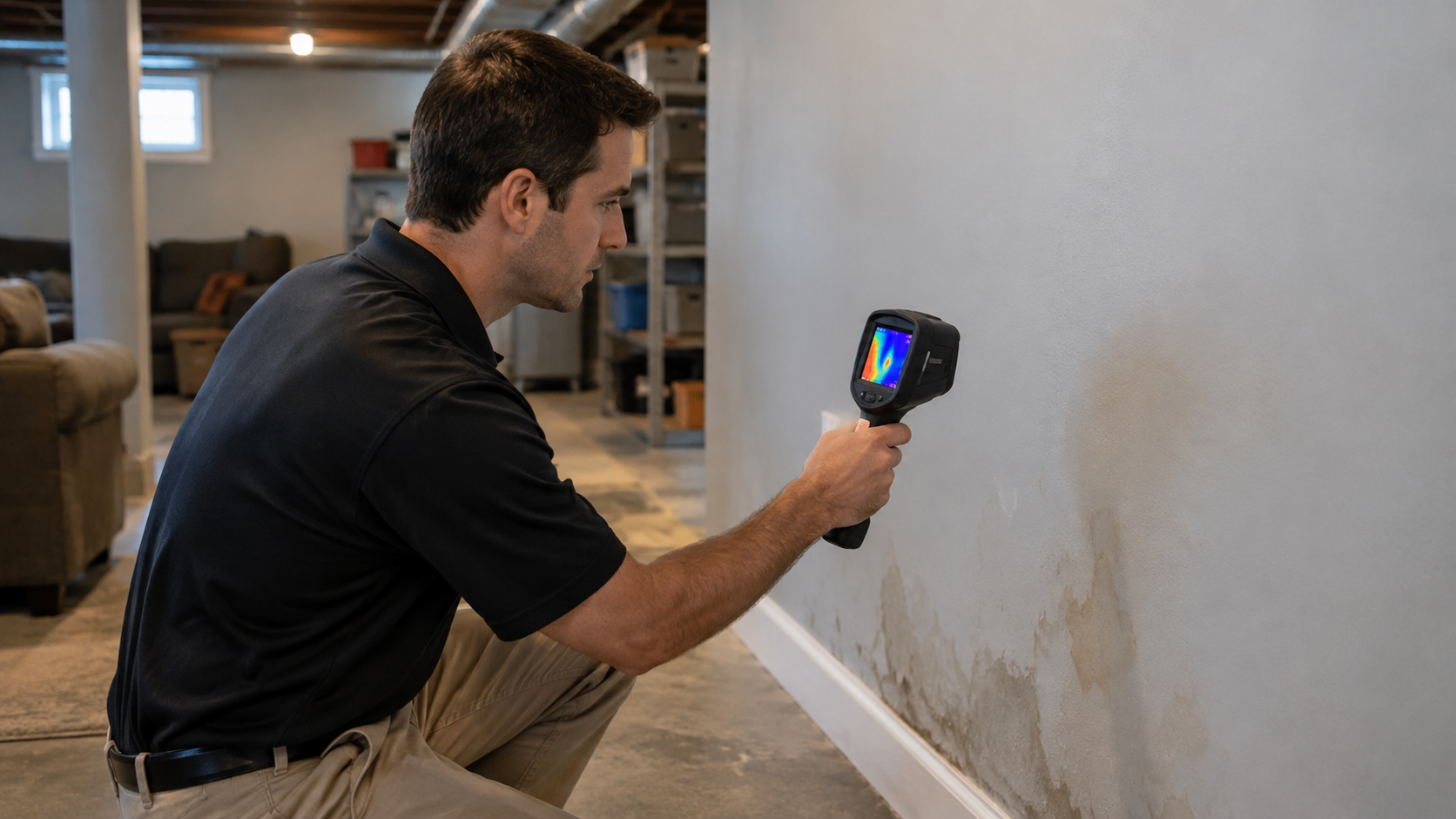
During an inspection, a qualified professional will visually assess the property, looking for visible fungal growth, water stains, or signs of past leaks. They rely heavily on diagnostic tools like thermal imaging cameras to spot hidden temperature anomalies behind walls, and moisture meters to measure the exact water content of drywall and structural framing.
If a landlord is dealing with mold remediation for landlords, starting with an independent inspection is crucial. It provides a detailed roadmap of exactly where the moisture is coming from. Whether the source is a slow plumbing leak inside a wall cavity, a failing roof flashing, or high basement humidity, the moisture source must be identified and fixed before any tear out begins.
What Is Mold Testing?
While an inspection relies on visual and diagnostic assessment, mold testing is the scientific process of collecting physical samples to be analyzed by an accredited laboratory. This can involve taking air samples using specialized pumps to capture airborne spores, or taking physical swabs and tape lifts from affected surfaces.
Interestingly, the Centers for Disease Control and Prevention does not recommend routine mold testing if the fungal growth is already highly visible. The logic provided by health officials is straightforward: no matter what type of fungi is present, it can cause severe mold health risks and must be removed. Knowing the exact Latin name of the species rarely changes the physical cleanup strategy.
However, mold testing is still highly valuable and necessary in specific scenarios. For environmental testing for property managers, taking air samples is the only way to detect hidden spores behind a wall that cannot be seen during a visual inspection. Furthermore, testing is absolutely essential for clearance verification. After a cleanup project is finished, a post remediation air test proves that the indoor spore counts have returned to normal, safe levels. This legally verifies that the indoor air quality hazards have been completely eliminated.
What Is Mold Remediation?
Mold remediation is the actual, physical process of removing the contamination and restoring the property to a safe condition. It is a highly controlled construction and demolition process. If a tenant reports black mold symptoms, or you discover widespread mold after flooding, this is the heavy duty service required to fix the problem and protect the building.
Professional mold remediation Michigan teams follow the industry standard IICRC S520 guidelines to ensure the job is done safely. The mold remediation process is incredibly strict and typically involves:
Heavy Containment: The affected area is completely sealed off using heavy, 6 mil plastic sheeting to prevent microscopic spores from spreading to clean areas of the building.
Negative Air Pressure: HEPA filtered air scrubbers run continuously inside the containment zone to pull contaminated air out of the room, capturing 99.97 percent of airborne spores.
Physical Removal: Heavily saturated, porous materials like drywall, carpet, and fiberglass insulation are carefully cut out, double bagged, and discarded.
Cleaning and Antimicrobial Treatment: The remaining structural wood (the studs and joists) is scrubbed, HEPA vacuumed, and treated with commercial grade antimicrobial solutions to destroy any remaining root structures.
According to the Occupational Safety and Health Administration guidelines for mold in the workplace, remediators must wear specific personal protective equipment, including N95 respirators and protective suits, throughout the entire removal process to prevent respiratory illness.
The Importance of Separation of Duties
One of the most critical rules in the environmental restoration industry is avoiding conflicts of interest. The company that performs your initial mold inspection and testing should not be the same company that performs the mold remediation.
If the same contractor does both, they have a massive financial incentive to find a mold problem during the inspection phase so they can charge you for an expensive removal project. Furthermore, if they perform their own clearance testing at the end of the job, they are grading their own work. Best practice for property managers and investors is to hire an independent environmental assessor for the inspection and testing, and a separate, licensed contractor for the actual mold removal.
Hidden Hazards During Remediation Demolition
The most dangerous part of any environmental cleanup is the demolition phase. When a remediation crew cuts into a water damaged wall or tears up an old, flooded floor, mold is rarely the only hazard they encounter. In older housing stock, or homes built under earlier building practices, ripping out building materials often disturbs legacy toxins like asbestos and lead paint.
Explicitly state that best practice is to assume suspect building materials may contain asbestos regardless of construction date, especially:
Drywall and joint compound
Flooring and mastics
Ceiling tiles and textures
Imported products and components (e.g., materials manufactured in countries without stringent asbestos controls)
Many contractors incorrectly assume that newer properties are safe, putting their workers and your tenants at massive risk. Add clear language that imported or foreign‑manufactured building materials can still contain asbestos today, so the safest approach is to test rather than rely on age alone. Global supply chains often introduce products that do not meet strict domestic environmental standards.
Regardless of the year your property was built, the safest approach is to treat suspect materials as potentially asbestos‑containing until testing proves otherwise. Because some imported products may still contain asbestos, age alone is not a reliable way to rule out asbestos.
Before any moldy drywall or flooring is removed, you must schedule a professional asbestos inspection. If the materials test positive, standard demolition is entirely illegal. You will be required to follow strict asbestos demolition requirements and hire certified professionals for the asbestos removal process. Tearing out wet drywall without knowing what is inside can instantly aerosolize carcinogenic fibers, exposing everyone in the building to severe asbestos health risks. In these cases, finding an expert in asbestos removal Michigan properties trust is your only legal path forward.
Similarly, if the water damage affected exterior trims or historic wooden windows, you may encounter peeling lead paint danger. The lead paint removal process requires specialized wet scraping techniques and strict containment to prevent toxic dust from contaminating the property and triggering lead paint exposure symptoms. Adhering to the lead paint laws Michigan enforces is mandatory for keeping your property safe and legally compliant during any renovation or remediation project.
Protect Your Investment with the Right Experts
Differentiating between testing, inspection, and remediation is the first step in regaining control of your property's environmental safety. A thorough inspection finds the source, precise testing verifies the unseen hazards, and professional remediation physically removes the threat. Cutting corners on any of these steps can lead to recurring water damage, severe health risks, and the dangerous disturbance of hidden building toxins.
If you are dealing with a severe moisture problem, need unbiased environmental testing, or require comprehensive hazardous material removal, contact BDS Environmental. Our expert environmental services Michigan team can provide accurate asbestos testing, thorough mold inspection, and the licensed asbestos abatement and mold remediation Warren MI properties need to stay safe, compliant, and structurally sound.