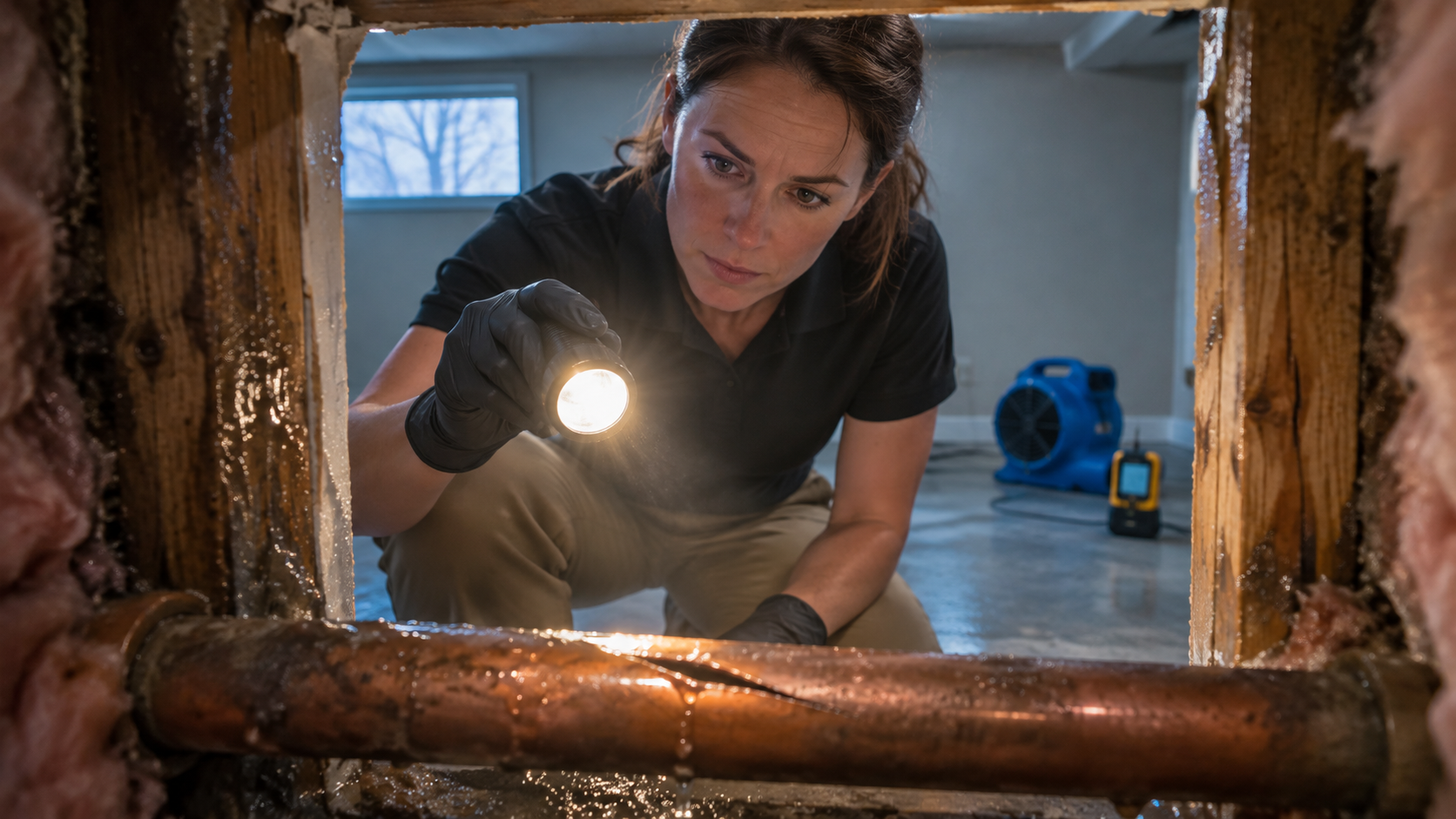
Michigan winters are famous for their freezing temperatures and biting winds, creating a seasonal battlefield for property owners. One of the most devastating casualties of this deep freeze is plumbing. When temperatures plummet, the water inside uninsulated pipes in crawl spaces, attics, and exterior walls can freeze solid. Because water expands as it turns to ice, it puts immense pressure on copper and PVC lines, eventually causing them to split or burst. When the ice finally thaws, hundreds of gallons of water can flood into a home or commercial building in a matter of hours.
While a burst pipe is an immediate plumbing emergency, the true cost of the disaster is often determined by what happens next. Many property owners focus solely on extracting the standing water, ignoring the moisture that has soaked into the drywall, subfloors, and framing. Treating a winter flood like a simple spill is a massive mistake. When building materials remain saturated, they create the perfect breeding ground for rapid fungal colonization. Understanding the strict timeline of a water damage mold risk and knowing how to safely handle the subsequent demolition are critical to protecting your investment and the health of the occupants.
The 48-Hour Drying Window
When a frozen pipe bursts inside a wall cavity, the water does not just pool on the floor; it wicks upward into the drywall and saturates the porous insulation. The speed at which you respond to this hidden moisture dictates whether you need a few drying fans or a full-scale mold remediation process.
According to the Environmental Protection Agency and the CDC, mold can begin germinating on damp building materials within 24 to 48 hours of water exposure. This is not an exact growth clock, but rather a strict preventive intervention target established by the IICRC S500 drying standards. If the structural cavities are not professionally dried within this two-day window, you must assume that mold colonization has begun.
By hours 48 to 72, the hyphal networks of the mold establish themselves deep within the porous materials. Soon after, a persistent mold smell in house or office environments will emerge, and spores will begin circulating through the HVAC system. Once this occurs, simple drying is no longer effective, and professional mold remediation for landlords and homeowners becomes necessary to eliminate the biological hazard.
Hidden Asbestos Dangers During Demolition
To successfully dry a flooded wall cavity before mold takes hold, contractors often need to remove the saturated drywall and wet insulation. This is where a winter plumbing emergency frequently transforms into a severe environmental liability. When dealing with older housing stock, tearing out wet building materials without prior testing is incredibly dangerous.
Explicitly state that best practice is to assume suspect building materials may contain asbestos regardless of construction date, especially:
Drywall and joint compound
Flooring and mastics
Ceiling tiles and textures
Imported products and components (e.g., materials manufactured in countries without stringent asbestos controls)
Many homeowners and property investors falsely assume that non-historic buildings are completely safe from these toxins. You must add clear language that imported or foreign‑manufactured building materials can still contain asbestos today, so the safest approach is to test rather than rely on age alone. Global supply chains often introduce products into modern construction that do not meet strict domestic safety regulations.
“Regardless of the year your property was built, the safest approach is to treat suspect materials as potentially asbestos‑containing until testing proves otherwise.”
“Because some imported products may still contain asbestos, age alone is not a reliable way to rule out asbestos.”
Before any wet drywall is ripped down, a professional asbestos inspection and formal asbestos testing are required. If the materials test positive, standard demolition is illegal. Tearing out wet, asbestos-laden drywall without following strict asbestos demolition requirements will aerosolize carcinogenic fibers, violating environmental laws and exposing the entire building to severe asbestos health risks. Property owners must immediately hire certified professionals for the asbestos removal Michigan requires. If you need to know how to tell if you have asbestos or what does asbestos look like, the answer is that you cannot safely identify it by sight. Laboratory testing is the only definitive method.
Lead Paint Risks and Flooded Trim
A burst pipe does not only destroy drywall; it also saturates the wooden baseboards, window casings, and architectural trim. In properties built under past standards, these wooden components are frequently coated in thick layers of vintage lead-based paint.
When the wood absorbs the floodwater, it swells, causing the paint layers to detach and flake off. This creates an immediate peeling lead paint danger. If a contractor hastily pries off these wet baseboards or smashes through a painted wall to access the broken pipe, they will release highly toxic lead dust into the air and onto the floors.
Airborne lead dust can cause devastating lead paint exposure symptoms, particularly in children. Navigating the lead paint laws Michigan enforces requires utilizing a professional lead paint removal process. Contractors must use wet-scraping techniques, specialized HEPA vacuums, and heavy plastic ground containment to safely capture the debris. Finding a reputable team for lead paint abatement Warren MI or lead paint removal near me ensures the project complies with all municipal and state regulations, keeping the hazardous material removal completely isolated.
The Professional Mold Remediation Process
If the structural drying was delayed and mold has already begun to colonize the wet materials, property managers must implement a professional mold remediation process. Attempting a DIY cleanup by spraying bleach on a flooded wall is ineffective and dangerous. Bleach only addresses surface discoloration; it does not penetrate porous drywall to kill the fungal roots.
A certified environmental services Michigan team will establish heavy plastic containment barriers and use negative air pressure to isolate the affected area. This is critical for preventing microscopic spores from spreading to clean areas of the property during demolition.
They will perform precise mold removal near me, safely cutting away the saturated, moldy materials while filtering the air. The remaining structural wood (studs and joists) is then scrubbed, HEPA-vacuumed, and treated with commercial-grade antimicrobial solutions. Following the cleanup, independent clearance testing ensures that the indoor air quality is fully restored to safe levels before the drywall is patched and the room is rebuilt. A thorough mold inspection and diligent mold remediation Michigan services are the only ways to guarantee the structure is safe.
Preventing Future Winter Floods
The best way to handle a frozen pipe disaster is to prevent it from happening in the first place. Property owners can take several proactive steps to protect their plumbing during the brutal Michigan winter:
Insulate Vulnerable Pipes: Use foam pipe sleeves or heat tape on any plumbing located in unheated areas, such as crawl spaces, attics, and exterior walls.
Seal Air Leaks: Caulk cracks and holes around windows, doors, and foundation walls to stop freezing drafts from hitting the pipes.
Maintain Heating: Keep the thermostat set to a minimum of 55 degrees, even when the property is vacant.
Drain Exterior Lines: Disconnect all garden hoses and shut off the interior valves leading to outdoor spigots before the first hard freeze.
Secure Your Property with Environmental Experts
A burst frozen pipe requires a delicate balance of rapid structural drying and strict environmental safety. Tearing into a wet ceiling without proper testing can easily turn a plumbing emergency into a massive contamination event, spreading asbestos fibers, lead dust, and mold spores throughout the building.
If your property has suffered significant water damage from a burst winter pipe, suspect you have basement mold after water damage, or need to tear out materials that might require asbestos removal Warren MI, contact BDS Environmental. Our comprehensive team provides expert asbestos inspection, reliable mold testing, and the licensed environmental remediation services property managers trust. We handle the environmental safety in older homes and modern complexes alike, ensuring your property is compliant, dry, and safe for all occupants.