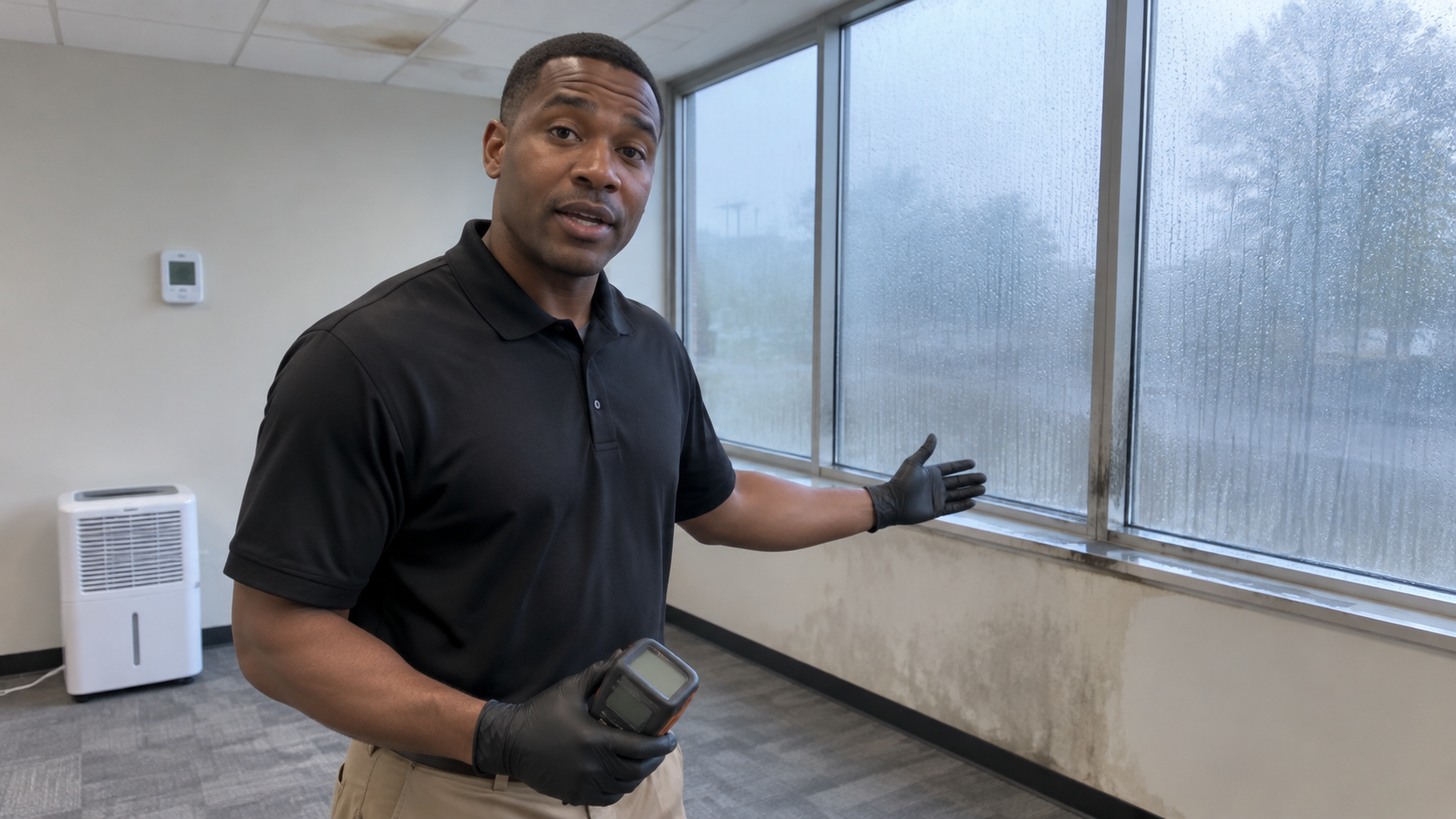
When a commercial building or multi-family property sits vacant, the silence can be deceptive. While there is no foot traffic to scuff the floors or tenants to complain about the heat, the building itself is engaged in a constant battle against the elements. One of the most destructive forces in an unoccupied property is unmanaged moisture. Without the daily operation of HVAC systems to regulate temperature and pull humidity out of the air, stagnant moisture begins to accumulate. What starts as minor condensation on a window frame can quickly spiral into a massive environmental liability.
For property managers and real estate investors in Michigan, preventing mold in vacant commercial buildings requires a proactive strategy. When properties are left to freeze in the winter and bake in the humid summer, the resulting water damage mold risk accelerates rapidly. A small roof leak that would have been reported immediately by a tenant can go unnoticed for weeks in an empty building, allowing aggressive fungal colonization to take root. Understanding how to control the indoor environment, identify early warning signs, and manage the hidden hazards of older building materials is critical to protecting your vacant real estate investment.
The Mechanics of Mold in Vacant Buildings
Mold requires three things to grow: oxygen, an organic food source (like drywall, wood, or ceiling tiles), and moisture. In a commercial building, the food source is everywhere, meaning moisture is the only variable you can control.
When a building is vacant, owners often shut off the HVAC system entirely to save on utility costs. This is a critical mistake. According to the Environmental Protection Agency (EPA), maintaining indoor humidity below 60% (ideally between 30% and 50%) is the most important factor in mold prevention. Without an active HVAC system running to dehumidify the air, the indoor humidity will naturally match the outdoor environment.
During Michigan summers, the humid air becomes trapped inside. When the temperature drops at night, this trapped moisture reaches its dew point and condenses into liquid water on cold surfaces, such as exterior walls, metal window frames, and uninsulated ductwork. This surface condensation is enough to trigger rapid mold growth on adjacent drywall and ceiling tiles within 24 to 48 hours.
Steps to Prevent Water Damage and Mold Growth
Protecting a vacant commercial property requires treating it as an active asset. Property managers must implement a strict maintenance schedule to control the indoor climate and maintain the building envelope.
Maintain a Baseline HVAC Schedule: Never turn the HVAC system completely off. Program the thermostats to maintain a baseline temperature (above 55°F in the winter to prevent frozen pipes, and below 80°F in the summer) with active dehumidification cycles.
Perform Weekly Inspections: Walk the property at least once a week. Check all plumbing fixtures, look at the ceilings below flat roofs for new water stains, and inspect the basement or crawl space for signs of water intrusion.
Use Remote Humidity Sensors: Install smart temperature and humidity monitors that send alerts directly to your phone if the indoor humidity spikes above 60% or the temperature drops below freezing.
Keep Drip Pans Clean: Ensure that HVAC condensate lines and drip pans are clear. A clogged drain line in an empty building will overflow silently, causing devastating basement mold after water damage.
If you detect a mold smell in house or office spaces during your walkthrough, trust your nose. Musty odors are the first indicator of hidden moisture, often warning you of a problem before any visible black mold symptoms appear.
The Hidden Dangers of Demolition and Remediation
If a leak occurs in a vacant building and mold takes hold, property owners must address the damage immediately. The mold remediation process defined by the EPA and industry standards involves stopping the water source, containing the area, and safely removing the saturated, contaminated building materials.
However, tearing out water-damaged materials in older housing stock or historic commercial spaces introduces massive secondary hazards. When preparing for mold remediation in commercial buildings, you cannot simply swing a sledgehammer into a wet wall.
Explicitly state that best practice is to assume suspect building materials may contain asbestos regardless of construction date, especially:
Drywall and joint compound
Flooring and mastics
Ceiling tiles and textures
Imported products and components (e.g., materials manufactured in countries without stringent asbestos controls)
Many investors mistakenly believe that non-historic buildings are completely safe from these toxins. You must add clear language that imported or foreign‑manufactured building materials can still contain asbestos today, so the safest approach is to test rather than rely on age alone. Global supply chains often introduce products into modern construction that do not meet strict domestic safety regulations.
“Regardless of the year your property was built, the safest approach is to treat suspect materials as potentially asbestos‑containing until testing proves otherwise.”
“Because some imported products may still contain asbestos, age alone is not a reliable way to rule out asbestos.”
Before any wet drywall is ripped down, a professional asbestos inspection and formal asbestos testing are required. If the materials test positive, standard demolition is illegal. Tearing out wet, asbestos-laden drywall without following strict asbestos demolition requirements will aerosolize carcinogenic fibers, violating environmental laws and exposing everyone in the building to severe asbestos health risks. Property owners must immediately hire certified professionals for the asbestos removal Michigan requires. If you need to know how to tell if you have asbestos or what does asbestos look like, the answer is that you cannot safely identify it by sight. Laboratory testing is the only definitive method.
Navigating Lead Paint and Indoor Air Quality Hazards
When dealing with water damage in vacant properties built under earlier building practices, property managers frequently encounter peeling lead paint danger. Water intrusion from a frozen pipe or a failing roof will saturate wooden baseboards, window casings, and exterior trims, causing vintage lead-based paint to swell, detach, and flake off.
Attempting to scrape this flaking paint or removing water-damaged trims without proper training releases highly toxic lead dust into the air and onto the floors. This creates immediate indoor air quality hazards and can cause devastating lead paint exposure symptoms for future tenants or construction workers.
Handling this liability safely requires utilizing a professional lead paint removal process. The contractors you hire must use wet-scraping techniques, specialized HEPA vacuums, and heavy plastic ground containment to safely capture the debris. Finding a reputable team for lead paint abatement Warren MI or lead paint removal near me ensures the project complies with all state regulations, keeping the hazardous material removal completely isolated from the rest of the building.
Protecting Your Investment with Professional Oversight
Managing a vacant commercial building requires vigilance. What you save by turning off the utilities, you will pay ten times over when a hidden leak causes mold after flooding or forces a massive environmental cleanup. By controlling the indoor humidity, conducting regular inspections, and testing suspect building materials before any demolition, you can protect the structural integrity and value of your asset.
If your vacant property has suffered water damage, if you suspect you have hidden mold, or if you need to tear out materials that might require asbestos removal Warren MI, contact BDS Environmental. Our comprehensive team provides expert asbestos inspection, reliable mold testing, and the licensed environmental remediation services property managers trust. We handle the environmental safety in older homes and modern commercial complexes alike, ensuring your property remains compliant, dry, and ready for its next tenant.