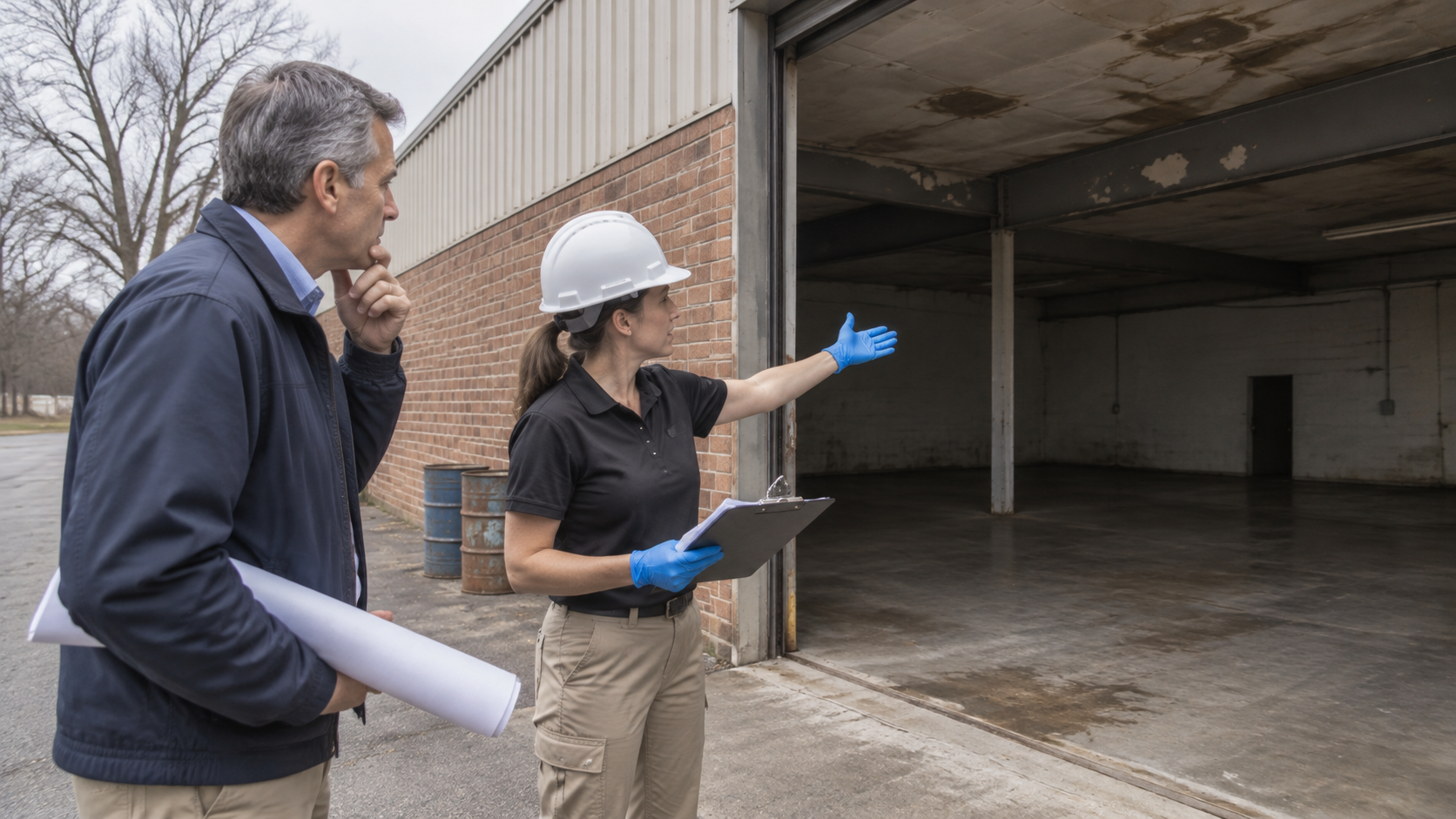
Purchasing commercial real estate or industrial property in Michigan requires significant capital and meticulous planning. For investors, developers, and property managers, evaluating the physical structure and financial viability of a property is only half the battle. The hidden dangers beneath the soil and inside the building envelope can instantly transform a lucrative asset into an overwhelming financial liability. If a buyer unknowingly acquires a contaminated site, they can be held strictly liable for the cleanup costs, even if they did not cause the original pollution. To prevent this, the commercial real estate industry relies heavily on a foundational due diligence tool: the Phase I Environmental Site Assessment.
A Phase I ESA is far more than a basic building inspection. It is a rigorous, regulated investigation designed to uncover historical environmental risks before the title changes hands. However, while this assessment is incredibly powerful for evaluating soil and groundwater contamination, it possesses significant blind spots regarding the interior of the building. Understanding what a Phase I ESA covers, when it is legally required, and why supplemental investigations are necessary to detect indoor air quality hazards is essential for environmental compliance property owners. Relying on a standard Phase I alone without checking for mold, asbestos, or lead can leave your real estate portfolio dangerously exposed.
What Is a Phase I Environmental Site Assessment?
A Phase I Environmental Site Assessment is a standardized investigation that evaluates the environmental history and current condition of a commercial or industrial property. Governed by the strict ASTM E1527-21 standard, this assessment satisfies the Environmental Protection Agency's requirements for "All Appropriate Inquiries" (AAI). Completing this inquiry before purchasing a property is the primary way a buyer can qualify for liability protection under the federal Comprehensive Environmental Response, Compensation, and Liability Act (CERCLA).
The Phase I ESA is strictly a non-invasive assessment. Inspectors do not drill into the ground, tear open walls, or take physical samples of building materials. Instead, the environmental professional conducts a deep forensic investigation consisting of four main components:
Regulatory Records Review: Evaluating federal, state, and local databases for known hazardous waste spills, underground storage tanks, and cleanup liens on the property and surrounding areas.
Historical Research: Reviewing historical aerial photographs, fire insurance maps, city directories, and topographic maps to determine what the property was used for over the past century.
Site Reconnaissance: A physical walk-through of the property to visually look for signs of contamination, such as stained soil, stressed vegetation, abandoned drums, or chemical odors.
Interviews: Speaking with past and current owners, operators, and local government officials to gather unrecorded knowledge about the site.
If the environmental professional identifies a Recognized Environmental Condition (REC)—a sign that hazardous substances or petroleum products were likely released into the environment—the buyer will typically need to proceed to an invasive Phase II ESA involving physical soil and groundwater testing.
When Is a Phase I ESA Needed?
In the commercial real estate world, a Phase I ESA is almost always a mandatory step in the transaction process. It is required in several specific scenarios:
Real Estate Transactions: Any buyer who wishes to claim the "innocent landowner" or "bona fide prospective purchaser" defense against CERCLA liability must complete a Phase I before acquiring the property.
Commercial Financing: Traditional lenders and commercial banks will not underwrite a commercial mortgage or refinance a loan without a clean Phase I report. They need assurance that the collateral is not severely devalued by environmental contamination.
Change of Land Use: When converting an industrial warehouse into a residential apartment complex or retail space, municipalities often require an assessment to ensure the land is safe for its new purpose.
The Blind Spot: Out-of-Scope Environmental Hazards
While a Phase I ESA is brilliant at discovering a forgotten underground oil tank or a historic chemical spill, it has a massive blind spot that catches many new commercial buyers off guard. Under the official ASTM E1527-21 guidelines, certain critical indoor air quality hazards are specifically classified as "non-scope" considerations. This means that a standard Phase I ESA will not automatically inspect or test for asbestos, mold, or lead-based paint.
A buyer can receive a perfectly clean Phase I report, close on the building, and walk into a nightmare on day one of renovation.
Water Damage and Mold Risks
A vacant commercial property or a building with a deferred maintenance history is highly susceptible to roof leaks, plumbing failures, and HVAC condensation. The standard Phase I does not include a mold inspection or evaluate the property for a water damage mold risk. If the building suffered a burst pipe over the winter, you could be inheriting severe mold in commercial buildings.
A persistent mold smell in house or office spaces is often the first indicator of a problem. Ignoring this leads to extreme mold health risks for future tenants, including respiratory infections and black mold symptoms. If widespread contamination is found after closing, the buyer will be entirely responsible for funding the professional mold remediation process. To avoid this, investors should request a specific assessment for mold after flooding or basement mold after water damage before finalizing the purchase. If contamination is confirmed, utilizing licensed mold remediation Michigan services or a trusted mold removal near me contractor is essential.
Peeling Lead Paint Dangers
Another out-of-scope hazard is lead paint in older homes and vintage commercial properties. While the Phase I looks at the dirt outside, it ignores the peeling lead paint danger inside the building envelope. Disturbing these surfaces during a remodel can generate toxic dust, exposing workers to severe lead paint exposure symptoms. Navigating the strict lead paint laws Michigan enforces requires specialized training and containment. Buyers must identify these risks early to accurately budget for the necessary lead paint removal process, utilizing certified lead paint abatement Warren MI teams or professional lead paint removal near me.
The Hidden Threat of Asbestos Before Renovation
Of all the non-scope hazards excluded from a standard Phase I, asbestos is the most prevalent and costly to remediate. For decades, asbestos was the standard for fireproofing, thermal insulation, and building strength in commercial construction.
Many developers falsely assume that buildings constructed after the 1980s are completely safe. This is a massive and dangerous misconception. Best practice is to assume suspect building materials may contain asbestos regardless of construction date, especially:
Drywall and joint compound
Flooring and mastics
Ceiling tiles and textures
Imported products and components (e.g., materials manufactured in countries without stringent asbestos controls)
Global supply chains mean that modern materials can still introduce this hazard. Add clear language that imported or foreign‑manufactured building materials can still contain asbestos today, so the safest approach is to test rather than rely on age alone.
“Regardless of the year your property was built, the safest approach is to treat suspect materials as potentially asbestos‑containing until testing proves otherwise.”
“Because some imported products may still contain asbestos, age alone is not a reliable way to rule out asbestos.”
If a buyer is wondering how to tell if you have asbestos or what does asbestos look like, the reality is that visual identification is impossible. An independent asbestos inspection and laboratory asbestos testing are mandatory before any commercial demolition. If you uncover signs of asbestos during a remodel, you face strict asbestos demolition requirements. Ripping into these materials without proper containment will aerosolize carcinogenic fibers, causing severe asbestos health risks. Handling this liability requires hiring a licensed asbestos removal Michigan contractor. Finding accredited asbestos removal near me ensures the asbestos abatement is handled legally, keeping your project compliant and your workers safe.
Upgrading Due Diligence for Property Managers
To truly secure environmental safety in older homes and modern commercial builds, environmental testing for property managers must go beyond the basic Phase I ESA. Savvy buyers negotiate with their environmental consultants to add these "non-scope" considerations into their due diligence package.
By conducting a comprehensive survey that includes asbestos testing, lead assessments, and a thorough mold inspection alongside the Phase I ESA, a buyer gains a complete picture of the property's liabilities. This knowledge provides powerful leverage. The buyer can negotiate the purchase price downward, demand that the seller pay for the necessary hazardous material removal before closing, or accurately forecast the timeline for environmental remediation services. Whether the property needs precise mold remediation Warren MI, a comprehensive lead paint removal Michigan strategy, or large-scale asbestos removal, knowing the costs upfront prevents budget-destroying surprises.
Secure Your Real Estate Investment
A Phase I Environmental Site Assessment is the critical first step in commercial real estate due diligence, but it is rarely the only step required to protect your investment. Purchasing a property without evaluating the interior building materials for mold, asbestos, and lead leaves you entirely exposed to massive regulatory fines and remediation costs. Comprehensive environmental preparation ensures your renovation projects start safely and finish profitably.
If you are acquiring a commercial property, managing a multifamily complex, or preparing for an asbestos before renovation concern, contact BDS Environmental. Our expert environmental services Michigan team can help you navigate the complexities of property assessments, providing accurate asbestos testing, detailed mold inspection, and the licensed mold remediation for landlords and investors rely on. We handle the dirty work of hazardous material removal so you can focus on building a safe, compliant, and lucrative real estate portfolio.