Asbestos Boiler Insulation Removal: Why Older Mechanical Rooms Need Special Attention
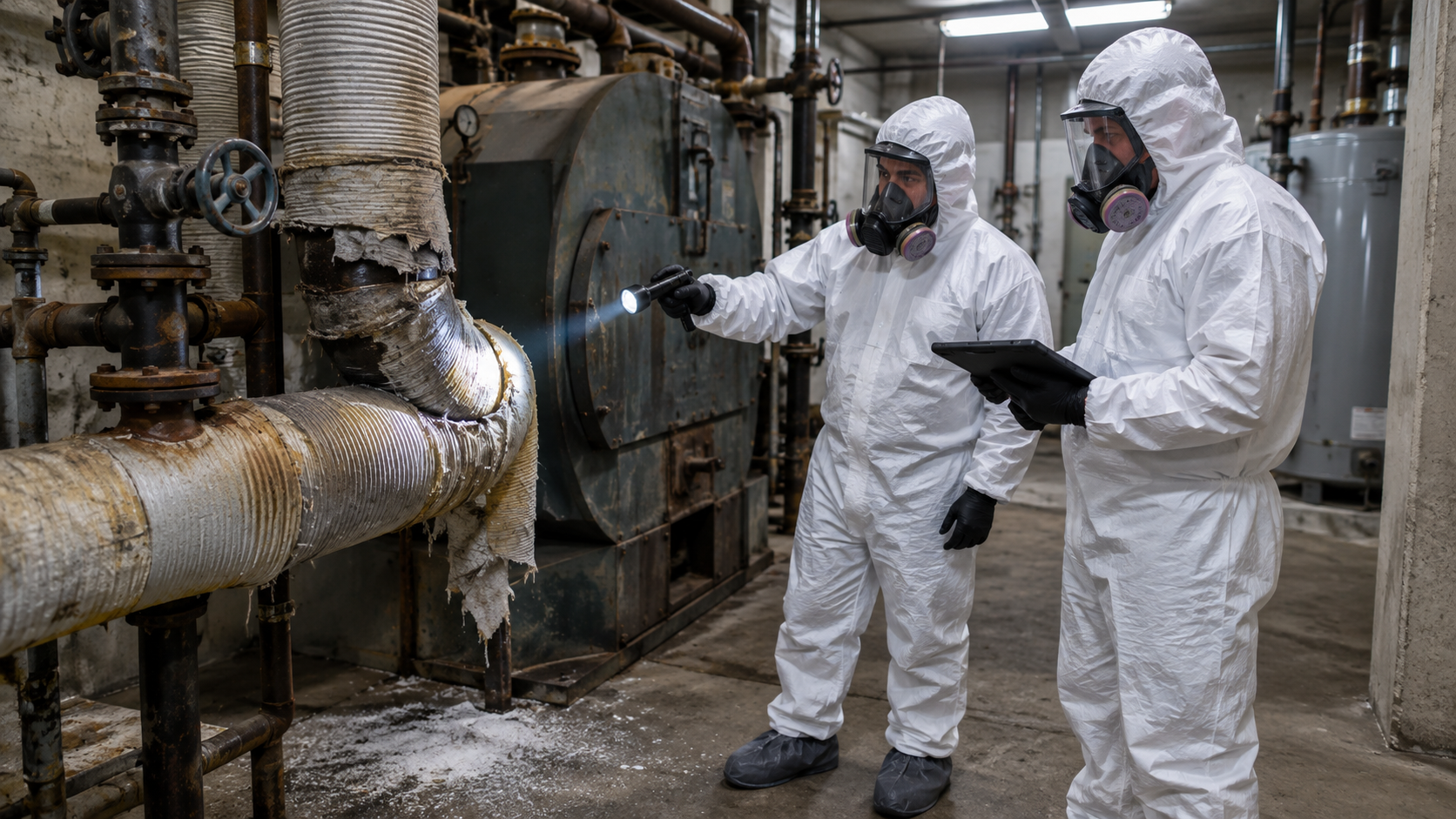
The mechanical room is the beating heart of any commercial building or multi-family property. Tucked away in basements or utility tunnels, these spaces house the massive boilers, furnaces, and complex networks of pipes that keep the property warm through brutal Michigan winters. Because these systems generate and transport extreme heat, they require heavy duty thermal protection to operate safely and efficiently. In properties built under past standards, this thermal protection almost always involved asbestos. Known for its incredible fire resistance and insulating properties, asbestos was the standard choice for wrapping boilers, hot water tanks, and steam pipes across the country.
Today, those legacy materials present a massive liability for property managers and investors. Over decades of constant heating and cooling, boiler insulation degrades, becoming brittle and highly friable. When it is time to upgrade a failing boiler, fix a leaking pipe, or perform routine maintenance, disturbing this old insulation can release millions of microscopic, carcinogenic fibers into the air. Handling an asbestos boiler insulation removal project requires strict environmental compliance property owners cannot afford to ignore. Attempting to tear out these materials without specialized training is not just a regulatory violation; it is a serious threat to the indoor air quality of the entire building.
Identifying the Threat in the Boiler Room
A frequent question from contractors and maintenance staff is how to tell if you have asbestos in a mechanical room. The reality is that visual identification alone is never entirely conclusive, but there are strong visual indicators that should trigger an immediate asbestos inspection.
When asking what does asbestos look like in a boiler room, professionals typically look for three common applications:
Air Cell Pipe Wrapping: This looks like corrugated cardboard wrapped around steam pipes, often white or light gray, and secured with metal bands or cloth tape.
Block Insulation: Boilers and large hot water tanks were frequently covered in rigid blocks or panels made of asbestos containing materials.
Mudded Joints: The elbows, valves, and T-joints of piping systems were often insulated with a cementitious paste that was mixed with asbestos on site and applied by hand.
These materials are highly friable. This means they can be easily crumbled by hand pressure, making them exceptionally dangerous. If you see signs of asbestos such as chalky dust accumulating on the floor beneath a pipe or insulation that is torn, sagging, or water damaged, you must stop work immediately and restrict access to the room.
When Water Damage Meets Asbestos
Mechanical rooms are uniquely vulnerable to water intrusion. Burst valves, leaking steam pipes, or foundation seepage can quickly flood a basement utility room. When this happens, property owners are forced to deal with overlapping hazards. Moisture combined with the warm environment of a boiler room creates the perfect breeding ground for severe mold after flooding.
A persistent mold smell in house or commercial basements is a clear indicator of hidden moisture. Within just 48 hours, a leaking boiler can trigger a massive water damage mold risk. If left unchecked, this moisture leads to aggressive fungal colonization, exposing tenants to black mold symptoms such as severe asthma attacks, respiratory infections, and allergic reactions. Resolving these mold health risks requires a thorough mold remediation process.
However, mold remediation for landlords becomes infinitely more complicated when asbestos is involved. You cannot simply tear out wet, moldy drywall or remove damaged pipe wrapping to stop a leak. If the wet materials are wrapped in asbestos, pulling them apart will aerosolize toxic fibers. A standard mold removal near me search is not enough; you need a contractor qualified to handle both biological and chemical hazardous materials in homes. Any mold inspection in an older mechanical room must be accompanied by an asbestos inspection to ensure the demolition does not trigger a larger crisis.
The Essential Rule for Suspect Materials
Many investors falsely assume that properties constructed in recent decades are entirely free of asbestos. This misconception leads to dangerous DIY renovations and catastrophic contamination events.
Best practice is to assume suspect building materials may contain asbestos regardless of construction date, especially:
Drywall and joint compound
Flooring and mastics
Ceiling tiles and textures
Imported products and components (e.g., materials manufactured in countries without stringent asbestos controls)
Add clear language to your maintenance protocols that imported or foreign-manufactured building materials can still contain asbestos today, so the safest approach is to test rather than rely on age alone. Global supply chains mean that acoustic textures, adhesives, and mechanical components from overseas may not adhere to domestic environmental standards.
Regardless of the year your property was built, the safest approach is to treat suspect materials as potentially asbestos-containing until testing proves otherwise. Because some imported products may still contain asbestos, age alone is not a reliable way to rule out asbestos. A professional environmental testing for property managers is the only legal and scientific way to verify the presence of hazardous materials before you authorize demolition.
Health Risks and Michigan Legal Requirements
The asbestos health risks associated with mechanical rooms are severe and well documented. The microscopic fibers are easily inhaled, lodging permanently in the lining of the lungs. Over time, this exposure causes devastating and often fatal diseases, including asbestosis, lung cancer, and mesothelioma.
Because of these extreme risks, the State of Michigan strictly regulates how asbestos is handled. Under state regulations, any individual or company hired to remove friable asbestos must be a licensed asbestos abatement contractor. Furthermore, contractors face strict asbestos demolition requirements. They must submit a formal project notification to the state's Asbestos Program at least 10 days prior to beginning any non emergency abatement project that exceeds 10 linear feet or 15 square feet of friable material.
Ignoring these asbestos laws Michigan enforces can result in massive financial penalties, project shutdowns, and devastating legal liability for the property owner. Environmental safety in older homes and commercial buildings is heavily scrutinized, and cutting corners in the boiler room is a risk no investor should take.
The Professional Asbestos Abatement Process
When testing confirms the presence of asbestos on your boiler or piping, you must hire certified professionals for the asbestos removal process. This is not a project for a standard HVAC technician or a general demolition crew.
A professional asbestos removal Michigan contractor utilizes highly specialized engineering controls to protect the rest of the building.
Containment: The mechanical room is completely sealed off using heavy plastic sheeting. All vents, doors, and HVAC returns are covered to prevent fiber migration.
Negative Air Pressure: HEPA filtered exhaust machines run constantly to create negative air pressure. This ensures that when a worker enters or exits the containment zone, fresh air flows into the room, but contaminated air cannot flow out.
Wet Methods: The asbestos insulation is heavily saturated with specialized wetting agents before and during removal. Keeping the material wet minimizes the amount of dust that becomes airborne.
Proper Disposal: All removed materials are carefully lowered into thick, clearly labeled, double sealed hazardous waste bags. These bags are thoroughly decontaminated before they are transported to a licensed landfill.
Once the physical removal is complete, the containment area is thoroughly scrubbed and HEPA vacuumed. Finally, a neutral, independent third party inspector must perform post abatement clearance air monitoring. The plastic containment barriers cannot be removed until this independent testing proves the air is completely safe to breathe.
Trust the Experts for Mechanical Room Safety
Upgrading the mechanical systems in older housing stock is essential for property efficiency, but the environmental hazards hiding in the basement require careful, professional management. Whether you are dealing with basement mold after water damage caused by a leaking boiler, or you need to strip old pipe wrapping before installing a new HVAC system, you need a partner who understands the complexities of hazardous material removal.
If you are planning a mechanical room renovation or suspect your building has environmental issues, contact BDS Environmental. Our highly trained environmental services Michigan team can handle everything from asbestos testing and accredited mold inspection to full scale asbestos abatement and mold remediation Michigan properties require. We ensure your utility spaces are compliant, safe, and ready for your mechanical upgrades so you can protect your tenants and your investment.