Fall Roof Leaks and Mold: What Michigan Property Owners Should Watch For
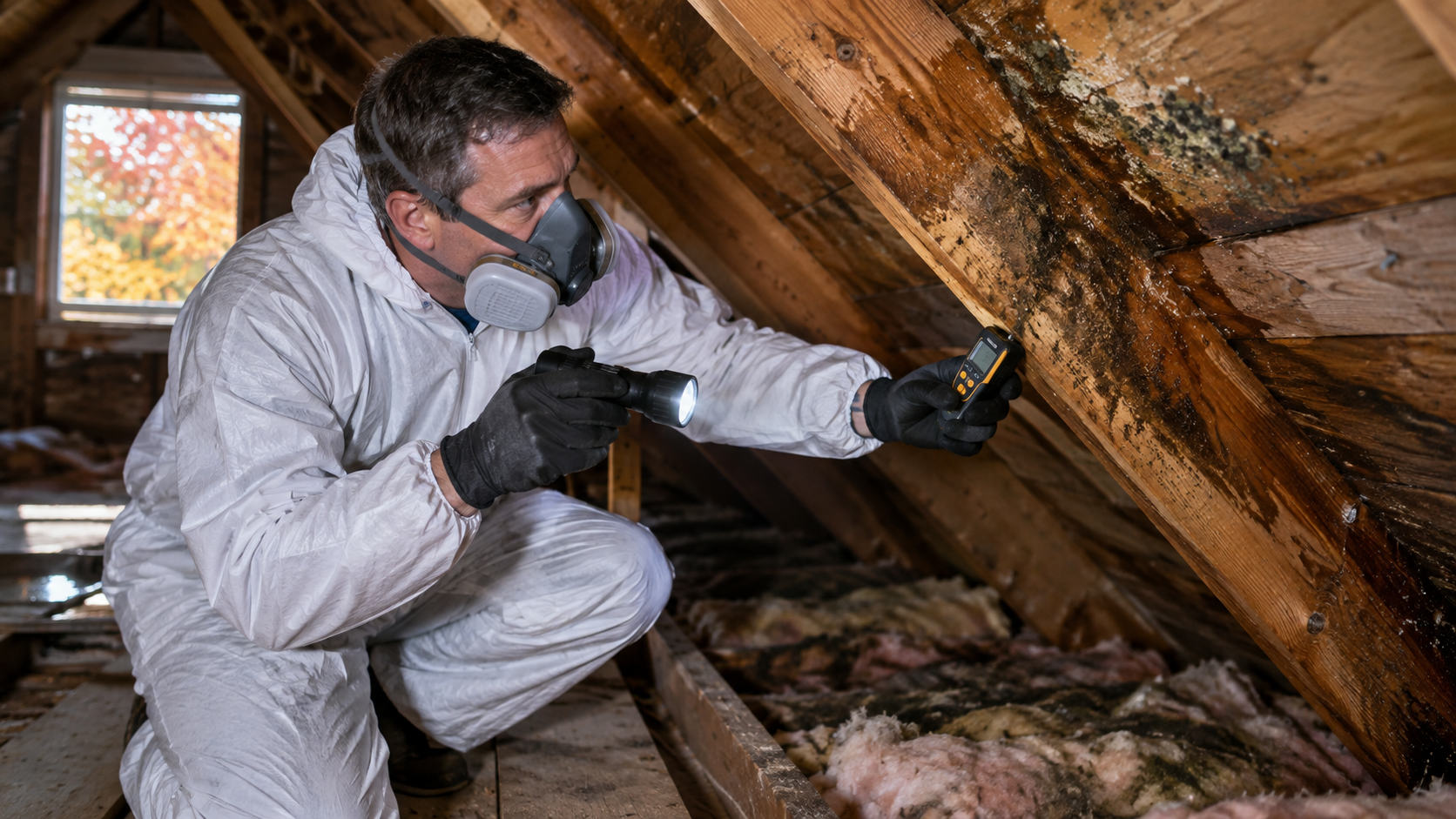
As the vibrant Michigan summer gives way to autumn, property managers and homeowners know it is time to prepare for severe weather changes. The transition to fall brings heavy rains, fluctuating temperatures, and falling leaves that can wreak havoc on residential and commercial roofing systems. Gutters become quickly clogged with debris, causing rainwater to pool and back up under shingles or commercial flat roof membranes. For many property owners, a small roof vulnerability in September can turn into a massive internal nightmare by November when the freeze and thaw cycles begin to expand tiny cracks into major structural failures.
While fixing a few loose shingles might seem like a simple maintenance task, the real danger of a fall roof leak lies inside the building. Water that infiltrates the attic and wall cavities creates an immediate indoor air quality hazard. Once moisture hits the insulation and drywall, the water damage mold risk skyrockets, threatening both the integrity of the property and the health of the occupants. Furthermore, when contractors rush to tear out wet ceilings to find the source of the leak, they often unknowingly disturb hazardous materials in homes. Navigating these overlapping environmental liabilities requires a proactive approach, strict safety protocols, and a clear understanding of what hides behind the walls of older housing stock.
How Autumn Weather Triggers Roof Leaks
The fall season in Michigan creates a perfect storm for roof vulnerabilities. The primary culprit is often poor gutter maintenance. According to roofing experts, failing to clear leaves and debris from gutters traps moisture and forces rainwater to overflow into the soffits and fascia boards. When temperatures drop at night, this trapped moisture freezes and expands, lifting shingles and breaking the waterproof seals around chimneys and vents.
Once water breaches the exterior barrier, it rarely drips straight down. It travels along rafters, soaks into attic insulation, and pools on the top of the drywall ceiling. Because the weather is cooler and windows are kept closed, the trapped moisture has no way to evaporate. This stagnant, damp environment in a warm attic or wall cavity creates the ideal breeding ground for rapid fungal colonization.
The Hidden Danger of Indoor Mold Growth
Property owners often mistakenly believe that a minor water stain on the ceiling is just a cosmetic issue. However, the EPA clearly warns that mold can begin growing on damp building materials within 24 to 48 hours of water exposure. By the time a yellow water spot becomes visible to a tenant, there is usually a significant fungal colony thriving on the reverse side of the drywall.
The first warning sign is often not visual. A persistent mold smell in house or office building is a definitive indicator of hidden moisture. If you notice a musty, earthy odor on the upper floors of a property following a heavy fall rain, you must investigate immediately.
Ignoring these signs invites serious mold health risks. The Centers for Disease Control and Prevention notes that exposure to damp environments can cause severe respiratory issues, coughing, wheezing, and skin rashes. While many people refer to toxic black mold symptoms, the CDC emphasizes that any indoor fungal growth, regardless of the species, can trigger asthma attacks and allergic reactions in sensitive individuals. For landlords, protecting tenants from these health hazards is a critical legal and ethical responsibility.
Proper Steps for Mold Remediation
When a roof leak causes an outbreak, spraying the ceiling with bleach is not a solution. The CDC explicitly states that cleaning mold without addressing the moisture problem will simply result in the mold returning.
A professional mold remediation process involves several strict steps. First, a qualified roofing contractor must stop the water intrusion. Next, the property requires a comprehensive mold inspection to determine how far the moisture has traveled. If the water ran down the inside of the walls, it could easily cause basement mold after water damage, miles away from the original roof leak.
For severe contamination, especially mold in commercial buildings, professional mold removal is required. This involves setting up negative air pressure containment, removing the saturated drywall and insulation safely, and treating the structural wood with commercial grade antimicrobial agents. Achieving a successful mold remediation for landlords means passing a final clearance test to prove the indoor air is clean and safe for the next tenant to occupy.
Asbestos Risks During Ceiling and Wall Repairs
The most dangerous phase of fixing a roof leak is the demolition. When a ceiling is saturated with water and mold, the damaged drywall must be cut out. In properties built under past standards, this seemingly straightforward task can easily release toxic, microscopic asbestos fibers into the air.
Best practice is to assume suspect building materials may contain asbestos regardless of construction date, especially:
Drywall and joint compound
Flooring and mastics
Ceiling tiles and textures
Imported products and components (e.g., materials manufactured in countries without stringent asbestos controls)
Imported or foreign-manufactured building materials can still contain asbestos today, so the safest approach is to test rather than rely on age alone. Many property managers mistakenly believe that newer buildings are entirely exempt from this hazard. This is a dangerous assumption. Regardless of the year your property was built, the safest approach is to treat suspect materials as potentially asbestos-containing until testing proves otherwise.
Because some imported products may still contain asbestos, age alone is not a reliable way to rule out asbestos. An acoustic popcorn ceiling, drop ceiling tiles, or the joint compound used to finish the drywall can all harbor these carcinogenic fibers. Before any demolition begins, you must schedule a professional asbestos testing appointment.
If the wet ceiling materials test positive, standard demolition is illegal. Tearing down wet, asbestos laden drywall without proper containment violates strict asbestos demolition requirements and exposes workers and tenants to severe asbestos health risks. In this scenario, you will need to coordinate with an asbestos abatement team for professional asbestos removal Michigan services. They will carefully remove the hazardous materials under controlled conditions, ensuring no fibers escape into the rest of the building before the roofers and carpenters arrive to rebuild.
Peeling Lead Paint on Exterior Trims
Roof leaks do not just damage the inside of the building. When gutters overflow or ice dams form on the eaves, the exterior trim, soffits, and fascia boards become thoroughly saturated. In older homes, these exterior wooden components are frequently coated in heavy layers of lead based paint.
When the wood swells with water, the paint loses its adhesion. This creates a severe peeling lead paint danger. As the paint flakes off and falls to the ground, it contaminates the soil around the foundation of the building. This poses a direct risk to children playing in the yard and creates a major liability for environmental compliance property owners.
Just like with asbestos, you cannot simply scrape or power wash away the problem. Scraping dry lead paint creates toxic dust that can drift into neighboring properties or enter the home through open windows, causing lead paint exposure symptoms. The EPA requires specific lead safe work practices when disturbing painted surfaces in properties built under earlier building practices.
If your roof repair requires replacing rotted fascia boards or scraping peeling soffits, you must ensure the workers are properly trained in the lead paint removal process. They must use wet scraping techniques, specialized HEPA vacuums, and heavy plastic ground containment to capture every single paint chip. Utilizing a professional environmental remediation services company ensures that the toxic paint is handled legally and safely.
Preparing Your Property for Winter
The window of opportunity to fix autumn roof leaks is incredibly short. Once the Michigan winter sets in and snow covers the roof, locating and patching a leak becomes exceptionally difficult and expensive. Moisture trapped in the walls will remain there, feeding hidden mold colonies all winter long.
To protect your real estate investment, you should conduct a thorough visual inspection of your property every fall. Check the ceilings on your upper floors for yellowing water stains or bubbling paint. Look at your exterior gutters and downspouts to ensure they are clear of leaves and flowing properly. Most importantly, trust your nose. If you detect a damp, musty odor anywhere in the building, act immediately.
Taking a proactive approach prevents a minor exterior repair from snowballing into a massive interior disaster. By addressing water intrusion early, you can avoid the costly and disruptive need for hazardous material removal down the road.
Trust the Professionals for Environmental Safety
Managing property damage requires a delicate balance of speed and strict environmental safety. If you discover a fall roof leak, do not rush into a messy demolition without checking for hidden liabilities. Tearing into a wet ceiling without proper testing can easily turn a simple drywall patch into a major contamination event.
If you are dealing with a severe roof leak, suspect you have hidden mold, or need to tear out materials that might contain asbestos or lead, contact BDS Environmental. Our expert environmental services Michigan team can provide comprehensive asbestos inspection, thorough mold inspection, and the licensed mold removal near me required to keep your building safe. We handle the environmental safety in older homes so you can focus on keeping your property secure, compliant, and ready for the winter ahead.