Lead Paint on Exterior Surfaces: Risks During Scraping, Repairs, and Repainting
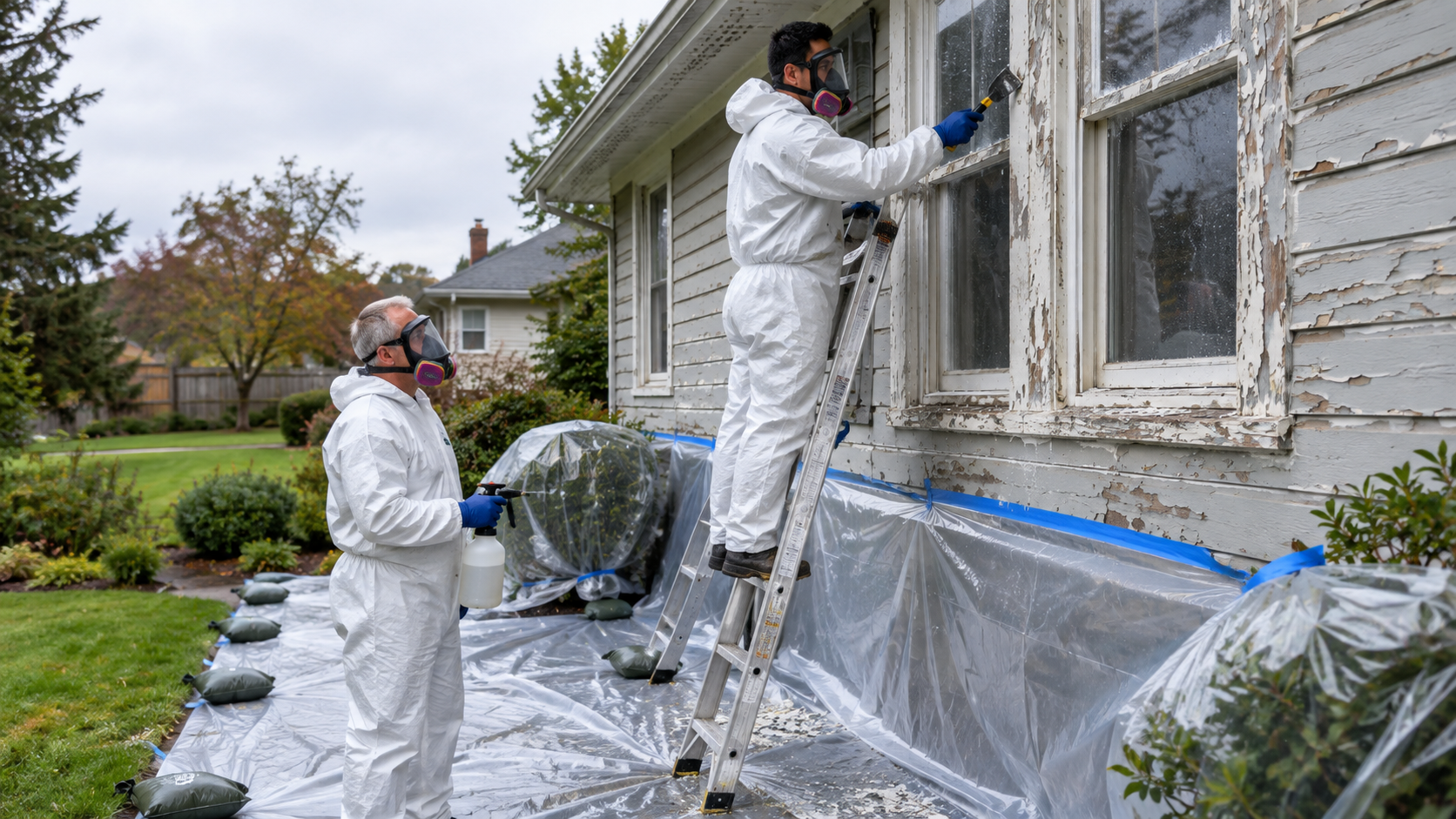
When commercial property managers and homeowners decide to update the exterior of an older building, the first step is always surface preparation. To get new paint to adhere, the old, flaking layers must come off. Usually, this means breaking out the heavy-duty scrapers, renting a power washer, or firing up an orbital sander. However, if you are managing older housing stock, these standard preparation methods can trigger an environmental disaster. The peeling lead paint danger on exterior surfaces is one of the most significant—and most frequently mishandled—liabilities in property management and renovation.
Exterior lead paint deteriorates naturally over time due to sun, rain, and freeze-thaw cycles. As the paint chalks and flakes, it falls directly into the soil around the foundation. Over decades, this creates highly toxic soil conditions. If a contractor aggressively scrapes, sands, or power-washes that exterior without strict containment protocols, they will blast concentrated lead dust across the yard, into neighboring properties, and through open windows, causing severe lead paint exposure symptoms for residents and massive fines from the EPA.
The Danger of Power Washing and Dry Scraping
The most common mistake contractors make on older exteriors is treating them like modern buildings. Power washing is incredibly efficient at stripping loose paint, but when that paint contains lead, high-pressure water forces toxic chips deep into the soil and washes contaminated runoff into municipal storm drains. While the EPA's Lead Renovation, Repair, and Painting (RRP) Rule does not outright ban pressure washing, it requires the contractor to contain and properly dispose of all the contaminated wastewater—a logistical nightmare for most standard painters.
Dry scraping and power sanding are equally hazardous. The friction generates microscopic lead dust that can remain airborne for hours before settling. Under the RRP Rule, anyone paid to perform work that disturbs painted surfaces in homes built under earlier building practices must be certified, and they must use specific lead-safe work practices. This means utilizing wet-scraping techniques and specialized HEPA-shrouded tools rather than standard power sanders. A standard painter using aggressive removal tactics is not just cutting corners; they are actively performing an illegal and highly dangerous lead paint removal process.
Strict Containment is Mandatory
Whether you are repainting a single-family rental or a multi-story commercial building, you cannot simply let paint chips fall into the grass. The RRP Rule dictates exactly how the exterior environment must be protected before a single scraper touches the siding.
Contractors must establish strict ground containment:
Plastic Sheeting: A layer of heavy, 6-mil plastic sheeting must be taped to the building’s foundation.
Distance Requirements: For single-story buildings, the plastic must extend outward a minimum of 10 feet in all directions (or to the property line). For buildings taller than one story, the containment must extend out 20 feet.
Protecting Occupants: All windows and doors within 20 feet of the work area must be closed and sealed.
Play Areas and Gardens: Sandboxes, swing sets, and vegetable gardens must be completely covered to prevent the soil from becoming an indoor air quality hazard when tracked inside.
If the property has large trees or shrubs within the work area, the contractor must still contain the debris. If paint chips or residue are found resting in the bushes at the end of the project, the site will fail the required visual clearance inspection.
Soil Contamination and Long-Term Liability
One of the most insidious aspects of exterior lead paint is how it impacts the ground below. Decades of natural chalking and previous, unprotected paint scraping often mean the soil around the "drip line" of older homes is already highly contaminated.
When property managers or environmental testing for property managers identify high lead levels in the soil, the liability is immense. Children playing near the foundation can ingest the soil through hand-to-mouth contact, leading to permanent neurological damage. Landlords and investors cannot afford to make this existing contamination worse by hiring uncertified painters who allow fresh lead chips to blanket the yard.
If the soil is heavily contaminated, environmental compliance property owners must take action. This may involve paving over the affected dirt, capping it with thick layers of clean topsoil and dense landscaping, or hiring professionals for comprehensive environmental remediation services to physically remove the toxic dirt.
Beware of Overlapping Exterior Hazards
When renovating the exterior of an older property, lead paint is rarely the only hazardous material you will encounter. If your exterior repair involves removing old siding, replacing soffits, or tearing off old roofing shingles, you must also be acutely aware of asbestos.
Regardless of the year your property was built, the safest approach is to treat suspect materials as potentially asbestos-containing until testing proves otherwise. Because some imported products may still contain asbestos, age alone is not a reliable way to rule out asbestos, and a government notice on asbestos in imported building products reports that asbestos has been found in a range of imported goods and building materials.
Best practice is to assume suspect building materials may contain asbestos regardless of construction date, especially:
Drywall and joint compound
Flooring and mastics
Ceiling tiles and textures
Imported products and components
Imported or foreign-manufactured building materials can still contain asbestos today, so the safest approach is to test rather than rely on age alone. For exteriors, older cementitious siding panels (commonly known as transite siding), roof mastics, and window glazing putty frequently contain high levels of asbestos. Ripping off these materials without a prior asbestos inspection can trigger severe asbestos health risks and violate strict asbestos demolition requirements.
Secure Your Property Before You Scrape
Repainting an older property should improve its value, not create a massive environmental liability. If you manage older housing stock or commercial properties, you must ensure that your maintenance staff and your contractors understand the severe risks and strict legal regulations surrounding exterior surface preparation.
If you are planning an exterior renovation, dealing with peeling paint, or suspect you have contaminated soil or hazardous siding, contact BDS Environmental. Our environmental services Michigan team can provide the necessary lead testing, asbestos testing, and expert hazardous material removal to ensure your project is safe, compliant, and ready for a fresh coat of paint.