How Property Managers Can Document Water Damage for Insurance Claims
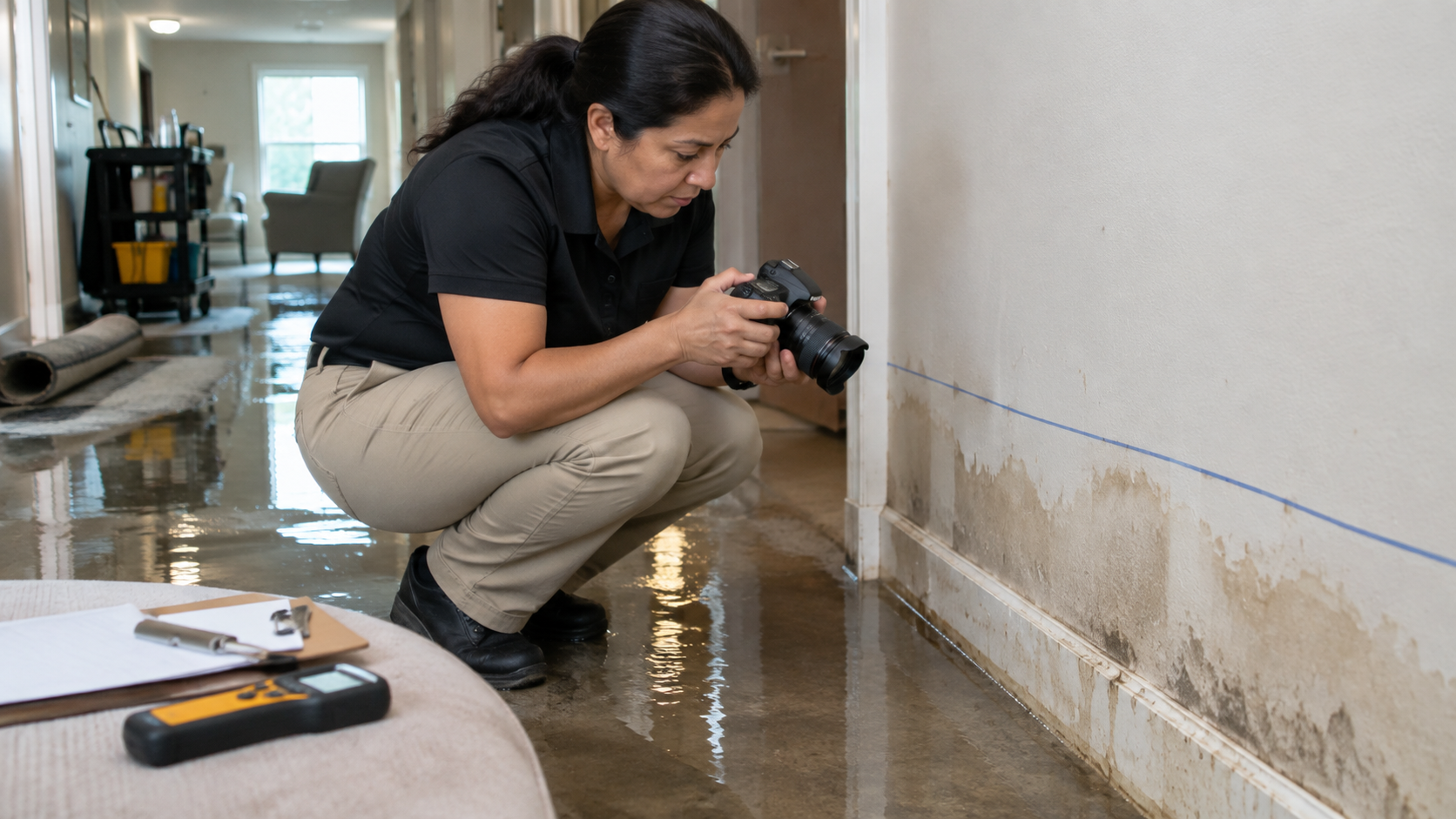
When a pipe bursts in a commercial building or a roof leaks in a multi-family rental, the immediate response is always chaotic. Water is spreading, tenants are angry, and property managers are scrambling to shut off the main valve and call a plumber. In the rush to stop the bleeding and get the property dry, the most critical administrative step is often overlooked: documentation. For property owners and investors, failing to properly document water damage before the cleanup crew arrives can turn a covered insurance loss into a massive out-of-pocket expense.
Insurance policies are notoriously complex when it comes to water damage. Distinguishing between a sudden, accidental burst pipe (which is typically covered) and a slow, long-term leak (which is often denied) comes down to the evidence you can provide to the insurance adjuster. Furthermore, if that water disturbs older building materials or causes secondary indoor air quality hazards, the scope of the claim can skyrocket. To ensure your insurance claim is approved and fully funded, property managers must treat every water loss like a crime scene and document it meticulously before a single piece of drywall is removed.
Stop the Source, Then Start the Camera
Your first obligation under any insurance policy is to mitigate further damage. This means shutting off the water source, turning off the electricity to the affected area, and taking immediate safety precautions. Once the area is secure, but before you start shop-vacuuming the floor or moving wet furniture, you must document the scene exactly as it is.
High-resolution visual evidence is your strongest asset against an adjuster who might claim the damage was pre-existing.
Wide and Close-Up Shots: Take wide-angle photos of every affected room to show the overall scale of the flooding, followed by close-up shots of the specific water source (like the split pipe or the failing roof flashing).
Document Water Lines: If there is standing water, use a tape measure or a marker on the wall to clearly show the high-water mark before it drains or is pumped out.
Video Walkthroughs: A continuous video walkthrough of the damaged area is often more compelling than still photos, as it captures the active dripping, the sound of the water, and the immediate severity of the situation.
Do not throw away any damaged materials or the broken plumbing fixtures. The adjuster will need to inspect the failed component to verify the cause of the loss.
Tracking the Financial Impact: Loss of Use and Revenue
For commercial buildings and rental properties, the cost of water damage extends far beyond replacing drywall and carpet. If a unit is uninhabitable, you are losing rental income. If a commercial tenant cannot operate, you may be liable for business interruption costs.
To successfully file a "Loss of Use" or business interruption claim, your documentation must bridge the gap between the physical damage and the financial loss.
Maintain a Loss Ledger: Create a specific accounting code or ledger to track every expense related to the water damage. This includes invoices from emergency plumbers, receipts for renting temporary fans, and the cost of relocating tenants.
Provide Historical Financials: Be prepared to submit previous profit and loss (P&L) statements or rent rolls to the insurance company to prove exactly how much revenue was lost during the period the property was out of commission.
Log All Communications: Keep a detailed, timestamped log of every phone call, email, and letter between your team, the insurance adjuster, and your contractors.
Documenting Secondary Hazards: Mold and Asbestos
The most complicated—and expensive—aspect of a water damage claim occurs when the water triggers secondary environmental hazards. If a property is not dried within 24 to 48 hours, a water damage mold risk becomes a reality, often leading to a costly mold remediation process.
Many commercial and residential insurance policies have strict caps or exclusions for mold damage. However, if you can prove through proper documentation (like timestamped photos and moisture readings from your restoration contractor) that the black mold symptoms developed as a direct, secondary consequence of the sudden, covered water event, you have a much stronger case for getting the mold remediation covered. If hidden mold is found later behind the walls, you must file a supplemental claim supported by professional moisture mapping before the wall is closed up.
Furthermore, drying out an older property often requires removing wet building materials. This is where asbestos becomes a major insurance factor. Regardless of the year your property was built, the safest approach is to treat suspect materials as potentially asbestos-containing until testing proves otherwise. Because some imported products may still contain asbestos, age alone is not a reliable way to rule out asbestos, and a government notice on asbestos in imported building products reports that asbestos has been found in a range of imported goods and building materials.
Best practice is to assume suspect building materials may contain asbestos regardless of construction date, especially:
Drywall and joint compound
Flooring and mastics
Ceiling tiles and textures
Imported products and components
Imported or foreign-manufactured building materials can still contain asbestos today, so the safest approach is to test rather than rely on age alone.
If the wet drywall or flooring tests positive for asbestos, standard demolition is illegal. The insurance company must generally cover the increased cost of professional asbestos abatement under the "Ordinance or Law" provision of your policy, as the wet materials must be removed to fix the plumbing. However, the insurer will demand written proof—namely, a professional asbestos testing report from an accredited lab—before they approve the higher cost of hazardous material removal.
Partner with Professionals Who Understand Documentation
Fighting an insurance company over a water damage claim is exhausting, especially when you are also trying to manage a flooded property. Submitting blurry photos and disorganized receipts will only lead to delays and underpaid settlements. To get your property back online quickly and ensure the claim is fully funded, you need contractors who understand how to document their work for the adjuster.
If your commercial or residential property has suffered water damage and you are concerned about hidden mold, asbestos in the wet drywall, or peeling lead paint danger, contact BDS Environmental before you begin demolition. Our environmental services Michigan team provides the professional moisture mapping, mold inspection, and asbestos testing required to build an airtight insurance claim, followed by the expert remediation needed to make your property safe again.