What Is Mold Clearance Testing and When Should You Request It?
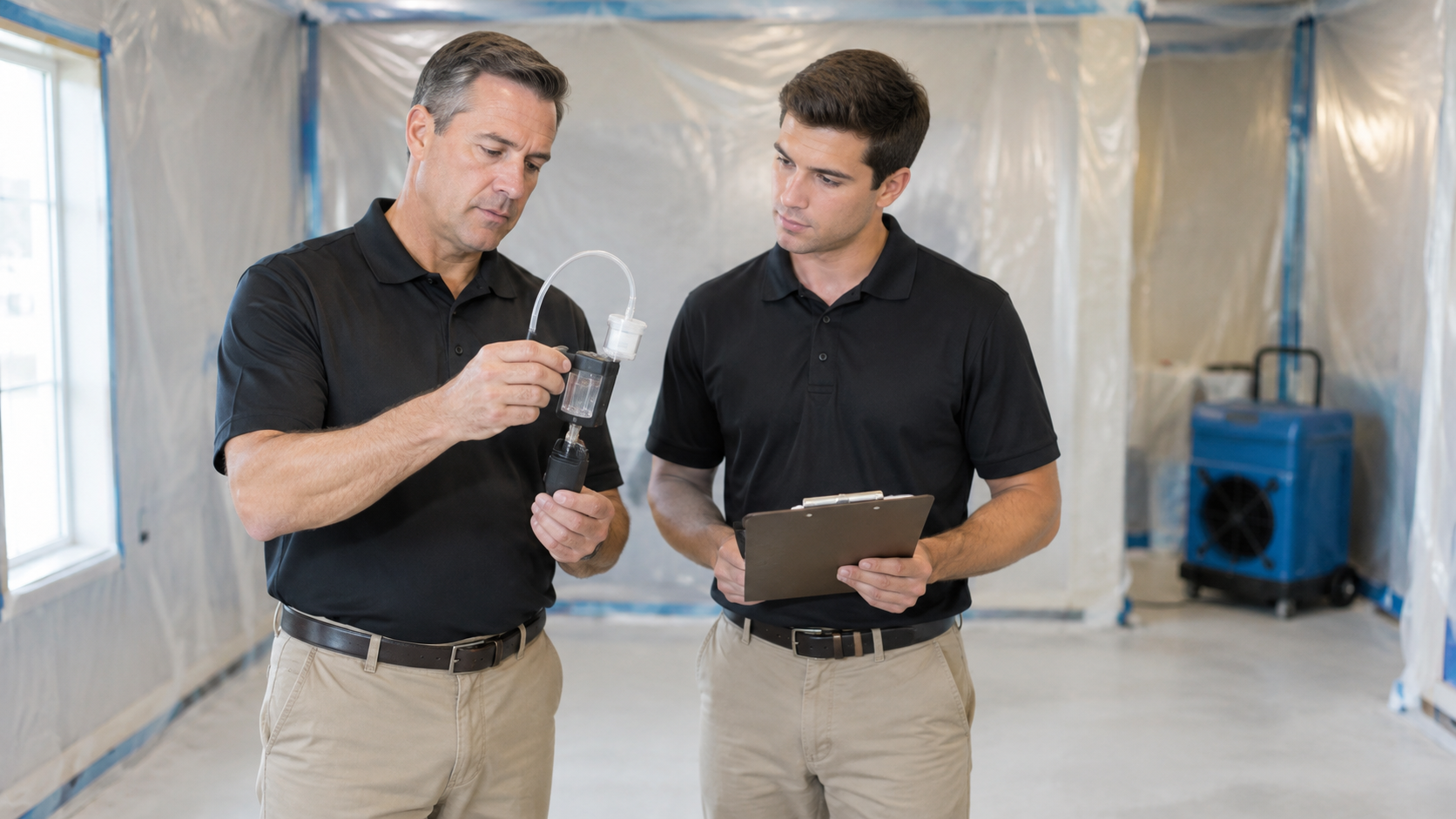
When property owners discover a serious mold issue, their first instinct is to get it out as quickly as possible. They hire a contractor, the wet drywall is torn out, air scrubbers are run, and the room is scrubbed down. Once the containment plastic comes down and the room looks clean, most landlords and investors assume the problem is solved and immediately start rebuilding. However, looking clean and actually being safe are two very different things when dealing with microscopic fungi. The only way to definitively prove that a mold remediation process was successful is through formal mold clearance testing.
Also known as Post-Remediation Verification (PRV), clearance testing is an independent, scientific assessment performed after the cleanup is finished but before the containment barriers are removed. For property managers and contractors in Michigan, skipping this final step is a massive liability. Without documented clearance, you have no proof that the air is safe to breathe, no guarantee that the moisture source was actually fixed, and zero protection if a tenant later complains of black mold symptoms.
The Difference Between a Visual Inspection and Clearance Testing
A common misconception is that a visual mold inspection by the remediation contractor is enough to declare a room safe. While a visual check is the mandatory first step of the PRV process, it cannot detect airborne spores.
Mold reproduces by releasing microscopic spores into the air. During demolition, even with the best HEPA filtration, millions of these spores can be disturbed. If the remediation crew misses a small patch of mold behind a stud, or if they fail to adequately HEPA-vacuum the fine dust from the concrete floor, the air inside that room will remain highly contaminated, even if the walls look perfectly clean.
Clearance testing bridges this gap. An independent environmental testing professional will evaluate the space using industry-standard protocols (such as ANSI/IICRC S520) to ensure the indoor air quality is safe.
A proper clearance test includes:
Moisture mapping: Using calibrated moisture meters to confirm that the wood framing and structural materials are completely dry.
Indoor air sampling: Collecting air samples inside the containment area to measure the exact concentration of airborne mold spores.
Outdoor baseline sampling: Taking an air sample outside the building on the same day to establish a natural baseline for comparison.
If the indoor spore count is higher than the outdoor baseline, or if the inspector detects specific, dangerous water-damage marker spores (like Stachybotrys or Chaetomium), the test fails.
When Should You Request Clearance Testing?
While the EPA does not legally mandate clearance testing for all residential mold cleanups, it is considered the gold standard for liability protection. There are several specific scenarios where requesting a formal clearance test is strongly advised:
1. Real Estate Transactions and Tenant Turnovers
If you are selling a home or turning over a rental unit, buyers and new tenants want proof that the property is safe. A passing clearance report provides documented, scientific proof from a third party that the mold removal was handled professionally and the home is mold-free. For landlords, this is a vital shield against future legal claims regarding mold health risks.
2. After Major Water Events
If a property suffered a burst pipe, a flooded basement, or a severe roof leak, the water damage mold risk is exceptionally high. In these cases, the moisture often travels behind walls and under flooring. Clearance testing ensures that the hidden cavities were properly dried and treated before you pay thousands of dollars to install new drywall and carpet.
3. Commercial and Institutional Settings
For those managing mold in commercial buildings, schools, or medical facilities, clearance testing is often required by insurance companies or corporate policies. The liability associated with exposing dozens of employees or the public to indoor air quality hazards is too high to rely on a simple visual check.
The Timing of the Test is Critical
Clearance testing must be done at the exact right moment in the remediation timeline. It should happen after the contractor has completely finished cleaning and HEPA-vacuuming the space, but before the plastic containment barriers are taken down and before any reconstruction begins.
It is generally recommended to leave the air scrubbers running for 24 to 48 hours after the physical cleaning is done, then turn them off for several hours before the inspector arrives. This allows any remaining spores to settle out of the air so they can be accurately measured. If a contractor rushes to pull down the plastic before the clearance results come back from the lab, and the test fails, they have just cross-contaminated the rest of the building.
What Happens if a Clearance Test Fails?
A failed test is frustrating, but it means the system worked—it caught a hazardous situation before it was permanently walled up. A failed test does not necessarily mean the contractor did a terrible job; it often simply means the area did not meet the strict clearance criteria at that exact moment.
Common reasons for a failed test include:
Drywall dust or construction debris left on the floor (spores stick to dust).
Wood framing that is still reading too high on a moisture meter.
A small area of hidden mold that was missed during demolition.
When a test fails, the remediation contractor must return, re-clean, re-HEPA vacuum, and run the air scrubbers again at their own expense until the area passes a second clearance test.
Overlapping Hazards: Why Testing Matters Before You Demolish
While clearance testing happens at the end of a project, the most important testing happens before the walls are ever opened. When dealing with mold remediation for landlords or older homes, tearing out wet drywall or pulling up damp flooring can easily disturb other hidden dangers.
Regardless of the year your property was built, the safest approach is to treat suspect materials as potentially asbestos-containing until testing proves otherwise. Because some imported products may still contain asbestos, age alone is not a reliable way to rule out asbestos, and a government notice on asbestos in imported building products reports that asbestos has been found in a range of imported goods and building materials.
Best practice is to assume suspect building materials may contain asbestos regardless of construction date, especially:
Drywall and joint compound
Flooring and mastics
Ceiling tiles and textures
Imported products and components
Imported or foreign-manufactured building materials can still contain asbestos today, so the safest approach is to test rather than rely on age alone. Tearing out wet drywall without an asbestos inspection can instantly contaminate the property with carcinogenic fibers. Furthermore, ripping down walls covered in peeling lead paint danger requires specialized lead paint removal processes to avoid poisoning the air with lead dust.
Trust the Experts for Verification
Mold remediation is an expensive investment in your property's safety, and you deserve proof that the job was done correctly. Relying on a visual inspection alone leaves your property, your tenants, and your bank account exposed to massive liability.
If you are dealing with a severe mold issue, managing an environmental compliance property owners project, or need third-party verification that a cleanup was successful, contact BDS Environmental. Our environmental services Michigan team can provide unbiased mold clearance testing, asbestos testing, and comprehensive indoor air quality assessments to ensure your property is truly clean, compliant, and ready to be rebuilt.