Environmental Due Diligence for Michigan Commercial Real Estate Buyers
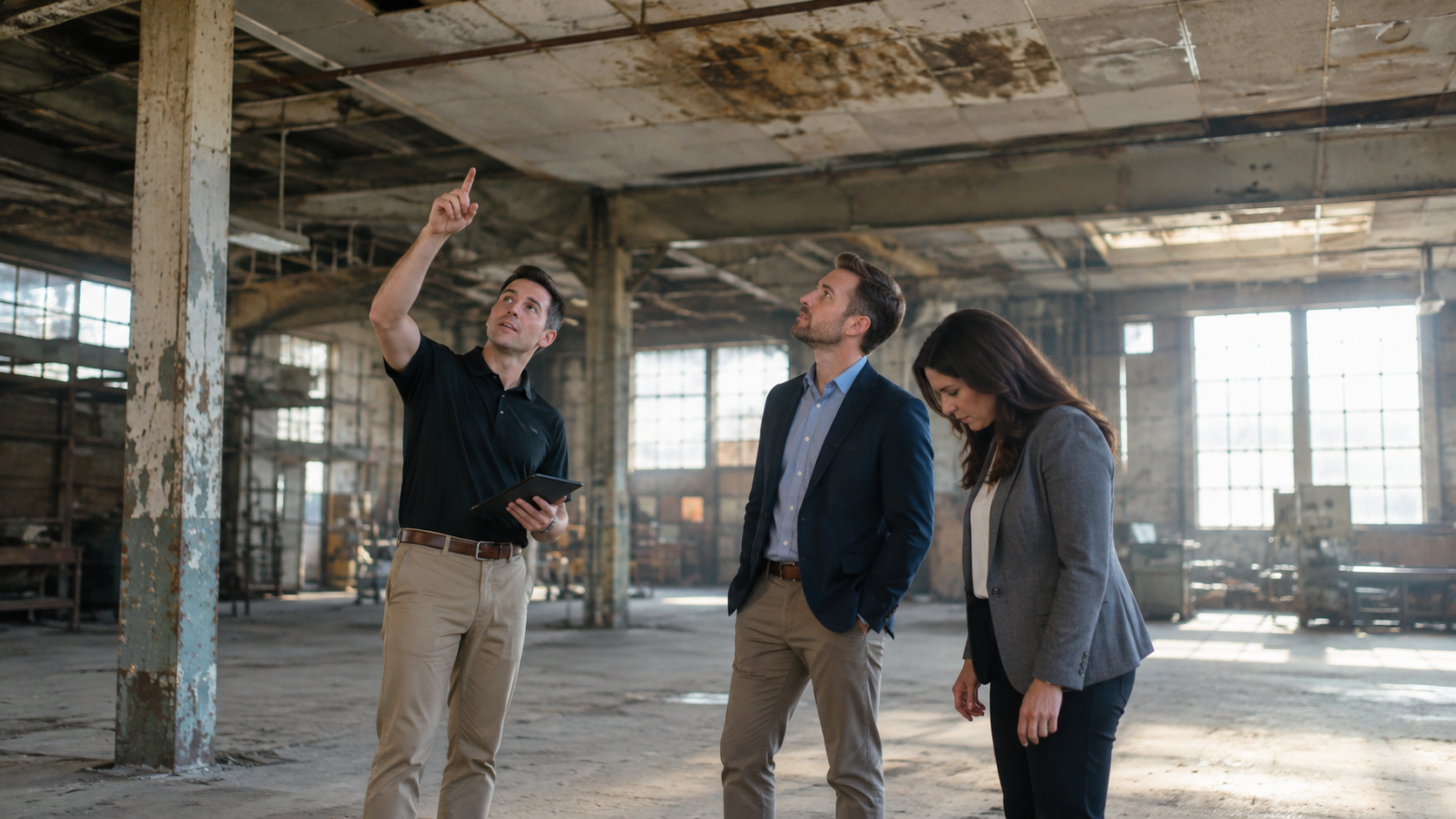
Purchasing commercial real estate in Michigan is a massive financial commitment, but the true cost of a property goes far beyond the asking price. If a buyer unknowingly purchases a contaminated site—whether it is an old manufacturing plant in Warren or a historic retail space in Grand Rapids—they can instantly inherit decades of environmental liability. Under both federal and state law, the current owner of a property can be held legally and financially responsible for cleaning up hazardous materials, even if they did not cause the contamination.
To avoid this, savvy investors rely on a rigid environmental due diligence process. In Michigan, this involves specific regulatory steps designed to protect the buyer from pre-existing liabilities while ensuring the property is actually safe for its intended use. However, navigating the intersection of federal Phase I requirements, state-level Baseline Environmental Assessments, and indoor air quality hazards requires extreme precision. If you rush the due diligence period or rely on incomplete inspections, an otherwise profitable investment can quickly turn into a financial nightmare.
The Foundation: The Phase I Environmental Site Assessment
The core of any commercial real estate due diligence process is the Phase I Environmental Site Assessment (ESA). To qualify for liability protection under the federal "All Appropriate Inquiries" (AAI) rule, a buyer must have a Phase I ESA performed by a qualified environmental professional before they purchase the property.
A Phase I ESA is a non-invasive investigation. The inspector will not drill into the ground or tear open walls. Instead, they review historical records, fire insurance maps, city directories, and environmental databases to piece together the history of the site. They are looking for Recognized Environmental Conditions (RECs), which indicate that hazardous substances or petroleum products were likely spilled or disposed of on the property.
If the Phase I ESA identifies a REC—for example, if the building was previously a dry cleaner or an auto body shop—the buyer will typically need to proceed to a Phase II ESA.
Phase II ESA and the Michigan BEA
A Phase II ESA is an invasive physical investigation. It generally involves drilling soil borings, installing groundwater monitoring wells, and sampling soil gas to confirm exactly what contaminants are present and in what concentrations.
If the Phase II testing confirms that the property is contaminated above the state's generic cleanup criteria, it is officially classified as a "facility" under Michigan law. This is where the Michigan-specific due diligence process begins. To protect themselves from liability for that existing contamination, the buyer must submit a Baseline Environmental Assessment (BEA) to the Department of Environment, Great Lakes, and Energy (EGLE).
A BEA documents the exact environmental condition of the property at the time of purchase. By filing this report, the new owner essentially draws a line in the sand: they are proving what contamination was there before they took ownership, which legally shields them from being forced to clean it up. However, the BEA must be conducted before or within 45 days of purchasing or occupying the property, and submitted to EGLE within six months. Missing these strict deadlines means forfeiting your liability protection completely.
Due Care: Your Ongoing Obligation
Submitting a BEA protects you from cleaning up past mistakes, but it does not mean you can ignore the contamination. Michigan law requires property owners to implement a "Due Care Plan."
Due care is an ongoing legal obligation to ensure that the existing contamination does not harm the public or the environment.
You must take necessary measures to prevent the exacerbation of existing contamination.
If there is contaminated soil on the site, your due care plan might involve paving over it to prevent people from coming into contact with it.
If there are harmful vapors trapped under the concrete slab, you may need to install an active vapor mitigation system before you can use the building as office space.
Under Part 201, a facility's due care documentation must be available to EGLE upon request, and failing to maintain safe conditions can result in the loss of your liability protections.
The Blind Spot: Asbestos, Mold, and Lead
While a Phase I ESA is excellent at finding soil and groundwater contamination, it has a massive, built-in blind spot that catches many commercial buyers off guard. Under the official ASTM E1527-21 standard, asbestos, lead-based paint, and mold are specifically excluded from the scope of a standard Phase I ESA because they are not considered RECs.
This means a buyer can receive a "clean" Phase I report, purchase the building, and immediately run into a brick wall when they try to renovate.
Asbestos Risks:
Regardless of the year your property was built, the safest approach is to treat suspect materials as potentially asbestos-containing until testing proves otherwise. Because some imported products may still contain asbestos, age alone is not a reliable way to rule out asbestos, and a government notice on asbestos in imported building products reports that asbestos has been found in a range of imported goods and building materials.
Best practice is to assume suspect building materials may contain asbestos regardless of construction date, especially:
Drywall and joint compound
Flooring and mastics
Ceiling tiles and textures
Imported products and components
Imported or foreign-manufactured building materials can still contain asbestos today, so the safest approach is to test rather than rely on age alone. If you plan to renovate, an asbestos inspection is legally required before demolition. If asbestos is found, you will face strict asbestos demolition requirements and the cost of professional asbestos abatement.
Mold and Lead Risks:
Similarly, if a commercial building has been vacant, a leaking roof can cause severe mold in commercial buildings. A standard Phase I will not test for mold spores, leaving the buyer responsible for the mold remediation process. If the building is an older property, peeling lead paint danger is also a concern, requiring specialized lead paint removal services before the space is safe for commercial tenants.
Protect Your Investment Before Closing
Environmental due diligence is not just a box to check for the bank; it is the most critical step in protecting your commercial real estate investment. Relying on a basic Phase I ESA without looking for indoor air quality hazards like mold or asbestos can completely derail your renovation budget and timeline.
If you are navigating the purchase of a commercial property and need comprehensive environmental testing for property managers, contact BDS Environmental. Our environmental services Michigan team can help you identify hidden liabilities by providing thorough asbestos testing, mold inspection, and the expert hazardous material removal needed to ensure your new investment is safe, compliant, and ready for business.