Lead Dust Testing in Michigan Homes: When Is It Needed?
When property owners think about lead poisoning, they usually picture a child peeling and eating a paint chip from a weathered windowsill. In reality, the most common source of lead exposure is not chips—it is dust. The CDC explicitly warns that home renovation and remodeling activities that disturb lead-based paint can create substantial amounts of toxic lead dust, which is then inhaled or ingested. Because this dust is often invisible and easily tracked throughout a house, property owners, investors, and contractors frequently spread the hazard without realizing it.
In Michigan, lead testing is not just a theoretical safety measure; it is built into both public health initiatives and housing regulations. The Michigan universal blood lead testing law now requires blood lead testing for children at specific ages based on exposure risk, often tracing elevated levels right back to the older housing stock they live in. For contractors and landlords dealing with homes built before 1978, managing lead dust is an unavoidable operational requirement. Knowing when to test for lead dust is the only reliable way to protect occupants, stay compliant with federal and local laws, and verify that your environmental remediation services actually worked.
Before Renovations Begin
The most critical time to test for lead is before a single wall is cut or a piece of trim is sanded. The EPA’s Renovation, Repair, and Painting (RRP) Rule requires that contractors, property managers, and maintenance workers disturbing painted surfaces in pre-1978 target housing must either assume lead is present or test the surfaces to prove it is not.
This is a major operational decision for contractors and investors. If you do not test, you must assume the peeling lead paint danger is real. You are then required to use lead-safe work practices, which include specialized containment, HEPA vacuums, wet cleaning, and specific waste disposal protocols. However, if a certified professional uses an EPA-recognized test kit to prove the specific surface is lead-free, the strict RRP containment requirements can be waived for that component.
For property managers planning a major turnover in an older apartment building, upfront lead testing allows them to determine exactly where lead paint removal is necessary and where standard demolition can proceed, keeping the budget and schedule predictable.
After Remodeling: The Importance of Clearance Testing
While testing before the project dictates the work methods, testing after the project proves the space is safe to inhabit. When a lead paint removal process or a heavy renovation is finished, the EPA requires specific post-renovation cleaning protocols.
However, visual cleaning is rarely enough to verify that microscopic lead dust is gone. The EPA has aggressively lowered the hazard standards for lead dust, reducing the permissible limits to 5 micrograms per square foot on floors and 40 micrograms per square foot on window sills. To prove a space meets these strict tolerances, a certified inspector must perform lead dust wipe sampling.
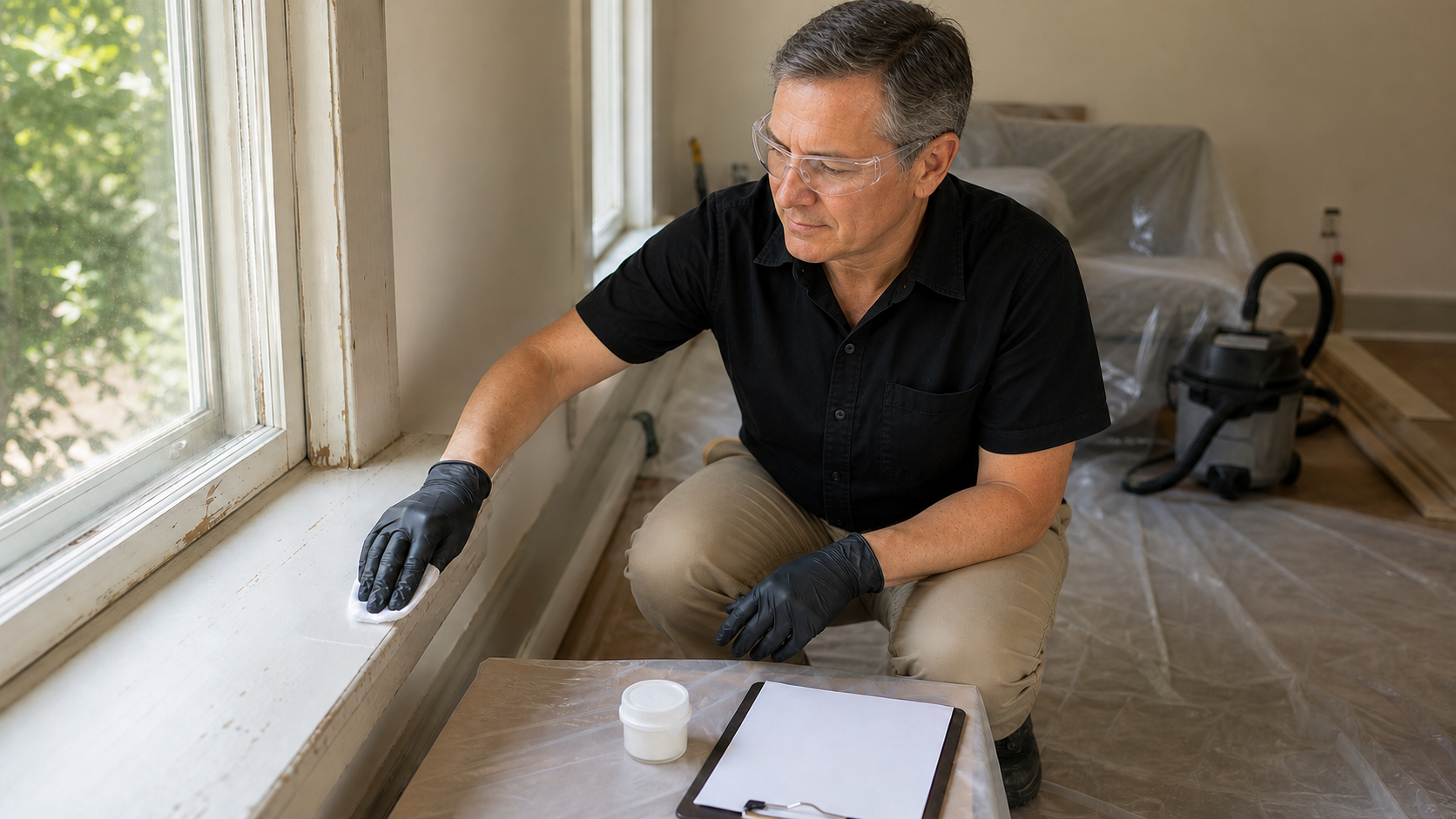
This process involves using specialized wipes over a specific surface area (usually one square foot) in a distinct "S" pattern to collect settled dust. The wipes are sent to an EPA-accredited lab for analysis. If the results come back above the clearance levels, the contractor must re-clean the entire area and test again. You cannot simply tear down containment and let tenants move back in; clearance testing is the final step in ensuring environmental safety in older homes.
Rental Property Compliance in Michigan
In several Michigan municipalities, lead dust testing is not just tied to renovation; it is tied to the ability to legally rent a property. For example, Detroit requires owners of rental properties built before 1978 to have a lead inspection and risk assessment performed to determine the presence of lead-based paint hazards.
To get a Certificate of Compliance and legally lease the unit, landlords must obtain a lead clearance. Depending on whether the landlord used interim controls (like specialized painting) or full lead paint abatement to address the hazards, they may be required to have the property re-inspected annually or every three years.
For landlords, this ongoing environmental compliance means lead dust testing is an unavoidable cost of doing business. If a landlord fails to secure clearance testing, they can face fines, the inability to evict non-paying tenants, and massive liability if a child in the unit develops elevated blood lead levels.
When Overlapping Hazards Are Present
Lead dust is rarely the only issue in older Michigan homes. When testing for lead before a renovation, it is crucial to recognize that the same demolition work that creates lead dust can also disturb other hazardous materials. If you are tearing down a wall or ripping up a floor, you must account for asbestos.
Regardless of the year your property was built, the safest approach is to treat suspect materials as potentially asbestos-containing until testing proves otherwise. Because some imported products may still contain asbestos, age alone is not a reliable way to rule out asbestos, and a government notice on asbestos in imported building products reports that asbestos has been found in a range of imported goods and building materials.
Best practice is to assume suspect building materials may contain asbestos regardless of construction date, especially:
Drywall and joint compound
Flooring and mastics
Ceiling tiles and textures
Imported products and components
Imported or foreign-manufactured building materials can still contain asbestos today, so the safest approach is to test rather than rely on age alone. When dealing with multiple hazards, environmental testing for property managers must be comprehensive; checking for lead while ignoring an asbestos inspection puts the entire project at risk.
Investigating Unexplained Health Issues
Sometimes the need for lead testing is not triggered by a construction schedule, but by a medical report. Michigan’s universal testing laws mean more children are being screened for lead exposure than ever before. If a child tests positive for elevated blood lead levels, the local health department or the family’s pediatrician will often initiate an environmental investigation.
In these cases, a certified risk assessor will test the home’s dust, soil, and peeling paint to find the source of the exposure. If lead-contaminated dust is found, the property owner will be required to hire specialized environmental remediation services to eliminate the hazard and pass strict clearance testing before the home is considered safe again.
Trust the Professionals to Verify Safety
You cannot see, smell, or taste lead dust, which is why testing is the only definitive way to manage the hazard. Whether you need an inspection to determine if the EPA RRP Rule applies to your upcoming remodel, require clearance testing to satisfy municipal rental laws, or need a risk assessment to ensure tenant safety, guesswork is simply not an option.
If you own, manage, or renovate older properties, contact BDS Environmental before your next project. Our environmental services Michigan team can handle comprehensive lead dust sampling, asbestos testing, mold inspection, and the expert hazardous material removal necessary to keep your properties safe, legally compliant, and liability-free.