Mold Behind Drywall: Signs Your Walls May Have a Hidden Moisture Problem
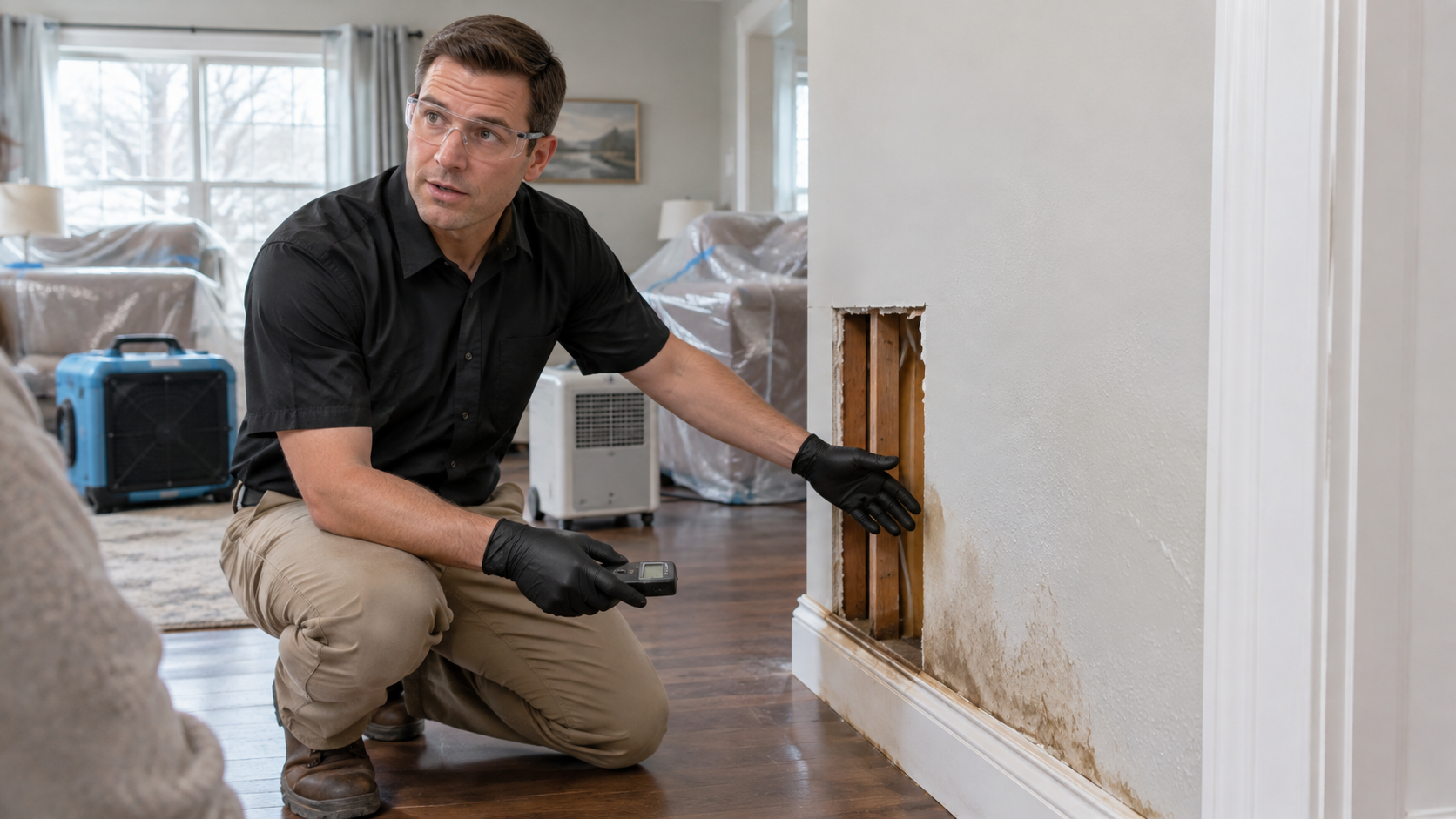
When property owners think about mold, they usually picture the obvious: fuzzy black spots in a shower corner, green splotches on a basement wall, or a fuzzy piece of wood after a flood. But some of the most destructive mold problems are the ones you cannot see. The EPA’s moisture and mold guidance explicitly notes that mold may be hidden on the back side of drywall, wallpaper, or paneling, inside wall cavities around leaking pipes, and in roof materials above ceilings. By the time mold actually pushes its way through the paint to become visible on the finished side of a wall, the framing and insulation behind it have usually been contaminated for weeks or months.
For Michigan homeowners, landlords, and contractors, dealing with hidden mold requires a shift in how you look at water damage. You cannot rely on visual inspections alone. The CDC’s mold guidelines state that people who spend time in damp buildings often report health problems, including respiratory symptoms and worsening asthma, even if they cannot see the mold. Recognizing the subtle clues that moisture is trapped inside a wall cavity is the first step in addressing an indoor air quality hazard before it requires massive demolition.
The Persistent Musty Odor
The most reliable sign of hidden mold is usually not visual; it is olfactory. The EPA states that you should suspect hidden mold if a building smells moldy but you cannot see the source.
When mold grows in a dark, damp wall cavity, it releases microbial volatile organic compounds (mVOCs) as part of its metabolic process. These gases easily penetrate drywall, creating the distinct, earthy, or damp smell associated with basement mold after water damage or a failing roof. If you notice a persistent mold smell in house conditions—especially one that is stronger near certain walls, electrical outlets, or HVAC registers—there is a high probability that moisture is trapped behind the drywall. Deodorizers and air fresheners will not solve this; the odor will continue until the moisture source is stopped and the mold is removed.
Bubbling, Peeling, or Discolored Finishes
Drywall is highly porous. It is essentially a layer of gypsum plaster sandwiched between two thick sheets of paper—a perfect food source for mold when wet. When a plumbing leak or a window flashing failure introduces water into a wall cavity, the drywall acts like a wick, pulling the moisture upward and outward.
As the moisture reaches the painted surface, it disrupts the adhesion of the paint or wallpaper. You may see:
Paint that bubbles, blisters, or peels away from the wall.
Wallpaper that loses its grip at the seams.
Faint yellow, brown, or water-stained rings that slowly expand.
Baseboards that warp or pull away from the wall.
These cosmetic issues are rarely just bad paint jobs. They are physical evidence of a water damage mold risk operating from the inside out. If the wall feels soft, spongy, or damp to the touch, the drywall is severely compromised and likely harboring mold on the hidden side.
Unexplained Health Symptoms
Often, the first sign of a hidden mold problem is the health of the people living or working in the building. The CDC notes that for mold-allergic individuals, inhaling or touching mold can cause sneezing, a runny nose, red or itchy eyes, and asthma attacks.
When mold is growing behind drywall, the spores and volatile gases can enter the living space through electrical outlets, baseboard gaps, and HVAC returns. If occupants experience unexplained allergy or respiratory symptoms that improve when they leave the building and return when they come back inside, it is a strong indicator of an indoor air quality hazard. For commercial property managers, an uptick in tenant complaints regarding air quality or "sick building" symptoms should trigger an immediate mold inspection, even if the walls look perfectly clean.
Do Not Use Bleach on Drywall
When property owners suspect mold, the immediate reaction is often to grab a bottle of bleach. While this might work for non-porous surfaces like bathroom tile, using bleach on drywall is a major mistake.
The EPA’s mold remediation guidelines recommend scrubbing hard surfaces with detergent and water, but explicitly state that porous materials like soaked drywall that cannot be fully cleaned and dried must be thrown out.
Bleach is mostly water. When you spray it on drywall, the chlorine stays on the surface, but the water soaks into the porous gypsum, actually feeding the root structure of the mold. The mold may temporarily turn white or clear, making it look like the problem is solved, but it will almost always return within a few weeks. True mold remediation process steps require cutting out the contaminated drywall, cleaning the structural wood behind it with proper antimicrobial agents, and establishing negative air containment to prevent spores from spreading.
The Hidden Danger of Asbestos in Drywall
If you confirm that mold is growing behind a wall, the next step is demolition. You have to remove the wet drywall to fix the leak and clean the framing. However, tearing into older drywall introduces a completely different environmental hazard: asbestos.
The OSHA interpretation of asbestos standards clarifies that while the wallboard itself seldom contains asbestos, the hazard is usually in the joint compound, spackling compound, and tape used to produce a smooth wall surface. Tearing down a moldy wall without testing it first can easily release asbestos fibers into the air, turning a moisture problem into a major asbestos exposure event.
Regardless of the year your property was built, the safest approach is to treat suspect materials as potentially asbestos-containing until testing proves otherwise. Because some imported products may still contain asbestos, age alone is not a reliable way to rule out asbestos, and a government notice on asbestos in imported building products reports that asbestos has been found in a range of imported goods and building materials.
Best practice is to assume suspect building materials may contain asbestos regardless of construction date, especially:
Drywall and joint compound
Flooring and mastics
Ceiling tiles and textures
Imported products and components
Imported or foreign-manufactured building materials can still contain asbestos today, so the safest approach is to test rather than rely on age alone. If you have mold behind an older wall, you need an asbestos inspection before you swing a hammer. If the joint compound tests positive, professional asbestos removal is required to handle the demolition safely.
How Professionals Handle Hidden Mold
When a wall cavity is contaminated, opening it up carelessly will blast millions of mold spores into the living space. Professional environmental remediation services approach hidden mold much differently than a DIY homeowner.
First, they identify the moisture source. There is no point in replacing drywall if the roof or pipe is still leaking. Next, they set up physical containment barriers with negative air pressure to isolate the work area. This ensures that when the drywall is cut, the mold spores are captured by HEPA filters rather than settling on furniture or entering the HVAC system. Finally, they remove the compromised porous materials, HEPA-vacuum the framing, apply commercial-grade antimicrobials, and verify that the wood is completely dry before installing new drywall.
If you notice bubbling paint, a persistent musty odor, or unexplained health symptoms, do not ignore the warning signs or attempt to bleach the wall. Contact BDS Environmental for professional mold inspection and testing. Our environmental services Michigan team can identify hidden moisture, perform necessary asbestos testing before demolition, and handle the complete hazardous material removal required to make your property safe and healthy again.