
Asbestos Pipe Insulation: When It Becomes a Renovation Hazard
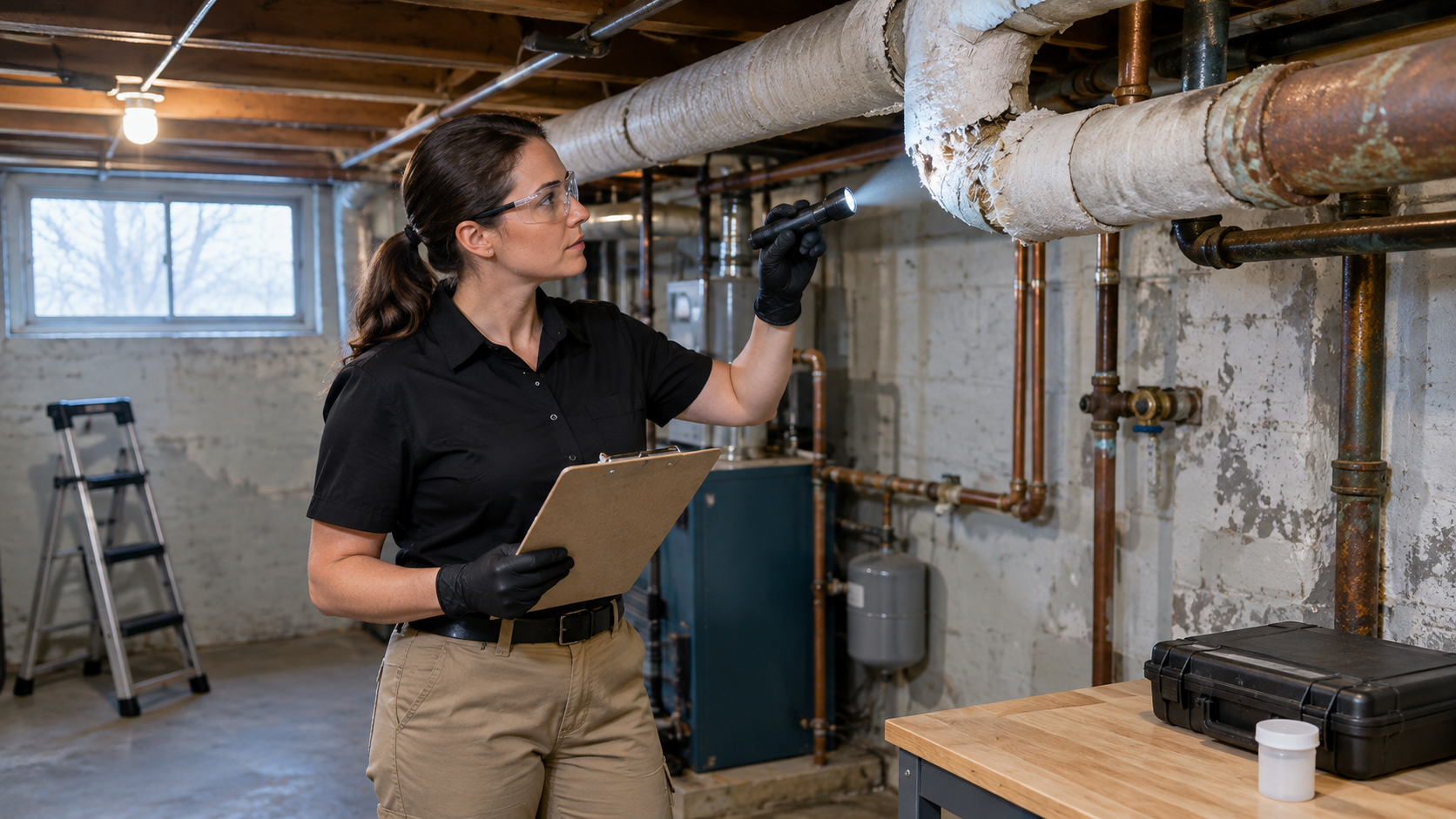
In many older Michigan homes and commercial buildings, the basement ceiling looks like a mechanical museum. Old boilers, hot water tanks, and a maze of steam pipes often sit untouched for decades. While the iron and copper are harmless, the thick, white, chalky wrapping surrounding those pipes is not. The EPA banned the installation of friable asbestos pipe insulation and block insulation on facility components like boilers and hot water tanks, but the ban did not require existing materials to be removed. As a result, miles of asbestos pipe wrap are still sitting in basements, crawl spaces, and wall cavities today.
For property managers, investors, and homeowners, this legacy insulation usually only becomes a problem when it is time to remodel, repair a leak, or upgrade the HVAC system. OSHA guidelines note that the removal of asbestos-containing thermal system insulation requires specific engineering controls, such as negative pressure enclosures or specialized glove bags, to prevent fiber release. When contractors or DIYers ignore these requirements and try to cut, tear, or pull down old pipe insulation without proper containment, they are not just making a mess—they are creating a severe, immediate indoor air quality hazard that can contaminate the entire property.
What Makes Pipe Insulation So Dangerous?
The primary danger of asbestos pipe insulation is its physical condition. The material was originally designed to insulate heat, and it did that job incredibly well. However, decades of expanding and contracting with heat cycles cause the material to dry out and degrade.
The National Cancer Institute warns that over time, asbestos fibers can accumulate in the lungs and cause scarring and inflammation, leading to serious health problems like asbestosis, lung cancer, and mesothelioma. The specific risk with pipe insulation is that it is highly "friable." This means it easily crumbles, flakes, or releases dust when disturbed. Unlike asbestos floor tiles, which lock the fibers into solid vinyl, pipe wrap is often just a paper-thin canvas jacket holding together chalky, pure asbestos material. Even a minor bump with a ladder, a plumbing repair, or a water leak can cause the jacket to split and release microscopic fibers into the air.
Hidden Hazards Inside the Walls
While exposed basement pipes are easy to spot, asbestos insulation is also frequently hidden inside the walls of older buildings. When older homes were constructed, steam pipes and HVAC runs were routed through wall cavities, and contractors insulated those runs with asbestos wrap to prevent heat loss and fire risks.
This creates a major water damage mold risk scenario during modern renovations. If a pipe leaks inside a wall, a homeowner or plumber might tear open the drywall to fix the leak and remove the wet, moldy materials. In doing so, they can inadvertently tear into the old asbestos pipe wrap. What started as a mold remediation process suddenly becomes a full-scale asbestos exposure event because the hidden hazard was disturbed without containment.
This is why an asbestos inspection is critical before you swing a hammer. Regardless of the year your property was built, the safest approach is to treat suspect materials as potentially asbestos-containing until testing proves otherwise. Because some imported products may still contain asbestos, age alone is not a reliable way to rule out asbestos, and a government notice on asbestos in imported building products reports that asbestos has been found in a range of imported goods and building materials.
Best practice is to assume suspect building materials may contain asbestos regardless of construction date, especially:
Drywall and joint compound
Flooring and mastics
Ceiling tiles and textures
Imported products and components
Imported or foreign-manufactured building materials can still contain asbestos today, so the safest approach is to test rather than rely on age alone. If you need to open a wall or remove old ceiling tiles to reach plumbing, professional asbestos testing is the only way to ensure the area is safe to demolish.
Safe Removal Methods: Glove Bags vs. Full Containment
When asbestos testing confirms the presence of asbestos pipe insulation, the abatement process must be handled by licensed professionals. In Michigan, MIOSHA requires that any individual or company hired to remove friable asbestos must be licensed by the state's Asbestos Program before engaging in abatement activities.
There are generally two ways professional abatement teams handle pipe wrap:
1. The Glove Bag Method: For small, isolated sections of pipe, professionals often use a technique called the "glove bag" method. The CDC notes that glove bags were developed as an engineering control to isolate sections of insulated pipe within a sealed plastic bag during removal operations. The bag is sealed tightly around the pipe, and the abatement worker uses integrated sleeves (gloves) to cut the insulation and wet it down inside the bag. A HEPA vacuum is attached to maintain negative pressure so that no fibers escape when the bag is eventually removed.
2. Full Containment: If the insulation is heavily damaged, falling apart, or involves a large network of pipes (like a commercial boiler room), glove bags are not enough. The abatement contractor will build a full containment enclosure using heavy plastic sheeting, establish negative air pressure, and utilize specialized decontamination showers to ensure no fibers leave the work zone.
Do Not Attempt DIY Encapsulation
When property owners discover deteriorating pipe wrap, a common DIY mistake is trying to "fix" it by wrapping duct tape over the broken sections or painting it. This is incredibly dangerous. The pressure of applying tape or rolling paint onto friable insulation often crushes the material, forcing fibers out the sides of the jacket and directly into the homeowner's breathing zone.
Furthermore, DIY encapsulation does not satisfy asbestos demolition requirements if you ever plan to sell the property or renovate the space in the future. A licensed environmental remediation services team uses specific, commercial-grade penetrating encapsulants that lock the fibers together without requiring heavy physical pressure on the pipe. If the pipe is in a high-traffic area where it might be bumped again, professional asbestos removal is always the safer, more permanent solution.
Co-occurring Hazards in Older Basements
In older Michigan properties, environmental hazards tend to group together. It is very common to find asbestos pipe insulation in the same basement that has peeling lead paint danger on the windows and black mold symptoms on the drywall after a flood.
When you have overlapping hazards, proper sequencing is vital. You cannot safely manage a mold removal project if the fans and air movers are blowing air across friable asbestos pipe wrap. Airflow can disturb the asbestos fibers, creating a massive indoor air quality hazard that requires a much more expensive cleanup effort. Environmental compliance property owners must meet requires dealing with the most friable, dangerous material first—which usually means the asbestos pipe insulation.
Plan Before You Plumb
For general contractors and investors, the golden rule of older basements is simple: never cut a pipe or tear down a drop ceiling until you know what is covering the mechanicals above it. The cost of asbestos removal Michigan professionals charge upfront is a fraction of what it costs to decontaminate a building after an amateur has ripped down friable pipe wrap and spread the dust through the HVAC system.
If you are planning a renovation, dealing with a plumbing emergency, or have noticed chalky white wrapping on your basement pipes, contact BDS Environmental before you begin work. Our environmental services Michigan team can handle safe asbestos inspection, mold inspection, and the expert hazardous material removal necessary to keep your property safe, legally compliant, and ready for the next phase of construction.
