Commercial Water Damage Cleanup: How to Keep Business Disruption Under Control
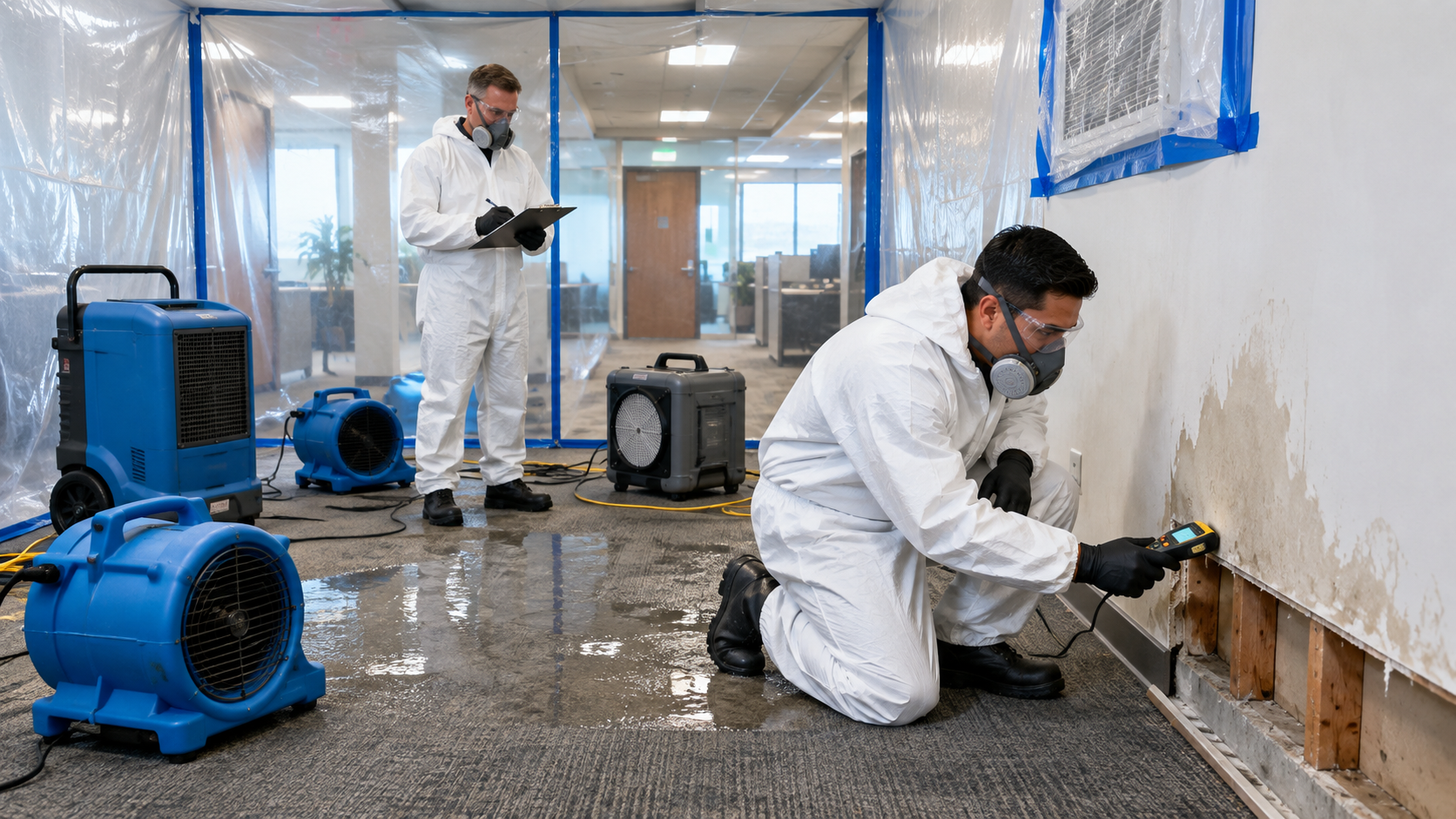
When a burst pipe, severe storm, or roof failure dumps water into a commercial building, the immediate concern is always the physical damage to the property. However, for business owners, property managers, and commercial investors, the true cost of a water event is often measured in downtime. Every day an office, retail space, or apartment building sits wet is a day of lost revenue, interrupted operations, and frustrated tenants. The EPA guidelines on indoor air quality during emergencies note that damaged buildings and leaking pipes can quickly create airborne hazards, requiring fast response and protective equipment during cleanup.
The key to minimizing business disruption is understanding that commercial water damage is not just a drying project; it is an environmental stabilization project. The EPA’s mold remediation guidance for schools and commercial buildings establishes that water-damaged materials should ideally be dried within 24 to 48 hours to prevent mold colonization. When commercial property owners miss that window, or when they tear into wet walls without checking for older hazardous materials, a three-day drying job can quickly turn into a three-week environmental remediation process. Managing the cleanup correctly from the first hour is the only way to keep the doors open and the liability low.
The 48-Hour Drying Window
The most critical factor in controlling commercial downtime is speed. Water spreads rapidly through commercial floor plates, wicking up drywall, soaking under raised access floors, and migrating through drop ceilings.
The EPA emphasizes that drying wet materials within 24 to 48 hours is the best strategy to avoid the need for mold remediation. Once past that 48-hour mark, mold begins to grow, and the scope of work fundamentally changes. Instead of simply extracting water and setting up fans, the building now faces a water damage mold risk that requires containment, demolition of porous materials, and specialized cleaning.
For property managers, this means emergency water extraction must happen immediately. Commercial restoration contractors use high-capacity pumps, industrial wet vacuums, and moisture mapping tools to find hidden water inside wall cavities before it turns into an indoor air quality hazard. If the water is extracted quickly and structural drying begins within the first day, the business disruption can often be limited to a brief closure rather than a major demolition event.
Containment Keeps the Rest of the Building Open
One of the biggest advantages of working with professional environmental remediation services is their ability to isolate the damage. In a large commercial building, a flood in one suite does not necessarily mean the entire building has to shut down.
If mold is suspected or already growing, OSHA and EPA guidelines require the use of containment to prevent spores from spreading. For commercial mold remediation, this typically involves building floor-to-ceiling barriers out of heavy polyethylene sheeting and sealing off the HVAC vents in the affected area. The crew will then use HEPA-filtered air scrubbers to establish negative air pressure inside the containment zone.
This engineering control is crucial for business continuity. Because negative pressure ensures that air only flows into the work zone, the mold spores and demolition dust cannot escape into the adjacent, occupied offices. By establishing strict containment, the rest of the commercial property can often remain open and operational while the remediation crew works safely behind the plastic.
The Risk of Hidden Asbestos in Older Buildings
While drying the building is the priority, contractors and property managers must be extremely careful during the initial demolition phase. If a pipe bursts in an older commercial building, the water will likely ruin the drywall, ceiling tiles, and flooring. Tearing those wet materials out without testing them first is a massive liability.
The EPA regulates asbestos in commercial renovations and demolitions under the Asbestos NESHAP, requiring building owners to inspect for asbestos before disturbing suspect materials. A water emergency does not void this requirement. If a cleanup crew hastily rips up wet flooring or cuts into soggy drywall that contains asbestos, they can contaminate the entire commercial space with carcinogenic fibers, leading to immediate project shutdowns and severe fines.
Regardless of the year your property was built, the safest approach is to treat suspect materials as potentially asbestos-containing until testing proves otherwise. Because some imported products may still contain asbestos, age alone is not a reliable way to rule out asbestos, and a government notice on asbestos in imported building products reports that asbestos has been found in a range of imported goods and building materials.
Best practice is to assume suspect building materials may contain asbestos regardless of construction date, especially:
Drywall and joint compound
Flooring and mastics
Ceiling tiles and textures
Imported products and components
Imported or foreign-manufactured building materials can still contain asbestos today, so the safest approach is to test rather than rely on age alone. Fast, emergency asbestos testing allows the cleanup crew to identify the hazards and proceed with legal asbestos abatement if necessary, avoiding a disastrous cross-contamination event.
Managing HVAC and Indoor Air Quality
During a commercial water event, the building's HVAC system can be both a victim and a vector. If water damages the ductwork, or if mold begins to grow near the return vents, the HVAC system can actively spread a mold smell in house conditions or office environments to unaffected floors.
The EPA’s guidelines for commercial indoor air quality stress that identifying and eliminating sources of pollution is key to resolving indoor air quality problems. During water damage cleanup, property managers should shut down the HVAC system in the affected zones to prevent pulling spores or demolition dust into the ductwork.
If the water damage has already compromised the ventilation system, environmental testing for property managers can determine if the ducts need professional cleaning or if mold in commercial buildings has spread through the air handling units.
Lead Paint and Remodeling
Similar to asbestos, lead paint in older homes and commercial buildings often complicates water damage cleanup. If the building features older painted brick, wood trim, or original windows that have been damaged by the water, the demolition process can generate toxic lead dust.
Contractors handling the cleanup must comply with OSHA and EPA lead regulations, ensuring that peeling lead paint danger is managed with wet scraping, HEPA vacuuming, and proper containment. Failing to address lead dust during the tear-out phase leaves the commercial property owner liable for exposing tenants and their employees to heavy metals when they return to the office.
Planning the Rebuild
A successful commercial water damage response ends with clearance testing. Before the containment barriers come down and the general contractor begins hanging new drywall, an independent inspector should verify that the building is dry, the mold is gone, and no hazardous materials were left behind. This documentation is critical for environmental compliance property owners must maintain for their insurance records and tenant lease agreements.
By treating a commercial flood as a tightly controlled environmental project rather than a chaotic demolition job, property managers can protect their tenants, preserve their assets, and minimize costly downtime.
If your commercial property has suffered water damage, do not let a manageable leak turn into a massive environmental liability. Contact BDS Environmental immediately. Our environmental services Michigan team can handle emergency water assessment, perform critical asbestos testing before demolition, and manage the full mold remediation process to get your business back up and running safely.