Who Is Responsible for Mold in a Commercial Lease?
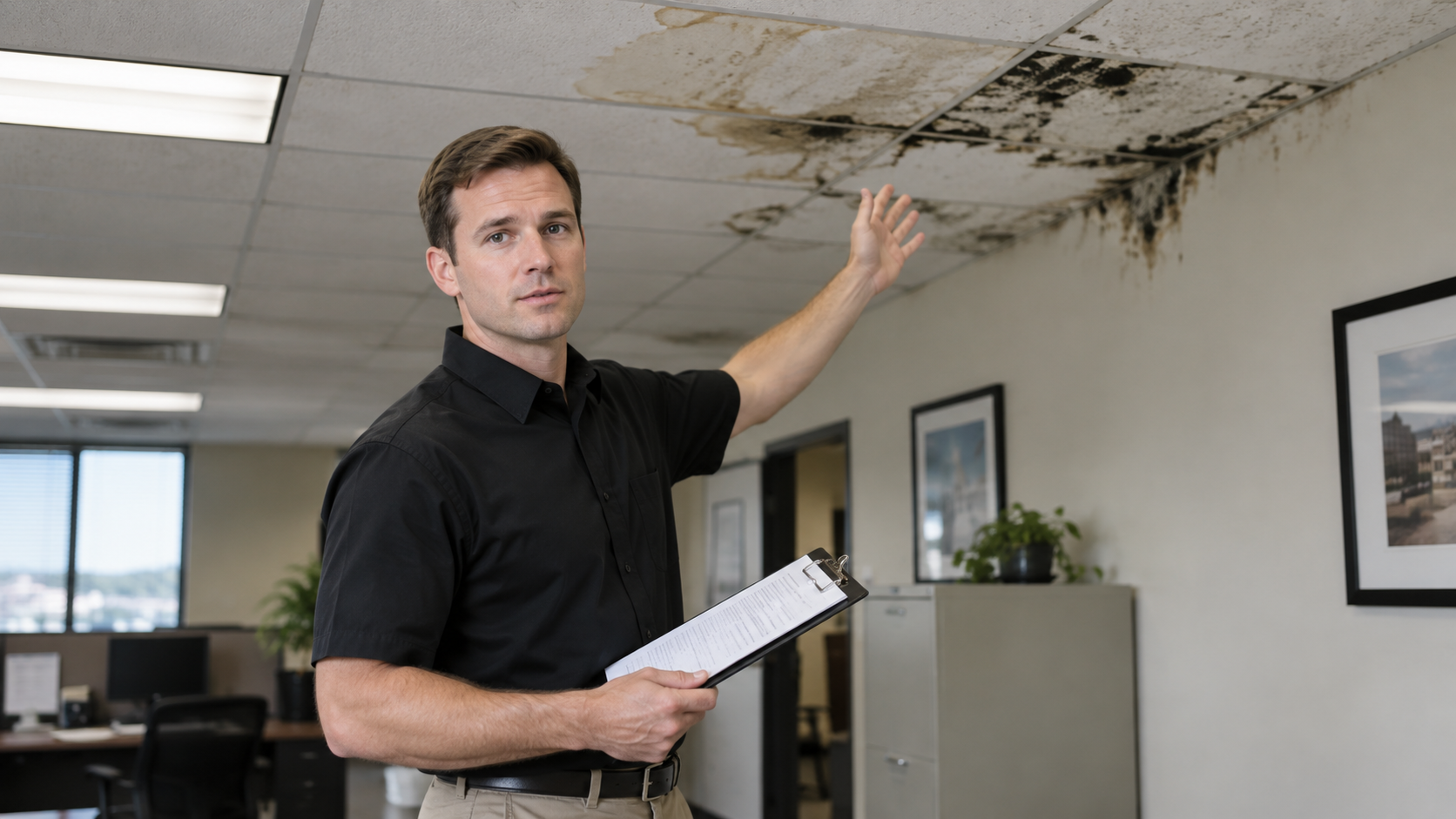
When mold is discovered in a commercial building, the immediate question is rarely how to clean it up; the immediate question is usually who has to pay for it. Unlike a residential lease where landlord responsibility is heavily mandated by state law, commercial leases are treated as business-to-business contracts. This means the lines of responsibility are often dictated by the specific wording in the lease agreement rather than a universal legal standard. When a tenant spots black mold symptoms on a warehouse wall or notices a persistent mold smell in house or office environments, both parties usually rush to the lease to see who is on the hook for the environmental remediation services.
For commercial property managers, landlords, and tenants in Michigan, navigating a mold dispute requires understanding both contract law and environmental reality. The EPA’s guidance on mold remediation in schools and commercial buildings states clearly that the key to mold control is moisture control, and that remediation cannot be successful until the underlying water problem is fixed. In a commercial lease dispute, determining who is responsible for the mold almost always comes down to determining who was responsible for the moisture that caused it, and who failed to act when the problem started.
The “Implied Warranty of Suitability”
Historically, commercial tenants had very few protections if a building developed environmental issues. They leased the space "as-is," and if the roof leaked or the HVAC failed, the tenant was expected to handle it. However, the legal landscape has shifted. Many jurisdictions now recognize an "implied warranty of suitability" in commercial leases, which functions similarly to the implied warranty of habitability in residential law.
This warranty generally requires a commercial landlord to ensure the premises are fit for their intended commercial purpose at the beginning of the lease and to repair latent defects in the essential structure. If a commercial tenant cannot safely operate their business because a failed roof caused massive mold in commercial buildings, a court may find the landlord in breach of this implied warranty if they failed to maintain the building envelope.
However, because Michigan does not have specific state statutes strictly governing mold in commercial properties, this warranty is often fiercely debated and can be heavily modified or waived by the actual language of the lease.
What Does the Lease Actually Say?
The most important factor in determining responsibility for a mold remediation process is the commercial lease agreement itself. Commercial leases often contain specific clauses that divide maintenance and repair duties between the landlord and the tenant.
Structural vs. Interior: Many commercial leases stipulate that the landlord is responsible for the "structural" elements of the building (the roof, exterior walls, and foundation), while the tenant is responsible for everything "inside the walls" (plumbing fixtures, interior drywall, and flooring).
HVAC Maintenance: A common source of a water damage mold risk in commercial spaces is a poorly maintained HVAC system. If the lease requires the tenant to hold an active HVAC maintenance contract and they fail to do so, the resulting condensation and mold growth will likely be the tenant's financial responsibility.
Mold Addendums: Many modern commercial leases include a specific mold clause or addendum. These addendums often list tenant responsibilities for preventing mold, such as promptly reporting leaks, maintaining appropriate indoor temperatures, and cleaning spills.
If the lease contains a mold "escape clause," it may explicitly state that the landlord is not liable for any mold that grows after the tenant takes possession, placing the burden of environmental compliance property owners typically carry onto the tenant.
Who Caused the Moisture?
Even with a strong lease, responsibility often hinges on causation and negligence. The EPA defines mold remediation as the removal of contaminated materials paired with corrective action to eliminate the moisture source. Therefore, liability usually follows the water.
If a tenant leaves a window open during a storm, fails to report a slow leak under a breakroom sink, or stacks inventory against damp exterior walls without allowing airflow, the landlord can argue the tenant's negligence caused the mold. Conversely, if a tenant repeatedly notifies the landlord that the roof is leaking, and the landlord ignores the requests until basement mold after water damage becomes severe, the landlord will likely be held responsible for the resulting mold inspection and hazardous material removal.
In short, the party that failed to uphold their maintenance duties or failed to act promptly when notified of water intrusion is usually the party paying for the remediation.
The Risk of Hidden Hazards During Cleanup
When a commercial landlord and tenant finally agree on who is paying for the cleanup, the next hurdle is the actual demolition. This is where commercial water damage disputes often get worse. If the building is older, tearing out moldy drywall or pulling up water-logged flooring can disturb hidden asbestos or lead paint.
The EPA’s mold remediation guidance advises that removing moldy porous materials like wallboard is a necessary step, but contractors must be aware of what they are cutting into.
Regardless of the year your property was built, the safest approach is to treat suspect materials as potentially asbestos-containing until testing proves otherwise. Because some imported products may still contain asbestos, age alone is not a reliable way to rule out asbestos, and a government notice on asbestos in imported building products reports that asbestos has been found in a range of imported goods and building materials.
Best practice is to assume suspect building materials may contain asbestos regardless of construction date, especially:
Drywall and joint compound
Flooring and mastics
Ceiling tiles and textures
Imported products and components
Imported or foreign-manufactured building materials can still contain asbestos today, so the safest approach is to test rather than rely on age alone. If a tenant hires a cheap contractor to rip out moldy drywall and they accidentally disturb asbestos joint compound, the tenant has just created a massive indoor air quality hazard and a severe liability issue for both themselves and the landlord.
Environmental Testing Protects Both Parties
When a dispute arises over mold in a commercial space, guessing is the most expensive path forward. Both the landlord and the tenant need facts to determine the scope of the problem and the necessary response.
This is where environmental testing for property managers and tenants becomes invaluable. A professional mold inspection can determine the type of mold, the extent of the contamination, and, most importantly, the source of the moisture. If demolition is required to fix the underlying leak, professional asbestos testing ensures that the repair does not trigger a secondary environmental crisis.
By relying on independent environmental data, landlords and tenants can move past the argument and focus on getting the commercial space safe, compliant, and operational again.
If you are dealing with a mold dispute in a commercial property, or need to address water damage before it spreads, contact BDS Environmental. Our environmental services Michigan team provides independent mold inspection, comprehensive asbestos testing, and the professional environmental remediation services necessary to resolve the issue quickly and safely for everyone involved.