
Why Environmental Compliance Matters for Contractors and Developers
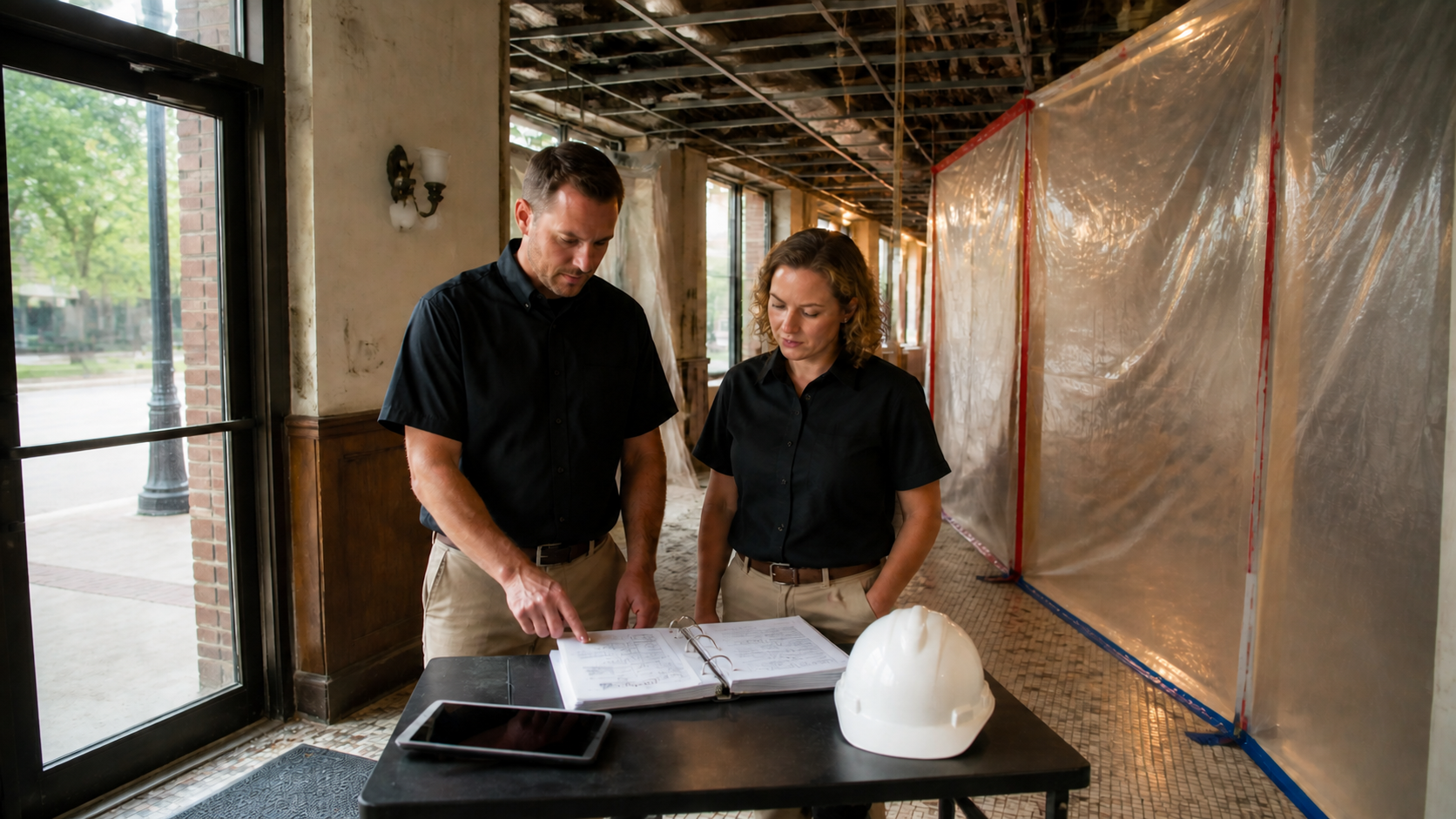
Environmental compliance can sound like a back-office issue until it affects a bid, a demolition schedule, a lender requirement, or a stop-work problem in the field. For contractors and developers, it is not just about paperwork. It directly affects how projects are scoped, priced, sequenced, and delivered, especially when renovation, demolition, hazardous materials, or occupied properties are involved.
That is why environmental compliance matters long before work begins. The EPA’s Managing Your Environmental Responsibilities guide for construction and development says owners, contractors, architects, and other project personnel can use the guide during the pre-bid phase to understand requirements, during pre-construction to assign responsibilities, and during construction to address ongoing environmental questions or self-audit their work. In Michigan, that practical mindset is especially important because demolition, asbestos, lead-related work practices, waste handling, and indoor air quality concerns can all affect project timing and liability if they are treated too late.
Compliance Starts Before the First Hammer Swing
One of the biggest mistakes contractors and developers make is treating environmental compliance like something that happens after the scope is already locked in. In reality, compliance starts in preconstruction. The EPA’s Construction Sector resource page pulls together regulatory information for asbestos, hazardous waste, air quality, demolition, lead laws, and other construction-related requirements, which is a good reminder that environmental obligations are built into the construction process, not layered on afterward.
That matters because environmental issues change the real scope of a project. A job that looks like standard demolition or interior renovation can quickly become a project that requires asbestos inspection, asbestos testing, lead-safe controls, specialized disposal, or broader environmental remediation services. The earlier those issues are identified, the easier it is to build realistic pricing, sequencing, subcontractor coordination, and owner expectations into the plan.
Contractors also need to remember that compliance is often shared across the team. The EPA’s construction planning guide is structured specifically to help assign responsibilities among the owner, contractor, architect, and others involved in the project. When that assignment does not happen early, the result is often confusion about who ordered testing, who handled notifications, who verified the survey, and who owns the delay once a hidden issue is discovered.
Asbestos Compliance Can Reshape the Entire Schedule
Asbestos is one of the clearest examples of why environmental compliance matters in real-world development and construction. The EPA’s guidance for owners and managers of buildings that contain asbestos explains that federal requirements apply to renovation and demolition of buildings that contain asbestos and also points owners toward operations and maintenance planning when asbestos-containing materials remain in place. In Michigan, the state’s asbestos and demolition page makes clear that demolition activities throughout the state are regulated by EGLE because of asbestos.
For contractors and developers, that means asbestos is not just a material issue. It is a scheduling issue, a permitting issue, and often a budget issue. The Michigan Asbestos Program’s notification rules require project notification 10 days before many non-emergency asbestos abatement projects above certain thresholds, which means the environmental timeline can directly affect when work is allowed to begin. If the survey is late, the schedule is late.
This is also where best practice matters. Regardless of the year your property was built, the safest approach is to treat suspect materials as potentially asbestos-containing until testing proves otherwise. Because some imported products may still contain asbestos, age alone is not a reliable way to rule out asbestos. A government notice on asbestos in imported building products reports that asbestos has been found in a range of imported goods and building materials used in construction.
Best practice is to assume suspect building materials may contain asbestos regardless of construction date, especially:
Drywall and joint compound
Flooring and mastics
Ceiling tiles and textures
Imported products and components
Imported or foreign-manufactured building materials can still contain asbestos today, so the safest approach is to test rather than rely on age alone. For developers working on repositioning or adaptive reuse projects, that point is important because buildings often contain layered repair histories, replacement finishes, and materials installed at different times by different trades.
Lead-Safe Work Practices Are a Business Risk Issue Too
Lead compliance matters for many of the same reasons. The EPA explains that the purpose of the Renovation, Repair and Painting Rule is to minimize exposure from lead-based paint dust during renovation, repair, or painting activities. The EPA also states that the RRP Rule requirements include training renovators in lead-safe work practices, certifying firms and renovators, accrediting training providers, and requiring specific work practice standards.
For contractors, that is not just a technical compliance note. It affects who can perform the work, how the work area is set up, what documentation has to be kept, and how disturbance of painted surfaces is controlled. For developers, it affects whether renovation plans in homes where lead-based paint may be present or in child-occupied facilities can move forward as originally priced and scheduled.
This is one reason environmental compliance matters even on projects that do not seem “environmental” at first glance. Common tasks like sanding, cutting, demo, floor replacement, and repainting can trigger lead-safe obligations when covered surfaces are disturbed. If a contractor assumes it is just ordinary prep work, the job can slide into avoidable exposure risk and enforcement risk very quickly.
Compliance Protects Budget, Reputation, and Deal Certainty
A lot of field professionals think about compliance mainly in terms of fines. That is part of it, but it is not the whole picture. Environmental compliance matters because it protects project certainty. When surveys are incomplete, notifications are missed, or regulated materials are discovered after mobilization, the cost usually shows up as downtime, change orders, rescheduling, disposal complications, tenant disruption, and damaged trust between the parties.
The EPA’s construction-sector resource page exists for a reason. It bundles together compliance tools for demolition, hazardous waste, asbestos, lead, effluent guidelines, and other rules because environmental responsibilities touch multiple parts of construction and development at once. The EPA’s planning guide also encourages use during construction itself for answering ongoing questions and conducting self-audits, which underscores that compliance is an active management process, not a one-time document packet.
That is especially true on redevelopment and infill projects. Older commercial properties, public buildings, industrial sites, and mixed-use properties often come with prior repairs, legacy materials, unknown conditions, or deferred maintenance. In those environments, environmental compliance is often what separates a controlled project from a reactive one.
Reputation matters too. Owners, municipalities, lenders, and tenants notice which contractors plan around environmental risk and which ones act surprised by it. A contractor who understands asbestos before renovation, lead-safe work practices, environmental testing for property managers, and hazardous material removal sequencing is easier to trust with complex work than one who treats compliance like an afterthought.
Good Compliance Usually Looks Like Good Project Management
In the field, strong environmental compliance usually looks a lot like strong project management. It means the right questions are being asked early, the right consultants are brought in when needed, and the environmental scope is built into the real construction plan instead of handled off to the side.
For contractors and developers, that usually means:
Review environmental issues during pre-bid, not after award.
Confirm whether demolition or renovation will disturb suspect materials.
Build asbestos inspection, asbestos testing, and any required abatement into the schedule.
Verify whether lead-safe work practices apply before painted surfaces are disturbed.
Assign responsibility for surveys, notifications, documentation, and follow-up.
Coordinate environmental work with demolition, MEP, and finish trades so sequencing is realistic.
Keep records organized in case owners, inspectors, lenders, or buyers ask for proof.
That approach is not about slowing projects down. It is about keeping them from being slowed down later by preventable surprises.
For Michigan contractors and developers, the practical takeaway is simple: environmental compliance is part of how professional projects are planned and delivered. It protects workers, occupants, schedules, budgets, and the long-term value of the work. If a project may involve asbestos-containing materials, lead-related concerns, demolition sequencing, or other environmental risk, contact BDS Environmental to discuss asbestos inspection, asbestos testing, environmental remediation services, and compliance support before work begins. The projects that move best are usually the ones where environmental issues were identified and managed before they had a chance to become field problems.
