Common Safety Procedures Used During Asbestos Removal Projects
Asbestos removal is not just another demolition task with extra paperwork. It is a controlled abatement process designed to keep hazardous fibers from spreading into the rest of the building and exposing workers, occupants, or neighboring trades. That is why professional asbestos abatement projects follow strict safety procedures from the first inspection through final cleanup. For homeowners, property managers, contractors, and investors, those procedures are not technical extras. They are the reason a project stays contained, compliant, and safer to complete.
In Michigan, this matters even more on occupied buildings, renovation projects, and demolition work where schedules are tight and hidden materials can quickly change the scope. A proper asbestos removal project is built around planning, isolation, air control, protective equipment, decontamination, waste handling, and documentation. When people understand those common safety procedures, they also understand why asbestos work should never be treated like standard tear-out or cleanup.
Why Safety Procedures Matter
The reason asbestos projects use so many controls is simple: disturbing asbestos-containing material can release fibers that are too small to see and easy to spread if the work area is not properly managed. OSHA’s asbestos construction page highlights the regulatory framework for asbestos work in construction, including removal practices, exposure monitoring, and accepted survey and inspection standards. The EPA’s consumer guidance on asbestos exposure also warns that improper removal can actually increase exposure for building occupants and workers.
That is why asbestos removal is approached as hazardous material removal, not simple demolition. The point of the safety procedures is to control fiber release, protect the surrounding property, and keep the work from turning a localized issue into a building-wide contamination problem.
Pre-Project Inspection and Planning
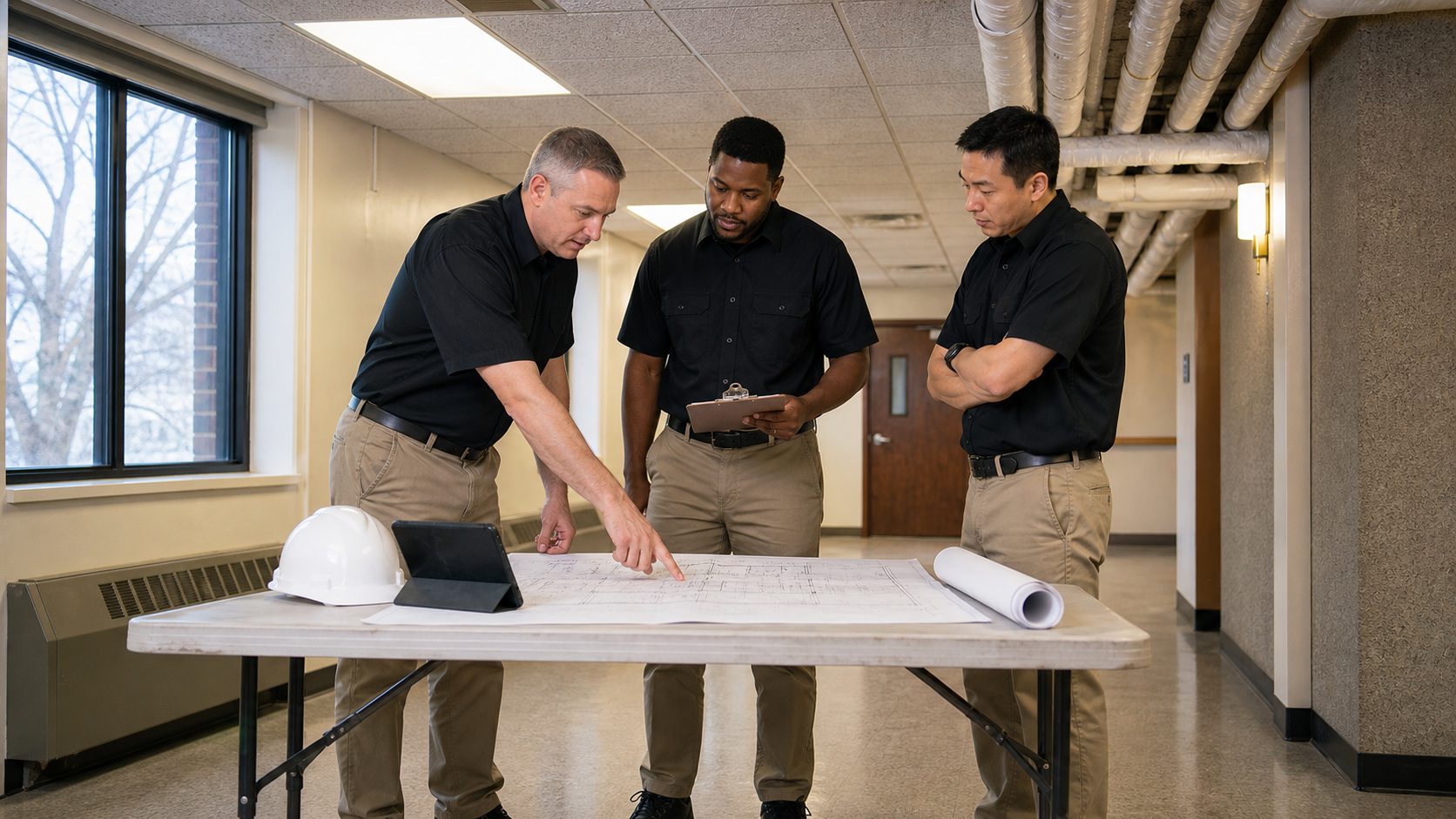
One of the most important safety procedures happens before any material is removed. The project starts with asbestos inspection, asbestos testing, and a written work plan that defines what will be removed, how the area will be contained, what equipment will be used, how waste will be handled, and how exposures will be monitored.
OSHA’s Appendix F for Class I asbestos operations explains that planning should include a physical description of the work area, the amount of material to be removed, ventilation shutdown scheduling, hygiene procedures, personal protective equipment, air monitoring, work practices, and the waste transport method. In Michigan, the MIOSHA asbestos construction standard and project notification rules require contractors performing friable asbestos removal or encapsulation to notify the program before many non-emergency abatement jobs begin.
That planning step is not just about compliance. It is how the contractor decides what controls will actually keep the project safe once materials start getting disturbed.
Regulated Areas and Access Control
A common safety procedure on asbestos jobs is setting up a regulated work area with restricted access. OSHA’s Appendix F says Class I asbestos work requires critical barriers over all openings to the work area, isolation of HVAC systems, and the use of impermeable dropcloths and coverage of objects within the regulated area. The EPA’s safe work practices page also emphasizes controlling access and using proper work practices when asbestos-containing materials are present.
In field terms, this usually means warning signs, sealed doorways, controlled entry points, and clear separation between the abatement zone and occupied parts of the building. This is one of the first lines of defense against fiber migration because it keeps foot traffic, airflow, and unnecessary disturbance away from the work area.
HVAC Isolation and Full Containment
Another standard safety procedure is shutting down or isolating HVAC systems that serve the work area. OSHA states that the power to the heating, ventilation, and air conditioning systems servicing the restricted area must be deactivated and locked off, and ducts, grills, windows, vents, and access ports must be sealed with two layers of plastic to prevent contaminated air from being drawn into the building system.
Containment itself is also a major part of asbestos abatement. OSHA recommends that walls, barriers, ceilings, and floors in the enclosure be lined with two layers of plastic sheeting at least 6 mil thick, and that openings for exits be controlled by airlocks or vestibules. This is why asbestos removal areas often look overbuilt to people outside the industry. The extra layers, sealed seams, and airlocks are there to keep the contamination inside the containment and out of the rest of the property.
Negative Air Pressure and HEPA Filtration
Negative air pressure is one of the most recognizable safety procedures used during asbestos removal projects. OSHA’s Appendix F says negative-pressure enclosures are used to draw air into the containment under anticipated conditions and exhaust it through a HEPA filter 24 hours a day during the project. The same guidance says the enclosure should maintain negative pressure of at least -0.02 inches of water gauge, with airflow checked using smoke tubes or similar visual methods to confirm air is moving into the enclosure and away from workers’ breathing zones.
This is one reason professional asbestos abatement is so different from standard construction dust control. The system is not just collecting debris after it spreads. It is actively controlling where contaminated air can move while the work is happening. HEPA-filtered ventilation and HEPA vacuums are also part of the standard equipment OSHA identifies as essential for cleaning the work area and managing airborne contamination during removal.
Wet Methods and Dust Suppression
Keeping asbestos-containing material adequately wet during removal is another basic safety procedure. OSHA’s construction asbestos resources reference EPA guidance that emphasizes proper wetting of asbestos-containing material before removal. Appendix F also says water sprayers should be used to keep material as saturated as possible during removal, often using a fine mist and wetting agents to improve penetration and reduce fiber release.
This matters because dry removal creates more opportunity for fibers to become airborne. Wet methods are one of the simplest and most effective engineering controls on an asbestos job, especially when combined with containment, HEPA filtration, and careful removal techniques.
Personal Protective Equipment
Personal protective equipment is another common safety procedure, but it works best when it is part of a larger control system. OSHA’s Appendix F directs contractors to the asbestos standard’s requirements for respiratory protection and protective clothing, and it also describes hygiene procedures that include removing contaminated clothing in the decontamination sequence before workers leave the enclosure. OSHA has also stated in an interpretation letter that appropriate respiratory protection and protective clothing are required unless the employer has a qualifying negative exposure assessment for certain limited work conditions.
On active projects, that typically means respirators, disposable coveralls, gloves, and protective footwear are used to keep fibers off the worker’s body and out of clean areas. PPE matters, but it is not supposed to be the only control. It is there to support containment, wet methods, filtration, and decontamination, not replace them.
Decontamination Procedures
A properly run asbestos removal project also includes decontamination procedures for workers, tools, and equipment. OSHA’s Appendix F describes separate areas inside the enclosure for the work area, decontamination area, and waste storage area, along with procedures for cleaning tools, HEPA-vacuuming gross contamination from clothing, and removing coverings before entering the shower area. The guidance also states that water used to clean personnel or equipment should be filtered or collected and discarded as asbestos waste.
This is one of the most important procedures on the whole job because contamination often spreads during exit, not just during removal. A contractor can do careful removal work and still contaminate surrounding space if decontamination is weak. That is why shower rooms, equipment rooms, and controlled exit sequencing are standard on higher-risk asbestos abatement projects.
Waste Handling and Cleanup
Waste handling is another area where professional asbestos removal differs from ordinary construction debris disposal. OSHA says waste asbestos-containing material must be bagged during or immediately after removal, kept saturated until the waste container is sealed, and placed in hard airtight containers when sharp edges or corners could puncture bags. The same guidance recommends double-bagging waste in bags designed for asbestos disposal and handling removed filters and other contaminated debris as hazardous waste.
Cleanup standards are also strict. OSHA says surfaces inside the enclosure should be kept free of visible dust and debris as much as feasible, cleaned with wet wiping and HEPA vacuuming, and fully cleaned before the ventilation system is shut down or the enclosure is dismantled. That is why final cleanup on an asbestos job is not a quick sweep at the end. It is a controlled part of the abatement process itself.
Air Monitoring and Project Verification
Another common safety procedure is air monitoring. OSHA’s construction asbestos page notes that exposure monitoring samples for OSHA purposes must be analyzed by phase contrast microscopy, while bulk sample analysis is generally done by polarized light microscopy. Appendix F also says air samples should be taken to demonstrate the integrity of the enclosure, the cleanliness of the clean room and shower area, and the effectiveness of the HEPA filtration setup.
In practice, air monitoring helps confirm that the containment is working and that exposure control measures are doing what they are supposed to do. It also gives owners, contractors, and project managers a documented basis for evaluating whether the removal area is actually ready to move to the next phase of work.
Testing Comes Before Removal
It is also important to remember that safety procedures start before removal, not after demolition begins. Regardless of the year your property was built, the safest approach is to treat suspect materials as potentially asbestos-containing until testing proves otherwise. Because some imported products may still contain asbestos, age alone is not a reliable way to rule out asbestos.
Best practice is to assume suspect building materials may contain asbestos regardless of construction date, especially drywall and joint compound, flooring and mastics, ceiling tiles and textures, and imported products or components. A government notice on asbestos in imported building products reports that asbestos has been found in a range of imported goods and building materials, which is exactly why testing is safer than relying on age or appearance alone.
That point matters on renovation, selective demolition, and tenant improvement work just as much as it does on full abatement projects. You do not want the first real “test” of a suspect material to be a saw, scraper, or demolition hammer.
If you suspect a building may contain asbestos-containing materials, contact BDS Environmental to discuss asbestos inspection, asbestos testing, asbestos abatement, and environmental remediation services. The safest asbestos removal projects are the ones that are scoped correctly from the start, contained properly during the work, and documented carefully all the way through completion.