Why Older Schools and Municipal Buildings Often Require Asbestos Abatement
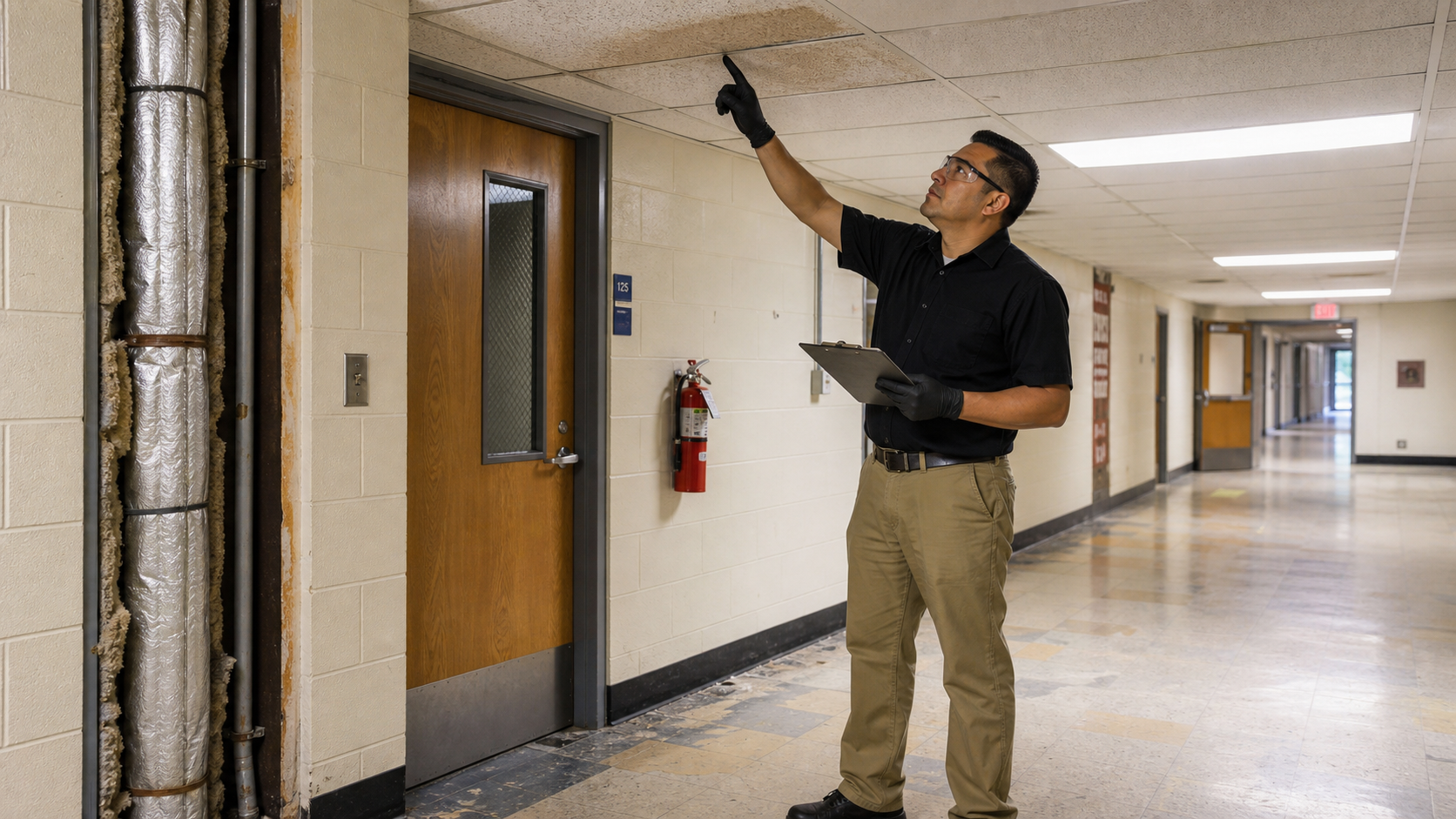
Older schools and municipal buildings often bring a different level of asbestos risk than a typical residential property. These facilities are heavily used, frequently repaired, and often upgraded in phases, which makes asbestos inspection and asbestos testing especially important when building materials are aging, damaged, or likely to be disturbed. In public-use buildings, the question is rarely just whether asbestos is present. The bigger issue is whether those materials can still be safely managed in place or whether asbestos abatement has become the more responsible path.
That distinction matters because schools and municipal buildings are rarely static. Maintenance crews open walls, ceiling systems get accessed, flooring is replaced, and mechanical spaces are updated while the building often remains in service. In Michigan, that combination of age, occupancy, and ongoing work is exactly why asbestos removal becomes part of project planning so often. For administrators, contractors, property managers, and investors, understanding that pattern helps prevent delays, reduce indoor air quality hazards, and support better environmental compliance.
Why These Buildings Get More Scrutiny
Schools and municipal buildings are held to a higher operational standard because they serve the public every day. Under the EPA’s school asbestos guidance, public school districts and nonprofit private schools must inspect for asbestos-containing building material and maintain management plans designed to prevent or reduce asbestos hazards. The EPA’s AHERA designated person guide also makes clear that asbestos management in schools is an ongoing responsibility, not a one-time review.
That matters in the field because these buildings have constant traffic and constant maintenance demands. The EPA’s AHERA FAQ on covered school facilities explains that school buildings can include maintenance, storage, and utility facilities essential to operations, not just classrooms and offices. In other words, asbestos concerns often exist in the exact spaces where renovation and repair work start first.
Why Abatement Becomes Necessary So Often
Not every asbestos-containing material has to be removed immediately. The EPA’s school asbestos page explains that response actions depend on the condition of the material and the risk of disturbance, while the federal AHERA requirements guide outlines ongoing obligations like management planning, reinspections, and surveillance.19january2021snapshot.
The problem in older public buildings is that materials do not stay untouched forever. Ceiling systems sag, flooring cracks, pipe insulation gets damaged, and wall systems are opened for plumbing, electrical, and HVAC work. Once suspect materials are deteriorating or likely to be disturbed, asbestos abatement becomes less of a preference and more of a practical necessity.
Renovation Is a Major Trigger
One of the biggest reasons older schools and municipal buildings require asbestos abatement is renovation. Projects that seem routine, like replacing flooring, updating lighting, upgrading mechanical systems, or remodeling offices and restrooms, can easily disturb suspect materials hidden in ceilings, mastics, wall assemblies, and utility areas.
That is why asbestos before renovation should always be treated as a serious planning issue. The Michigan EGLE asbestos program states that the asbestos NESHAP protects the public and environment by minimizing the release of asbestos fibers during renovation and demolition activities. The state’s Understanding the Asbestos NESHAP fact sheet also explains that advance notification is required so proper precautions can be taken before work begins.
From a contractor’s perspective, that means asbestos demolition requirements and renovation requirements can directly affect schedule, cost, phasing, and access. A project that starts as straightforward construction can quickly become an environmental remediation issue if suspect materials were not properly identified before the work begins.
Public Occupancy Raises the Risk
A vacant building and an occupied school are not managed the same way. Older schools and municipal buildings are used by students, teachers, office staff, maintenance workers, visitors, and contractors, often all within the same week. That constant occupancy leaves much less margin for error when suspect materials are damaged or disturbed.
The New York State Education Department’s AHERA page notes that asbestos management plans must include response actions such as operations and maintenance, repair, enclosure, encapsulation, or removal depending on conditions. The point is not that every material must come out. The point is that older public buildings require a documented, defensible decision about how the material will be handled and how occupants will be protected.
Why Management in Place Has Limits
Managing asbestos in place can be effective when the material is intact, stable, and unlikely to be disturbed. But that strategy becomes harder to maintain in buildings that need repeated repair work, phased upgrades, or constant access above ceilings and behind walls. Public buildings rarely stay untouched long enough for in-place management to remain the easiest long-term answer.
This is where property managers and facility directors often shift from simple monitoring to asbestos removal planning. If a material keeps getting damaged, sits in the path of modernization, or creates recurring access concerns for other trades, abatement may be the cleaner and safer option. In many older municipal buildings, that decision is less about panic and more about ending a cycle of temporary fixes.
Construction Date Is Not a Reliable Safety Test
One of the biggest mistakes in asbestos planning is assuming risk can be ruled out based on age alone. Regardless of the year your property was built, the safest approach is to treat suspect materials as potentially asbestos-containing until testing proves otherwise.
Because some imported products may still contain asbestos, age alone is not a reliable way to rule out asbestos. A government notice on asbestos in imported building products reports that a range of imported goods and construction materials have been found to contain asbestos, which is why verification and testing matter.
Best practice is to assume suspect building materials may contain asbestos regardless of construction date, especially:
Drywall and joint compound
Flooring and mastics
Ceiling tiles and textures
Imported products and components
Imported or foreign-manufactured building materials can still contain asbestos today, so the safest approach is to test rather than rely on age alone. That is especially important in schools and municipal buildings where additions, repairs, and partial renovations may have introduced materials from multiple manufacturers over time.
Why Layered Repair Histories Matter
Older schools and municipal buildings often have complex repair histories. One wing may have original flooring, another may have replacement ceiling systems, and a mechanical room may contain patched materials from several different renovation phases. That layered history makes asbestos inspection more important because materials that look newer are not automatically free of risk.
In a Michigan field context, this is where thorough environmental testing for property managers becomes valuable. The Michigan EGLE demolition information page explains that there is still a risk of asbestos exposure during renovations and demolitions and that these activities are regulated statewide. For public owners and contractors, that means assumptions based on appearance can create both safety problems and compliance problems.
What Facility Teams Should Watch For
In practical terms, asbestos abatement becomes more likely when a building has one or more of these conditions:
Renovation will disturb flooring, mastics, ceilings, drywall systems, or insulation.
Water damage has affected suspect materials.
Mechanical or electrical work requires repeated access behind walls or above ceilings.
Records are incomplete or do not match field conditions.
Materials are visibly damaged, brittle, or deteriorating.
The building has gone through multiple additions or repair phases.
Occupancy makes long-term in-place management harder to sustain.
These conditions do not automatically mean full removal is required, but they do mean the property deserves a professional asbestos inspection and, where appropriate, asbestos testing before anyone treats the project as routine.
Why This Matters for Michigan Projects
In Michigan, older schools and municipal buildings often sit at the intersection of deferred maintenance, active occupancy, and regulated renovation work. The Michigan EGLE asbestos program and the state’s Asbestos NESHAP fact sheet both center on minimizing fiber release during renovation and demolition, which is exactly why early planning matters so much.
For building owners, contractors, and public agencies, the smarter move is not to guess based on appearance, assumptions, or age. It is to identify suspect materials early, define the real scope of work, and address hazardous material removal before the project becomes more expensive or more disruptive than it needed to be.
If you suspect an older school, municipal building, or similar public property may involve asbestos-containing materials, contact BDS Environmental to discuss asbestos inspection, asbestos testing, asbestos abatement, and environmental remediation services. Getting a clear plan in place before renovation or demolition begins is one of the best ways to protect occupants, support compliance, and keep the project moving.