What Contractors Should Do If They Suspect Asbestos on a Job Site
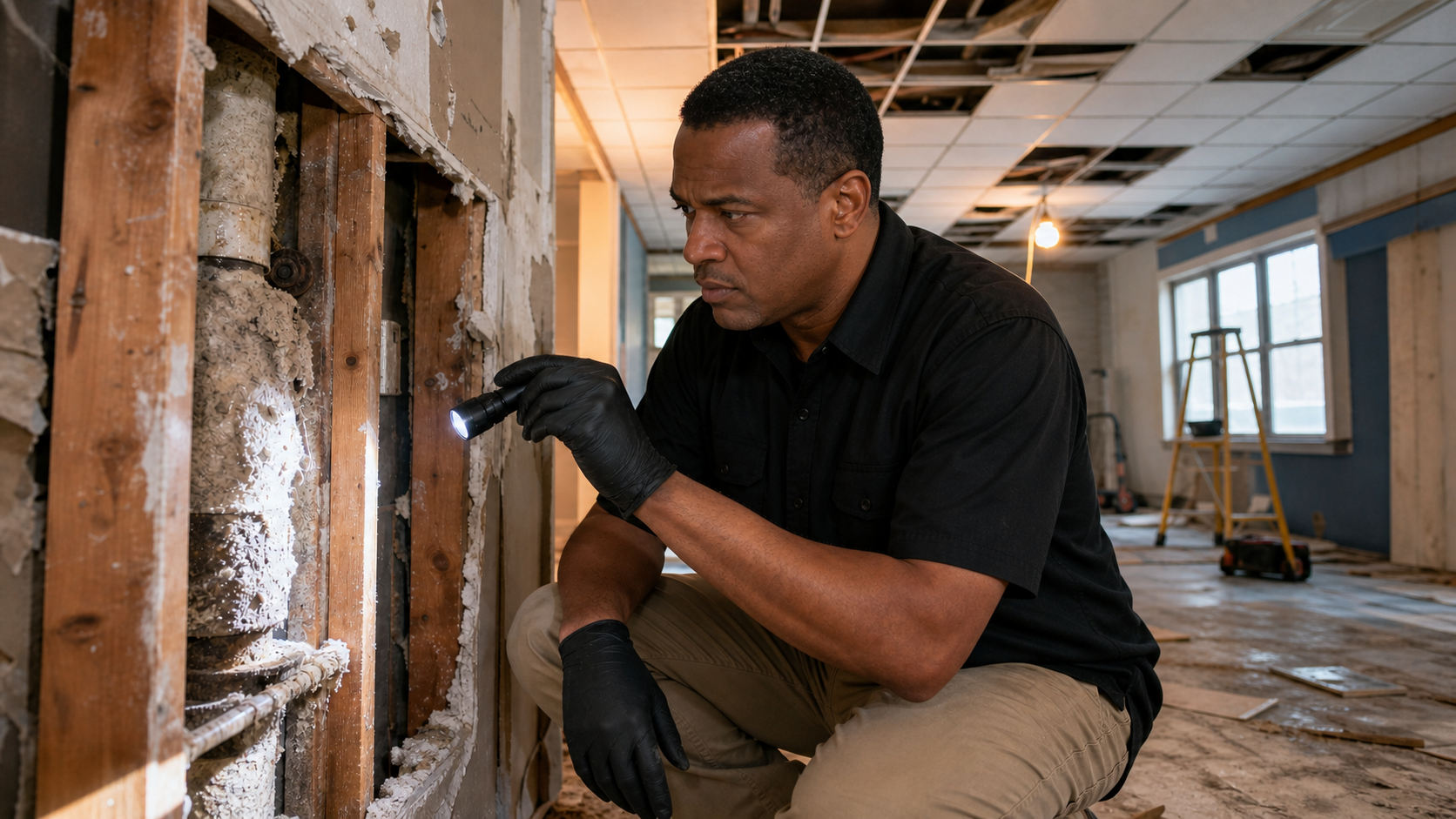
On a busy job site, contractors are trained to solve problems quickly. But when suspect asbestos shows up during demolition, tenant improvements, flooring removal, ceiling work, mechanical access, or wall disruption, speed without the right process can make the situation worse. What seems like a small discovery can quickly turn into a worker-safety issue, a project delay, and a compliance problem if the material is disturbed further.
That is why the first response matters so much. Contractors do not need to diagnose asbestos on the spot, but they do need to know how to recognize a red flag, stop the work safely, and move the issue into the hands of qualified environmental professionals. On commercial and residential renovation projects alike, the right response protects workers, protects the client, and protects the project from turning into a much bigger liability.
Stop Work Before the Problem Spreads
If you suspect asbestos on a job site, the first step is simple: stop disturbing the material. Do not keep cutting, scraping, drilling, prying, sanding, or tearing out the area just to “finish the section” before someone arrives. The risk increases when suspect material is actively disturbed, because that is when fibers are most likely to become airborne and move into the breathing zone or nearby work areas.
The immediate goal is control, not investigation. Keep other trades out of the area, avoid dry cleanup, and do not let anyone start sweeping debris into bags or trash containers. If the suspect material is inside an occupied building, it is also smart to think about airflow, foot traffic, and whether activity nearby could carry dust beyond the immediate work zone.
This is exactly why the EPA advises owners and managers to identify and manage asbestos before maintenance or renovation disturbs it. On a live project, once the material is already exposed, the contractor’s job is to prevent additional disturbance until proper asbestos inspection and asbestos testing can happen.
Do Not Guess Based on Appearance or Age
Contractors ask the same questions all the time: What does asbestos look like? How do you tell if you have asbestos? Are there obvious signs of asbestos? In the field, that line of thinking is understandable, but it is not reliable enough to make worksite decisions.
Many asbestos-containing materials look ordinary. Suspect floor tile can look like standard resilient flooring. Mastic can look like common adhesive. Ceiling tiles and textures may not stand out at all. Drywall systems, joint compound, patching materials, pipe insulation, wall panels, and utility-area finishes can all appear routine to the naked eye. In other words, visual familiarity is not proof of safety.
Regardless of the year the building was built, the safest approach is to treat suspect materials as potentially asbestos-containing until testing proves otherwise. Because some imported products may still contain asbestos, age alone is not a reliable way to rule out asbestos. A commercial asbestos guidance article also notes that assumptions based on age alone can be misleading, particularly where building materials or components may come from outside traditional domestic supply chains.
Materials Contractors Should Be Most Careful With
Best practice is to assume suspect building materials may contain asbestos regardless of construction date, especially:
Drywall and joint compound
Flooring and mastics
Ceiling tiles and textures
Imported products and components
That last category matters more than many crews realize. Imported or foreign-manufactured building materials can still contain asbestos today, so the safest approach is to test rather than rely on age alone. If a material is questionable and the scope of work will disturb it, the correct next move is professional asbestos testing, not field guesswork.
Notify the Right People and Document the Discovery
Once the area is stabilized, the next step is communication. The foreman, superintendent, project manager, property owner, or facility representative should be notified right away so the site response is documented and the proper next party can be brought in. Contractors should not keep the issue informal or assume someone else will mention it later. Small gaps in communication create big problems when schedules, subcontractors, and occupied spaces are involved.
It is also worth documenting what was encountered and when. That does not mean collecting your own samples or handling the material more than necessary. It means recording the location, the work activity that exposed it, who was present, and whether the material was already damaged or only became visible when finishes were opened. A clear record helps everyone respond faster and reduces confusion if the project later needs schedule changes, tenant communication, or revised scopes of work.
From a practical standpoint, this is where contractors can add a lot of value for clients. A calm, well-documented response signals professionalism. It shows that the job is being handled responsibly rather than reactively, and that matters whether the client is a homeowner, property manager, investor, or commercial building owner.
Bring in Certified Professionals for Inspection and Next Steps
Once suspect asbestos is found, the next step is not more demolition. It is bringing in the right environmental professional. A qualified asbestos inspector can evaluate the suspect material, collect samples appropriately, and arrange accredited laboratory analysis so the project team knows what it is dealing with.
That testing step matters because not every suspect material ends up being asbestos-containing, but no contractor should make that call from appearance alone. If results confirm asbestos, the project can then move into the right scope, whether that means asbestos abatement, asbestos removal, revised sequencing, or a decision to avoid disturbing the material altogether.
For regulated work, compliance requirements may apply before renovation or demolition proceeds. The EPA’s asbestos renovation and demolition guidance explains that owners and operators have asbestos management responsibilities when renovation or maintenance may disturb asbestos-containing materials. In Michigan, asbestos-related renovation and demolition oversight is handled through the state’s EGLE Asbestos NESHAP program. Contractors do not need to become regulators, but they do need to understand that once asbestos is in the picture, normal demolition workflow no longer applies.
This is also where local knowledge matters. Teams searching for asbestos removal near me, asbestos removal Michigan, or asbestos removal Warren MI are usually not just looking for labor. They are looking for licensed professionals who understand containment, waste handling, project coordination, and the local compliance landscape well enough to keep the job from drifting into avoidable risk.
Understand Why the Health Risk Has to Be Taken Seriously
Some contractors still hear asbestos discussed like an “old building problem” that only matters in extreme conditions. That mindset is dangerous. The real issue is exposure during disturbance, especially when workers are cutting into unknown materials without realizing what they are releasing.
According to occupational health research cited by the Asbestos Disease Awareness Organization, asbestos-related diseases cause about 39,000 deaths per year in the United States. NPR also reported on CDC findings showing that malignant mesothelioma deaths have continued even after decades of regulation and awareness. Those are not minor background statistics. They are reminders that asbestos health risks remain real when suspect materials are mishandled on active job sites.
For contractors, that means the stakes go beyond one delayed task. A poor decision in the field can affect your crew, other trades, building occupants, and anyone else who enters the area before it is properly evaluated. It can also affect the client’s liability and trust in the project team. Stopping work early is not overreacting. It is the responsible move.
Do Not Resume Work Until the Site Is Cleared
Once asbestos is confirmed, the solution is not to work around it casually or let another trade “be careful” near the area. If the planned scope will disturb the material, the site needs a proper response plan before work resumes. That may involve asbestos abatement, containment, clearance procedures, and updated scheduling before general construction activities can restart.
This is where many projects either stay under control or begin to unravel. A disciplined response keeps environmental remediation services separate from general construction tasks, which protects both compliance and quality. A rushed response creates confusion about who removed what, whether the area was cleared, whether debris was handled correctly, and whether adjacent spaces were affected.
For contractors, the safer standard is straightforward:
Stop work immediately in the affected area.
Restrict access and avoid further disturbance.
Notify project leadership and the property representative.
Arrange professional asbestos inspection and asbestos testing.
Follow the direction of licensed asbestos abatement or asbestos removal professionals.
Resume work only after the area has been properly addressed and released back to the project.
That approach protects the job site, but it also protects your reputation. Clients remember which contractors stay level-headed and handle hazardous material removal issues the right way.
Make Asbestos Planning Part of Every Renovation Mindset
The best time to deal with asbestos is before demolition begins. Contractors who build asbestos before renovation thinking into their standard workflow usually have fewer delays, fewer emergency calls, and fewer project disputes. That means asking the right questions before cutting into walls, pulling flooring, disturbing ceiling materials, or opening utility spaces.
This is especially important for property managers, owners, and general contractors coordinating tenant improvements or turnover work in occupied buildings. Environmental compliance for property owners is easier to manage when asbestos inspection is treated as part of pre-job planning rather than something addressed only after suspect debris is already on the floor. It also helps project teams coordinate other issues that may exist at the same time, including mold inspection, lead paint concerns, and broader indoor air quality hazards.
Contractors do not need to be asbestos experts to respond well. They need to know when to stop, when to escalate, and when not to let schedule pressure override site safety. That is what protects workers and keeps a manageable issue from becoming a serious one.
If you suspect asbestos on a job site, contact BDS Environmental before work continues. A timely inspection, clear testing results, and the right abatement plan can protect your crew, your client, and the project as a whole.