Is Asbestos Dangerous If Left Undisturbed? Understanding the Real Risk
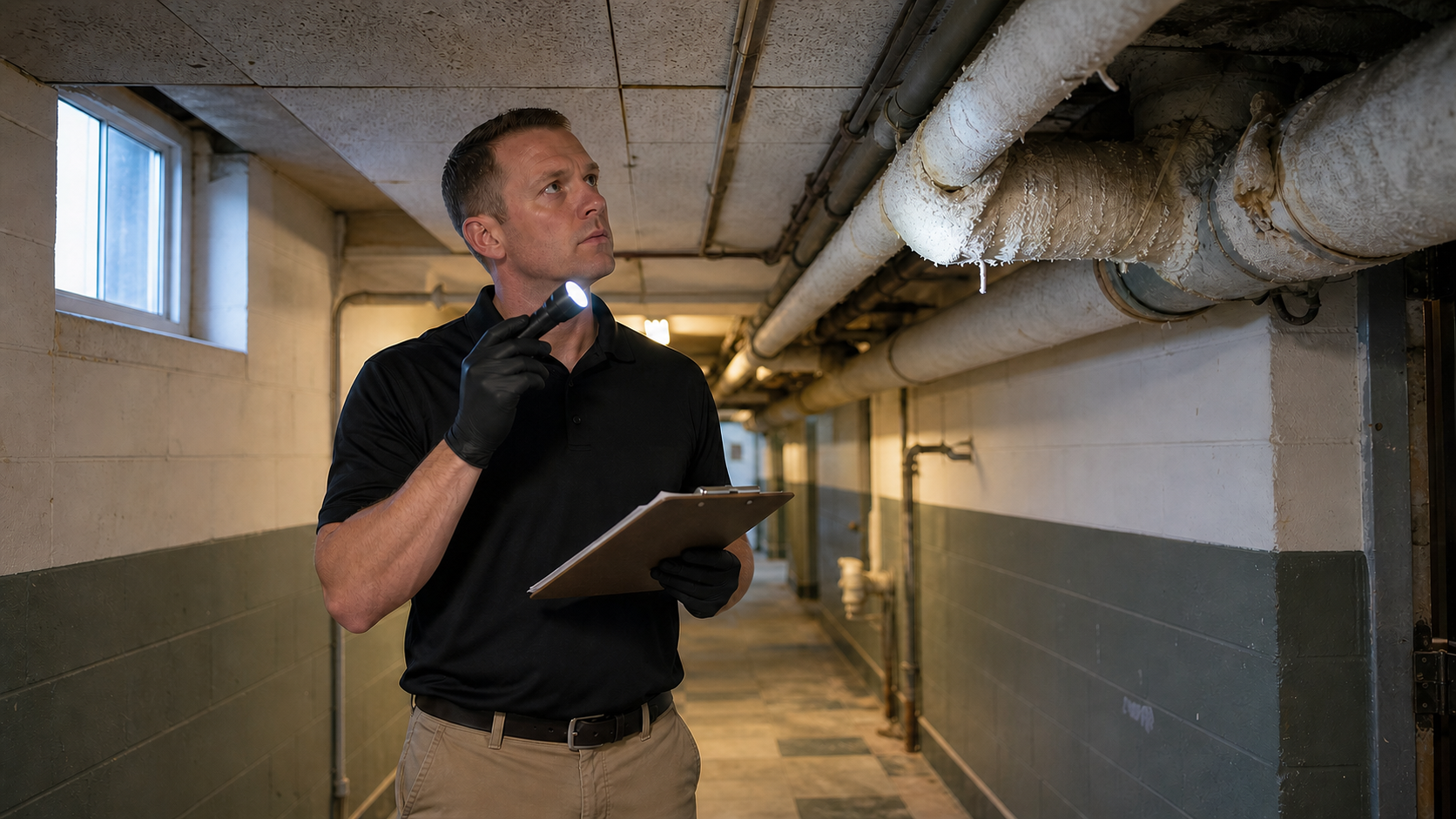
One of the most common questions Michigan property owners ask when they learn their building may contain asbestos is whether they need to do anything about it at all. If the material is not bothering anyone, if the ceiling tiles look intact, if the floor is still solid underfoot—does asbestos actually pose a danger? The short answer is that undisturbed, intact asbestos-containing materials in good condition do not release fibers at levels that create the same acute risk as damaged or disturbed materials. But that answer requires significant context, because "undisturbed" is not a permanent state, and the conditions that keep asbestos stable today can change quickly with age, water damage, renovation activity, or simple wear over time.
For homeowners, property managers, landlords, contractors, and investors working across Metro Detroit, Warren, and other Michigan communities, understanding the real risk profile of asbestos in buildings is essential to making sound decisions. Leaving all asbestos in place indefinitely and ignoring it entirely is not responsible management. Tearing it all out immediately without professional asbestos inspection and asbestos testing is equally problematic—and in many cases creates far more risk than it eliminates. The right approach is informed: know what you have, understand its condition, assess the likelihood of disturbance, and make decisions based on facts rather than fear or dismissal.
How Asbestos Becomes Dangerous
Fiber Release Is the Mechanism of Harm
Asbestos itself is a naturally occurring mineral. The hazard it presents is not from its existence in a building material but from what happens when those materials release microscopic fibers that become airborne and are inhaled. EPA explains that asbestos fibers that are inhaled can become permanently lodged in lung tissue, where they are associated with mesothelioma, lung cancer, and asbestosis—serious diseases that may not manifest for decades after the original exposure occurred.
https://www.epa.gov/asbestos/learn-about-asbestos
NIEHS similarly notes that there is no established safe level of asbestos exposure, and that the risk of disease is related to the concentration of fibers inhaled and the duration of exposure.
https://www.niehs.nih.gov/health/topics/agents/asbestos
The critical distinction is between materials that are actively releasing fibers and materials that are not. When asbestos-containing materials are intact, bonded, and undisturbed, fiber release is minimal. When those same materials are cut, sanded, scraped, broken, or allowed to deteriorate to the point of crumbling, fiber release can be significant.
Friable vs. Non-Friable: The Condition That Matters Most
EPA distinguishes between two categories of asbestos-containing materials based on their potential to release fibers:
Friable asbestos can be crumbled, pulverized, or reduced to powder by hand pressure. Sprayed-on fireproofing applied to structural steel, deteriorating pipe and boiler insulation, and damaged acoustic ceiling textures fall in this category. Friable materials that are in poor condition present the most immediate risk because fiber release requires minimal disturbance.
Non-friable asbestos is bound in a solid matrix and does not readily release fibers under normal conditions. Intact vinyl and asphalt floor tiles, solid-set roofing materials, and undamaged transite panels are common examples. These materials present lower risk when left in good condition but become a concern when cut, abraded, or demolished.
The practical implication for Michigan property owners is that material condition is as important as material type when assessing risk. A piece of intact, undamaged floor tile presents a very different situation than crumbling pipe insulation in a basement mechanical room.
When "Undisturbed" Is Not a Realistic Description
Age and Deterioration Change the Equation
The word "undisturbed" implies a static situation—but asbestos-containing materials in real buildings are subject to ongoing forces that change their condition over time. Factors that cause previously stable materials to deteriorate and begin releasing fibers include:
Water damage and moisture infiltration that breaks down binders in ceiling tiles, joint compound, and insulation
Vibration from building systems, traffic, or construction activity in adjacent spaces
Physical impact and wear in high-traffic areas
Age-related loss of cohesion in materials that were installed many decades ago
Pest activity or rodent damage in wall and ceiling cavities where insulation materials are present
A property that was assessed years ago and found to have asbestos-containing materials in acceptable condition may have had those conditions change significantly since then—without any deliberate disturbance by an occupant or contractor.
Maintenance and Repair Work Creates Disturbance
Most asbestos exposure in homes and smaller buildings does not come from major renovation projects. It comes from routine maintenance and repair activities that disturb asbestos-containing materials without anyone realizing those materials are present. Common examples include:
Drilling through walls or ceilings that contain asbestos-containing joint compound or textured coatings
Replacing plumbing fixtures that require cutting into walls with asbestos-containing materials
Installing light fixtures or ceiling fans in areas with asbestos-containing ceiling textures
Pulling up resilient flooring during kitchen or bathroom updates
Scraping and sanding wall surfaces during repainting projects
Each of these activities seems routine. In a building where asbestos-containing materials have been identified and documented, they require planning. In a building where no asbestos inspection has been done, they represent uncontrolled disturbance events waiting to happen.
The Imported Materials Factor: Why Any Building May Be Affected
Construction Date Is Not the Deciding Factor
Best practice is to assume suspect building materials may contain asbestos regardless of when a property was built. Asbestos-containing materials are not a historical curiosity limited to older construction—because some imported or foreign-manufactured building products, including drywall, joint compound, flooring, ceiling tiles, and mechanical insulation from countries without stringent asbestos regulations, can still contain asbestos today. The safest approach is to treat suspect materials as potentially asbestos-containing until asbestos inspection and asbestos testing prove otherwise.
This applies specifically to:
Drywall and joint compound, including materials used in partial renovations or additions at any point in a building's history
Flooring and mastics, including newer-looking resilient flooring that may have been sourced internationally
Ceiling tiles and textures, particularly drop ceiling systems where replacement tiles may have been added over time
Imported products and components incorporated during repairs or updates that may not have been subject to domestic asbestos controls
Because some imported products may still contain asbestos, age alone is not a reliable way to rule out asbestos in any building material. Testing is the only way to know.
Leave It, Manage It, or Remove It: How Decisions Are Made
When Leaving It in Place Is Appropriate
EPA's guidance on managing asbestos in buildings acknowledges that not every instance of asbestos-containing material requires immediate removal. When materials are:
In good condition with no visible damage, deterioration, or signs of fiber release
Not subject to disturbance through planned renovation or regular maintenance activities
Located in areas where they will not be regularly accessed or handled
...an Operation and Maintenance (O&M) approach may be appropriate. An O&M program involves documenting the location and condition of asbestos-containing materials, establishing protocols to avoid accidental disturbance, training maintenance staff to recognize and avoid disturbing identified materials, and scheduling periodic monitoring to track condition changes over time.
O&M is not a permanent solution and does not eliminate the material. It is a management strategy for materials that do not currently present an active hazard and are not scheduled for disturbance.
When Asbestos Abatement Is the Right Choice
Asbestos abatement—the professional removal of asbestos-containing materials—is the right choice when:
Materials are in poor condition, friable, or actively releasing fibers
Renovation, repair, or demolition work will disturb asbestos-containing materials
The building is being fully or partially demolished, which triggers mandatory pre-demolition asbestos abatement under EPA NESHAP requirements regardless of material condition
An O&M approach is no longer practical because the scope of disturbance risk from planned work is too broad to manage
The building owner wants a permanent solution rather than ongoing management obligations
https://www.epa.gov/asbestos/asbestos-national-emission-standards-hazardous-air-pollutants-neshap
For Michigan commercial property owners and larger residential portfolio holders, asbestos abatement before major renovation is consistently more cost-effective than discovering asbestos mid-project and managing an emergency response. As discussed in our previous BDS Environmental blog on contractor disturbance, the regulatory consequences and emergency remediation costs that follow an uncontrolled asbestos release reliably exceed what planned abatement would have cost.
When the Answer Requires Professional Evaluation
For many Michigan property owners, the decision between leaving asbestos in place, managing it, or removing it cannot be made without professional assessment. Signs of asbestos are not visible to the untrained eye—you cannot tell if a material contains asbestos by looking at it. How to tell if you have asbestos requires laboratory analysis of samples collected by a certified inspector. What does asbestos look like in building materials? It looks identical to the non-asbestos version of the same product. That is exactly why professional asbestos inspection and testing are the only way to make informed decisions about the materials in your building.
A certified asbestos inspector samples suspect materials, submits them for laboratory analysis, evaluates the condition of identified asbestos-containing materials, and provides written documentation of findings and recommendations. That report gives you the factual foundation for deciding whether management, abatement, or continued monitoring is the right approach for each material in the building.
What Asbestos Inspection Gives You That Guessing Cannot
Documentation That Supports Every Future Decision
Having a current asbestos survey on file for a Michigan property does more than answer today's question about risk. It provides:
A baseline record of where asbestos-containing materials exist, their condition, and their recommended management approach
The information contractors need to plan renovation work safely and in compliance with EPA and OSHA requirements
Documentation that supports environmental compliance property owners are expected to maintain for lenders, insurers, and regulators
Protection in the event of a regulatory inquiry, worker exposure claim, or tenant concern
Environmental testing for property managers and investors is most valuable when it is proactive rather than reactive. Knowing what is in your buildings before a situation forces the question puts you in control of the response.
OSHA Requirements When Workers May Be Exposed
For commercial property owners and landlords who hire contractors for maintenance and renovation work, OSHA's asbestos standard for construction establishes that employers and building owners have a responsibility to inform workers about known asbestos conditions before work begins.
https://www.osha.gov/asbestos
Without an asbestos inspection, you cannot fulfill that obligation. And when workers are exposed to asbestos-containing materials during renovation without having been informed of the risk, both the contractor and the building owner may face OSHA enforcement action. Having current asbestos documentation is not just an environmental compliance tool—it is an occupational safety and liability management tool as well.
Overlapping Hazards in Michigan Properties
In many Michigan homes and commercial buildings, asbestos does not exist in isolation. Properties with asbestos-containing materials often also have lead-based paint on walls, trim, and structural components, as well as mold conditions from water intrusion in basements, crawlspaces, and wall cavities. When renovation work is planned, all three hazards may be present in the same work area.
Coordinating environmental remediation services for asbestos abatement, lead paint removal, and mold remediation under a single integrated scope is the most efficient and safest approach when these hazards overlap—reducing duplication of containment setups, minimizing disruption to occupants, and ensuring that addressing one hazard does not inadvertently disturb another.
The Bottom Line on Undisturbed Asbestos
Asbestos-containing materials that are intact, in good condition, and not subject to disturbance present a lower immediate risk than damaged or friable materials. But "undisturbed" is not a permanent guarantee, and the only way to make an informed decision about any asbestos-containing material in your building is to know it is there in the first place. Asbestos inspection establishes what you have. Professional evaluation of condition and disturbance risk guides your decisions from there. And when the time comes for renovation, demolition, or remediation, certified asbestos abatement ensures that materials are removed safely, documented thoroughly, and disposed of in compliance with Michigan and federal requirements.
If you own or manage a Michigan property and want to understand whether asbestos-containing materials are present, what condition they are in, and how to handle them correctly for both current occupancy and future renovation plans, BDS Environmental can help. The team works with homeowners, property managers, landlords, contractors, and investors throughout Michigan to conduct professional asbestos inspections, assess material conditions, coordinate abatement when it is needed, and provide the documentation that supports sound long-term building management. If asbestos is a question for your property, contact BDS Environmental to get a professional answer before you make any decisions about the materials in your building.