Mold in Rental Properties: Responsibilities for Michigan Landlords
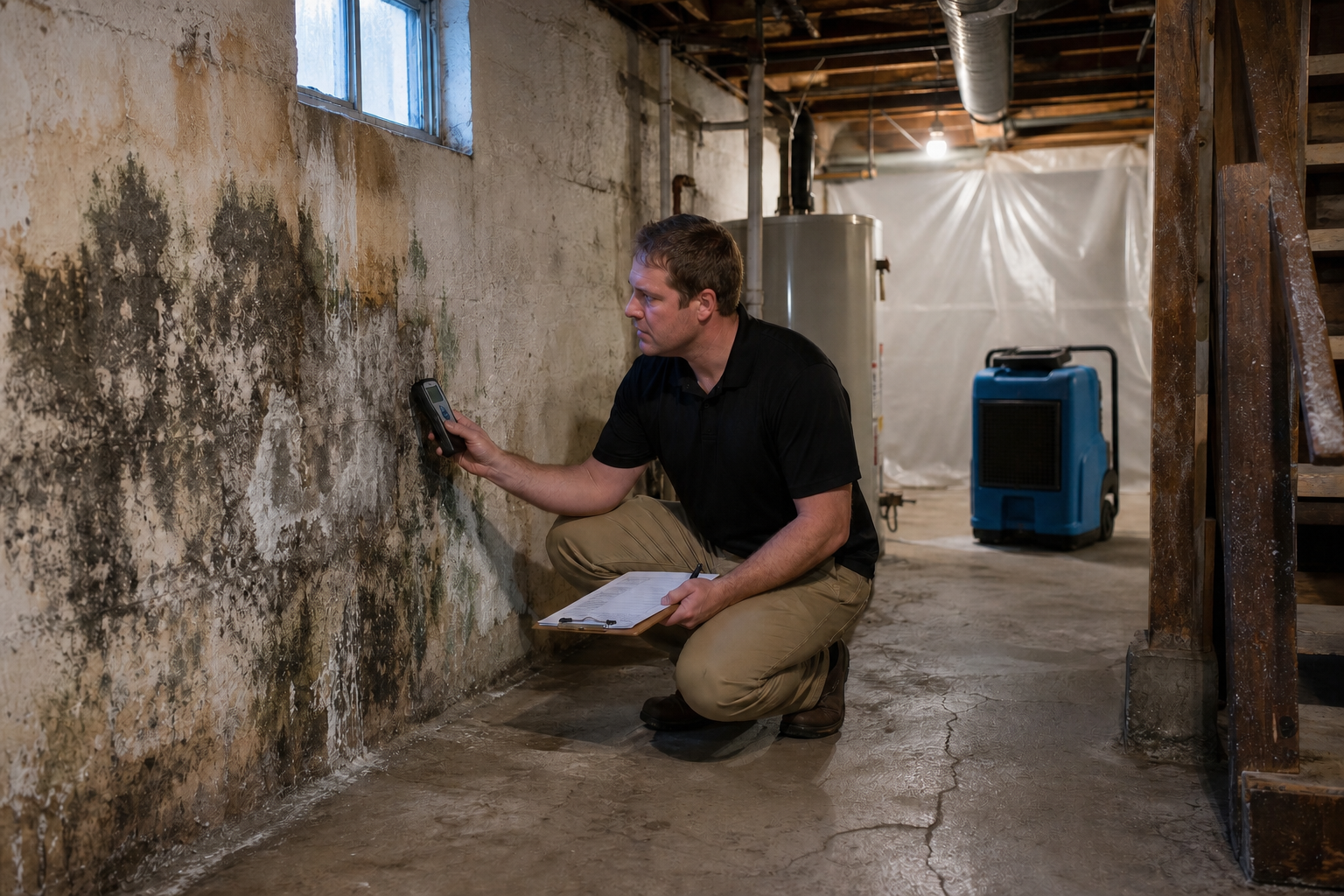
Mold in a rental property is not a cosmetic inconvenience that can be resolved with a coat of paint and a maintenance note. For Michigan landlords, mold is a habitability issue with legal consequences, health implications for tenants, and financial exposure that grows significantly the longer it goes unaddressed. When a tenant reports a mold smell in the house, visible growth in a bathroom, or black mold symptoms that they believe are tied to their unit, a landlord's response from that point forward is what determines whether the situation is managed professionally or whether it escalates into a code complaint, a rent withholding dispute, or litigation. The difference between those two outcomes almost always comes down to how quickly and thoroughly the mold condition was assessed and addressed.
For landlords managing single-family rentals, small multifamily properties, and larger portfolio holdings across Metro Detroit, Warren, and other Michigan communities, understanding mold responsibilities is part of operating rental properties legally and professionally in this market. Michigan's older housing stock—dense with properties that have experienced decades of water events, aging plumbing, and variable maintenance—creates conditions where mold is a recurring operational reality rather than a rare exception. Knowing when you are responsible, what response the law and basic property standards require, and when professional mold remediation is the right call protects your tenants, your property, and your investment.
What Michigan Law Says About Mold in Rental Properties
The Implied Warranty of Habitability
Michigan's landlord-tenant law requires landlords to maintain rental properties in a condition fit for human habitation. This implied warranty of habitability means that a unit must be structurally sound, safe, and free from conditions that pose a health or safety threat to occupants. While Michigan does not have a single stand-alone mold statute, mold conditions that affect habitability—particularly when they result from a building defect, structural moisture intrusion, or a maintenance failure—fall squarely within the landlord's obligation to maintain the premises.
The Michigan Housing Law and local housing codes in many Michigan municipalities reinforce this standard. When a rental unit has active mold growth caused by a building-side moisture problem—a leaking roof, a seeping foundation, a failed plumbing connection inside the wall—the landlord is responsible for both correcting the moisture source and addressing the resulting mold damage. Tenants who provide written notice of mold conditions and receive no response have remedies under Michigan law, including rent withholding and repair-and-deduct options in defined circumstances.
Tenant Notification and Response Obligations
When a tenant reports mold, the clock starts running on your response. From a practical and legal standpoint, landlords should:
Document the notification date and the specific conditions described
Arrange for a professional mold inspection or assessment within a reasonable timeframe—not weeks after the complaint
Provide tenants with written communication acknowledging the report and describing the planned response
Follow through on remediation within a timeframe consistent with the severity of the condition
Ignoring or minimizing mold complaints is not a viable strategy. NIEHS notes that living or working in damp, moldy environments is consistently linked to respiratory symptoms, asthma, and upper respiratory infections, and tenants who develop health symptoms they attribute to mold conditions in their unit have grounds to pursue landlords who failed to respond appropriately. https://www.niehs.nih.gov/health/topics/agents/mold
The Real Health Risks Landlords Need to Understand
Mold health risks are not limited to dramatic cases of extensive black mold growth visible across entire walls. CDC notes that mold exposure can cause nasal stuffiness, throat irritation, coughing or wheezing, eye irritation, and skin irritation in otherwise healthy people. For tenants with asthma, allergies, or compromised immune systems, those effects can be significantly more severe. https://www.cdc.gov/mold-health/about/index.html
Black mold symptoms—a term frequently used in tenant complaints—are associated with Stachybotrys chartarum, a species that grows in persistently damp conditions. However, health professionals emphasize that any mold species in sufficient concentrations can create health concerns, and the color or appearance of mold is not a reliable indicator of its health significance. What matters is that mold is present in a rental unit in conditions that exceed what is normal, and that the landlord has a documented obligation to address it.
For Michigan landlords managing occupied units, mold health risks create direct liability. A tenant's documented health impacts combined with your documented failure to respond to a mold complaint is exactly the fact pattern that drives adverse legal outcomes for property owners.
Where Mold Develops in Rental Properties
Understanding where mold is most likely to establish itself in Michigan rental properties helps landlords prioritize inspections and catch conditions before tenants are exposed. Common locations include:
Basements and crawlspaces where basement mold after water damage from foundation seepage, sump pump failures, or sewer backups is one of the most consistent mold sources in Michigan rental housing
Bathrooms with inadequate ventilation, failing caulk around tubs and showers, and chronic humidity that exceeds what exhaust fans can manage
Under sinks and around supply and drain connections where slow leaks go undetected for extended periods
Around windows where condensation from thermal bridging or failed seals creates persistent moisture on adjacent framing and drywall
Attic spaces where inadequate ventilation or roof penetration failures allow moisture to accumulate in sheathing and insulation
Areas affected by mold after flooding, where water was not completely dried within the critical 24 to 48-hour window after a water event
Water damage mold risk is highest immediately after any significant water event—a flooding event, a burst pipe, an appliance leak that went undetected. Rapid, complete drying is the first line of defense. When drying is delayed or incomplete, mold remediation almost always follows.
Landlord Responsibility vs. Tenant Responsibility
Not every mold condition in a rental unit is the landlord's responsibility to remediate. The determining factor is generally the source of the moisture:
Landlord's responsibility when mold results from:
Building defects such as foundation seepage, roof leaks, or failed flashing
Plumbing failures inside walls or building systems the tenant cannot access
Inadequate building ventilation designed into the structure
Prior water damage that was not fully remediated before the tenant moved in
Tenant's responsibility when mold results from:
Consistently failing to use exhaust ventilation in bathrooms and kitchens
Leaving windows open during rain events that allow water intrusion
Blocking or disabling ventilation systems
Allowing spills or appliance leaks to go unreported for extended periods
In practice, the line between these categories requires honest assessment and sometimes professional evaluation to determine the actual moisture source. When the source is ambiguous, commissioning a professional mold inspection provides both documentation and clarity—which protects the landlord if the situation escalates to a dispute.
When Professional Mold Remediation Is the Right Response
EPA's mold cleanup guidance generally suggests professional help is warranted when affected areas exceed 10 square feet, when mold is connected to a sewage or contaminated water source, when mold is present in HVAC systems, or when occupants have health conditions that make exposure a concern. https://www.epa.gov/mold/mold-cleanup-your-home
For Michigan landlords, the practical threshold for professional mold remediation is often lower than this guidance suggests:
Any mold in an occupied unit where a tenant with respiratory conditions or young children is present
Recurring mold that has returned after previous cleaning attempts, indicating the moisture source was never properly resolved
Mold smell in house areas where no visible growth is apparent, suggesting hidden contamination inside walls or under flooring
Any mold after flooding or a significant water event where the full extent of contamination is unknown
Any situation where mold-contaminated materials such as drywall or subfloor need to be removed
The mold remediation process for rental properties follows the same structured sequence discussed in our previous BDS Environmental blog on mold remediation timelines: moisture source correction, containment setup, material removal, HEPA cleaning, structural drying, and clearance testing. Clearance testing after professional remediation produces the documentation that demonstrates conditions were returned to acceptable levels—documentation that matters for your records, for your tenant's confidence, and for your protection if the situation is ever disputed.
The Cost of Delayed Response
Landlords who delay responding to mold conditions consistently face higher costs than those who act promptly. What starts as a manageable bathroom mold issue that could be remediated in one to two days can become a wall cavity, subfloor, or structural framing situation if moisture continues for weeks or months without intervention. Mold remediation for landlords who waited too long on a tenant complaint also carries greater legal exposure—particularly when there is written documentation showing the tenant reported the problem and the landlord did not respond within a reasonable timeframe.
Professional mold remediation Michigan landlords invest in promptly is consistently less expensive, less disruptive, and less legally risky than remediation performed months later under pressure from a code complaint or tenant legal action.
How Mold Intersects With Other Hazards in Michigan Rental Properties
In many older Michigan rental properties, mold remediation that involves opening walls, removing flooring, or demolishing ceiling materials may encounter other hazardous materials in homes:
Asbestos-containing materials in flooring mastics, ceiling tiles, joint compound, and pipe insulation. Best practice is to assume suspect building materials may contain asbestos regardless of when the property was built, because some imported drywall, flooring, and ceiling products from countries without stringent asbestos regulations can still contain asbestos today. Regardless of the year your property was built, treat suspect materials as potentially asbestos-containing until asbestos inspection and asbestos testing prove otherwise.
Lead-based paint on walls and trim that may be disturbed when mold-damaged drywall is removed. In older Michigan rental housing, lead paint laws Michigan enforces require specific handling when lead-based paint is present and renovation disturbs those surfaces. Lead-safe work practices must be incorporated into mold remediation projects when lead-based paint may be present in homes under earlier building standards.
When mold remediation, asbestos abatement, and lead paint removal are all needed within the same project area, coordinating environmental remediation services under a single integrated scope is the most efficient and safest approach—both for the people in the building and for your project timeline and budget.
Protecting Your Tenants and Your Properties
Mold in rental properties is a landlord responsibility that cannot be delegated to tenants or minimized with surface cleaning. When moisture creates conditions for mold growth in your building, the obligation to identify the source, remediate the contamination professionally, and document that the problem was resolved falls to you as the property owner. Michigan's older rental housing stock makes this a regular operational reality—and the landlords who manage it well are the ones who respond quickly, use qualified professionals, and keep thorough records.
If you manage Michigan rental properties and are dealing with a mold condition—whether it is a tenant complaint you need to respond to, recurring mold you cannot get ahead of, or a post-flooding situation where you are not sure of the extent of the damage—BDS Environmental can help. The team works directly with landlords, property managers, and investors throughout Michigan to scope mold conditions accurately, perform professional mold remediation that addresses the source rather than the surface, and coordinate any overlapping hazards like asbestos or lead paint when they are present. If mold is an open issue in one of your properties, contact BDS Environmental to discuss your situation and determine the right professional response.