What Property Managers Should Know About Mold Complaints
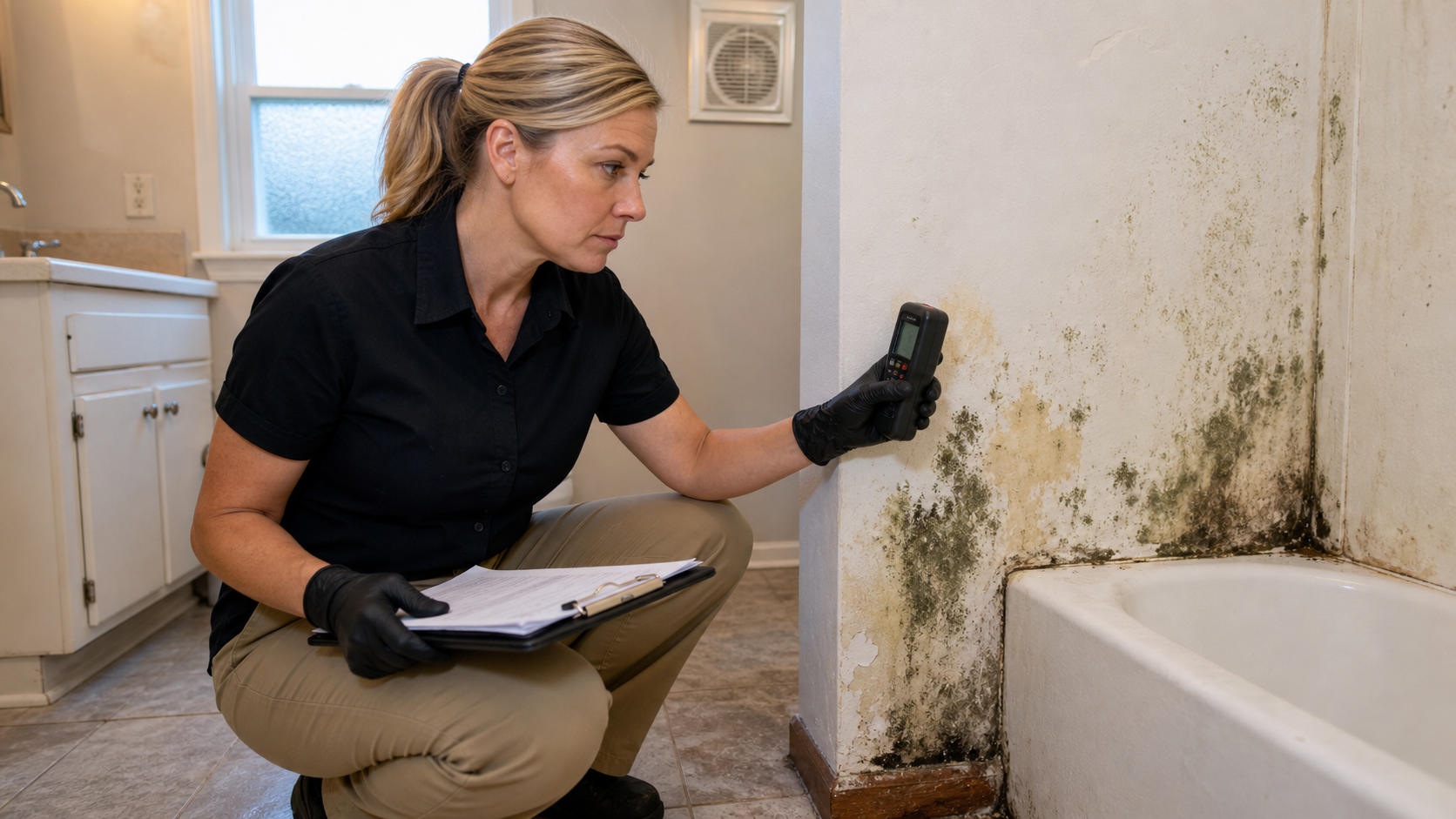
A mold complaint from a tenant is not a routine maintenance request that can be added to a work order queue and addressed when time allows. For property managers in Michigan, a written or verbal mold complaint starts a clock—on your legal response obligation, on the moisture conditions that are actively worsening inside the building, and on your exposure if the situation escalates into a code violation, a habitability dispute, or tenant health claims. The property managers who handle mold complaints well are the ones who have a clear, consistent response protocol already in place before the phone rings. Those who treat mold complaints as nuisances to be minimized or deferred tend to find themselves managing far more expensive and legally complicated situations down the road.
For property managers overseeing single-family rentals, small multifamily buildings, and larger commercial portfolios across Metro Detroit, Warren, and other Michigan communities, mold complaints are an operational reality—not an edge case. Michigan's older housing stock, combined with the state's cold winters, aging plumbing systems, and prevalence of basement moisture issues, creates conditions where mold develops regularly in managed properties. Understanding what a mold complaint legally and professionally requires, how to investigate and document it, and when professional mold remediation is the appropriate response protects your tenants, your property owner clients, and your own standing as a professional manager in this market.
Why Mold Complaints Demand Immediate Attention
Legal Obligations Begin at Notification
Under Michigan landlord-tenant law, the implied warranty of habitability requires that rental properties be maintained in a condition fit and safe for human habitation. When a tenant notifies you in writing of a mold condition, that notification creates a documented record that you had knowledge of a potentially habitability-affecting issue. From that point forward, your response—or failure to respond—becomes part of the record in any subsequent dispute.
Michigan courts have consistently applied the implied warranty of habitability to environmental conditions that affect indoor air quality and occupant health. A property manager who receives a written mold complaint and takes no meaningful action within a reasonable timeframe is in a significantly weaker legal position than one who documents the complaint, acknowledges it promptly, and initiates a professional assessment.
NIEHS notes that living or working in damp, moldy environments is consistently associated with respiratory symptoms, asthma, and upper respiratory infections—making mold a health concern, not just an aesthetic one. https://www.niehs.nih.gov/health/topics/agents/mold
Every Hour of Delay Makes It Worse
Mold does not pause while you figure out your next step. CDC notes that mold can begin colonizing wet building materials within 24 to 48 hours of a moisture event, and that sustained moisture conditions allow it to spread progressively through adjacent materials. https://www.cdc.gov/mold-health/about/index.html
A bathroom mold complaint that gets addressed within a few days may involve a few square feet of affected drywall. The same complaint ignored for three weeks can involve wall cavities, subfloor, framing members, and insulation—with a remediation scope that is proportionally more expensive and disruptive. Prompt response is not just legally important. It is the most cost-effective approach to managing mold in rental properties.
How to Respond to a Mold Complaint: A Practical Protocol
Step One: Document the Complaint Immediately
When a tenant reports mold—by phone, email, text, or written notice—document it immediately:
Record the date and time of the complaint
Note the specific location the tenant described, the conditions they observed, and any health symptoms they mentioned
Confirm receipt of the complaint to the tenant in writing, even if just by reply email
This documentation establishes your response timeline and demonstrates that you took the complaint seriously from the start. If the situation ever escalates to a dispute, your documented response record is your primary protection.
Step Two: Conduct a Prompt Visual Assessment
Within 24 to 48 hours of receiving a mold complaint, a property manager or qualified maintenance professional should visit the unit to assess conditions firsthand. During that visit:
Inspect the area the tenant identified for visible mold growth
Check for moisture sources: plumbing leaks under sinks, around toilets, near water heaters; signs of foundation seepage in basements; water staining from roof leaks or window failures
Note whether bathroom and kitchen exhaust fans are functional and properly vented
Look for signs of mold beyond the area the tenant identified—check adjacent walls, the ceiling above, and nearby closets or storage areas
Document your findings with photographs and written notes dated on the day of the visit.
Step Three: Determine Whether Professional Assessment Is Needed
EPA's guidance on mold cleanup identifies situations where professional help is warranted, including affected areas larger than 10 square feet, mold connected to sewage or contaminated water, mold in HVAC systems, or occupants with health conditions that make exposure a concern. https://www.epa.gov/mold/mold-cleanup-your-home
For Michigan property managers, the practical threshold for ordering a professional mold inspection is often lower:
When the source of moisture is not clearly identifiable from a visual walkthrough
When the tenant reports black mold symptoms or respiratory concerns tied to the unit
When you suspect mold smell in house areas but cannot locate visible growth—a sign of hidden contamination inside walls or under flooring
Any time basement mold after water damage, mold after flooding, or chronic moisture intrusion may have affected structural materials
When the affected area or building type involves multiple occupants, such as multi-unit residential or commercial properties
A professional mold inspection conducted by a qualified firm produces documentation that establishes what conditions exist, how extensive they are, and what remediation is appropriate—information you need to respond correctly and to demonstrate to the property owner that you handled the situation professionally.
What Tenants Are Actually Experiencing
Property managers sometimes receive mold complaints that appear minor on the surface—a small spot of discoloration in a bathroom corner, a brief mention of a musty smell. These complaints deserve the same procedural response as more dramatic ones, because what is visible from a tenant's perspective may represent a fraction of the actual contamination.
Black Mold and Other Mold Health Risks
Tenants frequently use the term "black mold" when filing complaints, often associating it with Stachybotrys chartarum. Health professionals emphasize that the color of mold growth is not a reliable indicator of its species or health significance—any mold in sufficient concentrations can cause respiratory irritation, nasal symptoms, and immune reactions. CDC notes that mold exposure effects are more severe for people with asthma, allergies, or compromised immune function. https://www.cdc.gov/mold-health/about/index.html
For property managers, what matters is not whether the tenant's visual identification of mold species is accurate, but whether a mold condition exists that affects habitability and requires professional attention.
Documenting Tenant Health Concerns
When a tenant's mold complaint includes a description of health symptoms—chronic coughing, congestion, eye irritation, or fatigue they attribute to the unit—document those statements carefully. Do not speculate in writing about whether their symptoms are or are not related to the property. Acknowledge the complaint, indicate that you are investigating conditions in the unit, and let the professional assessment findings guide your next steps.
A tenant with documented health concerns tied to a mold condition in your managed property, combined with a record showing delayed or inadequate response, is the fact pattern that drives the most significant liability outcomes for property managers and building owners alike.
When Mold Remediation Is the Required Response
Professional Remediation vs. Surface Cleaning
One of the most important things property managers need to understand is that sending maintenance staff to clean visible mold with household cleaning products is not mold remediation. As discussed in our previous BDS Environmental blog on bleach and mold, surface treatment with bleach does not penetrate porous materials where mold roots are embedded, and it does nothing to address the moisture source that enabled mold growth in the first place.
Professional mold remediation for rental properties involves a structured process: moisture source correction, work area containment with negative air pressure, removal of contaminated porous materials, HEPA vacuuming and antimicrobial cleaning of structural surfaces, complete structural drying, and clearance testing to confirm results before reconstruction. That process is what produces a documented outcome you can share with the property owner and the tenant.
What Clearance Documentation Means for Property Managers
Post-remediation clearance testing—air sampling that confirms spore levels in the remediated area are within acceptable ranges—provides property managers with documentation that professional standards were met. That clearance report, combined with your complaint response record, the mold inspection findings, and the remediation contractor's scope and completion documentation, creates a complete project file showing that the complaint was taken seriously and the hazard was professionally resolved.
This documentation matters not just for the current tenancy, but for future lease renewals, property sales, and any regulatory inquiry tied to the property's habitability record.
How Mold Complaints Intersect with Other Environmental Hazards
In many older Michigan rental properties, mold remediation that involves opening wall cavities, removing flooring, or demolishing ceiling materials can encounter other hazardous materials in homes. Property managers need to understand when mold remediation work may trigger additional environmental considerations:
Asbestos-containing materials in flooring mastics, ceiling tiles, joint compound, and insulation. Best practice is to assume suspect building materials may contain asbestos regardless of when the property was built, because some imported drywall, flooring, and ceiling products from countries without stringent asbestos regulations can still contain asbestos today. Regardless of the year your property was built, treat suspect materials as potentially asbestos-containing until asbestos inspection and asbestos testing prove otherwise.
Lead-based paint on walls and trim in older Michigan rental housing. When mold remediation involves removing or cutting into painted surfaces in housing where lead-based paint may be present, lead-safe work practices must be incorporated into the project scope. Michigan property managers overseeing units in older housing stock need to coordinate asbestos and lead paint considerations with mold remediation scopes to avoid creating secondary hazards during the cleanup.
Coordinating environmental remediation services across mold, asbestos, and lead under one professional plan is more efficient and produces cleaner documentation than managing each hazard in separate mobilizations with different contractors.
Building a Proactive Mold Management Approach
Environmental Testing for Property Managers
The most effective mold management is not reactive—it is built into routine property operations. Michigan property managers can significantly reduce their mold complaint exposure by:
Scheduling baseline mold inspections or moisture assessments after any flooding event, significant plumbing failure, or roof leak, rather than waiting for tenant complaints to surface
Including attic, basement, and crawlspace conditions in regular property assessment cycles, since these areas accumulate moisture and mold without direct tenant visibility
Maintaining records of all water events and moisture-related repairs across the portfolio so that water damage mold risk can be evaluated over time
Commissioning a mold inspection on any property with a history of repeated tenant complaints, recurring moisture conditions, or known deferred maintenance around plumbing and roofing systems
For portfolio managers overseeing multiple Michigan properties, maintaining current environmental documentation—updated after significant water events or major renovations—is part of responsible environmental compliance for property owners. It also creates a defensible record that you are actively managing environmental conditions rather than responding to them after they become problems.
Communication With Property Owners
Part of a property manager's responsibility when mold complaints are received is communicating clearly and promptly with building owners. Property owners have an obligation to maintain their buildings in habitable condition, and a property manager who receives a mold complaint and does not escalate it to the owner until it has become a significant problem may face professional and legal exposure in addition to the owner.
Provide property owners with the complaint documentation, the site assessment findings, and your professional recommendation for next steps, including when professional mold remediation is warranted. Document the owner's authorization to proceed with remediation and keep that authorization as part of your project file.
Handling Mold Complaints with the Professionalism They Require
Mold complaints in Michigan rental properties are not problems to be minimized, deferred, or resolved with surface cleaning and optimism. They are operational and legal events that require documented response, professional assessment when conditions warrant it, and professional remediation when the scope exceeds what routine maintenance can address. Property managers who build these protocols into their standard operating procedures handle mold complaints with confidence rather than uncertainty—and their managed properties reflect the difference.
If you manage Michigan rental or commercial properties and are dealing with a mold complaint that warrants professional evaluation, BDS Environmental can help. The team works directly with property managers, landlords, and building owners throughout Michigan to scope mold conditions accurately, conduct professional mold inspections, perform remediation that addresses the root cause rather than the surface, and coordinate any overlapping hazards like asbestos or lead paint when they are present in the same project area. If a mold complaint has come in and you want a professional assessment that supports a documented, defensible response, contact BDS Environmental to discuss your situation and determine the right course of action.