Do You Need an Asbestos Inspection Before Renovating a Home in Michigan?
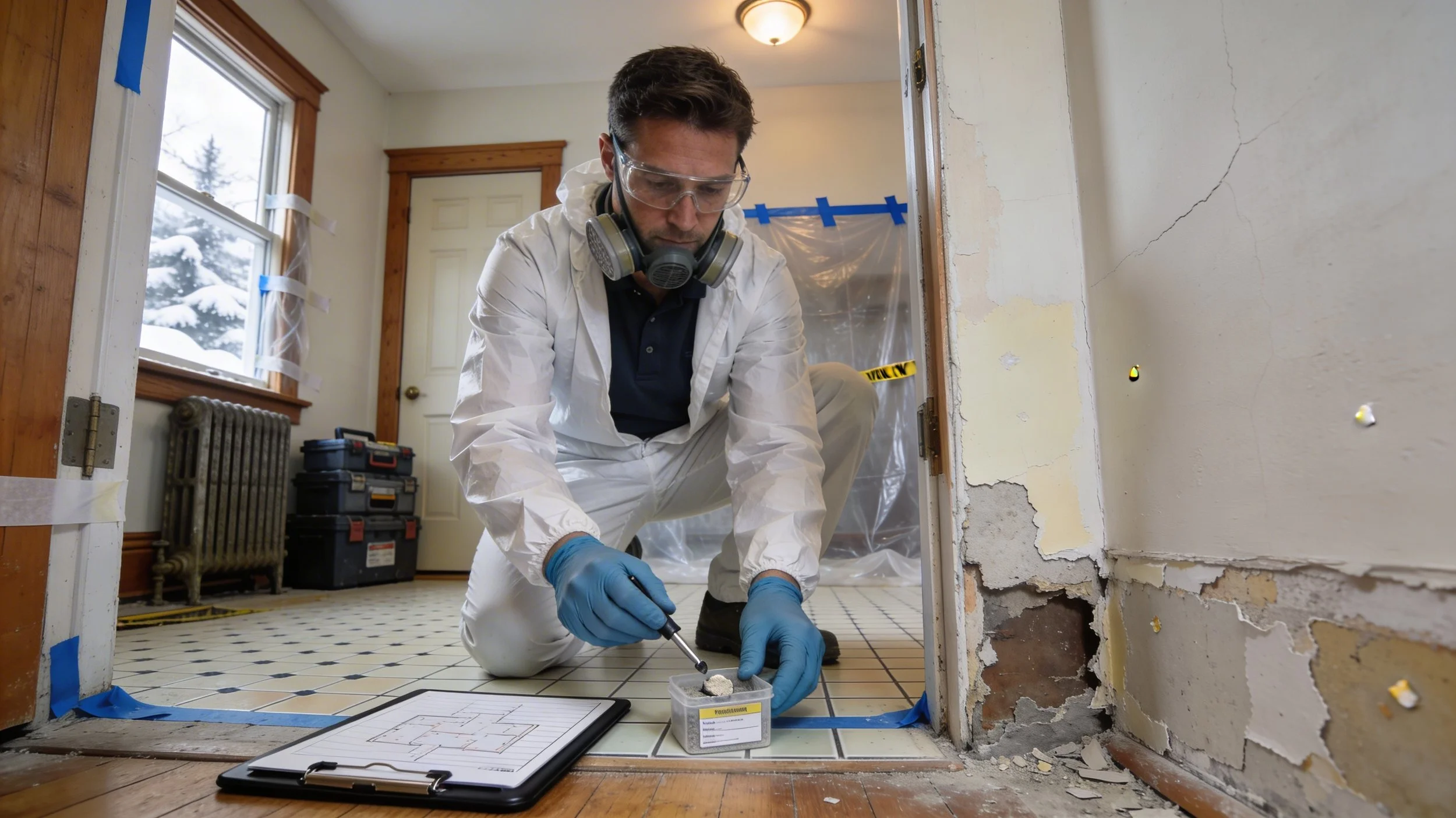
If you own an older home in Michigan and you are planning a renovation, the question of asbestos should be on your checklist right alongside permits, contracts, and budgets. Many houses contain asbestos in flooring, insulation, ceiling textures, siding, and other building materials, even if they have been updated cosmetically over the years. When these materials are cut, sanded, or demolished during remodeling, they can release microscopic fibers that affect indoor air quality and long-term health.
For homeowners, property managers, contractors, and investors working in Metro Detroit and other communities with older housing stock, the issue is not just “Is there asbestos in homes?” The real question is whether your specific renovation plan will disturb suspect materials and whether you can document that you checked before the work begins. An asbestos inspection before renovation is often the safest and most practical way to answer that question, and in many projects it is required by regulation at the federal or state level.
An asbestos inspection before renovation is often the safest and most practical choice in Michigan, and in many projects it is required by regulation.
Why Asbestos Matters When You Renovate
Asbestos was widely used in insulation, flooring, ceiling materials, siding, roofing, and other products in homes and commercial buildings through the late 1970s. When these materials stay intact, the immediate risk may be limited. The concern starts when renovation cuts, grinds, sands, or demolishes older materials and releases microscopic fibers into the air.
The U.S. National Institute for Occupational Safety and Health (NIOSH) has determined that exposure to asbestos fibers causes lung cancer, mesothelioma, and asbestosis, and recommends that exposures be reduced to the lowest feasible concentration. https://www.cdc.gov/niosh/docs/2011-159/default.html
Because health effects often appear decades after exposure, even short-term disturbance during a single renovation can have long-term consequences, especially if work is done without controls.
What Does an Asbestos Inspection Involve?
An asbestos inspection is a systematic survey of suspect materials by a trained professional, followed by laboratory asbestos testing of sampled materials.
Typical steps include:
Reviewing building age, renovation history, and construction types
Identifying suspect materials such as vinyl floor tiles, pipe insulation, ceiling textures, joint compound, siding, and roofing
Collecting small samples using controlled methods
Sending samples to an accredited laboratory for analysis
You cannot reliably tell if a material contains asbestos based on appearance alone. Many asbestos-containing products look identical to modern non-asbestos products. An inspection gives you a clear answer before you start cutting, sanding, or demolition.
For homeowners and investors, this fits naturally into pre-renovation planning, much like building permits and contractor bids. For property managers and environmental compliance property owners, it is part of due diligence and liability control.
Federal Rules: Asbestos NESHAP and Renovation
On the federal side, the key rule is the Asbestos National Emission Standards for Hazardous Air Pollutants (Asbestos NESHAP) under the Clean Air Act.
EPA explains that the Asbestos NESHAP regulations:
Specify work practices to be followed during demolitions and renovations of regulated “facilities”
Require owners or operators to notify the appropriate state or local agency before any demolition, and before certain renovation projects that may disturb threshold amounts of asbestos
Are designed to minimize the release of asbestos fibers during building demolition or renovation, waste packaging, transportation, and disposal
Regulations and laws page: https://www.epa.gov/asbestos/asbestos-laws-and-regulations
Important points for Michigan projects:
NESHAP covers institutional, commercial, and industrial buildings as “facilities.”
Single-family homes and small residential buildings may be exempt as stand-alone residences, but they can fall under NESHAP when part of a larger commercial or public project (for example, multiple homes demolished for a development).
The rule expects a “thorough inspection” before demolition or renovation of a facility to determine if asbestos is present.
Even if your specific single-family renovation is not a NESHAP-regulated “facility,” following the same inspection logic is still the safest approach.
Michigan Requirements and Practice
In Michigan, the Department of Environment, Great Lakes, and Energy (EGLE) enforces asbestos demolition and renovation requirements and processes notifications.
A few practical Michigan realities:
EGLE’s Asbestos NESHAP program focuses on demolition and renovation activities and requires notification when certain thresholds of regulated asbestos-containing material (RACM) will be disturbed.
Guidance used by Michigan institutions notes thresholds like 260 linear feet of RACM on pipes, 160 square feet on other components, or 35 cubic feet of debris for NESHAP notification, and much lower thresholds for worker-safety notification under state rules.Example institutional guidance: https://ehs.msu.edu/_assets/docs/asbestos/msu-asbestos-mgmt-prog.pdf
EGLE reported receiving over 95,000 asbestos demolition/renovation notifications and modifications in 2024 and conducting more than 1,900 inspections, which gives a sense of how active this enforcement area is https://www.michigan.gov/egle/newsroom/mi-environment/2025/04/02/online-asbestos-notification-system
Even when formal notification thresholds are not triggered, many municipalities, lenders, and large property owners expect asbestos inspection documentation before major work. For investors and property managers, not having that documentation can become a problem if questions arise later.
When Do You Really Need an Asbestos Inspection?
Common residential scenarios:
Removing or sanding old vinyl floor tiles, especially 9×9 tiles, or grinding old adhesive
Cutting or removing older pipe insulation in basements or mechanical rooms
Scraping or demolishing textured “popcorn” ceilings installed before the mid‑1980s
Demolishing plaster, drywall, or joint compound in a mid‑century home
Tearing off old cement siding or roofing materials
Full or partial interior gut for a flip or addition in an older house
If you are asking how to tell if you have asbestos or what does asbestos look like in these materials, the honest answer is that you cannot rely on appearance. Inspection and testing are the only reliable methods.
Renovation Risk vs “Leave It Alone”
Risk is highest when materials are friable (easily crumbled) or when your renovation methods will create dust and debris.
Higher-risk renovation activities include:
Dry cutting, grinding, or sanding older materials
Mechanically scraping floor tiles or adhesives
Demolition that breaks apart wall systems, tile, or ceiling finishes
Removing old pipe insulation or boiler insulation without containment
If asbestos-containing materials are present and remain in good condition, sometimes the safest course is to leave them undisturbed and encapsulated. Once you decide to renovate and disturb those materials, asbestos abatement becomes part of the plan.
An asbestos inspection helps you decide:
Whether your current scope will disturb suspect materials
Whether limited abatement in a defined area is enough
Whether you should modify your renovation approach to avoid unnecessary disturbance
How Asbestos Inspection Protects Your Project
Health and Safety
From a health standpoint, an inspection reduces the chance that you or your contractors unknowingly create airborne fibers in living areas or shared spaces. NIOSH and OSHA both emphasize that there is no completely safe level of asbestos exposure and that risk increases with fiber concentration and duration of exposure.
NIOSH summary: https://www.cdc.gov/niosh/docs/77-169/default.html
Regulatory and Legal Risk
From a compliance standpoint, an asbestos inspection:
Supports required notifications when thresholds are met
Shows regulators and municipalities you took reasonable steps to identify hazardous materials in homes before work
Helps avoid stop-work orders, fines, or costly mid-project changes if asbestos is discovered after demolition begins
EPA’s compliance monitoring overview: https://www.epa.gov/compliance/asbestos-demolition-and-renovation-compliance-monitoring
Budget and Schedule
From a project-management standpoint, planning asbestos abatement upfront is almost always cheaper and less disruptive than discovering asbestos mid-demo. If asbestos removal or asbestos abatement is needed, you can:
Bid the work accurately
Sequence abatement before other trades
Avoid having other contractors idle while an emergency abatement is arranged
For property managers and investors working across multiple properties, building asbestos inspection into your standard pre-renovation checklist is a practical way to protect timelines and budgets.
What About Other Environmental Hazards During Renovation?
Many Michigan homes often have more than one environmental concern. Renovation and demolition can expose:
Mold in concealed spaces after historical water intrusion
Lead paint in older homes, especially around windows, doors, and trim
General indoor air quality hazards in basements and mechanical rooms
If you open walls after basement mold after water damage, for example, you may encounter both mold and older materials that raise asbestos questions. Similarly, if you are sanding or replacing painted trim in a pre‑1978 home, you may be dealing with both asbestos in some materials and peeling lead paint danger on others.
That is why many property owners and managers prefer environmental remediation services that can coordinate asbestos inspection, mold inspection, and lead paint evaluation together when conditions warrant.
When a Professional Partner Makes Sense
You may not need a full environmental team for every minor project, but professional help is strongly recommended when:
You are planning major renovation or demolition
You are combining mold remediation or water damage repairs with demolition in older areas
You manage multi-unit or commercial properties and must document environmental testing for property managers, insurers, or lenders
You are unsure whether asbestos demolition requirements or notification thresholds apply to your project
In those situations, a licensed asbestos inspection is not just a box to check. It is the foundation of a safe and efficient renovation plan.
Moving Forward Safely
Renovation should improve a property, not introduce avoidable long-term health or legal risks. In Michigan’s older housing stock, assuming “it’s probably fine” without checking is one of the most costly mistakes owners and contractors make.
If you are planning a renovation and are unsure whether asbestos may be present, or if you already know you are dealing with suspect materials, BDS Environmental can help. Our team provides asbestos inspection, asbestos testing, and asbestos abatement services throughout Michigan, along with coordinated mold remediation and lead-related support when projects require it. Contact BDS Environmental to discuss your project, get clear answers, and plan your renovation with safety and compliance in mind.