
Mold Remediation vs Mold Removal: What’s the Difference?
If you have ever searched “mold removal near me” after noticing a musty odor or seeing spotting on drywall, you have already run into the confusing part of this industry. Companies (and homeowners) often use “mold removal” and “mold remediation” interchangeably, but they are not the same thing in practice.
In Michigan, that difference matters. Basements, freeze thaw cycles, spring groundwater, humid summers, and older building envelopes create repeat moisture issues. If the moisture source is not addressed, mold comes back, even after a “removal.”
The EPA is clear on the big picture: the key to mold control is moisture control.
This article breaks down what each term really means, what a proper mold remediation process should include, and how to know which approach your property needs.
Why the Terms Get Mixed Up
“Mold removal” is a common phrase because it is what most people type into Google. It is also an easy phrase to market. The problem is that it can imply a one-and-done solution, like removing a stain.
“Mold remediation” is more accurate and more professional because it refers to a complete process: identifying the moisture source, controlling contamination, removing or cleaning impacted materials, and preventing recurrence.
Another key point that gets missed is this: mold spores are present in normal indoor and outdoor air. The goal is not to “remove every spore.” The goal is to correct abnormal growth and return the building to a normal, healthy baseline.
What “Mold Removal” Usually Means
When people say “mold removal,” they usually mean one or more of the following:
Scrubbing visible growth off a hard surface
Treating a surface with a cleaner or antimicrobial product
Removing a moldy item (like carpet padding or a section of drywall)
Doing a quick cleanout of a small area
There are times when that is appropriate, especially for small, isolated issues on nonporous surfaces, as long as the moisture problem is corrected.
The EPA notes that if the moldy area is less than about 10 square feet (roughly a 3 ft by 3 ft patch), in many cases you can handle it yourself, depending on the situation.
Where “mold removal” goes wrong is when it focuses only on what you can see. Mold often grows behind baseboards, under flooring, inside wall cavities, or in insulation. If you only treat the visible surface, you may be leaving the real problem untouched.
What “Mold Remediation” Means
Mold remediation is a controlled, step-by-step approach designed to:
Identify and correct the moisture source
Prevent cross-contamination to clean areas
Remove contaminated materials that cannot be effectively cleaned
Clean remaining structural components properly
Manage airborne particles using HEPA filtration when needed
Verify that the area is dry and conditions are back to normal
Professional remediation work is often guided by industry standards like the ANSI/IICRC S520 (the Standard for Professional Mold Remediation).
The goal is not just to make the area look better. The goal is to make the building safer and reduce the chance of recurrence.
The Core Difference in One Sentence
Mold removal focuses on getting rid of what you see. Mold remediation focuses on solving the reason it is there, while safely correcting the contamination.
If you remember nothing else, remember this: if moisture remains, mold returns. The EPA repeatedly emphasizes that moisture control is the foundation of mold control.
What a Proper Mold Remediation Process Typically Includes
Every project is different, but a legitimate remediation job usually involves these components.
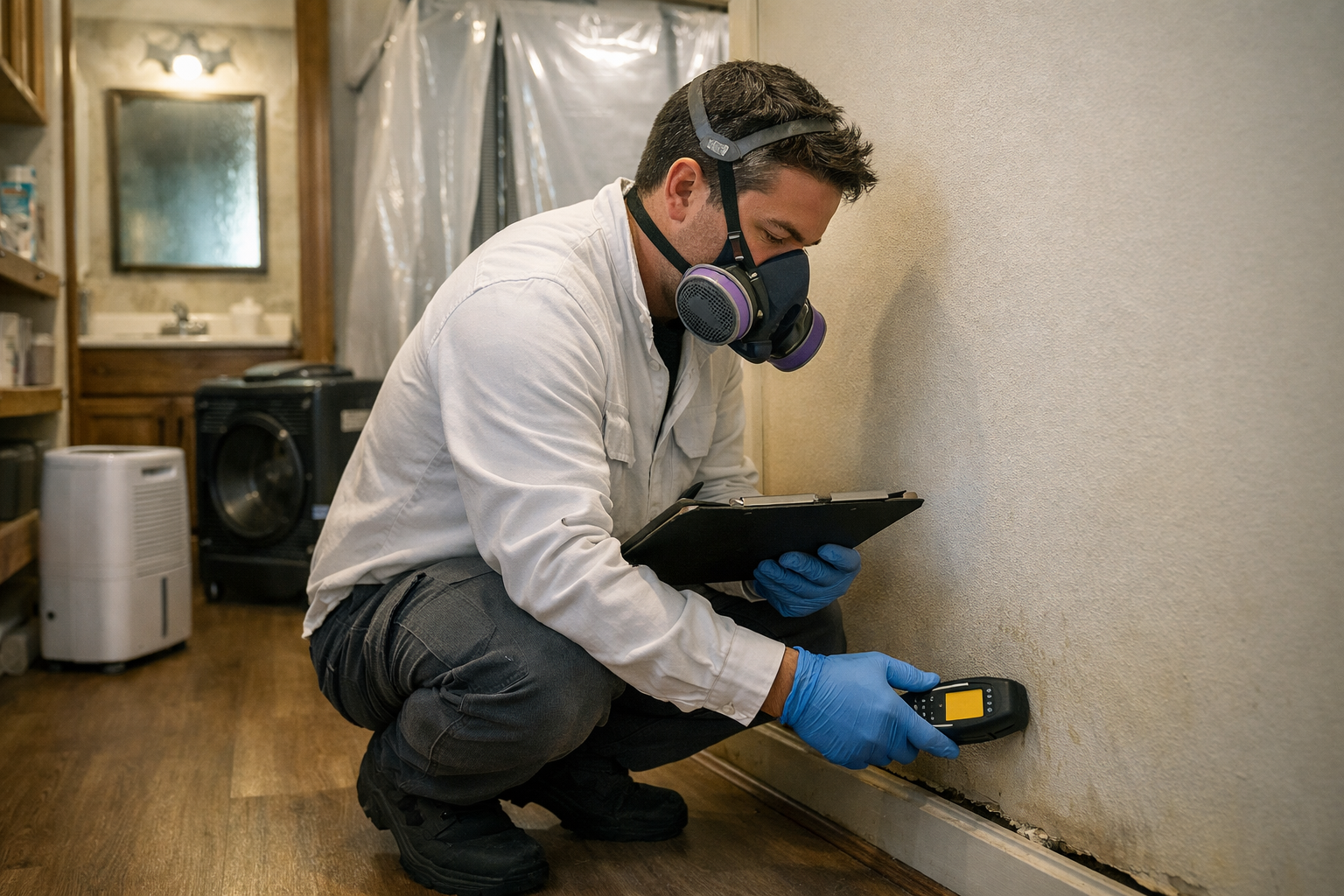
1. Assessment and moisture mapping
This may include:
Visual inspection of affected and adjacent areas
Moisture meter readings on drywall, framing, and flooring
Checking likely sources: plumbing, roof leaks, foundation seepage, HVAC condensation
If the moisture source is not found, the “fix” is temporary.
2. Containment and protecting the rest of the building
Containment is how professionals prevent spreading spores and debris into clean areas.
Depending on the project size and location, this can include:
Poly sheeting barriers
Controlled entry points
Negative pressure in the work zone
Sealing vents or returns if contamination is nearby
This is especially important in occupied buildings and in multi-family properties.
3. Air filtration and dust control
Many professional setups use HEPA air scrubbers to reduce airborne particles, particularly when removing contaminated drywall, insulation, or flooring.
4. Removal of unsalvageable materials
The EPA notes that porous materials like ceiling tiles, insulation, and carpet may need to be discarded if moldy because mold can grow into the material where cleaning cannot fully reach.
Common removals include:
Drywall cut-out at the proper height above moisture impact
Insulation removal from wall cavities
Carpet padding removal
Damaged particleboard or swollen trim
5. Cleaning and detailing of remaining structural components
A professional remediation is not just spraying chemicals. It typically involves physical cleaning methods such as:
HEPA vacuuming
Damp wiping and scrubbing of framing
Controlled cleaning of surfaces within containment
6. Drying and humidity control
Drying is not optional. If materials are not dry, the job is not finished.
The EPA advises that water-damaged areas and items should be dried within 24 to 48 hours when possible to prevent mold growth.
7. Verification and documentation
In professional settings, especially commercial and multi-family, documentation matters:
Before and after moisture readings
Photos (when appropriate)
Work logs
Clearance-style evaluation, depending on the situation
For property managers, this supports environmental compliance property owners may need for tenants, insurers, or investors.
When “Mold Removal” Is Enough
Simple mold removal may be appropriate when:
The affected area is small (often under the EPA’s 10 square feet guidance)
The mold is on a hard, nonporous surface
The moisture source was a one-time event and is fully resolved
You can dry the area quickly and keep humidity controlled
Examples:
Minor spotting on bathroom tile grout after a ventilation issue that has been corrected
Small surface growth on a basement concrete wall where humidity control is now in place
A small area under a sink after a leak was fixed immediately and the cabinet dried properly
Even then, the key is making sure the moisture source is truly resolved.
When You Need Mold Remediation
Mold remediation is typically the safer and more effective approach when:
You have a persistent musty odor (mold smell in house complaints that keep returning)
There was flooding or prolonged dampness (mold after flooding)
The affected material is porous: drywall, insulation, carpet, wood framing
Growth keeps coming back in the same location
The impacted area is larger than a small patch
You have a basement mold after water damage scenario with finished walls or flooring
The building is commercial, multi-family, or has shared ventilation pathways (mold in commercial buildings)
Health considerations matter too. The CDC notes that mold exposure can cause symptoms like stuffy nose, sore throat, coughing or wheezing, burning eyes, or skin rash, and can worsen asthma for some individuals.
NIOSH also summarizes research linking damp buildings with respiratory symptoms and asthma impacts.
Mold Remediation for Landlords and Property Managers
In rental properties, the biggest mistake is treating mold like a “paint and patch” problem. That often leads to repeat complaints, repeat repairs, and escalating conflict.
A landlord-focused approach should include:
Fixing the moisture source first
Addressing building envelope issues (gutters, grading, foundation seepage)
Verifying bathroom and kitchen ventilation is functioning
Documenting drying, repairs, and any remediation steps
Considering environmental testing for property managers when appropriate, especially in commercial or multi-unit settings
Mold remediation and broader mold remediation Michigan projects often have the same root causes: basements with seasonal moisture, older windows with condensation, roof flashing failures, and plumbing leaks that went unnoticed.
A Michigan Reality Check: Mold Work Can Overlap with Asbestos or Lead
Older Michigan properties can come with extra complications during demolition and repair.
If your building predates 1980 and you are removing drywall, flooring, or insulation, it is worth considering whether asbestos inspection or asbestos testing is needed before renovation. The EPA provides guidance on asbestos concerns in buildings and renovation contexts.
Similarly, if water damage causes paint deterioration in older housing stock, lead paint hazards can become a concern. This is one reason many property owners prefer environmental remediation services that can evaluate multiple hazards when conditions warrant.
How to Vet a Contractor Without Getting Lost in Buzzwords
Whether a company calls it “mold removal” or “mold remediation,” ask what they actually do.
Good questions include:
How do you identify and correct the moisture source?
Do you use containment when removing porous materials?
When do you use HEPA air scrubbers or negative air?
What materials do you remove versus clean in place?
How do you verify the area is dry at completion?
What documentation do you provide?
If the plan is only “spray it and wipe it,” you are not hearing a remediation plan.
Bottom Line
Mold removal is a piece of the puzzle. Mold remediation is the whole puzzle, including the reason mold grew in the first place.
In Michigan, where moisture issues are common and basements are everywhere, solving the moisture problem is what separates a short-term cleanup from a long-term fix.
Contact BDS Environmental
If you are dealing with persistent odors, visible growth, basement moisture, or concerns about indoor air quality hazards, it is worth getting a professional assessment. BDS Environmental supports homeowners, contractors, property managers, and investors throughout Michigan with mold inspection and professional mold remediation, with a focus on identifying the moisture source and correcting the issue safely.
If you suspect mold may be affecting your home or building, contact BDS Environmental to discuss next steps and schedule an evaluation.
