
How Lead Paint Removal Works and Why It Matters for Safety
If your Michigan home was built before 1978, there is a real chance it contains lead-based paint. That does not automatically mean the home is unsafe. The risk grows when paint starts failing, or when normal repairs and renovations create lead-contaminated dust around windows, doors, trim, stair rails, and floors.
Lead is especially dangerous for children. The CDC notes that lead exposure can damage a child’s brain and nervous system, slow growth and development, and contribute to learning and behavior problems. (CDC: https://www.cdc.gov/lead-prevention/symptoms-complications/index.html)
This article explains how lead paint removal works in the real world, what a safe lead paint removal process should include, and why cutting corners creates health and liability problems for homeowners, landlords, contractors, and investors.
Why Lead Paint Removal Matters
Lead-based paint was banned for residential use in 1978, but older coatings remain in place in many Michigan properties. The most common danger is not someone eating paint chips. The bigger issue is dust.
Lead dust is created when painted friction surfaces rub together or when painted materials are disturbed during work like sanding, scraping, drilling, window replacement, or demolition. That dust can settle on floors, window sills, toys, furniture, and HVAC returns. In rentals, turnover work is a common trigger, which is why lead paint laws Michigan landlords deal with are tied so closely to repairs and maintenance.
From a practical safety standpoint, lead paint removal matters because it is one of the few hazards where a “simple remodel” can turn into a contamination event if the work is not controlled.
Lead Paint Removal vs Lead Paint Abatement
People often use these terms interchangeably, but there is a meaningful difference in professional practice.
Lead paint removal
This usually means physically removing lead-based paint from a surface. That can be done, but it is often the highest dust-producing approach if not performed under strict containment and cleanup.
Lead paint abatement
Abatement is a regulated, long-term hazard control approach designed to permanently eliminate lead hazards. Michigan’s MiLeadSafe program explains that lead abatement eliminates lead hazards in paint, soil, and dust, and that firms performing lead abatement in Michigan must hold Lead Abatement Firm certification and employ certified supervisors and workers. (MiLeadSafe: https://www.michigan.gov/mileadsafe/professionals/workforce)
In many cases, especially in rentals or high-risk areas like windows, component replacement (such as replacing windows) is often a better long-term solution than attempting to remove paint layer by layer.
Step 1: Confirm the Risk With Testing Before You Disturb Anything
The first safe step is not removal. It is identification.
You cannot confirm lead paint visually. “Alligatoring” paint, thick layers, or chalky exterior coatings can be clues, but they are not proof.
Common testing options include:
XRF testing performed by a trained professional
Paint chip sampling sent to a lab
Dust wipe sampling, especially around windows and floors
Testing is especially important if you are planning to sand, scrape, demo, or replace windows or doors in a pre-1978 property. It is also a smart step for property managers who want documentation for environmental compliance property owners may need for tenant files, insurance, or acquisitions.
Step 2: Plan the Work Area Like a Contamination Control Project
The biggest mistake in lead paint removal is treating it like normal prep work. A safe lead paint removal process starts with work area control.
A proper plan typically includes:
Isolating the work area from clean areas of the home
Sealing doorways and HVAC vents as needed
Protecting floors with plastic sheeting and tack mats
Establishing a contained pathway for debris removal
Keeping children, pregnant occupants, and pets away from the work zone
For multi-family properties, this matters even more. Lead dust can spread into hallways, adjacent units, and shared stairwells if containment is not done correctly.
Step 3: Use Lead-Safe Work Practices
In many pre-1978 homes and rentals, renovation work that disturbs lead paint must follow EPA’s Renovation, Repair and Painting (RRP) Rule. The EPA explains that lead-safe work practices include containment to prevent dust and debris from leaving the work area, prohibiting certain practices, and thorough cleanup followed by cleaning verification. (EPA RRP work practices: https://www.epa.gov/lead/renovation-repair-and-painting-program-work-practices)
Practices that are commonly prohibited or restricted
EPA specifically calls out prohibitions like open-flame burning and using certain power tools without HEPA dust control. (EPA RRP work practices: https://www.epa.gov/lead/renovation-repair-and-painting-program-work-practices)
In the field, the high-risk behaviors we see include:
Dry sanding painted trim and doors
Grinding or cutting painted surfaces without HEPA control
Sweeping dust with a dry broom
Using a standard shop vac instead of a HEPA vacuum
Demolition without containment
Those shortcuts save time, but they can spread lead dust throughout the home.
Step 4: Removal Methods That Can Be Used Safely
There is no one-size-fits-all method. The right approach depends on the component, the condition of the paint, who occupies the building, and whether the work is renovation or true lead paint abatement.
Common lead-safe approaches include:
Component replacement
Often the best option for windows, doors, and heavily damaged trim.
Why it matters: windows are major lead dust generators due to friction surfaces. Replacing the component can permanently remove the hazard source instead of trying to stabilize layers that will keep failing.
Encapsulation or enclosure
These methods do not remove lead paint, but they can control it long-term when done correctly.
Encapsulation uses an approved coating system designed to seal lead paint in place. Enclosure covers the lead-painted surface with a durable barrier.
These are common in rental properties when the paint is intact but needs durable hazard control.
Controlled removal
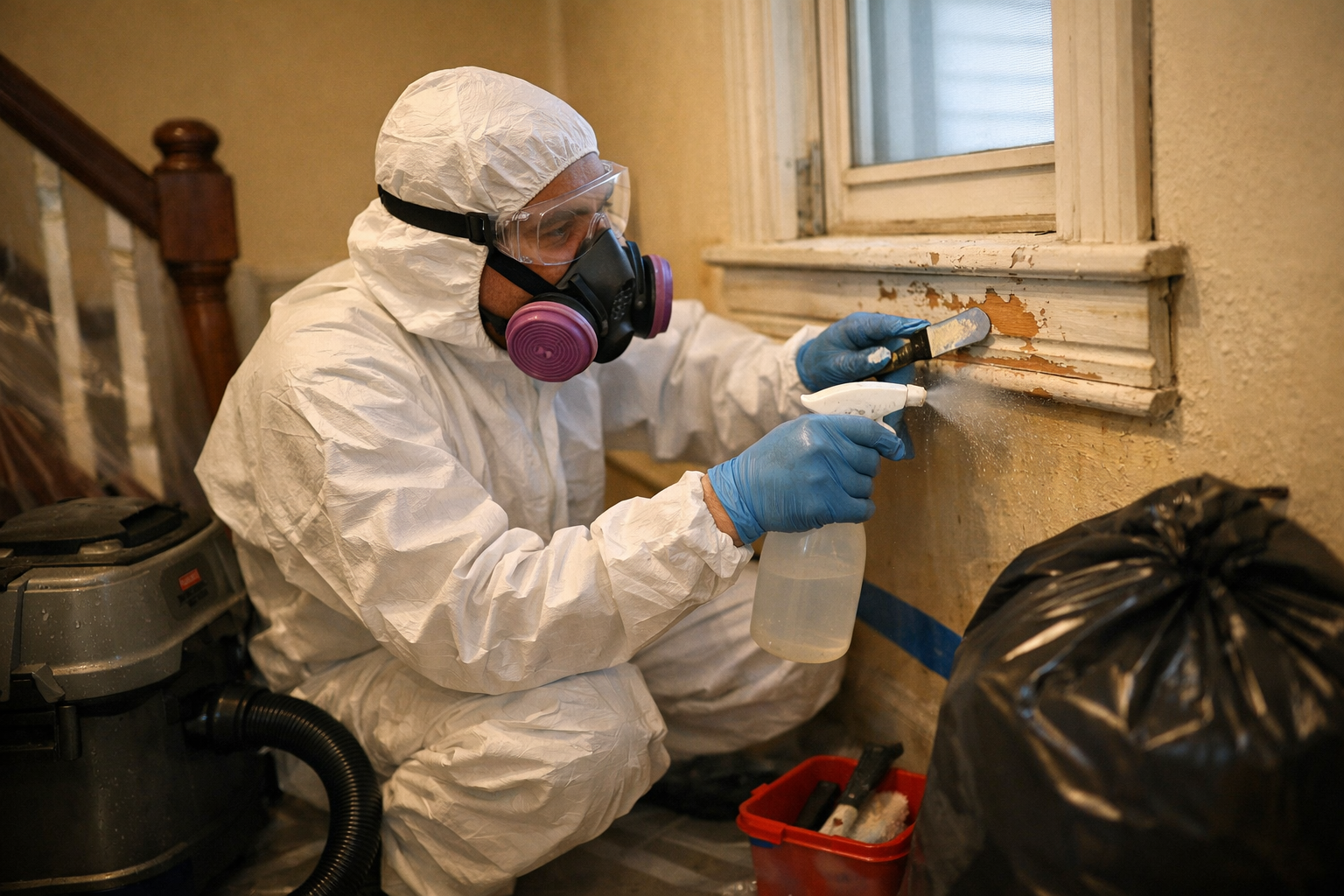
If removal is necessary, the work should be set up for dust control, including:
Wet methods to minimize dust
HEPA-equipped tools when power tools are needed
Controlled scraping with proper containment
Debris bagging and secure transport
A credible contractor will explain how they control dust at each step and how they prevent cross-contamination.
Step 5: Cleanup Is Not Optional, and It Is Not “Normal Cleaning”
Lead work is only as good as the cleanup.
EPA’s RRP framework requires thorough cleanup followed by a verification procedure to minimize exposure to lead-based paint hazards. (EPA RRP work practices: https://www.epa.gov/lead/renovation-repair-and-painting-program-work-practices) EPA also publishes a lead-safe steps guide that describes cleaning verification, and notes that clearance testing may be required in some federally assisted housing. (EPA Steps PDF: https://www.epa.gov/sites/default/files/documents/steps.pdf)
What professional cleanup commonly includes
HEPA vacuuming of horizontal surfaces
Wet wiping of surfaces within the work area
Careful removal and bagging of plastic sheeting
Final HEPA vacuuming after barriers are removed
In more sensitive projects, dust wipe sampling may be used to confirm that dust levels are within acceptable limits.
EPA also notes that under certain circumstances, dust lead testing can be used in lieu of cleaning verification when required by contract or law. (EPA Q&A updated Jan 21, 2026: https://www.epa.gov/lead/under-rrp-rule-composite-sampling-acceptable-post-renovation-dust-lead-testing-lieu-cleaning)
This is where professional Michigan environmental service providers can add real value, especially for landlords and property managers who need documentation.
Step 6: Post-Work Verification and Documentation
If you are a homeowner, documentation protects your family and supports resale transparency.
If you are a landlord or investor, documentation protects your asset and reduces liability.
Helpful records include:
What surfaces were addressed and how
Photos of containment setup and the work area
Waste disposal documentation where applicable
Cleaning verification notes or dust wipe results when performed
Any certifications relevant to the work
Why Cutting Corners Is a Safety Problem
Lead does not behave like typical construction dust. It persists. It settles into cracks, carpet fibers, and window tracks. It can become a long-term exposure source if cleanup is incomplete.
The health risks are the reason regulators take this seriously. The CDC’s guidance on lead paint exposure symptoms and impacts is clear, especially for children. (CDC: https://www.cdc.gov/lead-prevention/symptoms-complications/index.html)
For adults, renovation and occupational exposures can also matter, which is why lead-safe controls protect workers too.
Special Note for Older Michigan Homes: Lead Is Not Always the Only Hazard
In Michigan’s older housing stock, lead paint removal projects sometimes overlap with other hazardous materials in homes, especially when demolition expands beyond trim and wall surfaces.
Examples include:
Asbestos in older flooring, insulation, or textured materials
Moisture issues that drive mold growth and paint failure
If a project involves demolition of old flooring or insulation, asbestos inspection or asbestos testing may be appropriate before renovation work proceeds. This is part of why many owners choose environmental remediation services that can evaluate multiple risks instead of dealing with surprises mid-project.
Practical Guidance for Homeowners and Landlords
If you want the safest path forward, start with a simple decision framework.
When to prioritize immediate action
Peeling paint around windows, doors, stairs, or child-accessible areas
Renovation plans that involve sanding, scraping, cutting, or demolition
A rental unit where a child lives or is expected to live
Repeated paint failure driven by moisture or poor ventilation
Questions to ask any contractor
How do you contain the work area and prevent dust spread?
What work practices do you use to control lead dust?
Do you use HEPA tools and HEPA vacuums?
How do you handle cleanup and verification?
If this is abatement work, what Michigan certifications do you hold?
If the answers are vague, that is a problem.
Bottom Line
Lead paint removal is not just a construction task. It is a safety procedure. When done correctly, it reduces real health risks, supports compliance, and protects long-term property value. When done poorly, it can spread contamination through the home and create long-term exposure risks, especially for children.
If your home or rental was built before 1978, treat lead paint as a real possibility. Test before disturbing. Use lead-safe work practices. Verify cleanup.
Contact BDS Environmental
If you suspect lead paint in older homes, are planning renovations, or manage pre-1978 rentals, it is worth getting a clear plan before work begins. BDS Environmental supports Michigan homeowners, contractors, property managers, and investors with guidance on lead paint hazards, coordination for lead paint removal and lead paint abatement, and environmental remediation services when conditions warrant.
If you are dealing with peeling paint danger, renovation planning, or need help understanding the safest next step, contact BDS Environmental to schedule an evaluation and protect your property the right way.
