The Asbestos Removal Process Explained Step-by-Step
When asbestos is identified in a home or commercial building, the next question is usually straightforward: what happens now?
Asbestos removal is not standard demolition. It is a regulated environmental procedure designed to control airborne contamination and protect human health. For homeowners, contractors, property managers, and investors in Michigan, understanding how asbestos abatement works helps ensure projects move forward safely and in compliance with the law.
Below is a practical breakdown of what the asbestos removal process actually involves.
Why Professional Asbestos Removal Is Necessary
Asbestos was widely used in insulation, flooring, roofing, siding, and fireproofing materials until the late 1970s. When materials remain intact and undisturbed, risk may be limited. The concern begins when those materials are cut, drilled, sanded, or demolished.
According to the U.S. Environmental Protection Agency, inhaling asbestos fibers increases the risk of lung cancer, mesothelioma, and asbestosis (https://www.epa.gov/asbestos).
The National Cancer Institute notes that asbestos related diseases often develop 20 to 40 years after exposure (https://www.cancer.gov/about-cancer/causes-prevention/risk/substances/asbestos).
Because there is no known safe level of exposure, asbestos removal and asbestos abatement must follow strict federal and state regulations.
Step 1: Asbestos Inspection and Testing
Every project begins with asbestos inspection and laboratory asbestos testing.
If you are wondering how to tell if you have asbestos, visual identification alone is not reliable. Materials such as vinyl floor tiles, pipe insulation, popcorn ceilings, and cement siding may appear harmless but can contain asbestos fibers.
A licensed inspector will:
Identify suspect materials
Collect samples using controlled procedures
Submit samples to an accredited laboratory
Testing confirms whether asbestos containing material is present and determines the next steps.
In Michigan, inspection is often required before renovation or demolition under asbestos demolition requirements.
Step 2: Project Planning and Regulatory Notification
If asbestos is confirmed, the next step is developing a formal abatement plan.
This plan defines:
The scope of removal
The containment approach
Required regulatory notifications
Worker safety procedures
Under the EPA’s National Emission Standards for Hazardous Air Pollutants, certain renovation and demolition projects require advance notification (https://www.epa.gov/asbestos/national-emission-standards-hazardous-air-pollutants-neshap-9).
Clear documentation supports environmental compliance and protects property owners from unnecessary delays or penalties.
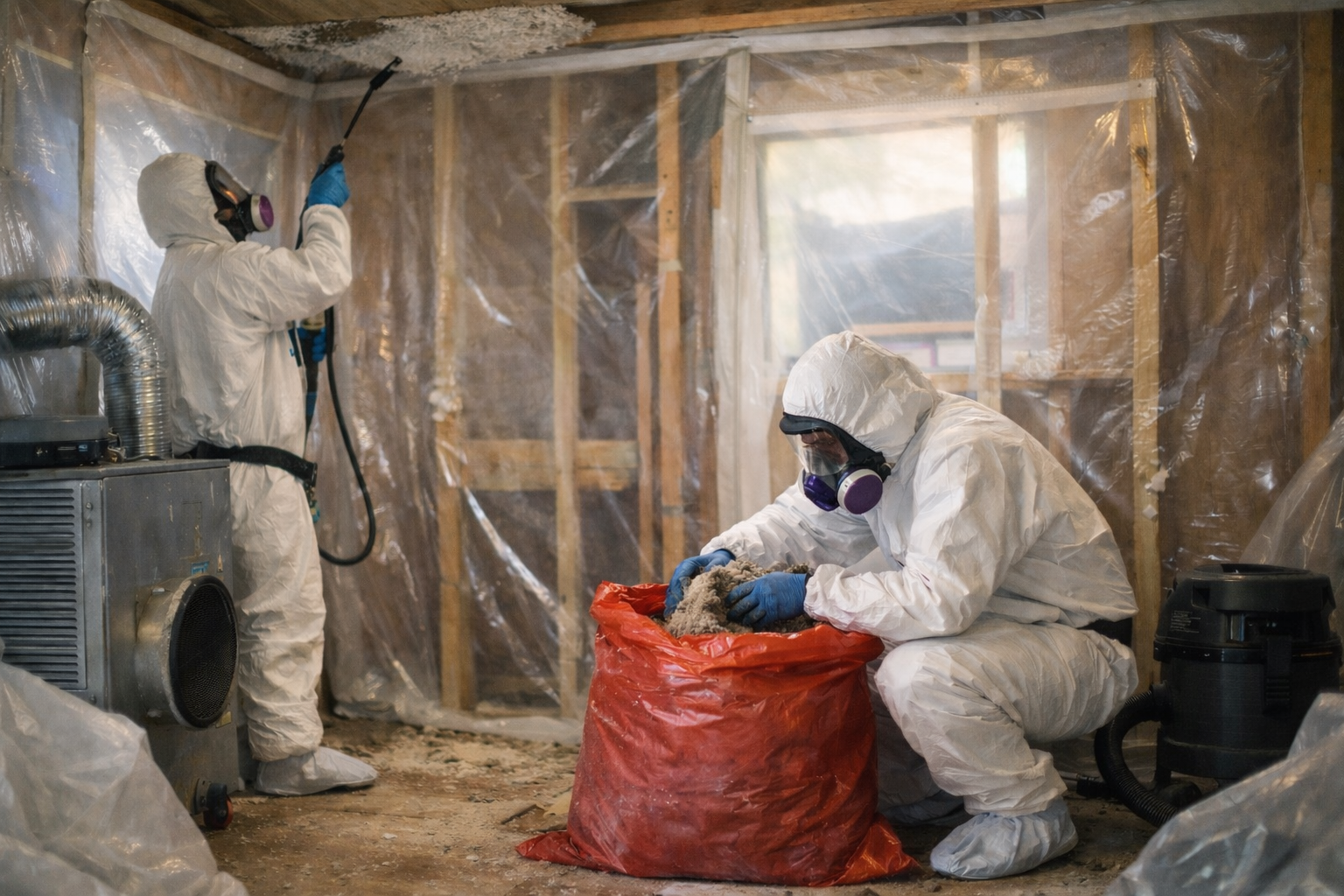
Step 3: Containment and Negative Air Setup
Before any removal begins, the work area must be fully isolated.
Containment typically includes:
Sealing floors, walls, and openings with heavy plastic sheeting
Covering HVAC vents to prevent contamination
Establishing controlled entry and exit airlocks
Posting regulated area signage
Negative air pressure machines equipped with HEPA filtration are installed to prevent asbestos fibers from escaping the containment area.
This step protects other parts of the building and maintains indoor air quality.
Step 4: Personal Protective Equipment
All technicians performing asbestos abatement wear specialized protective equipment, including disposable suits, approved respirators, gloves, and protective footwear.
These measures reduce the risk of inhalation and prevent contamination from spreading beyond the work zone.
Professional contractors follow OSHA guidelines for worker safety and airborne exposure limits.
Step 5: Controlled Removal of Asbestos Containing Materials
The removal phase is deliberate and controlled.
Technicians typically:
Wet materials to minimize dust
Remove materials intact whenever possible
Avoid unnecessary breakage
Immediately seal waste in approved containers
This is a technical process focused on reducing fiber release, not speed.
Licensed hazardous material removal professionals are trained to follow precise handling procedures that protect both workers and occupants.
Step 6: Secure Packaging and Disposal
Asbestos waste cannot be discarded with regular construction debris.
Removed materials are:
Double bagged or wrapped in leak tight containers
Clearly labeled
Transported to approved disposal facilities
Improper disposal can result in environmental violations and significant liability.
Professional asbestos removal ensures that waste handling meets both federal and Michigan regulations.
Step 7: Detailed Cleaning and HEPA Filtration
Once materials are removed, the containment area undergoes thorough cleaning.
This includes:
HEPA vacuuming all surfaces
Wet wiping walls, floors, and equipment
Inspecting the area for visible debris
Air filtration systems remain in operation to capture any remaining airborne particles.
Restoring safe indoor air quality is a critical component of the asbestos abatement process.
Step 8: Air Clearance Testing
Before containment barriers are removed, independent air clearance testing is performed.
Air samples are collected and analyzed to verify that fiber levels meet regulatory standards.
Only after clearance testing confirms acceptable air quality can renovation or re occupancy proceed.
This final verification provides reassurance that the area is safe.
Asbestos Removal Before Renovation
Many asbestos projects occur during renovation planning.
If asbestos before renovation is identified, abatement must be completed before demolition begins. Skipping this step increases contamination risk and can halt construction mid project.
Testing first is more efficient and cost effective than responding to unexpected contamination after fibers spread.
Additional Environmental Hazards Discovered During Removal
During abatement, other environmental issues sometimes come to light.
Mold Concerns
Opening walls may reveal moisture damage. The EPA states that mold can begin growing within 24 to 48 hours after water exposure (https://www.epa.gov/mold).
Common discoveries include basement mold after water damage or hidden mold in commercial buildings.
Mold inspection and mold remediation may be necessary if contamination is identified, particularly when indoor air quality hazards are present.
Lead Paint in Older Homes
If the building was constructed before 1978, lead paint in older homes may also require attention.
The CDC estimates that approximately 24 million U.S. homes contain deteriorated lead based paint and contaminated dust (https://www.cdc.gov/nceh/lead/prevention/default.htm).
Lead paint removal and lead paint abatement follow separate regulatory standards and should be handled by certified professionals.
Why DIY Asbestos Removal Is Not Recommended
Attempting asbestos removal without proper containment can:
Spread fibers throughout the structure
Contaminate HVAC systems
Increase long term health risks
Create legal and financial exposure
Asbestos health risks are well documented. Professional environmental remediation services exist to ensure safe and compliant handling.
Protecting Property and Investment
For property managers and investors, environmental testing before renovation helps protect timelines and budgets.
Identifying hazardous materials in homes early reduces unexpected delays and supports environmental safety in older homes.
The asbestos removal process is designed to eliminate risk through planning, containment, and verification, and not simply remove material and move on.
Contact BDS Environmental
If asbestos has been identified in your home or building, or if you are planning renovation and need professional asbestos inspection and testing, licensed evaluation is essential.
BDS Environmental provides certified asbestos inspection, asbestos abatement, mold remediation, lead paint abatement, and comprehensive environmental services throughout Michigan.
Contact BDS Environmental today to schedule an inspection and ensure your property is handled safely and in full compliance with state and federal regulations.