The Real Cost of Ignoring Mold Problems in Commercial Buildings
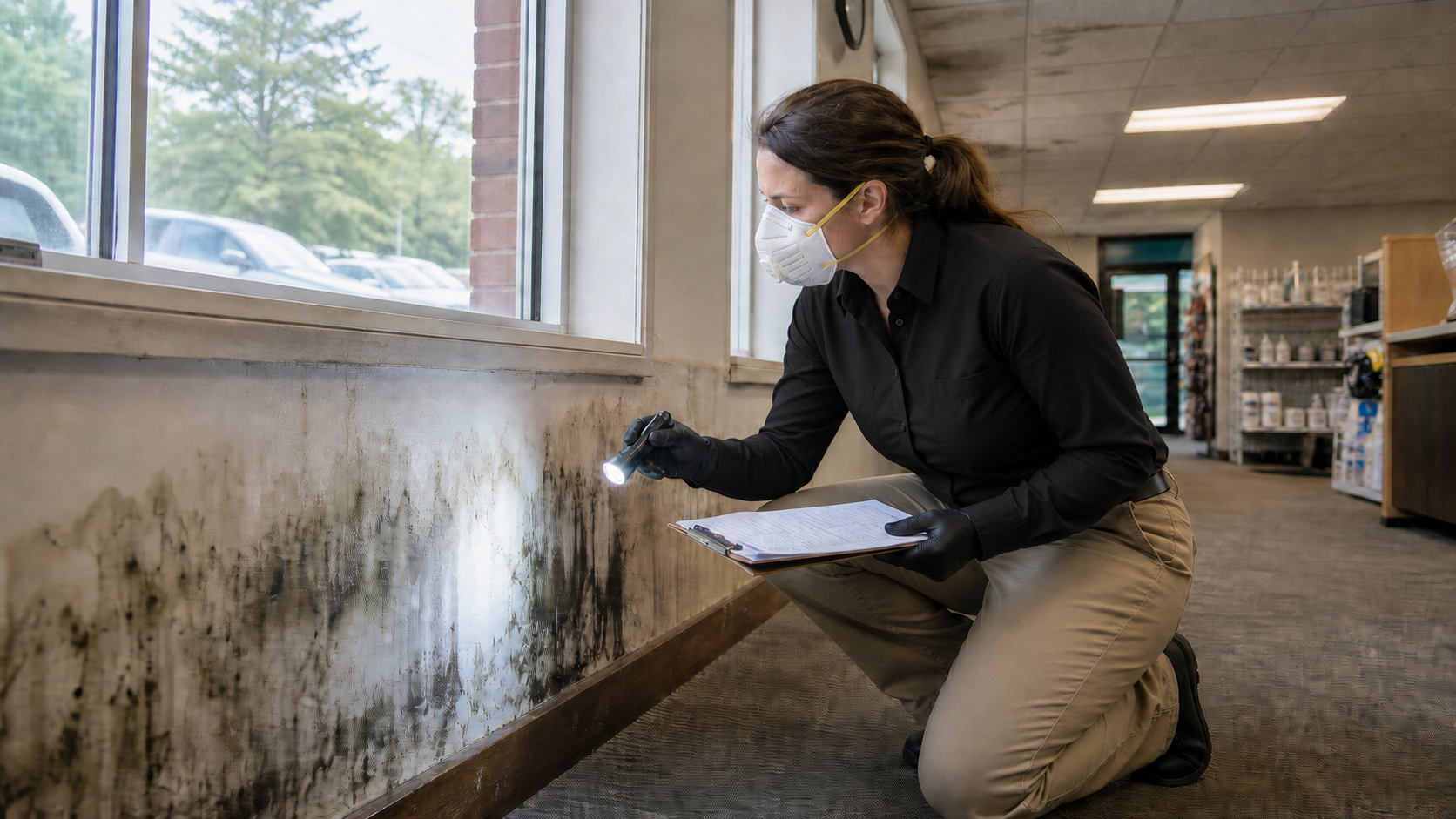
Mold problems in commercial buildings are often underestimated at first. A musty odor in a vacant suite, discoloration on drywall near a window line, staining above a ceiling tile, or recurring moisture in a basement or mechanical room can seem like small maintenance issues. In reality, those early warning signs can point to a larger condition that affects indoor air quality, tenant satisfaction, repair costs, and the long-term value of the property.
For property managers, building owners, contractors, and investors, the real cost of mold is usually not the first patch of visible growth. It is what happens when the source of moisture is left unresolved, the contamination spreads, and the problem starts affecting operations, leasing, occupant confidence, and renovation planning. Mold in commercial buildings is rarely just a cleaning issue. It is a building condition issue, and when it is ignored, the costs tend to multiply.
Mold Problems Rarely Stay Small
One of the biggest misconceptions about mold is that if the visible area looks minor, the issue must be minor too. In commercial properties, that is often not the case. What you can see on a wall, ceiling, base trim, or storage room surface may only represent the portion that has become visible after moisture has already been present behind finishes, above ceilings, below flooring, or inside wall cavities.
That is why delay becomes expensive. A small leak behind drywall can become damaged insulation, deteriorated finishes, odor migration, and widespread contamination in hidden areas. A tenant complaint about a mold smell in house style conditions, even in a commercial setting, can quickly turn into a broader investigation of building moisture, ventilation, maintenance response, and indoor air quality hazards.
When property managers act early, they are often dealing with a targeted mold inspection and a more limited repair scope. When they wait, they are more likely to face a larger mold remediation process, more invasive demolition, and more disruption to the building’s day-to-day use.
The Moisture Source Is the Real Problem
Mold does not develop in a vacuum. It grows when moisture is allowed to persist long enough on building materials that can support it. That moisture may come from roof leaks, plumbing failures, condensation, poor drainage, window intrusion, foundation seepage, HVAC issues, or basement humidity that is never fully addressed.
This is why mold removal alone is not a complete solution. If visible growth is wiped, painted over, or cut out without addressing the water source, the problem usually returns. The EPA emphasizes that the key to mold control is moisture control, and that if water intrusion is occurring in an indoor space, action should be taken immediately to identify and repair the source. In practical terms, the real cost of ignoring mold is not just the contamination itself. It is the repeated cycle of cosmetic cleanup, tenant frustration, and recurring repair work that happens when the moisture cause remains in place.
For commercial property managers, this is where professional mold inspection adds value. It helps separate surface symptoms from the underlying building condition. That matters whether the issue involves basement mold after water damage, mold after flooding, or an odor complaint in an office, retail, industrial, or multi-unit property.
Tenant Complaints Can Turn into Occupancy Problems
Commercial tenants do not experience mold as a technical building science issue. They experience it as a smell, a health concern, a visual problem, or a sign that a landlord is not addressing conditions inside the space. That means even a moderate mold issue can start affecting tenant relationships before the full extent of the contamination is understood.
In office environments, occupants may report musty odors, visible staining, or concerns about black mold symptoms even when the actual species and scope have not been confirmed. In retail settings, mold can affect customer-facing areas, storage rooms, product integrity, and staff morale. In multi-tenant buildings, moisture or mold in one suite can also raise concerns in adjacent spaces if odor, air movement, or water migration is involved.
Once that happens, the cost is no longer limited to repair work. It starts including management time, complaint response, documentation, contractor coordination, and potential difficulty retaining or replacing tenants. For property managers, mold remediation for landlords is often as much about protecting occupancy and trust as it is about removing contamination.
Deferred Maintenance Gets More Expensive Fast
Ignoring mold usually means ignoring the moisture issue behind it, and that tends to accelerate building deterioration. Wet drywall softens and loses integrity. Insulation loses performance. Ceiling tiles stain and sag. Wood trim, framing, and finish materials can deteriorate. Flooring adhesives may fail. Paint begins to bubble or peel. Odors settle into porous materials and become harder to eliminate.
That is where cost begins to spread across multiple trades. What could have started as a contained mold remediation issue may turn into drywall replacement, flooring removal, painting, HVAC cleaning, carpentry repair, and more extensive finish restoration. If the space is occupied, those costs also include scheduling around tenants, limiting access, and potentially performing work after hours to reduce disruption.
According to commercial cost guidance, mold remediation projects can range from a few thousand dollars for small contained jobs up to tens of thousands or more for larger commercial infestations that involve structural materials and occupied space. This is one reason mold problems often show up as budget overruns during commercial renovation projects. A property owner may plan for cosmetic improvements, only to discover that water damage mold risk was sitting behind those finishes all along. Once demolition opens the area, the real scope becomes visible, and the repair plan becomes more involved than expected.
Mold Can Delay Leasing, Renovation, and Turnover
In commercial real estate, timing matters. A delayed suite turnover, paused renovation, or slower lease-up period affects revenue. When mold is discovered late, especially after contractors are already mobilized or a new tenant is scheduled to take possession, the financial impact can move beyond remediation cost alone.
For example, a vacant suite with hidden moisture damage may seem ready for basic repainting and flooring work. Then a contractor removes base trim or opens a wall section and finds mold growth behind the finish. At that point, the job shifts from standard turnover work to a more controlled environmental remediation scope. The timeline changes. The vendor list changes. The turnover date may change too.
This is why mold testing during tenant turnover is widely recommended as a protective measure and legal safeguard. Pre-turnover mold inspection and moisture assessment cost far less than a delayed move-in, lost rent period, or rushed remediation job performed under tenant pressure. The earlier the condition is identified, the more control the property team keeps over schedule and budget.
Indoor Air Quality and Reputation Matter
Mold is not just a material damage issue. It is also an indoor air quality issue. EPA guidance on molds and health notes that mold exposure can irritate the eyes, skin, nose, throat, and lungs of both mold-allergic and non-allergic people. Even when contamination is not visibly dramatic, odor and moisture-related conditions can shape how occupants perceive the safety and professionalism of a property. In commercial settings, perception matters more than many owners initially realize.
A building that develops a reputation for musty conditions, recurring leaks, or unresolved mold concerns can become harder to lease and harder to manage. Existing tenants may be less likely to renew. Prospective tenants may become cautious if they see signs of patchwork repairs, stained finishes, or active moisture issues during tours. Investors and buyers may also view unresolved mold as a sign of deeper maintenance or asset management problems.
That reputational cost is hard to measure line by line, but it is real. Mold in commercial buildings can affect how the entire property is viewed, especially when the issue appears recurring or poorly managed. In that sense, ignoring mold can reduce confidence in the building itself, not just in one damaged area.
Small Problems Often Reveal Bigger Building Issues
Another real cost of ignoring mold is that it can hide related building failures that need attention. A mold issue may point to drainage defects, roof problems, exterior envelope failure, inadequate ventilation, plumbing leaks, or long-term humidity control problems. When the mold is dismissed as a housekeeping issue instead of investigated as a building systems issue, the larger defect remains active.
That is especially important in older commercial properties, mixed-use buildings, and facilities that have gone through piecemeal repairs over time. A stain on a ceiling tile may trace back to a recurring roof penetration issue. Growth around a window line may reflect envelope leakage. Basement mold after water damage may indicate that water intrusion is entering from more than one pathway. The visible mold is only the clue. The building is usually telling a larger story.
From a management standpoint, this is why a proper mold remediation process starts with identifying the cause, not just removing the visible result. Property managers who treat mold as an environmental condition tied to moisture usually make better long-term decisions than those who treat it as a cosmetic cleanup item.
Why Professional Response Matters
Commercial mold issues are rarely solved well by piecemeal maintenance responses alone. A proper approach usually involves defining the extent of the damage, identifying the moisture source, determining what materials can be cleaned versus removed, and carrying out work in a way that protects unaffected portions of the building.
That does not mean every mold issue requires a large remediation job. It does mean the response should be informed. A professional mold inspection can help determine whether the issue is localized or more widespread. A qualified remediation plan can help avoid unnecessary demolition while also preventing the common mistake of leaving contaminated materials or moisture conditions behind.
For Michigan property owners and managers, that practical distinction matters. Searching for mold removal near me or mold remediation Michigan is often a sign that a problem has already become disruptive. The better approach is to evaluate conditions early, before tenant complaints increase and before building damage expands. In many cases, especially in southeast Michigan markets, property teams may also be looking specifically for mold remediation Warren MI or nearby local support because response time and local building familiarity can make a difference.
The Cost of Ignoring Mold Is Usually More Than the Cost of Fixing It
The real cost of ignoring mold problems in commercial buildings is rarely limited to one invoice. It shows up in damaged materials, tenant complaints, delayed turnover, indoor air quality concerns, lost time, reactive contractor coordination, and recurring moisture problems that keep coming back because the source was never corrected.
For property managers, investors, and commercial building owners, the smarter move is early evaluation. Mold inspection, moisture investigation, and timely remediation help protect the building, the occupants, and the operating plan. They also help prevent a manageable issue from becoming an expensive and visible one.
If you suspect mold may be affecting your commercial property, contact BDS Environmental to discuss professional mold inspection, mold remediation, and broader environmental remediation services. Addressing the issue early is often the most practical way to protect both the building and the people who use it.