How to Reduce Liability During Commercial Renovation Projects
Commercial renovation projects create liability long before the first wall is opened. In occupied buildings, a renovation can affect tenants, employees, customers, neighboring suites, and contractors all at once if dust, fumes, moisture, or hidden hazardous materials are not identified and controlled early. The EPA’s renovation and repair guidance says renovation is a major cause of poor indoor air quality in occupied buildings and identifies demolition that releases toxic materials, construction dust and fumes, disrupted ventilation, and off-gassing from new materials as common causes of indoor air problems during renovation. Massachusetts indoor air guidance for occupied buildings makes the same point more directly, stating that renovation-generated pollutants can include mold, asbestos, lead, VOCs, and combustion products that migrate into occupied areas if the project is not properly controlled.
That is why liability reduction is really a planning issue, not just an insurance issue. The more clearly a project addresses hazardous material removal, containment, occupant protection, documentation, and environmental compliance on the front end, the lower the chance that a routine commercial renovation turns into an exposure claim, a delay, or a dispute over responsibility. The EPA’s asbestos guidance for building owners and managers says asbestos renovation requirements apply to many non-residential buildings, while the EPA’s lead-safe renovation guidance explains that lead-safe work practices are meant to minimize exposure to lead-based paint dust during renovation, repair, and painting activities.
Liability Starts Before Work Begins
One of the best ways to reduce liability during a commercial renovation project is to define the real scope before demolition or disturbance begins. The EPA says that before performing demolition, building teams should check for lead-based paint and asbestos so toxic materials are not released into occupied areas during the work. That point matters because many renovation problems begin when a project is priced and scheduled like standard construction, then later turns into asbestos abatement, lead-safe containment, mold remediation, or broader environmental remediation services once hidden conditions are discovered.
In Michigan, this front-end work is especially important. A Michigan renovation and demolition checklist says vacant buildings scheduled for renovation or demolition must have an asbestos building survey completed before work starts, and it also states that a thorough asbestos inspection is required before renovation work begins at a facility. That kind of requirement is not just regulatory background. It is a liability control measure because it helps owners and contractors avoid disturbing suspect materials before they understand what is in the building.
This is also where the client instruction on asbestos should be carried through clearly. Regardless of the year your property was built, the safest approach is to treat suspect materials as potentially asbestos-containing until testing proves otherwise. Because some imported products may still contain asbestos, age alone is not a reliable way to rule out asbestos, and a government notice on asbestos in imported building products reports that asbestos has been found in a range of imported goods and building materials.
Best practice is to assume suspect building materials may contain asbestos regardless of construction date, especially drywall and joint compound, flooring and mastics, ceiling tiles and textures, and imported products or components. Imported or foreign-manufactured building materials can still contain asbestos today, so the safest approach is to test rather than rely on age alone.
Occupied Buildings Raise the Stakes
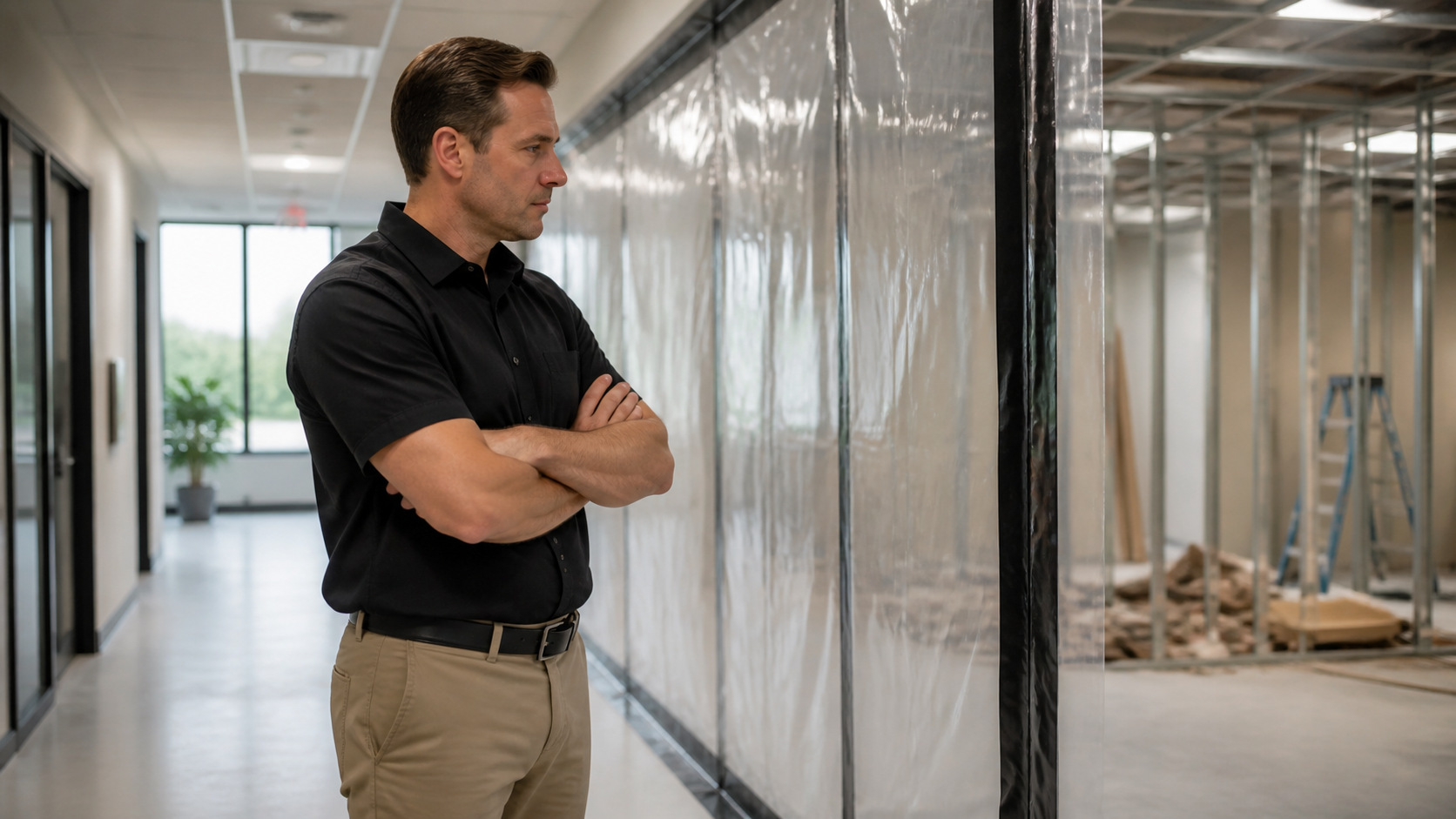
Commercial renovation liability gets more serious when the building stays occupied during the work. The EPA says occupants should be kept as far from renovation activities as possible, temporary barriers should be installed to seal work areas from occupied areas, and supply and return grilles should be covered when the HVAC system serving the renovation area also serves occupied space. Massachusetts guidance adds that occupied buildings should be physically separated from renovation zones with sealed barriers, and it specifically identifies shared walls, crawlspaces, ductwork, electrical openings, and ceiling spaces as migratory pathways that can let pollutants move from the job site into occupied areas.
That matters because many complaints and liability issues come from migration, not just from the original source. If renovation dust, VOCs, mold spores, lead dust, or asbestos fibers move into hallways, tenant suites, offices, or common areas, the project risk immediately becomes larger than the original scope. Massachusetts guidance says construction sites in occupied buildings should be isolated and depressurized compared with occupied areas, and it recommends daily air-pressure monitoring at barriers to confirm that pollutants are not moving toward occupants.
Timing also matters. The EPA recommends performing work when occupants are not in the building whenever possible, such as evenings or other low-occupancy periods, because distance and reduced occupancy lower the concentration of pollutants reaching people outside the work area. Massachusetts guidance similarly recommends scheduling high-dust or high-odor work during unoccupied or low-occupancy periods and relocating susceptible occupants when feasible. For owners and property managers, that is a simple but powerful liability strategy because it reduces both exposure potential and the number of people affected if something goes wrong.
Different Hazards Need Different Controls
Reducing liability during commercial renovation projects also means recognizing that asbestos, lead, mold, and general indoor air quality hazards do not all behave the same way. The EPA’s asbestos guidance says the National Emission Standards for Hazardous Air Pollutants specify work practices for asbestos during demolitions and renovations and require building owners or operators to notify the appropriate state agency before certain covered projects begin. The same EPA guidance says apartment buildings, office buildings, shopping centers, hospitals, and similar facilities may need operations and maintenance programs to manage asbestos-containing materials in place and minimize occupant exposure.
Lead risk is different, but the exposure concern is just as real. The EPA says the purpose of the Renovation, Repair and Painting Rule is to minimize exposure from lead-based paint dust during renovation, repair, or painting activities and to reduce lead contamination by training contractors in lead-safe work practices. In practical terms, that means commercial renovations involving painted surfaces in covered spaces should not be treated like ordinary patch-and-paint work if the project can generate toxic dust during disturbance.
Mold and moisture issues create another category of liability because they often affect both building condition and occupant comfort. The EPA says demolition can release mold as one of the toxic materials that contributes to indoor air problems during renovation, while Massachusetts guidance says renovation projects can expose occupants to mold and other respiratory irritants if pollutant migration is not controlled. That is why mold inspection, mold remediation, and moisture review are often important when a commercial project involves prior leaks, basement mold after water damage, musty odors, or damaged materials behind walls and ceilings.
The broader lesson is that liability usually increases when a project uses one generic cleanup approach for all hazards. A better approach is to identify the material, define the exposure pathway, and match the control plan to the actual risk.
Documentation Reduces Disputes
A commercial renovation project is easier to defend when the documentation is clear. Massachusetts guidance recommends maintaining logs for barrier condition, pressure monitoring, occupant complaints, and scheduling communications during occupied-building renovations. The EPA also recommends a detailed renovation plan that addresses testing, timing, barriers, containment, and cleanup because those are the factors most likely to affect indoor air quality during the project.
That kind of documentation matters because liability often grows after the fact. A tenant may say dust entered their suite, an employee may report odors or symptoms, or a contractor may argue that the environmental scope was not part of their responsibility. When the owner or project team has records showing the asbestos inspection, asbestos testing, lead-safe planning, barrier setup, HVAC isolation, cleanup schedule, and complaint-response process, the project is in a much stronger position than one that relied on verbal assumptions.
Documentation also supports environmental compliance for property owners after the work is done. The EPA’s asbestos guidance makes clear that notification duties and work-practice requirements are part of renovation compliance, not optional extras. The EPA’s lead guidance shows the same thing for lead-safe renovation work, where the goal is not just to finish construction, but to minimize exposure from the dust that renovation can create. In other words, good records help prove that the project was managed with occupant protection and regulatory obligations in mind.
Practical Risk Reduction Steps
For owners, developers, and contractors, the most effective liability reduction plan usually looks like this:
Start with asbestos inspection, asbestos testing, and lead-related screening before any demolition or invasive work begins.
Treat suspect materials as potentially asbestos-containing until testing proves otherwise, especially drywall and joint compound, flooring and mastics, ceiling tiles and textures, and imported products or components.
Use containment, sealed barriers, HVAC protection, and negative pressure or depressurization strategies to keep contaminants from spreading into occupied areas.
Schedule the dirtiest or highest-risk work during unoccupied or low-occupancy periods whenever possible.
Keep daily cleanup standards high, including debris removal, HEPA-based dust control, and wet wiping in adjacent occupied areas where needed.
Maintain logs for barriers, pressure checks, occupant notifications, complaints, and corrective actions so the project record is clear if questions arise later.
Coordinate environmental remediation services early if the project involves mold in commercial buildings, water damage mold risk, lead paint removal, asbestos abatement, or other hazardous material removal concerns.
Reducing liability during a commercial renovation project is really about controlling what can spread, documenting what was done, and identifying regulated materials before they become an exposure problem. If your project may involve asbestos-containing materials, lead-related concerns, mold, or other indoor air quality hazards, contact BDS Environmental to discuss asbestos inspection, asbestos testing, mold inspection, and environmental remediation services before work begins. A renovation project is always easier to manage when the environmental risk is defined early instead of discovered halfway through the job.