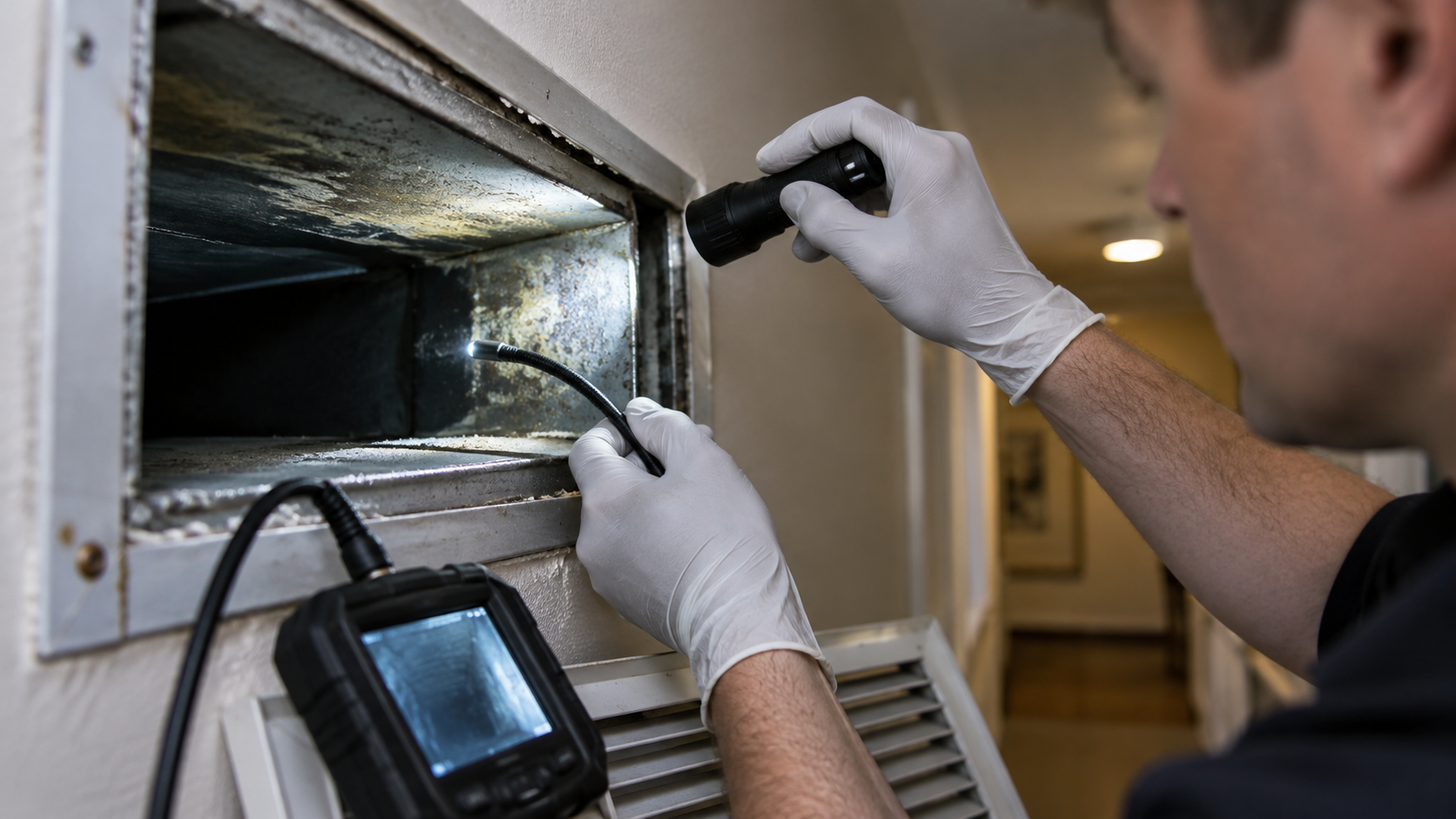
Michigan properties rely heavily on HVAC systems to battle humid summers and freezing winters. These mechanical systems act as the respiratory system of a building, circulating conditioned air through every room to maintain a comfortable environment. However, when excess moisture enters the ductwork, that same distribution system can turn into a massive liability. Spores that take root in the dark, damp environment of a ventilation network will quickly spread throughout the entire property, turning a localized moisture problem into a widespread indoor air quality hazard. For property managers, contractors, and homeowners, ignoring the early warning signs of duct contamination is an incredibly costly mistake.
Recognizing mold in an HVAC system early is critical to protecting both the structural integrity of your building and the overall health of the occupants. While light dust accumulation inside a vent is normal, active fungal growth inside the ductwork requires a rapid, professional response. The challenge is knowing when a simple wipe down of a vent cover is sufficient, and when the situation demands comprehensive environmental testing for property managers or a professional mold remediation process. Understanding the causes, the health implications, and the overlapping environmental dangers hidden in your walls will help you make the right call before the contamination spirals out of control.
How Fungal Growth Takes Root in Ductwork
Mold requires moisture, oxygen, and an organic food source to thrive. Inside an HVAC system, all three are readily available. According to environmental guidelines on duct cleaning, moisture is the primary catalyst for fungal growth in air vents. Condensation frequently builds up around cooling coils, especially during the humid Michigan summers. If the system does not drain properly due to a clogged drain line, or if the metal ducts are poorly insulated, that condensation pools inside the channels, creating a massive water damage mold risk.
Once moisture is introduced, the dust, pet dander, and debris trapped in the system serve as the perfect organic food source. Within days, this damp environment can foster significant mold colonies. If you notice a persistent mold smell in house or office environments every time the air conditioner kicks on, you likely have an active fungal colony breeding inside the mechanical system.
Mold Health Risks from Contaminated Air Systems
The danger of HVAC mold is that it does not stay localized. When mold grows near the air handler or on cooling coils, the system blows air directly across the spores and distributes them out of every vent. This aerosolization makes HVAC contamination uniquely dangerous compared to a standard spot of basement mold after water damage.
The Centers for Disease Control and Prevention warns that exposure to indoor mold can cause a stuffy nose, sore throat, coughing, wheezing, and red or itchy eyes. For individuals with asthma, compromised immune systems, or specific allergies, the reactions can be much more severe. While black mold symptoms often grab the headlines, the reality is that any type of fungal growth being blown into your living space poses serious mold health risks and must be professionally addressed to ensure a safe environment.
When Can You Clean It vs. When to Replace It?
Many homeowners assume that hiring a basic duct cleaning service is enough to solve an HVAC mold problem. However, this is not always the case. The Environmental Protection Agency explicitly states that if fiberglass duct liner gets wet or moldy, it cannot be effectively cleaned and should be removed and replaced. Porous materials like fiberglass insulation trap microscopic spores deep within their fibers, meaning a surface vacuum will not prevent the mold from returning.
If you discover contamination in your ductwork, the Environmental Protection Agency also advises turning off the HVAC system entirely to prevent further spreading. If the mold is confined to hard, non porous surfaces like bare sheet metal, professional mold removal near me is possible. A certified contractor will follow strict protocols during the mold remediation process:
Shutting off the system to prevent cross contamination.
Isolating the ductwork and sealing all supply and return vents with plastic.
Using heavy duty HEPA vacuums and EPA registered antimicrobial cleaners to scrub the metal.
Addressing the root moisture issue to ensure the fungal growth does not return.
If the infestation covers a large area, or if the property has suffered severe water damage, a full replacement of the affected ductwork may be required. Attempting a DIY cleanup by spraying bleach into your air vents is ineffective and can actually introduce harmful chemical fumes into your indoor air.
Hidden Asbestos Hazards in Older HVAC Systems
When professional remediation or duct replacement is necessary, property owners must be extremely cautious during the demolition phase. Ductwork installed in homes built under past standards was frequently sealed, wrapped, or insulated with materials containing asbestos. Before you authorize a contractor to tear out old ventilation pipes, you must verify what is wrapped around them.
Explicitly state that best practice is to assume suspect building materials may contain asbestos regardless of construction date, especially:
Drywall and joint compound
Flooring and mastics
Ceiling tiles and textures
Imported products and components (e.g., materials manufactured in countries without stringent asbestos controls)
Many investors mistakenly believe that non historic buildings are free from these hazards. You must add clear language that imported or foreign‑manufactured building materials can still contain asbestos today, so the safest approach is to test rather than rely on age alone. Global supply chains mean that modern HVAC components, acoustic textures, or mastics may not adhere to strict domestic environmental regulations.
“Regardless of the year your property was built, the safest approach is to treat suspect materials as potentially asbestos‑containing until testing proves otherwise.”
“Because some imported products may still contain asbestos, age alone is not a reliable way to rule out asbestos.”
If a visual inspection reveals suspect pipe wrap or white tape on your duct joints, do not touch it. You must schedule professional asbestos testing before proceeding. Ripping out asbestos insulation without proper containment violates strict asbestos demolition requirements and exposes the entire building to carcinogenic fibers. If the test is positive, you must hire certified professionals for the asbestos removal Michigan requires before the HVAC repairs can continue.
Overlapping Threats: Lead Paint During Wall Demolition
Replacing compromised ductwork often requires opening up walls, tearing out baseboards, or removing architectural trim to access the mechanical chases. In older housing stock, these surfaces are frequently coated in heavily degraded lead based paint.
If a contractor carelessly pries off a painted vent register or smashes through a plaster wall, they risk creating a severe peeling lead paint danger. Toxic lead dust will fall into the ductwork and spread across the floor, creating an immediate hazard. The EPA requires contractors to follow strict lead safe work practices when renovating homes where lead-based paint may be present. Airborne lead dust can cause severe lead paint exposure symptoms, including fatigue, high blood pressure, and permanent developmental delays in children.
For landlords and environmental compliance property owners, hiring contractors who are trained in the proper lead paint removal process is essential. Wet scraping techniques, specialized HEPA vacuums, and heavy plastic ground containment are mandatory to prevent toxic dust from escaping. Navigating the lead paint laws Michigan enforces ensures your property remains safe and your renovation stays on track.
Secure Your Indoor Air Quality with Professional Help
Tackling mold in commercial buildings or residential HVAC systems is never a simple DIY project. Because the mechanical system touches every room in the property, making a mistake during cleanup means you risk pushing fungal spores, asbestos fibers, or lead dust into every corner of the building. Protecting your investment and your tenants requires precise diagnostics, certified remediation, and an unwavering commitment to safe environmental practices.
If you suspect your HVAC system is contaminated, notice a musty odor from your vents, or need to replace ductwork that might involve hazardous building materials, contact BDS Environmental. Our comprehensive environmental services Michigan team can provide accurate asbestos inspection, reliable mold testing, and the licensed mold remediation Warren MI properties rely on. We handle the complex hazardous material removal so you can breathe easy and keep your building safe.