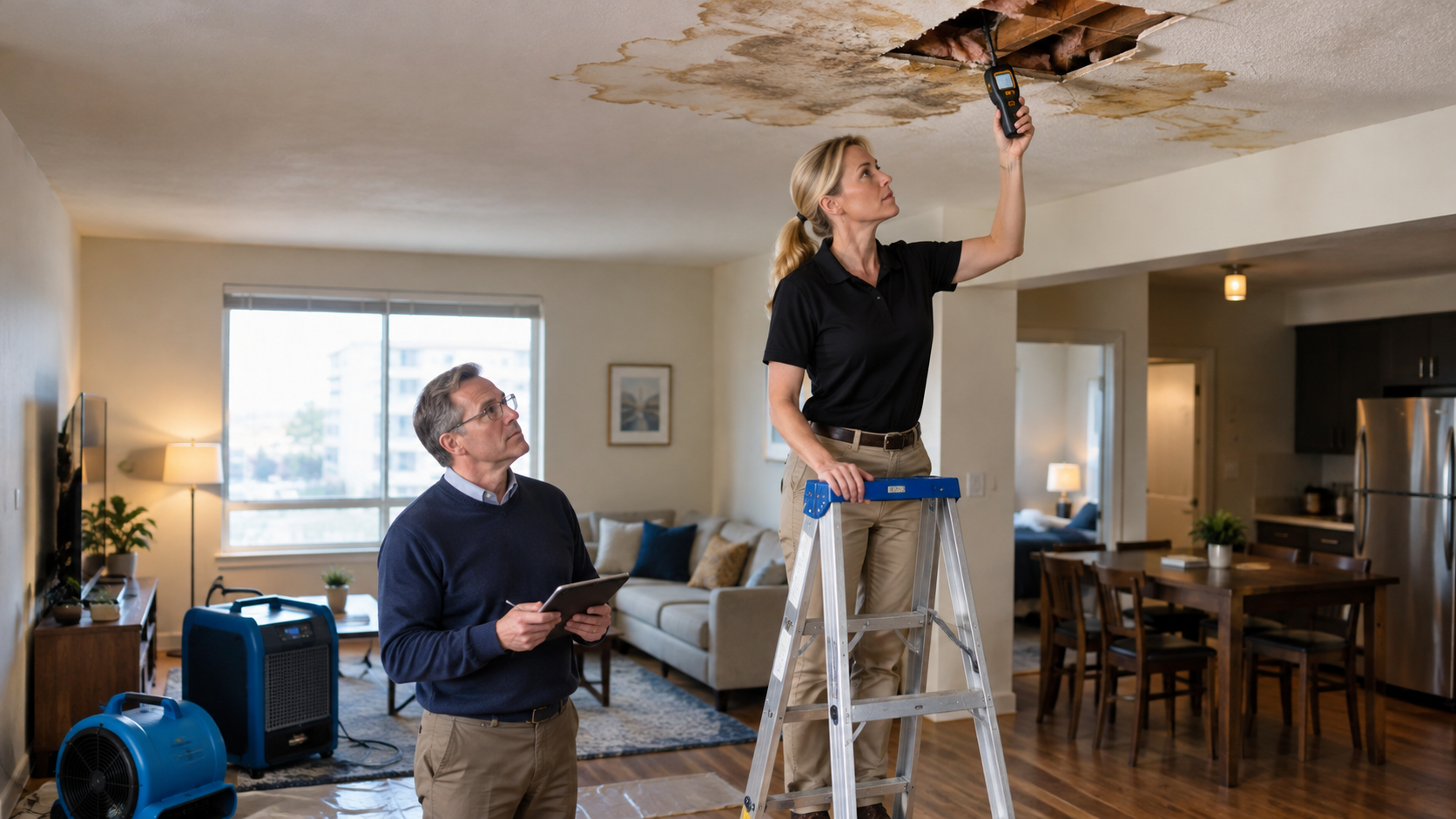
When a pipe bursts or a sink overflows in a single-family home, the damage is usually contained to one immediate area. However, water damage in apartment buildings presents a compounding nightmare for property managers. Because multi-unit properties share interconnected plumbing systems and stacked floor plans, a single broken supply line on the fourth floor can quickly cascade downward, destroying ceilings, walls, and flooring in multiple units before the main valve is finally shut off. According to property insurance data, these multi-unit leaks are among the most expensive and disruptive events a property manager will ever face.
The challenge of a multi-unit leak is rarely just about stopping the water; it is about managing the aftermath at top speed. Property managers must coordinate emergency plumbing, appease displaced tenants, and aggressively dry the structure to prevent a massive water damage mold risk. Furthermore, when the saturated drywall and flooring are located in older housing stock, tearing out those materials can unexpectedly release hidden toxins into the air. Handling a multi-unit leak safely requires a rapid, coordinated response and a deep understanding of the overlapping indoor air quality hazards hiding within the building's walls.
Rapid Response Protocols for Property Managers
When a tenant calls the emergency maintenance line to report water dripping from their ceiling, the property manager's response protocol dictates the total cost of the claim. Because multi-unit properties share interconnected plumbing systems, water travels the path of least resistance, often flowing behind walls and down pipe chases to flood apartments two or three stories below the actual source.
A rapid response requires immediate action on three fronts:
Source Control: Maintenance teams must immediately shut off the main water supply to the affected zone, or the entire building if the localized valve cannot be found.
Tenant Communication: Property managers must quickly notify all tenants in the vertical stack below the leak to move their belongings and allow maintenance to inspect their ceilings for impending collapse.
Water Extraction: Standing water must be aggressively extracted using commercial wet vacuums. The longer water sits on subfloors, the deeper it penetrates into the building's structural framing.
While the initial emergency plumbing repair might only take a few hours, the environmental testing for property managers and subsequent structural drying can take days. Managing tenant expectations and clearly documenting the damage for insurance claims are crucial steps for environmental compliance property owners facing multi-unit disasters.
The 24 to 48-Hour Mold Window
Once a multi-unit leak is stopped, the clock starts ticking. Water easily wicks up drywall and pools inside dark wall cavities between apartments, creating a perfect microclimate for fungal colonization. The Centers for Disease Control and Prevention and the EPA warn that mold can begin growing on damp surfaces within just 24 to 48 hours of water exposure.
Missing this narrow drying window guarantees a much larger problem. If the wall cavities remain saturated, a persistent mold smell in house or apartment units will emerge, followed quickly by visible growth. Prolonged exposure to indoor mold can trigger severe mold health risks, including respiratory infections, asthma exacerbation, and allergic reactions often associated with black mold symptoms. To avoid these liabilities and the need for extensive mold in commercial buildings remediation, property managers must deploy commercial-grade dehumidifiers and air movers immediately to dry the shared walls and ceiling assemblies.
The Hidden Threat of Asbestos During Demolition
If the water sat for too long, or if the ceiling is physically collapsing from the weight of the leak, demolition is inevitable. This is where property managers must exercise extreme caution. Tearing out wet ceilings, flooring, or pipe chases in properties built under past standards often disturbs legacy asbestos.
Explicitly state that best practice is to assume suspect building materials may contain asbestos regardless of construction date, especially:
Drywall and joint compound
Flooring and mastics
Ceiling tiles and textures
Imported products and components (e.g., materials manufactured in countries without stringent asbestos controls)
Many property managers falsely assume that newer developments are completely safe from these toxins. You must add clear language that imported or foreign‑manufactured building materials can still contain asbestos today, so the safest approach is to test rather than rely on age alone. Global supply chains often introduce products into modern construction that do not meet strict domestic safety regulations.
“Regardless of the year your property was built, the safest approach is to treat suspect materials as potentially asbestos‑containing until testing proves otherwise.”
“Because some imported products may still contain asbestos, age alone is not a reliable way to rule out asbestos.”
Before any demolition begins, a professional asbestos inspection and formal asbestos testing are required. If the wet materials test positive, standard demolition is illegal. Ripping out wet drywall without following strict asbestos demolition requirements will aerosolize carcinogenic fibers, violating environmental laws and exposing multiple units to severe asbestos health risks. Property managers must immediately hire certified professionals for the asbestos removal Michigan requires. If you need to know how to tell if you have asbestos or what does asbestos look like, the answer is that you cannot safely identify it by sight. Laboratory testing is the only definitive method.
Peeling Lead Paint and Multi-Unit Safety
In older housing stock, water intrusion frequently causes secondary damage to painted surfaces. When water saturates baseboards, wooden window frames, and plaster walls, the paint layers swell and detach. This creates an immediate peeling lead paint danger.
Scraping away this flaking paint or smashing through a painted wall to access a leaking pipe can release highly toxic lead dust. If this dust is drawn into the building's shared HVAC system, it can spread to other apartments, causing lead paint exposure symptoms for tenants who were not even directly impacted by the initial leak. Navigating the lead paint laws Michigan enforces requires utilizing a professional lead paint removal process. Contractors must use wet-scraping techniques and HEPA vacuums to safely capture the debris, ensuring the hazardous material removal is completely isolated from the rest of the building. Finding a reputable team for lead paint abatement Warren MI or lead paint removal near me ensures the project complies with all municipal and state regulations.
Managing the Mold Remediation Process
If fungal growth has already taken hold in the wall cavities, property managers must implement a professional mold remediation process to protect their tenants. Mold remediation for landlords is heavily scrutinized, and attempting a DIY cleanup in a multi-unit building is a massive liability.
A certified environmental services Michigan team will establish heavy plastic containment barriers and use negative air pressure to isolate the affected units. They will perform precise mold removal near me, cutting away the saturated materials while filtering the air to prevent spores from traveling down the hallways. Following the cleanup, independent clearance testing ensures that the indoor air quality is fully restored to safe levels before the drywall is patched and the tenants return. A thorough mold inspection and diligent mold remediation Michigan services are the only ways to guarantee the structure is safe.
Secure Your Building with Environmental Experts
Managing a multi-unit water leak requires a delicate balance of rapid response and strict environmental safety. Tearing into a wet ceiling without proper testing can easily turn a plumbing emergency into a massive contamination event, shutting down multiple apartments and resulting in costly regulatory fines.
If your apartment building has suffered significant water damage, suspect you have hidden mold after flooding, or need to tear out materials that might require asbestos removal Warren MI, contact BDS Environmental. Our comprehensive team provides expert asbestos inspection, reliable mold testing, and the licensed environmental remediation services property managers trust. We handle the environmental safety in older homes and modern complexes alike, ensuring your property is compliant, dry, and safe for all your tenants.