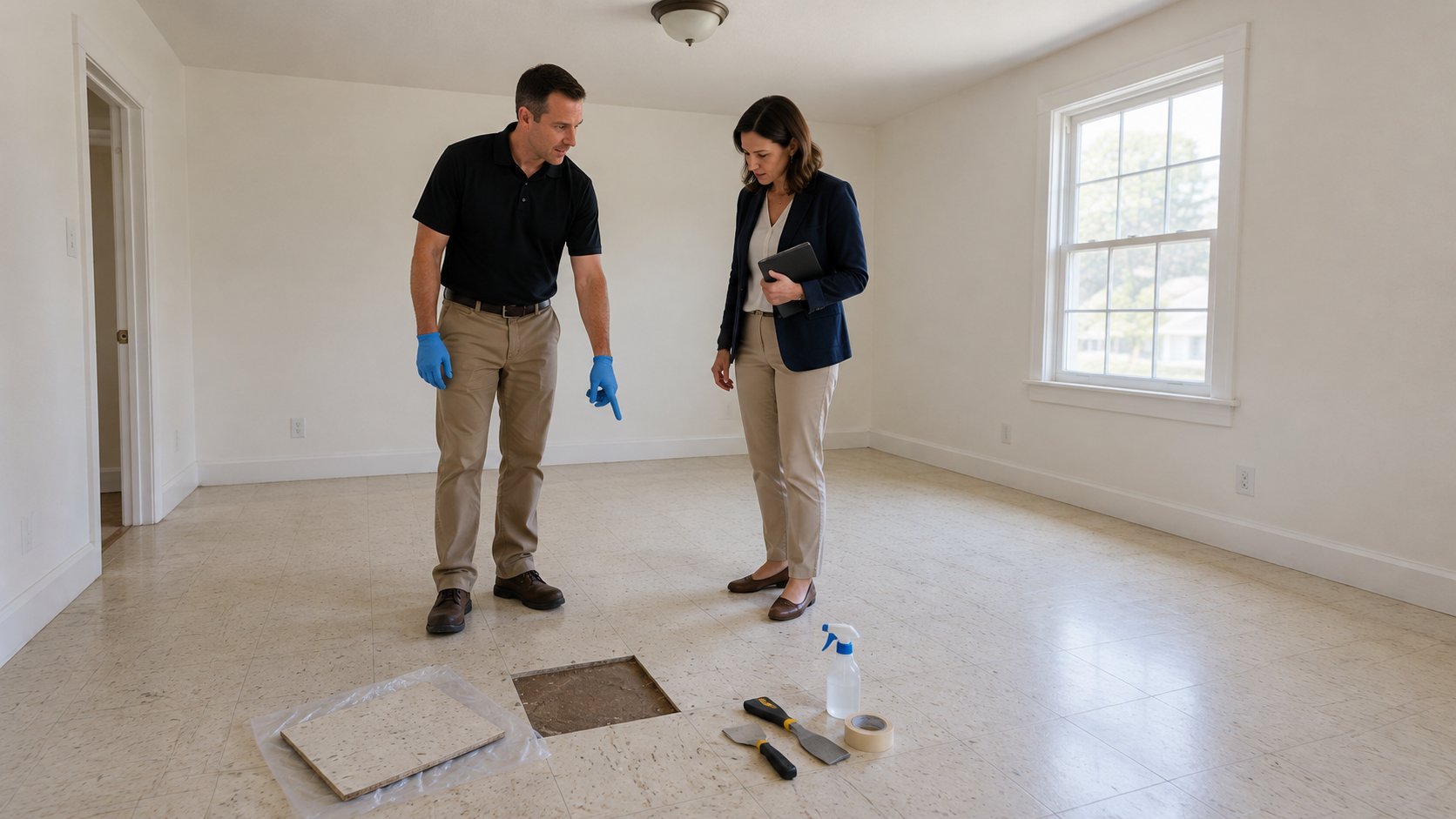
When renovating older housing stock or updating a historic commercial building, one of the most common upgrades is replacing the outdated, scuffed flooring. Tearing up old carpet or peeling back layers of linoleum often reveals original 9x9 or 12x12 vinyl floor tiles beneath. While these vintage tiles might seem harmless, they represent one of the most widespread environmental liabilities in American real estate. For decades, asbestos was standard in the manufacturing of vinyl floor tiles, linoleum backing, and the black mastic adhesive used to glue the flooring down.
While intact asbestos floor tiles are generally considered safe, the danger arises the moment a contractor or DIY homeowner decides to rip them up. Scraping, chipping, or sanding these materials transforms a dormant building product into an immediate indoor air quality hazard. For property managers, contractors, and investors in Michigan, understanding how to legally and safely manage asbestos flooring is critical. Mishandling this material can trigger severe regulatory fines, contaminate the property, and expose workers and occupants to life-threatening health risks.
Understanding Asbestos Flooring and Mastic
Before the late 1980s, asbestos was heavily utilized in flooring products for its durability, fire resistance, and insulating properties. It was mixed into the vinyl matrix of the tiles themselves, woven into the paper backing of sheet linoleum, and blended into the thick, black mastic adhesive used to bond the flooring to the concrete or wooden subfloor.
When these materials are in perfect condition, the EPA and OSHA classify them as "Category I non-friable" materials. This means the dangerous asbestos fibers are locked tightly within the vinyl or glue and cannot be crumbled by hand pressure. However, the real world of renovation rarely involves perfectly intact flooring. Floor tiles naturally become brittle over time, cracking and chipping under heavy foot traffic.
More importantly, the act of removal changes the classification. If a contractor uses a floor scraper to chip away brittle tiles, or uses a drum sander to grind the stubborn black mastic off the subfloor, they are actively pulverizing the material. This violent mechanical action renders the flooring friable, immediately releasing millions of microscopic, carcinogenic asbestos fibers into the air.
Best Practices for Suspect Flooring
A frequent—and highly dangerous—mistake made by modern contractors is assuming that buildings constructed after the 1980s are entirely free of asbestos flooring. While domestic manufacturing regulations tightened, the global supply chain did not uniformly follow suit.
Explicitly state that best practice is to assume suspect building materials may contain asbestos regardless of construction date, especially:
Drywall and joint compound
Flooring and mastics
Ceiling tiles and textures
Imported products and components (e.g., materials manufactured in countries without stringent asbestos controls)
Add clear language that imported or foreign‑manufactured building materials can still contain asbestos today, so the safest approach is to test rather than rely on age alone. When you pull up a carpet and find a questionable tile or a layer of black adhesive, visual identification is impossible.
“Regardless of the year your property was built, the safest approach is to treat suspect materials as potentially asbestos‑containing until testing proves otherwise.”
“Because some imported products may still contain asbestos, age alone is not a reliable way to rule out asbestos.”
Before any flooring demolition begins, professional asbestos testing by an accredited laboratory is mandatory. If you are asking how to tell if you have asbestos or what does asbestos look like, the only definitive answer comes from a microscope.
The Severe Health Risks of Improper Removal
The asbestos health risks associated with flooring removal are devastating. When a worker dry-scrapes black mastic or shatters a vinyl tile, the aerosolized fibers remain suspended in the air for hours. When inhaled, these microscopic fibers lodge deep within the lung tissue and cannot be expelled.
Over decades, this trapped asbestos causes severe inflammation and scarring, leading to incurable diseases such as asbestosis, lung cancer, and mesothelioma. If a property manager allows an untrained crew to tear up asbestos flooring, they are not only endangering their workers but also contaminating the entire building through the HVAC system, creating a massive liability for environmental compliance property owners.
Options for Managing Asbestos Floors
When an asbestos inspection confirms the presence of asbestos flooring or mastic, property owners have two primary options: encapsulation or professional abatement.
Encapsulation (Leaving it in Place):
If the asbestos tile is tightly bonded to the subfloor and remains in good condition, the safest and most cost-effective option is often to leave it undisturbed. You can install new flooring—such as floating laminate, engineered hardwood, or new carpeting—directly over the old asbestos tiles. This securely traps the asbestos beneath the new floor, preventing any fibers from becoming airborne. However, this only defers the liability. If the building ever requires structural subfloor repairs, or if water damage necessitates a full tear-out, the asbestos must still be addressed.
Professional Asbestos Abatement:
If the old flooring is badly damaged, or if the new flooring system requires a pristine, level subfloor (like installing ceramic tile), full removal is the only option. However, DIY asbestos removal is never recommended and is heavily regulated.
The asbestos removal process for flooring requires certified professionals. A licensed asbestos removal Michigan contractor will:
Seal off the room with heavy plastic sheeting and establish negative air pressure using HEPA filtration systems to prevent cross-contamination.
Use specialized wet-scraping techniques and chemical mastic removers to gently lift the tiles and dissolve the adhesive without generating dust.
Package the debris in clearly labeled, double-sealed leak-tight bags.
Follow the strict Michigan EGLE regulations for disposal, transporting the waste via an approved manifest to a landfill licensed to accept asbestos.
Attempting to bypass these asbestos demolition requirements can result in massive EGLE fines, stop-work orders, and project shutdowns.
Beware of Overlapping Hazards
In older homes, replacing the flooring often disturbs the architectural trim, baseboards, and lower sections of the drywall. Property managers must be acutely aware of overlapping hazards during this phase.
If the baseboards in older housing stock are coated in vintage paint, aggressively prying them off the wall creates a severe peeling lead paint danger. Toxic lead dust will contaminate the subfloor and the surrounding soil, triggering lead paint exposure symptoms for occupants and violating the lead paint laws Michigan strictly enforces. Proper lead paint removal near me or a certified lead paint abatement Warren MI contractor should be utilized to safely remove the trim before the flooring project begins.
Furthermore, if the flooring replacement was prompted by a plumbing leak or a flooded basement, there is an immediate water damage mold risk. Wet subfloors hidden beneath old linoleum frequently harbor massive fungal colonies. You cannot simply cover wet, moldy subfloors with new laminate. The property requires a thorough mold inspection and a professional mold remediation process to safely extract the biological hazard alongside the asbestos. Combining professional mold remediation Michigan services with asbestos abatement ensures the site is truly clean.
Secure Your Renovation with Professional Expertise
Replacing the flooring in an older property is a complex project that requires far more than just a pry bar and a dumpster. Uncovering hidden asbestos mastic, lead-painted baseboards, or a mold-infested subfloor midway through demolition will instantly derail your budget and timeline.
If you are planning to upgrade your flooring, recovering from a basement flood, or suspect you are dealing with hazardous legacy materials, contact BDS Environmental before you begin demolition. Our expert environmental services Michigan team provides precise asbestos testing, thorough mold inspection, and the licensed asbestos removal Warren MI relies on. We handle the complex hazardous material removal, ensuring your property is compliant, clean, and ready for its new floors.