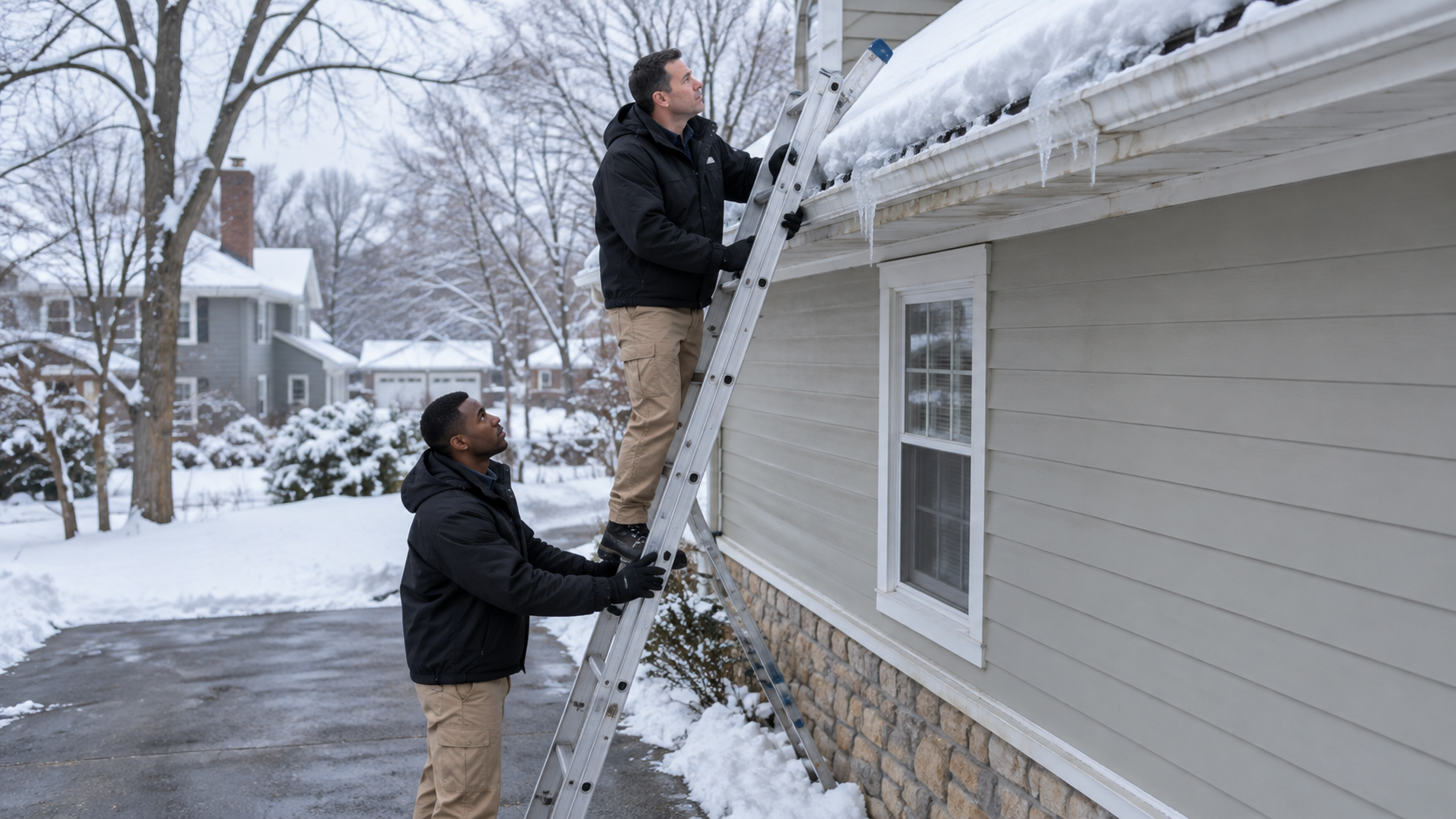
Michigan winters are beautiful but famously brutal on residential and commercial buildings. The combination of freezing temperatures, heavy snowfall, and indoor heating creates a highly challenging environment for any structure. While most property owners focus on keeping their heating bills down and their driveways shoveled, the most insidious seasonal threat often develops completely out of sight. When heat and humidity become trapped inside the building envelope, winter moisture problems quickly take hold. These issues manifest as dripping attic condensation, destructive ice dams, and hidden roof leaks that saturate the internal framing of the property.
Whether you are managing a large apartment complex or maintaining a single-family rental, winter moisture is the leading cause of seasonal structural degradation. If left unaddressed, this trapped water provides the ideal breeding ground for rapid fungal growth, turning a minor winter leak into a severe indoor air quality hazard. Furthermore, when contractors rush to tear out wet ceilings or damaged siding in the middle of winter, they frequently disturb dangerous legacy building materials. Navigating these overlapping threats safely requires a proactive maintenance strategy and a deep understanding of environmental safety in older homes and modern builds alike.
The Destructive Mechanics of Ice Dams
The most common and destructive winter moisture issue in Michigan is the formation of ice dams. An ice dam occurs when warm indoor air escapes into an improperly ventilated attic, heating the underside of the roof deck. This trapped heat melts the bottom layer of snow resting on the shingles. The meltwater flows down the slope of the roof until it reaches the cold, unheated eaves, where it rapidly refreezes. Over several days, this constant melting and freezing cycle creates a solid ridge of ice that blocks proper drainage.
With nowhere else to go, the newly melted water pools behind the ice dam and forces its way backward under the roofing shingles. This moisture bypasses the exterior waterproofing and drips directly into the attic, soaking the insulation, the wooden trusses, and the drywall ceiling below. By the time a property owner notices a water stain on their living room ceiling, the structural cavities above have likely been saturated for days or weeks.
Condensation and the Water Damage Mold Risk
Even if your roof is in perfect condition, your property can still suffer from severe winter water damage due to condensation. During the winter, the air inside a home is typically warm and holds ambient moisture from cooking, showering, and running humidifiers. When this warm, humid air comes into contact with poorly insulated, freezing exterior walls or windows, the moisture rapidly condenses into liquid water.
The Environmental Protection Agency strongly recommends keeping indoor humidity below 55 percent to prevent this winter condensation from accumulating on cold surfaces. When moisture continually drips inside window frames or pools behind drywall, the water damage mold risk accelerates rapidly. Mold spores can begin colonizing damp building materials in as little as 24 to 48 hours.
Often, the first warning sign is not a visible spot on the wall, but rather a persistent mold smell in house or office environments. Ignoring this musty odor is a dangerous mistake. Exposure to indoor dampness and mold can cause severe respiratory irritation, asthma exacerbation, and allergic reactions. These mold health risks are serious, and the presence of black mold symptoms among tenants should prompt an immediate, professional environmental investigation.
Professional Mold Remediation Requirements
When winter roof leaks or severe condensation cause an outbreak, a simple surface cleaning is never enough. Attempting to scrub moldy drywall with bleach will not solve the problem, as the fungal roots penetrate deep into the porous material. Whether you are dealing with basement mold after water damage, hidden ceiling mold, or widespread mold after flooding from a burst winter pipe, the situation requires professional intervention.
A thorough mold inspection is the first step in identifying the true source of the moisture. Once the ventilation or roofing issue is corrected, a licensed environmental services Michigan contractor will begin the formal mold remediation process. For property investors, ensuring proper mold remediation for landlords is critical to limiting liability.
The remediation team will set up heavy plastic containment barriers and utilize negative air pressure machines equipped with HEPA filters. This prevents microscopic spores from spreading to clean areas of the property during demolition. Once the area is secure, they will perform precise mold removal near me, carefully cutting out the saturated materials and treating the underlying structure with commercial-grade antimicrobial agents. Handling mold in commercial buildings and residential rentals demands strict adherence to these safety protocols to ensure the indoor air quality hazards are completely eliminated.
Hidden Asbestos Dangers During Winter Repairs
The most dangerous phase of fixing a winter roof leak or resolving a condensation issue is the demolition. When a ceiling is ruined by an ice dam, the damaged drywall and insulation must be cut out and replaced. In older housing stock, this seemingly routine repair can easily release toxic, microscopic asbestos fibers into the air.
Explicitly state that best practice is to assume suspect building materials may contain asbestos regardless of construction date, especially:
Drywall and joint compound
Flooring and mastics
Ceiling tiles and textures
Imported products and components (e.g., materials manufactured in countries without stringent asbestos controls)
Many contractors mistakenly assume that properties built in recent decades are entirely exempt from asbestos hazards. However, property managers must add clear language that imported or foreign‑manufactured building materials can still contain asbestos today, so the safest approach is to test rather than rely on age alone. Global supply chains frequently introduce components into modern construction that do not adhere to strict domestic environmental safety standards.
“Regardless of the year your property was built, the safest approach is to treat suspect materials as potentially asbestos‑containing until testing proves otherwise.”
“Because some imported products may still contain asbestos, age alone is not a reliable way to rule out asbestos.”
If a homeowner asks how to tell if you have asbestos or what does asbestos look like, they must understand that visual identification is impossible. Asbestos was commonly mixed directly into the drywall joint compound used to seal the seams and cover the nails on ceilings and walls. Before any wet drywall is removed, you must schedule a professional asbestos inspection and formal asbestos testing.
If the materials test positive, standard demolition is illegal. Ripping out wet drywall without following strict asbestos demolition requirements will aerosolize carcinogenic fibers, violating environmental laws and exposing the entire building to severe asbestos health risks. Property owners must hire certified professionals for the asbestos removal Michigan requires. Utilizing a licensed asbestos abatement contractor for your asbestos removal Warren MI project ensures the hazardous material removal is conducted under strict containment. Do not allow your winter repairs to become an asbestos before renovation disaster. If you notice signs of asbestos materials degrading, you need expert asbestos removal near me to secure the site.
Exterior Repairs and Peeling Lead Paint
Ice dams do not just damage the inside of your property. As the heavy ice pushes backward under the shingles, it also destroys the exterior fascia boards, soffits, and wooden trim. In homes built under past standards, these exterior wooden components are frequently coated in heavy layers of lead-based paint.
When the wood swells with winter moisture, the paint layers detach and flake off, creating an immediate peeling lead paint danger. Scraping away this flaking paint to install new soffits or gutters can release highly toxic lead dust into the air and the surrounding soil. Municipalities in Michigan heavily regulate deteriorated paint on older homes because of the severe threat it poses to public health. Airborne lead dust causes devastating lead paint exposure symptoms, particularly in children.
Navigating the lead paint laws Michigan enforces requires utilizing a professional lead paint removal process. Contractors must use wet-scraping techniques and HEPA vacuums to safely capture the debris, ensuring the surrounding yard is not contaminated. Finding a reputable team for lead paint abatement Warren MI or lead paint removal near me ensures the project complies with all state regulations. Whether you need a comprehensive lead paint removal Michigan strategy or targeted lead paint abatement for a damaged trim board, professional oversight is mandatory. Treating lead paint in older homes with respect is the only way to avoid crushing regulatory fines and health liabilities.
Ensure Comprehensive Environmental Safety This Winter
Managing winter property damage requires a delicate balance of rapid response and strict environmental safety. Tearing into a wet ceiling without proper testing can easily turn a seasonal roofing leak into a massive contamination event. Environmental testing for property managers and environmental compliance property owners is the ultimate shield against unexpected liabilities.
If your property has suffered significant winter water damage, if you suspect you have hidden mold, or if you need to tear out materials that might require asbestos removal or lead mitigation, contact BDS Environmental. Our highly trained environmental services Michigan team provides expert asbestos inspection, reliable mold testing, and the licensed environmental remediation services property managers trust. We handle the complex hazardous materials in homes so you can repair your winter damage safely, keeping your building secure and your occupants protected all year long.