Mold in Crawl Spaces: Causes, Warning Signs, and Remediation Options
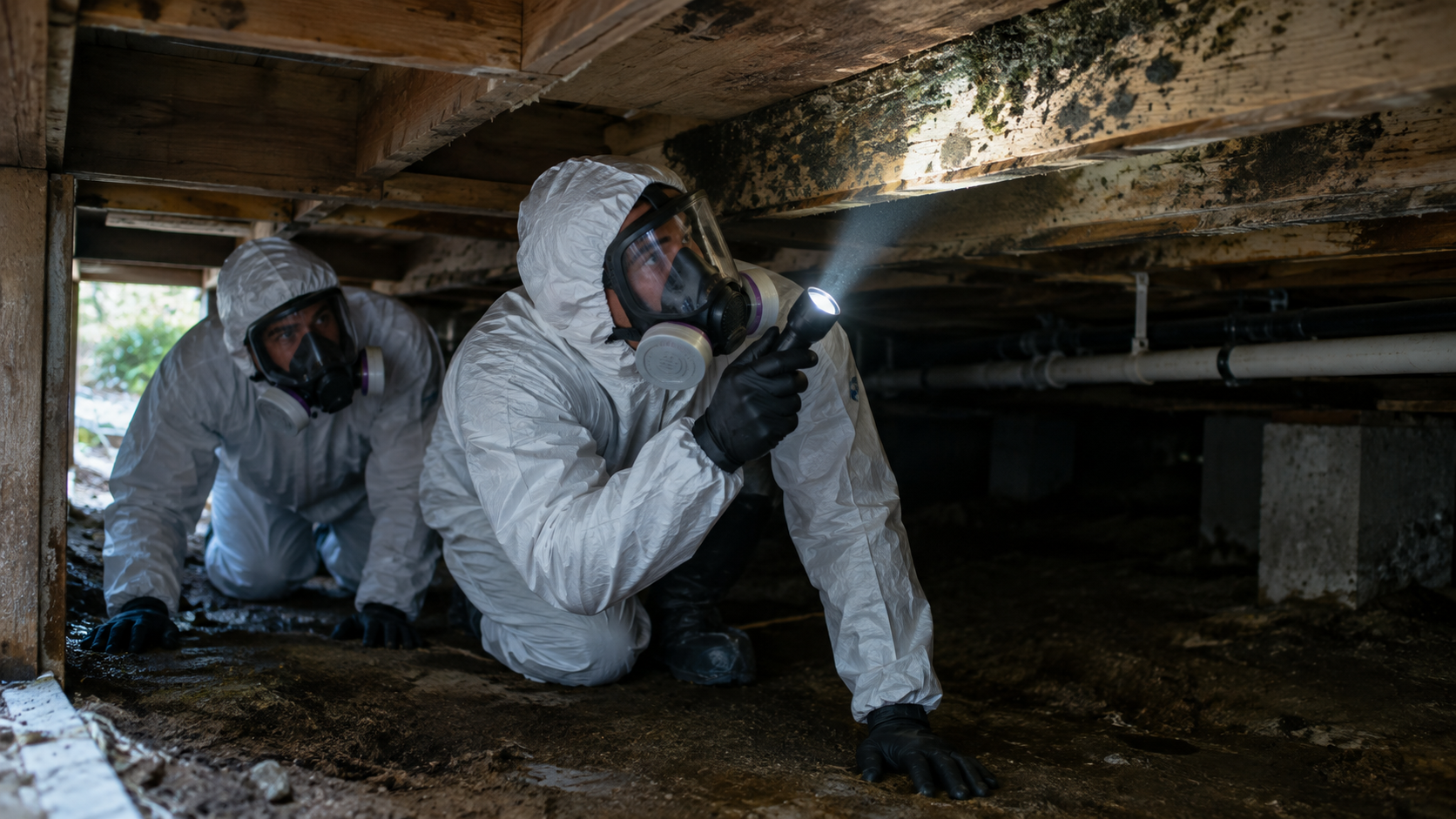
For many homeowners and property managers, the crawl space is an "out of sight, out of mind" area. Used primarily to house plumbing lines, HVAC ductwork, and electrical wiring, this dark, unfinished space rarely gets attention until a major issue arises. However, ignoring the crawl space is one of the biggest mistakes a property owner can make. In Michigan, where seasonal humidity and heavy precipitation are a constant battle, a dirt or improperly sealed crawl space is a ticking time bomb for severe moisture problems. When moisture accumulates unchecked beneath the floorboards, it inevitably triggers a massive water damage mold risk that threatens the structural integrity of the entire building.
The danger of crawl space mold is not isolated to the area below your feet. Thanks to the physics of airflow, the environment inside your crawl space directly dictates the indoor air quality of your living spaces above. Addressing mold in commercial buildings, rental properties, or single-family homes requires an understanding of how moisture enters the space, how to safely remove the contamination, and how to permanently prevent its return. For landlords and investors, proper mold remediation Michigan properties require is essential for protecting tenants and securing the long-term value of the real estate.
The Science of the "Stack Effect"
Why should you care about fungal growth in a space you never enter? The answer lies in a building science principle known as the "stack effect." The stack effect is the natural movement of air through a building caused by differences in temperature and pressure. As warm air inside your home rises and escapes through the upper levels and attic, it creates a slight vacuum in the lower levels. To replace the escaping air, the house pulls replacement air upward from the basement or crawl space.
This means that up to 50% of the air you breathe on the first floor of your home actually originated in the crawl space. If your crawl space is damp and contaminated, the stack effect acts like a chimney, continuously pulling microscopic mold spores, musty odors, and humidity directly into your living room and HVAC system.
Causes and Warning Signs
Crawl space mold thrives because the environment naturally provides exactly what fungi need to survive: organic food (wooden floor joists) and trapped moisture. Mold can begin colonizing wooden surfaces within 24 to 48 hours if the relative humidity stays above 60%. This moisture typically comes from exposed dirt floors releasing groundwater vapor, poor exterior drainage routing water under the foundation, or slow plumbing leaks from the pipes running overhead.
You do not need to crawl into the dirt to spot the warning signs. The most obvious indicator is a persistent mold smell in house; if your first floor smells earthy or musty, the source is likely directly below you.
Other warning signs include:
Unexplained allergy flare-ups or black mold symptoms among occupants.
Cupping or buckling hardwood floors on the main level.
High indoor humidity that your AC struggles to control.
The Centers for Disease Control and Prevention notes that mold exposure can cause serious mold health risks, including asthma exacerbation, respiratory infections, and severe allergic reactions.
Crawl Spaces and Hidden Asbestos Hazards
When a property owner decides to tackle a crawl space renovation or fix a plumbing leak, they often focus entirely on the mold. However, crawl spaces in older homes are notorious for housing other overlapping indoor air quality hazards. The network of pipes and ductwork running through these spaces was historically insulated with highly dangerous materials.
Best practice is to assume suspect building materials may contain asbestos regardless of construction date, especially:
Drywall and joint compound
Flooring and mastics
Ceiling tiles and textures
Imported products and components (e.g., materials manufactured in countries without stringent asbestos controls)
Many investors mistakenly believe that newer construction is free from asbestos risks. Add clear language that imported or foreign-manufactured building materials can still contain asbestos today, so the safest approach is to test rather than rely on age alone. Global supply chains mean that components like acoustic textures, mechanical insulation, and specialized mastics may not meet domestic safety standards.
Regardless of the year your property was built, the safest approach is to treat suspect materials as potentially asbestos-containing until testing proves otherwise. Because some imported products may still contain asbestos, age alone is not a reliable way to rule out asbestos.
If you crawl under a house and see degraded pipe wrapping, do not touch it. Tearing out moldy insulation or disturbing old mechanical wraps without an asbestos inspection can instantly aerosolize carcinogenic fibers, violating strict asbestos demolition requirements and causing severe asbestos health risks. You must hire professionals for accredited asbestos testing and specialized asbestos removal Michigan services before any crawl space demolition begins.
In addition to asbestos, the exterior access doors or foundation trim of older housing stock often harbor peeling lead paint danger. Disturbing these surfaces during a crawl space encapsulation project without utilizing a safe lead paint removal process can contaminate the surrounding soil, resulting in severe lead paint exposure symptoms for residents and running afoul of lead paint laws Michigan enforces.
The Professional Mold Remediation Process
If a mold inspection confirms a fungal infestation under your property, simply spraying the wood with bleach will not solve the problem. Effective mold remediation for landlords and homeowners requires a comprehensive, multi-step approach that addresses both the contamination and the environmental conditions.
Moisture Control: A professional environmental remediation services team will first stop the water source. This may involve fixing a leaky pipe, rerouting exterior downspouts, or installing a sump pump to handle active groundwater.
Safe Removal: Using negative air pressure and HEPA filtration, the mold remediation process begins. The team will physically remove heavily contaminated, porous materials (like fiberglass insulation) and scrub the wooden joists with professional-grade antimicrobial agents.
Encapsulation: The ultimate solution for long-term environmental safety in older homes is crawl space encapsulation. This involves installing a heavy-duty vapor barrier (typically 10-mil to 20-mil thick) over the dirt floor and sealing it to the foundation walls.
Conditioning: Finally, all exterior crawl space vents are sealed off, and a commercial-grade dehumidifier is installed to maintain the relative humidity below 50%, ensuring mold can never re-establish itself.
Protect Your Property and Your Health
Crawl space mold is not a problem that goes away on its own. Left untreated, it will rot your floor joists, ruin your indoor air quality, and create massive liabilities for environmental compliance property owners. Attempting a DIY cleanup in a confined space is extremely dangerous, especially when facing the dual threats of toxic mold spores and hidden hazardous materials in homes.
If you suspect you have a mold problem, notice a musty odor, or need to upgrade the environmental safety of your crawl space, contact BDS Environmental. Our expert environmental services Michigan team can provide comprehensive mold inspection, safe hazardous material removal, and the licensed mold removal near me required to fully restore your property. We handle the dirty work so you can breathe easy knowing your home is compliant, dry, and safe.