Michigan Asbestos Regulations: What Homeowners and Contractors Should Know
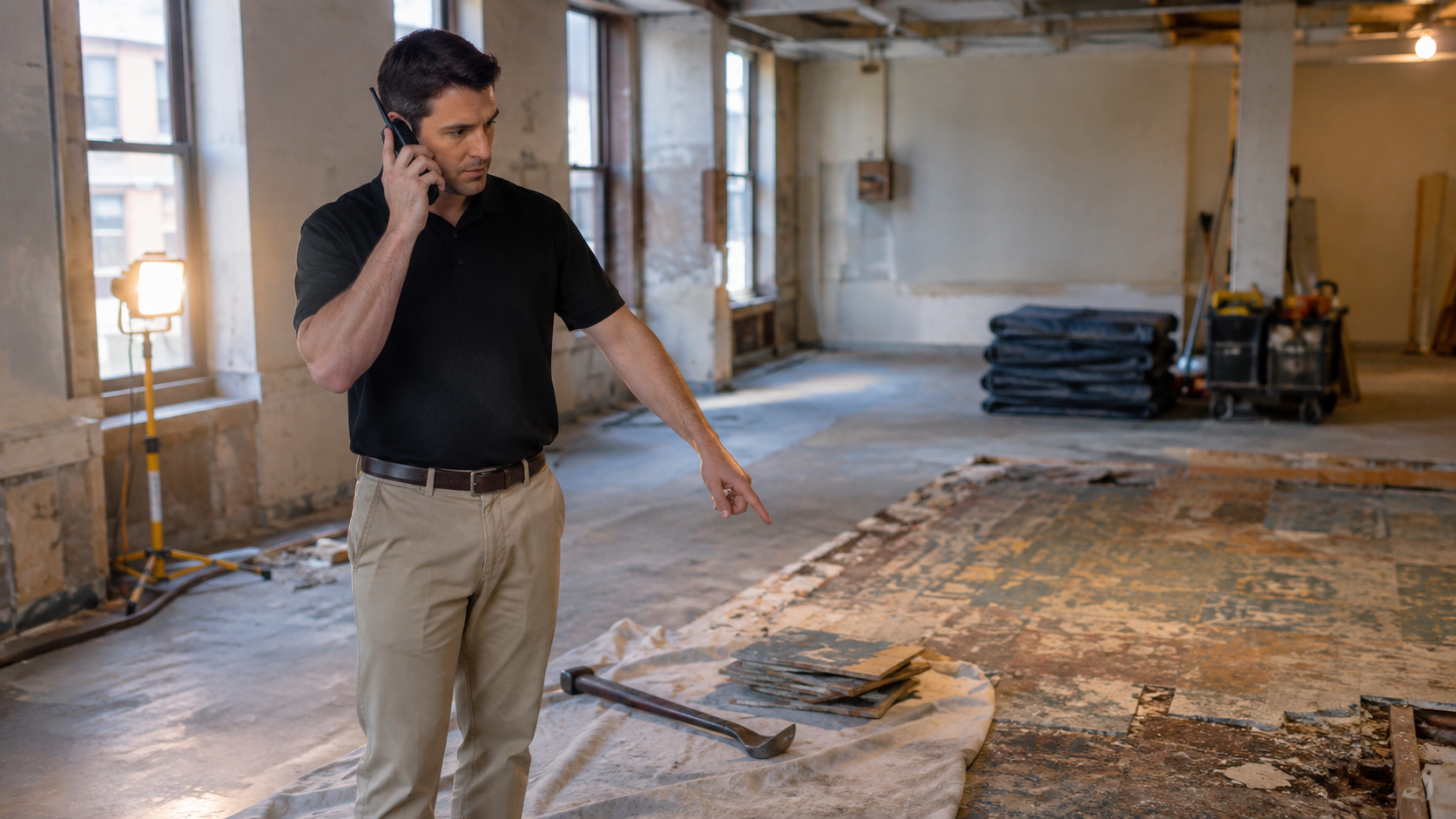
When property owners or contractors plan a renovation in an older building, they usually focus on permits, material costs, and schedules. What often gets overlooked is environmental compliance, specifically regarding asbestos. The EPA states that any demolition or renovation operation at an institutional, commercial, or industrial building is regulated by the Asbestos National Emission Standards for Hazardous Air Pollutants (NESHAP). This rule is designed to protect the public by minimizing the release of asbestos fibers, which are known to cause severe respiratory diseases like mesothelioma and lung cancer when inhaled.
In Michigan, managing asbestos is not just a federal issue; it involves strict state-level oversight that applies to both commercial properties and many residential projects. The Michigan Department of Environment, Great Lakes, and Energy (EGLE) implements the NESHAP program, while the Michigan Occupational Safety and Health Administration (MIOSHA) enforces worker protection rules and contractor licensing. For homeowners, property managers, and investors, understanding how these regulations overlap is critical. A misstep in asbestos testing, abatement, or demolition notification can lead to heavy fines, delayed projects, and significant liability.
The Requirement for Asbestos Testing
The biggest mistake property owners make is assuming a building material is safe because of how it looks or when the building was constructed. Michigan asbestos regulations generally require an asbestos inspection to be conducted by an accredited inspector prior to renovation or demolition activities, particularly in buildings constructed before 1981. This is often a prerequisite for obtaining a demolition permit.
However, age is not a perfect boundary. Regardless of the year your property was built, the safest approach is to treat suspect materials as potentially asbestos-containing until testing proves otherwise. Because some imported products may still contain asbestos, age alone is not a reliable way to rule out asbestos, and a government notice on asbestos in imported building products reports that asbestos has been found in a range of imported goods and building materials.
Best practice is to assume suspect building materials may contain asbestos regardless of construction date, especially:
Drywall and joint compound
Flooring and mastics
Ceiling tiles and textures
Imported products and components
Imported or foreign-manufactured building materials can still contain asbestos today, so the safest approach is to test rather than rely on age alone. For contractors, walking onto a job site and skipping the asbestos inspection is a direct violation of safety protocols and opens the firm to massive MIOSHA penalties if workers are exposed.
Demolition and Renovation Notifications
If an asbestos inspection confirms the presence of asbestos, or if a building is slated for total demolition, the state must be informed before work begins. This is where many projects run into legal trouble.
Under EGLE and NESHAP rules, a 10-working-day advanced notification is required before the demolition of any regulated building or structure, regardless of whether asbestos is present or not. If the project is a renovation rather than a demolition, notification is required if the amount of regulated asbestos-containing material to be disturbed exceeds 260 linear feet on pipes, 160 square feet on other surfaces, or 35 cubic feet off facility components.
MIOSHA also requires its own project notification 10 days prior to any non-emergency asbestos abatement project exceeding 10 linear feet or 15 square feet of friable asbestos. For property managers and commercial investors, these asbestos demolition requirements mean you cannot simply decide to knock down a wall on a Friday; environmental compliance property owners must follow requires strict scheduling and state coordination.
Who Can Legally Remove Asbestos in Michigan?
Because asbestos health risks are so severe, the state heavily regulates who can perform the actual hazardous material removal. MIOSHA requires that any individual or company hired to remove or encapsulate friable asbestos must be licensed as an asbestos abatement contractor.
There is a narrow exemption for specific licensed trades—such as electricians, plumbers, and residential builders. If properly trained and accredited, these trades can remove friable asbestos without an abatement contractor's license, but only if the removal is incidental to their primary trade and does not exceed the NESHAP thresholds (260 linear feet or 160 square feet).
However, for a full-scale renovation, a tenant build-out, or a major mold remediation process that also disturbs asbestos, a dedicated, licensed asbestos removal Michigan firm is required. Hiring an unlicensed handyman to handle asbestos in homes or commercial buildings is illegal and highly dangerous.
Residential vs. Commercial Regulations
The rules apply differently depending on the type of property you own. EPA NESHAP regulations specifically target institutional, commercial, or industrial buildings, and exclude residential buildings that have four or fewer dwelling units. This means a single-family homeowner doing their own DIY renovation is generally not subject to federal NESHAP notification rules.
However, that does not mean residential projects are unregulated. If a homeowner hires a contractor to perform work on a single-family home, that contractor is still subject to MIOSHA worker safety regulations. If the contractor encounters suspect materials, they must ensure their workers are protected from asbestos exposure, which often means stopping work until environmental remediation services can safely manage the hazard. Furthermore, if a single-family home is being demolished as part of a larger commercial or public project (such as clearing a block for a new retail center), the EPA considers that home part of a commercial project, and NESHAP rules fully apply.
Overlapping Environmental Hazards
In Michigan's older housing stock and commercial spaces, asbestos is rarely the only problem on the job site. When planning a renovation or recovering from a flood, contractors often find multiple environmental issues occupying the same space.
For example, peeling lead paint danger is extremely common on older window frames and trim. If those windows need to be replaced, the contractor must manage lead dust in addition to checking the surrounding drywall and caulking for asbestos. Similarly, if a property suffers basement mold after water damage, the tear-out process to address the water damage mold risk can easily disturb asbestos floor tiles or black mastic adhesive underneath.
When overlapping hazards exist, a specialized environmental services Michigan team is essential. Michigan requires separate licensing for asbestos and lead abatement, meaning a contractor certified to handle lead paint in older homes cannot legally remove asbestos unless they hold both licenses. A coordinated approach ensures that the containment protocols used for mold removal do not accidentally aerosolize asbestos fibers or lead dust.
Do Not Risk Your Property or Your Health
Navigating Michigan’s asbestos regulations can be complex, but the cost of ignoring them is catastrophic. Between EGLE notifications, MIOSHA licensing, and EPA disposal requirements, hazardous material removal is not a DIY job.
Whether you are a homeowner preparing for a kitchen remodel, a property manager turning over a commercial space, or a general contractor facing a demolition, compliance starts with testing. If you suspect your project may involve asbestos, lead paint, or mold, contact BDS Environmental before you begin work. Our certified team provides professional asbestos testing, mold inspection, and the licensed asbestos abatement services required to keep your project safe, legal, and moving forward.