What Is Negative Air Pressure and Why Is It Used During Abatement?
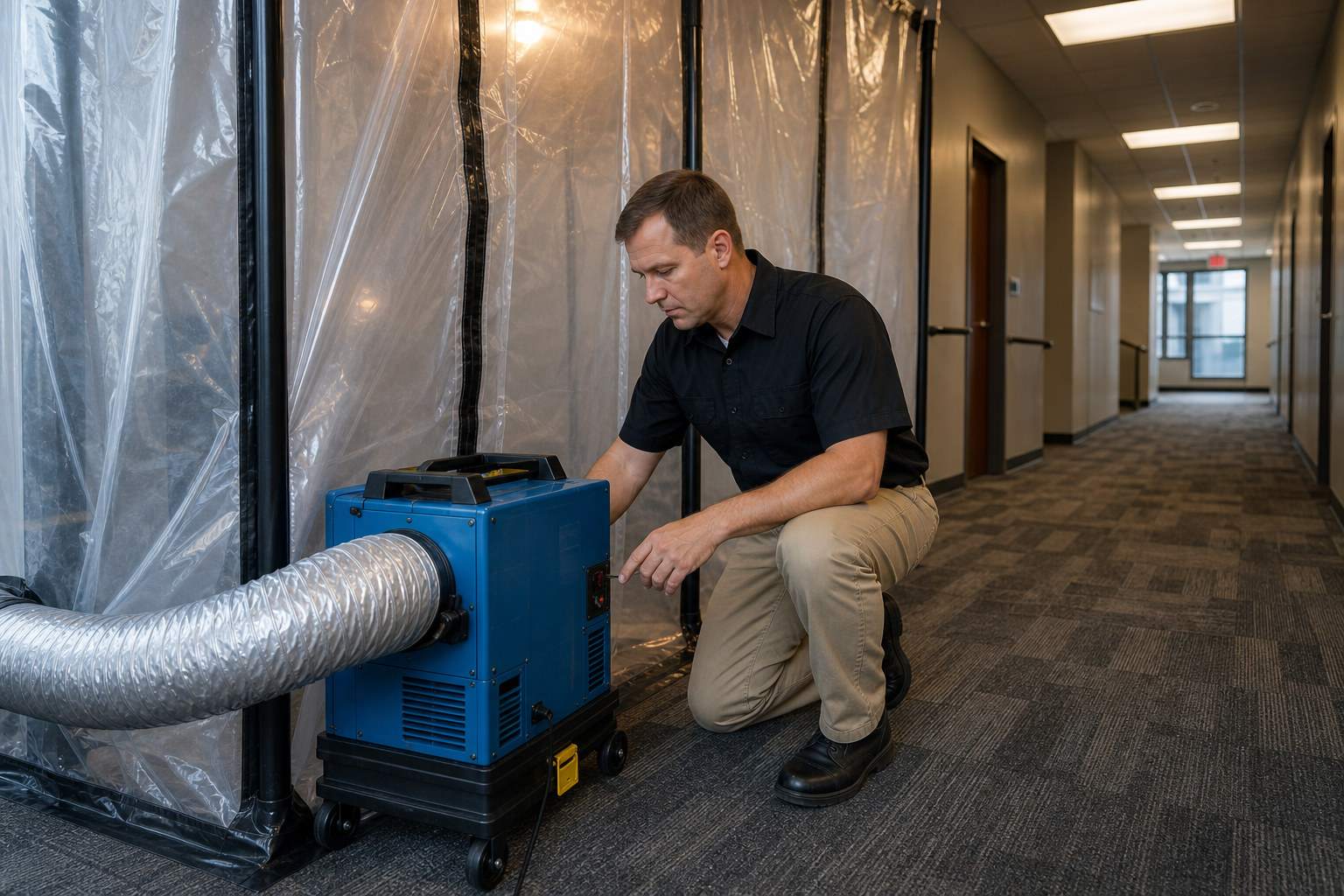
When people hear the term “negative air pressure” during an asbestos abatement or mold remediation project, it can sound overly technical or like just another box being checked on a job site. In reality, it is one of the most important engineering controls used to keep contaminants from spreading beyond the work area. For homeowners, property managers, contractors, and investors, understanding what negative air pressure does helps explain why professional containment matters so much during hazardous material removal.
In practical terms, negative air pressure is about controlling where air moves. During abatement, the goal is to make air flow into the contained work area rather than out of it, so dust, fibers, and spores are less likely to escape into occupied parts of the building. Whether the project involves asbestos removal, mold removal, or other environmental remediation services, negative air pressure is used to reduce cross-contamination, support indoor air quality protection, and make the overall remediation process safer and more controlled.
What Negative Air Pressure Means
Negative air pressure means the contained work area is pulling in more air than it releases back into the surrounding building. That pressure difference causes air to move into the containment instead of allowing contaminated air to drift outward. In asbestos work, OSHA’s appendix on negative pressure enclosures describes the criteria and procedures for erecting and using negative pressure enclosures for Class I asbestos work when they are used as an allowable control method.
OSHA has also explained that the purpose of a negative-pressure enclosure is to prevent the spread of asbestos contamination to outside work areas. That basic principle is what makes the system so valuable. The containment is not just a plastic barrier. It is an active air-control setup designed to keep contaminants from migrating beyond the abatement zone.
Why It Matters During Asbestos Abatement
Asbestos abatement is one of the clearest examples of why negative pressure is necessary. Once asbestos-containing materials are disturbed, fibers can become airborne and settle well beyond the immediate work area if containment is not properly built and maintained. On renovation and demolition jobs, that can affect adjacent rooms, hallways, mechanical spaces, and other occupied areas of the property.
Michigan’s Asbestos NESHAP program states that the asbestos NESHAP protects the public and environment by minimizing the release of asbestos fibers during renovation and demolition activities. The state’s Understanding the Asbestos NESHAP fact sheet makes the same point and explains that advance notification is required so proper precautions can be taken before covered work begins.
From a field perspective, negative air pressure helps support those precautions. It is one of the controls that helps keep asbestos removal from becoming building-wide contamination. That is especially important in occupied facilities, multifamily properties, schools, commercial buildings, and renovation projects where work areas sit close to active spaces.
Why It Is Also Used During Mold Remediation
Negative air pressure is not limited to asbestos abatement. It is also widely used in mold remediation when contamination is extensive enough to require containment. The EPA’s mold remediation guide for schools and commercial buildings states that its remediation guidelines can be implemented when the containment is completely sealed and under negative pressure relative to the surrounding area.
The EPA’s mold remediation document also directs remediators to maintain the area under negative pressure with a HEPA-filtered fan exhausted outside the building for larger containment setups. That matters because mold spores can travel during demolition, cleaning, and material removal just like fine dust can. In mold remediation Michigan projects, especially after flooding, long-term water damage, or hidden wall-cavity growth, negative air pressure helps keep the contamination from spreading into unaffected rooms.
This is one reason mold in commercial buildings and multifamily properties often requires more than surface cleaning. When the scope is large enough, the mold remediation process shifts from simple cleanup to controlled containment, air management, and selective demolition.
How the System Works on a Job Site
A negative air pressure setup usually combines physical containment with mechanical air filtration. The work area is sealed with barriers, openings are controlled, and a HEPA-filtered negative air machine pulls air from inside the containment so the pressure stays lower than the surrounding space. The result is directional airflow into the work area instead of outward leakage into the rest of the building.
In mold projects, the EPA specifically recommends maintaining negative pressure with a HEPA-filtered fan and blocking supply and return vents within the containment area. In asbestos work, OSHA’s negative pressure enclosure guidance is built around the same general concept of enclosure integrity, controlled airflow, and preventing contamination spread. The plastic alone is not the system. The system is the combination of containment, filtration, and pressure control working together.
What Negative Air Pressure Protects Against
The most obvious benefit of negative air pressure is that it helps prevent contaminants from spreading beyond the regulated work area. That protects adjacent finishes, reduces cleanup outside the containment, and lowers the chance that occupants, maintenance staff, or other trades will be exposed to airborne debris generated during abatement.
It also helps protect the project itself. When contaminants spread outside the work area, the cleanup scope can expand quickly. A targeted asbestos abatement can become a much larger restoration issue. A localized mold removal project can turn into a floor-wide indoor air quality complaint. Negative pressure helps keep the scope contained so the remediation stays more controlled, more defensible, and more likely to pass inspection or clearance requirements.
What It Does Not Replace
Negative air pressure is important, but it is not a substitute for proper planning. It does not replace asbestos inspection, asbestos testing, competent project design, personal protective equipment, safe work practices, or post-remediation cleaning. It is one control within a larger system.
That distinction matters for property owners who may hear “negative air” and assume the equipment alone makes the job safe. It does not. If the wrong materials are disturbed, if the containment leaks, if the work practices are poor, or if the moisture source is still active on a mold job, the project can still fail. Negative pressure helps control airborne migration, but it cannot correct a bad scope of work or poor environmental compliance.
Why Testing and Identification Still Come First
This is especially important on asbestos-related jobs. Negative pressure is used after the project reaches the abatement stage, but the building first has to be evaluated correctly. Regardless of the year your property was built, the safest approach is to treat suspect materials as potentially asbestos-containing until testing proves otherwise. Because some imported products may still contain asbestos, age alone is not a reliable way to rule out asbestos.
Best practice is to assume suspect building materials may contain asbestos regardless of construction date, especially drywall and joint compound, flooring and mastics, ceiling tiles and textures, and imported products or components. A government notice on asbestos in imported building products reports that asbestos has been found in a range of imported goods and building materials, which is exactly why testing is safer than relying on appearance or age assumptions.
For property managers and contractors, this is where asbestos before renovation becomes a major issue. You do not want to discover the need for containment and negative air pressure only after suspect materials have already been disturbed.
When Property Owners Should Expect It
Negative air pressure is most commonly used when the work involves friable or easily disturbed contaminants, demolition inside containment, or contamination that could spread into occupied areas if airflow is not controlled. That can include asbestos abatement, larger mold remediation projects, selective interior demolition, and some forms of hazardous material removal where fine particulates need to stay isolated.
In practical terms, property owners should expect questions about containment and negative air when:
Asbestos-containing materials are being removed rather than left in place.
Mold contamination is widespread or inside wall, ceiling, or HVAC assemblies.
Occupied areas sit near the work zone.
The project is happening in a school, commercial property, or multifamily building.
Environmental testing for property managers has already identified airborne or cross-contamination concerns.
The contractor needs to maintain a regulated work area for environmental safety and cleanup control.
Those are not signs of overkill. They are signs that the project team is treating the contamination like a real building systems issue instead of just another demolition task.
Why It Matters in Michigan Projects
On Michigan renovation and demolition projects, negative air pressure matters because abatement work often happens in active buildings, under tight schedules, and near occupied spaces. That makes containment quality just as important as removal itself. When asbestos removal Michigan projects are done correctly, negative air pressure supports the larger goal of keeping fibers inside the containment and out of the rest of the property.
For mold remediation Michigan work, the same logic applies. If a building already has moisture damage, odors, or hidden contamination, the last thing a property owner wants is to spread spores into previously unaffected rooms during cleanup. Negative air pressure helps keep the problem from getting bigger while the actual remediation is underway.
If you are planning renovation work or dealing with suspected contamination in a home, commercial property, or public building, contact BDS Environmental to discuss asbestos inspection, asbestos testing, asbestos abatement, mold remediation, and environmental remediation services. Knowing when negative air pressure should be part of the scope is one more way to keep the project safer, cleaner, and better controlled from start to finish.