What Happens If Asbestos Is Found During a Commercial Renovation?
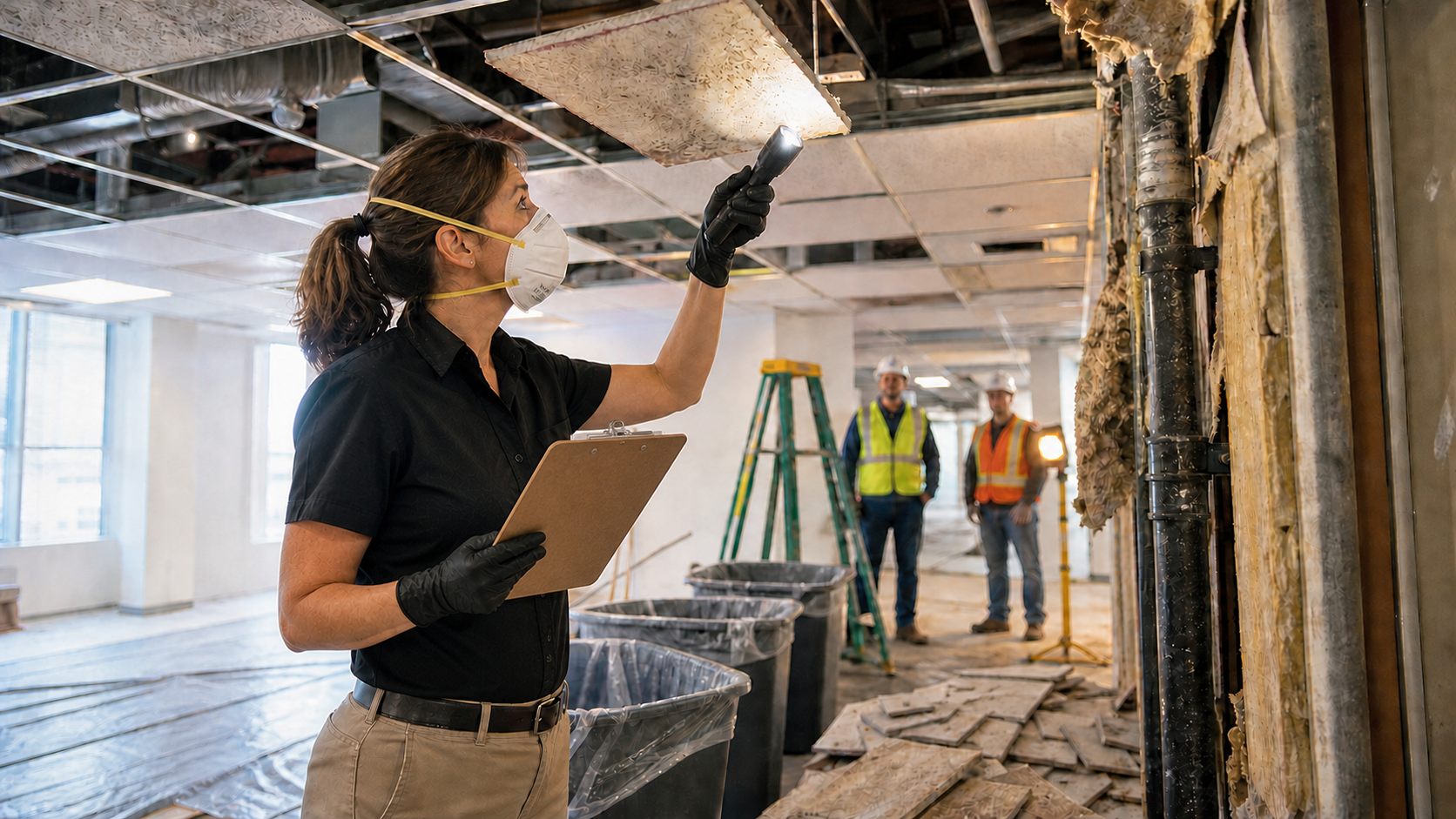
Commercial renovations are complicated enough without an unexpected environmental issue slowing everything down. Between contractor schedules, tenant coordination, permit timing, and budget control, the discovery of suspect asbestos-containing materials can quickly turn a straightforward project into one that requires immediate changes in scope, sequencing, and safety procedures.
That said, finding asbestos during a renovation does not automatically mean your project is in crisis. It means the work needs to pause, the material needs to be evaluated properly, and the next steps need to be handled in a controlled, compliant way. For property owners, managers, contractors, and investors, understanding that process is the key to protecting people, limiting liability, and keeping the project moving the right way.
The First Step: Stop Work and Control the Area
If suspect material is uncovered during demolition, build-out, flooring removal, ceiling work, or mechanical upgrades, the first step is simple: stop disturbing it. Asbestos is most dangerous when fibers become airborne, which can happen when materials are cut, broken, drilled, scraped, or otherwise disturbed.
The work area should then be secured as quickly as possible. That usually means restricting access, preventing unnecessary foot traffic, and avoiding any activity that could spread dust or debris into occupied portions of the building. In commercial settings, this early response matters because once fibers are released, the issue can expand from a localized renovation problem into a broader indoor air quality concern.
It is also important not to let well-meaning workers “clean it up” before testing. Sweeping, bagging debris, or continuing selective demolition can make the situation worse. The safest move is to pause and bring in a qualified professional for asbestos inspection and asbestos testing.
Why You Should Not Guess
One of the biggest mistakes people make during a renovation is assuming they can identify asbestos by sight. In reality, many suspect materials look ordinary. Floor tile, mastic, joint compound, ceiling textures, pipe insulation, wall systems, and utility materials can all appear harmless to someone without training.
That is why professional asbestos inspection matters. The only reliable way to determine whether a suspect material contains asbestos is to have it sampled appropriately and analyzed by a qualified laboratory. If the renovation is already underway, this testing helps establish whether the material can remain in place, needs asbestos abatement, or requires full asbestos removal before work continues.
Regardless of the year your property was built, the safest approach is to treat suspect materials as potentially asbestos-containing until testing proves otherwise. Because some imported products may still contain asbestos, age alone is not a reliable way to rule out asbestos. This is especially important for drywall and joint compound, flooring and mastics, ceiling tiles and textures, and imported or foreign-manufactured components that may not have been produced under stringent asbestos controls.
What Usually Happens After It Is Confirmed
Once asbestos testing confirms the presence of asbestos-containing material, the next step is to determine how that material affects the renovation plan. In some cases, the material may be in an area that will not be disturbed further, and the project team can revise the scope to avoid it. In many renovation projects, however, the material is directly in the path of demolition or construction, which means abatement becomes part of the job.
At that point, the owner or project manager typically works with a licensed asbestos abatement contractor to define the scope. That may include containment setup, engineering controls, removal procedures, waste handling, air clearance steps, and documentation before general trades are allowed back into the space. If the renovation involves regulated quantities of asbestos-containing material, notification requirements also come into play under the EPA’s asbestos renovation and demolition rules.
In Michigan, asbestos-related renovation and demolition activities are overseen through the state’s Asbestos NESHAP program administered by EGLE, which is why local compliance should be treated as part of the project plan, not as an afterthought.
Why This Affects More Than the Schedule
When asbestos is found, many owners initially focus on the delay. That is understandable, but the bigger issue is exposure risk. Disturbed asbestos can release microscopic fibers that may be inhaled by workers, occupants, maintenance staff, or anyone else who enters the area without proper controls.
The health effects associated with asbestos exposure are serious and well documented. According to the Asbestos Disease Awareness Organization, citing occupational health research, asbestos-related diseases are responsible for about 39,000 deaths in the United States each year. NPR also reported on CDC findings showing that malignant mesothelioma deaths have continued to occur despite decades of regulation and awareness.
That is one reason the response to a renovation discovery has to be disciplined. This is not just about code compliance or project administration. It is about preventing unnecessary exposure and making sure the building environment is safe before renovation resumes.
What Owners and Managers Need to Think About Right Away
When asbestos is discovered during a commercial renovation, several decisions follow quickly:
Whether the area must remain shut down until testing and abatement are complete.
Whether tenants, employees, or other occupants could have been affected.
Whether HVAC operation or shared air movement may have expanded the concern.
Whether project sequencing, contractor access, or waste handling must be revised.
Whether required notifications and documentation have been completed properly.
For property managers, this is where environmental compliance and project management start to overlap. A delay is one thing. A poorly documented response is another. If the project is in an occupied commercial building, the communication piece matters too. People do not need alarming language, but they do need a clear explanation that the issue is being assessed and handled appropriately.
Asbestos Removal vs. Asbestos Abatement
Owners often use these terms interchangeably, and in casual conversation that is common. Still, it helps to understand the distinction. Asbestos abatement refers broadly to the controlled process used to address asbestos hazards, which may include removal, repair, enclosure, or encapsulation depending on the condition of the material and the renovation goals.
Asbestos removal is the more specific act of taking the material out. If demolition or construction will disturb the material, removal is often the practical route. If the material is in good condition and can remain undisturbed, a different abatement strategy may sometimes be considered.
In active commercial renovation environments, though, removal is frequently the cleaner long-term solution because it prevents the same issue from disrupting future work. That is one reason many owners searching for asbestos removal near me are not just looking for labor. They are looking for a contractor who understands containment, clearance, waste disposal, scheduling, and regulatory documentation as one coordinated process.
Why “Older Building” Is Still Too Simplistic
People often associate asbestos only with older buildings, and while older commercial properties do deserve close attention, that framing is too narrow. It can create a false sense of confidence in properties that look newer or have had partial updates over time.
As one commercial asbestos guidance article notes, imported building materials and components can still present asbestos concerns in some settings, which means assumptions based only on age can be misleading. That is why the safer standard is not “How old is the building?” but “Has the suspect material been tested?”
Because some imported products may still contain asbestos, age alone is not a reliable way to rule out asbestos. The safest approach is to test rather than rely on age alone. That applies to materials such as drywall systems, flooring and mastics, ceiling products, patching materials, and other components that may not raise obvious red flags during a walk-through.
The Best Way to Avoid Mid-Project Disruptions
The best way to deal with asbestos found during renovation is to identify the issue before demolition starts. Pre-renovation asbestos inspection allows owners and contractors to understand where suspect materials are located, whether asbestos removal will be needed, how long abatement may take, and how that work should be built into the schedule.
This is where asbestos before renovation planning pays off. Instead of creating a surprise shutdown, the issue becomes part of the project scope from the beginning. That helps with budgeting, contractor coordination, compliance, and occupant communication.
For many commercial properties, it also makes sense to look at the broader environmental picture. Buildings undergoing renovation may have more than one issue present at the same time, including mold, lead paint, moisture damage, or other indoor air quality hazards. A thorough environmental review can help property owners avoid solving one problem while overlooking another.
What the Right Response Looks Like
If asbestos is found during a commercial renovation, the right response is measured and professional. Stop work in the affected area. Limit access. Arrange proper asbestos testing. Review regulatory obligations. Then determine the appropriate asbestos abatement or asbestos removal strategy before construction resumes.
Handled correctly, asbestos does not have to derail the entire project. It does, however, need to be taken seriously from the moment it is discovered. A fast, informed response protects workers, occupants, schedules, and liability all at once.
If you suspect your renovation may involve asbestos, or if work has already uncovered questionable materials, contact BDS Environmental to talk through the next step. A professional inspection and clear plan can make the difference between a manageable delay and a much bigger problem.