How Long Does Professional Mold Remediation Take?
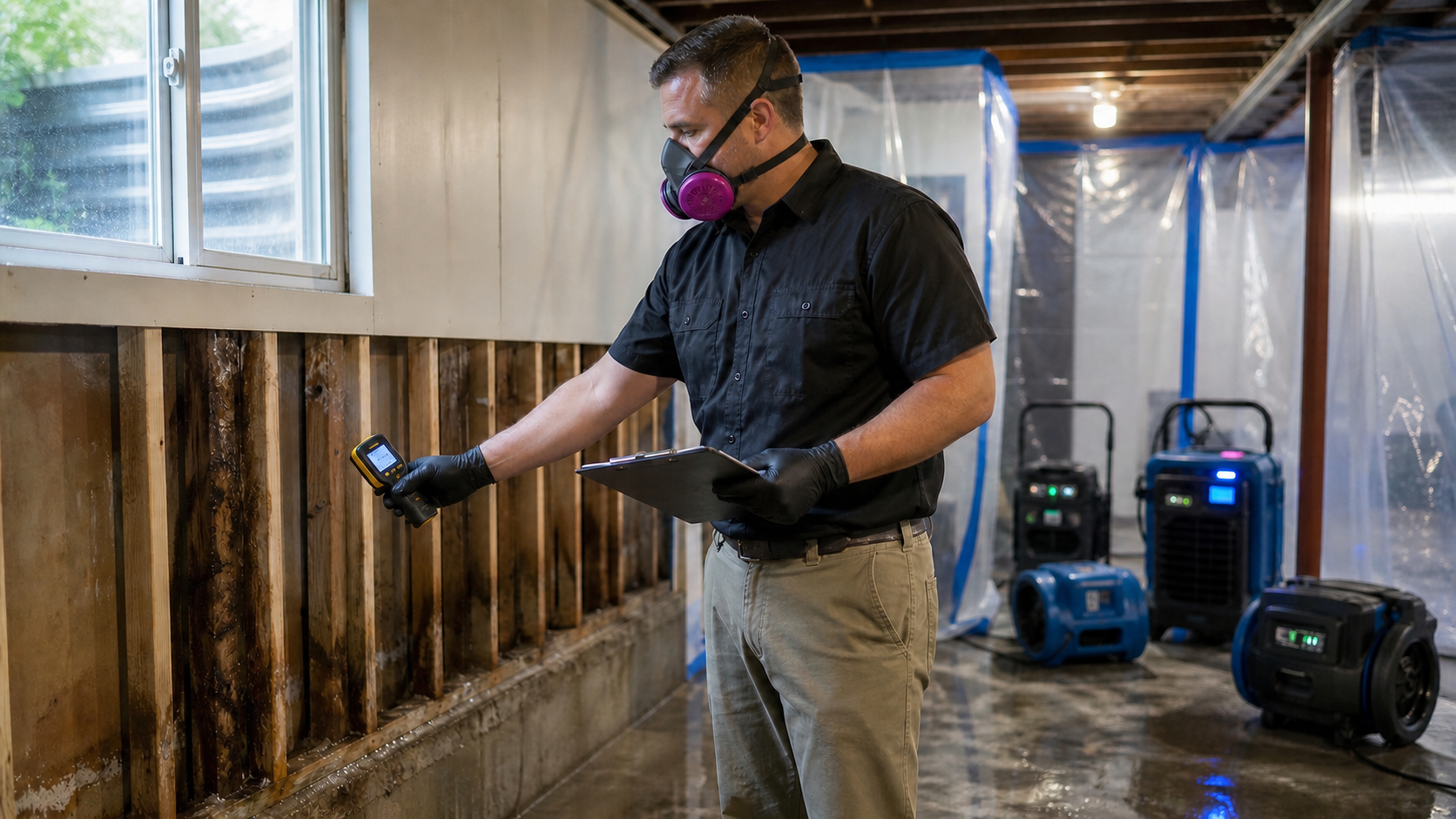
One of the first questions homeowners, landlords, and property managers ask when they are facing a mold problem is how long the remediation process is going to take. It is a practical question with a genuinely variable answer and understanding what drives that variability is important for anyone trying to plan around a mold remediation project. The timeline depends on the size of the affected area, the types of materials involved, the severity of the moisture damage, and whether hidden contamination is discovered once work begins. A small bathroom mold issue remediated quickly looks nothing like a basement mold situation following a flooding event that has affected structural framing, insulation, and multiple rooms.
For homeowners, landlords, property managers, and investors in Metro Detroit, Warren, and other Michigan communities, getting a realistic sense of mold remediation timelines helps with tenant communication, project scheduling, and budgeting. It also helps you understand why rushing a mold remediation project to save time almost always costs more in the long run—either because the work is done incompletely and mold returns, or because clearance testing fails and additional remediation is required before the space can be reoccupied. Understanding how the mold remediation process is structured, what each phase involves, and what factors extend or compress the timeline is knowledge that helps you make better decisions when mold becomes a problem in a Michigan property.
Why There Is No Single Answer to This Question
Mold Remediation Is Not One-Size-Fits-All
The honest answer is that professional mold remediation can take anywhere from one to two days for a small, contained bathroom or crawlspace situation to several weeks for a major flooding event that has affected multiple building systems throughout a property. EPA's mold cleanup guidance makes clear that the scale, scope, and underlying moisture conditions all determine how extensive remediation needs to be.
https://www.epa.gov/mold/mold-cleanup-your-home
What every mold remediation project has in common is a sequence of steps that cannot be skipped or compressed without compromising the outcome. The overall timeline is a function of how many materials need to be removed, how long structural components need to dry before reconstruction can begin, and how quickly clearance testing can confirm the area is safe for reoccupancy.
What Happens When Projects Take Longer Than Expected
The most common reason mold remediation projects extend beyond initial estimates is hidden contamination discovered after work begins. Mold inside wall cavities, under flooring, or in ceiling assemblies is not always visible during an initial inspection. Once containment is established and materials begin to be removed, the true extent of contamination becomes clear—and if it is larger than originally scoped, the project timeline adjusts accordingly.
NIEHS notes that building dampness and mold are consistently associated with respiratory symptoms and health effects, which means undetected contamination left in place is not a minor issue—it is a health risk that continues affecting occupants until it is fully addressed.
https://www.niehs.nih.gov/health/topics/agents/mold
For Michigan landlords and property managers, this is why working with a qualified mold inspection and remediation team that scopes projects thoroughly upfront—rather than the lowest bidder who provides a quick estimate without a thorough walkthrough—produces more predictable timelines and outcomes.
The Mold Remediation Process Phase by Phase
Phase One: Mold Inspection and Scoping (1 to 3 Days)
Before remediation begins, a professional mold inspection establishes where contamination exists, how far it extends, and what is causing the moisture conditions that allowed it to develop. For straightforward situations, this can be completed in a single site visit with results available within a day or two. For larger or more complex properties—commercial buildings, multi-unit residential properties, or homes with extensive water damage history—inspection may involve moisture mapping, air sampling, surface sampling, and sometimes thermal imaging to locate moisture behind walls without opening them.
The inspection phase produces the remediation scope: a written document identifying which materials will be removed, what containment and safety protocols will be used, and what the post-remediation clearance standard will be. A thorough scope upfront is what makes the rest of the project predictable.
Phase Two: Moisture Source Correction (Variable)
CDC is clear that mold cannot be permanently eliminated without first correcting the moisture source that allowed it to grow.
https://www.cdc.gov/mold-health/about/index.html
This phase runs parallel to or immediately before remediation begins, and its timeline varies enormously based on what is causing the moisture:
A simple plumbing leak behind a wall may be repaired in a few hours
Foundation seepage requiring exterior waterproofing or interior drainage solutions may take several days to a week or more
Roof damage allowing water infiltration may require weather windows for exterior repair work
HVAC condensate issues or ventilation deficiencies may involve mechanical work with its own scheduling requirements
No matter how efficiently the mold removal itself is performed, mold will return if the moisture source is not resolved before or during the remediation project. This is non-negotiable, and it is one of the key reasons basement mold after water damage and mold after flooding projects take longer than simple surface mold situations.
Phase Three: Containment Setup (Half Day to 1 Day)
Establishing proper containment is the first step of active remediation. This involves sealing the work area with polyethylene sheeting, closing and blocking HVAC registers, setting up negative air pressure within the work zone using air scrubbers with HEPA filtration, and establishing a decontamination zone for workers entering and exiting. Containment setup typically takes a half day to a full day depending on the size and complexity of the affected area.
Without proper containment, the process of disturbing mold-contaminated materials can spread spores to previously unaffected areas of the building, creating new contamination zones and extending the overall project significantly. This is why professional mold remediation produces fundamentally different outcomes than DIY cleaning approaches.
Phase Four: Material Removal and Cleaning (1 Day to Several Weeks)
This is the most variable phase of the process and the one that drives the overall project timeline most directly. EPA's guidance on mold cleanup explains that porous materials with significant contamination—drywall, insulation, ceiling tiles, carpet—should typically be removed and disposed of rather than cleaned in place, because surface treatment cannot reach mold embedded in the material.
https://www.epa.gov/mold/mold-cleanup-your-home
General timeline benchmarks for this phase:
Small contained area (one bathroom, one section of wall, small closet): 1 to 2 days
Moderate situation (basement section, crawlspace, one or two rooms with wall cavity involvement): 3 to 5 days
Significant contamination (multiple rooms, structural framing, subfloor, attic, or full basement): 1 to 3 weeks
Major flooding or commercial building event: 2 to 6 weeks or more depending on scale
After material removal, remaining structural surfaces in the work area are HEPA vacuumed and cleaned with appropriate antimicrobial agents. Air scrubbers continue running throughout this phase to capture airborne spores.
Phase Five: Structural Drying (2 to 5 Days Minimum)
Once contaminated materials are removed and surfaces are cleaned, the exposed structural components—wood framing, concrete, masonry—must be dried completely before reconstruction begins. Moisture readings in building materials must reach acceptable levels confirmed by calibrated meters, not just visual inspection.
Drying timelines depend on:
The initial moisture content of structural materials after water damage
The ambient humidity conditions in the building during drying
Whether industrial dehumidifiers and air movers are deployed to accelerate the process
The type of materials involved, since dense wood framing holds moisture longer than concrete block
Skipping adequate drying time and moving directly to reconstruction is one of the most common causes of recurring mold problems. Sealing moisture inside rebuilt walls creates exactly the conditions mold needs to re-establish.
Phase Six: Clearance Testing (1 to 2 Days Plus Lab Turnaround)
Post-remediation clearance testing is how you verify that the remediation was effective before reconstruction begins and before occupants return. CDC and NIOSH both note that clearance verification is an important part of confirming remediation success.
https://www.cdc.gov/niosh/mold/testing-remediation/index.html
Clearance testing typically involves:
Air sampling inside the remediated area and in adjacent spaces
Comparison of indoor spore counts to outdoor baseline levels
Sometimes surface sampling on cleaned structural components
Laboratory analysis of collected samples, which typically adds 24 to 72 hours for results
If clearance testing passes, reconstruction can begin. If it does not pass, additional cleaning or remediation is required before the area can be cleared. This is why cutting corners during the remediation phase creates timeline risk—failed clearance means re-doing work that was not done correctly the first time.
Factors That Extend Mold Remediation Timelines
Delayed Moisture Source Correction
When the moisture source causing mold growth cannot be immediately corrected—because exterior waterproofing requires weather windows, because a roofing contractor has a scheduling backlog, or because a mechanical repair involves coordination with other trades—the remediation timeline extends accordingly. Remediation cannot be completed and cleared while active moisture intrusion continues.
Discovery of Overlapping Hazards
In many older Michigan properties, mold remediation that involves opening walls, ceilings, or floors may encounter asbestos-containing materials in the substrates being disturbed. Best practice is to assume suspect building materials may contain asbestos regardless of when the property was built. Because some imported drywall, flooring, and ceiling products from countries without stringent asbestos regulations can still contain asbestos today, age alone is not a reliable way to rule it out. Regardless of when your property was built, treat suspect materials as potentially asbestos-containing until asbestos inspection and asbestos testing prove otherwise.
When asbestos-containing materials are discovered during a mold remediation project, the scope expands to include asbestos abatement with its own containment, removal, disposal, and clearance requirements. For Michigan property managers and investors, this is a strong argument for commissioning an asbestos inspection before mold remediation begins in any property with original building materials—so that the full scope is known and planned for rather than discovered after work is underway.
Similarly, mold remediation in older properties where lead-based paint may be present must incorporate lead-safe work practices during any work that disturbs painted surfaces. Coordinating mold remediation, asbestos abatement, and lead paint removal under one integrated environmental remediation plan is the most efficient and safest approach when all three hazards overlap in the same project area.
Commercial Buildings and Multi-Unit Properties
Mold in commercial buildings and multi-unit residential properties introduces additional complexity that affects timelines. Occupant notification requirements, coordination of temporary relocation when needed, phased work to maintain operations in unaffected areas, and more extensive clearance documentation requirements all extend the overall project duration compared to a single-family home. For property managers overseeing mold remediation for landlords in occupied multi-unit buildings, early planning and clear communication with tenants is essential to managing the process smoothly.
What You Can Do to Keep the Project on Track
Property owners and managers can influence mold remediation timelines in practical ways:
Commission a thorough mold inspection before remediation begins, so the scope is accurate and surprises are minimized
Address the moisture source immediately and in parallel with remediation planning, not after remediation starts
In older properties, order an asbestos inspection before remediation begins in areas with original building materials
Allow adequate drying time before reconstruction begins, even when schedule pressure exists
Do not dismiss or minimize a mold smell in house areas where no visible growth is apparent—hidden contamination that is not included in the initial scope will extend the project when it is found mid-work
Mold remediation projects that are planned properly, scoped accurately, and executed without shortcuts consistently deliver better timelines than projects that cut corners and require re-work or re-testing to pass clearance.
Getting the Timeline Right from the Start
Professional mold remediation takes as long as it needs to take to be done correctly—and the factors that drive that timeline are the nature of the contamination, the moisture conditions in the building, and the materials involved. For Michigan homeowners, landlords, and property managers, understanding the process helps you set realistic expectations, communicate accurately with building owners and tenants, and avoid the false economy of pushing remediation firms to move faster than the project allows.
If you are dealing with mold in a Michigan home, rental property, or commercial building—whether it is basement mold after water damage, recurring mold you cannot get ahead of, mold after flooding, or a persistent mold smell you cannot locate—BDS Environmental can help. The team works with homeowners, property managers, landlords, contractors, and investors to properly scope mold problems, design effective remediation plans, and coordinate any overlapping hazards like asbestos or lead paint that are discovered during the process. If you are trying to understand the scope of a mold situation and what remediation would realistically involve, contact BDS Environmental to discuss your property and get a professional assessment.